Whatcom County
House Washing (Soft Wash) in Lynden, WA
The short answer
We soft wash Lynden siding at low pressure, letting a cleaning solution lift the green growth that collects on lower courses and shaded walls. In August 2026 we did exactly that on a Lynden home's white lap siding. Because the city only allows detergent-free wash-down into its storm system, we plan every rinse away from the drains.

Randy Fee — Owner, King of Kings Window Cleaning
Washington business licence, UBI 605476674 · L&I insured · BBB rated A
Randy runs the company himself, so you are dealing with the owner, not a call centre — and every technician here is personally trained by him. Working Whatcom and Skagit County since 2024.
I run the Lynden route personally.
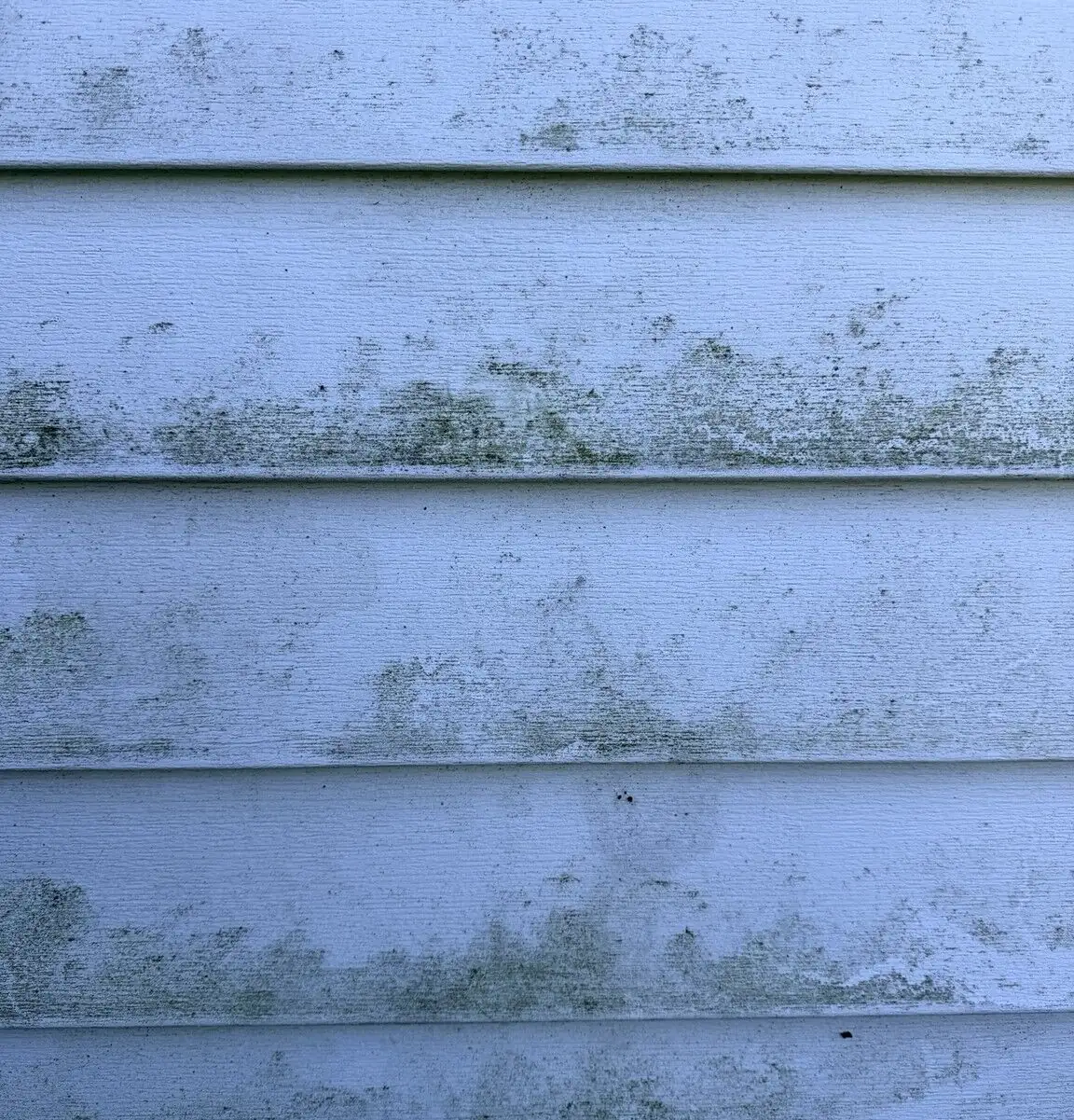
The green that creeps up the bottom of Lynden siding is not dirt. It is living growth, algae and mildew for the most part, and it comes back faster than people expect on the walls that stay damp longest. Rinsing it off with a hose does almost nothing. Blasting it with a pressure washer takes it off along with some of the finish, and pushes water somewhere you do not want it.
What works is a soft wash: a cleaning solution that kills and loosens the growth, applied at low pressure and rinsed off gently. The complication in this town is the rinse, because Lynden’s code has an opinion about where it may go.
What grows on Lynden siding, and where?
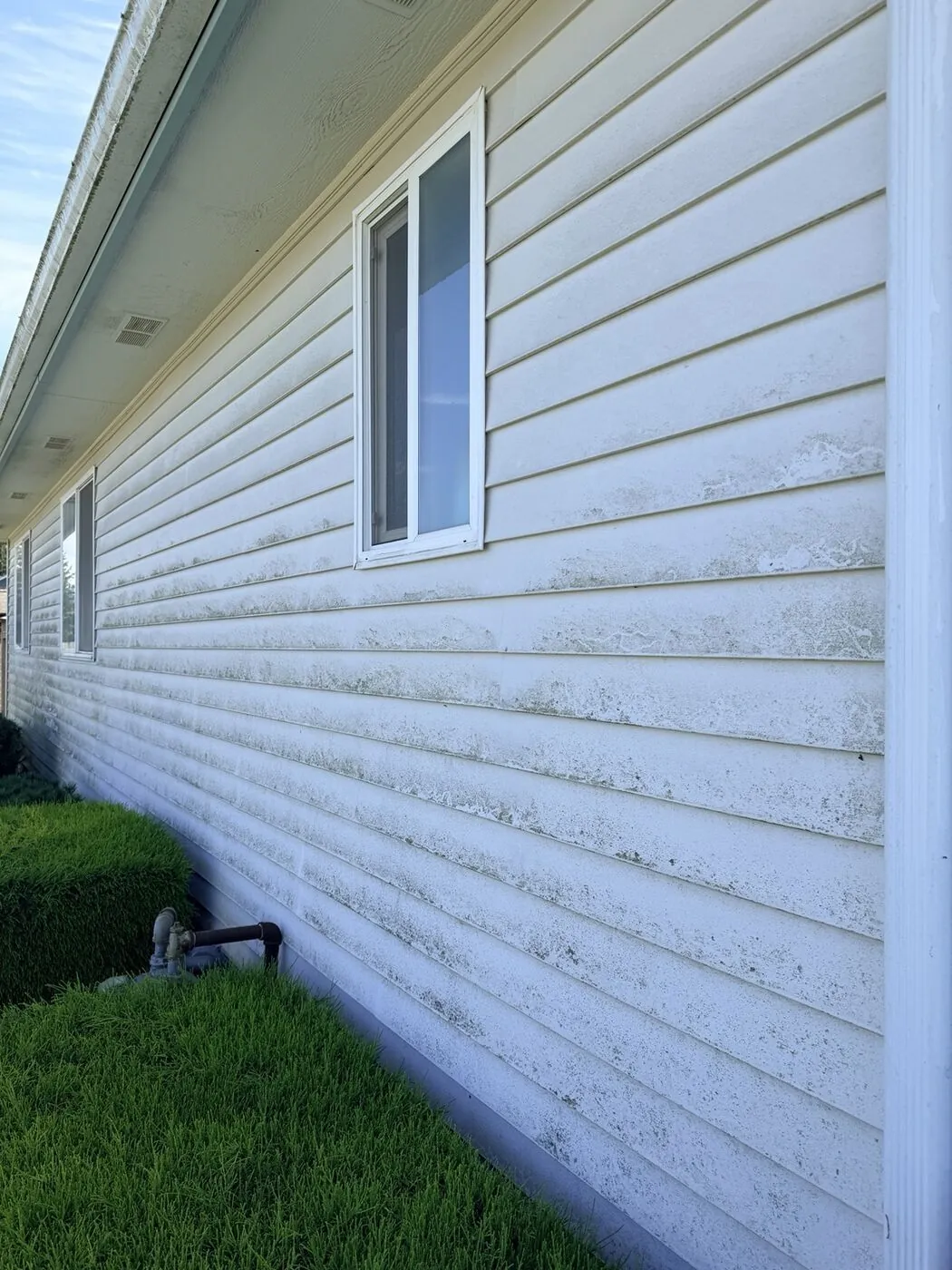
Mostly green organic growth, and mostly in two places. The first is the lower courses of each wall, the first few boards above the ground, where rain splashes back off beds, lawn and paths and keeps the siding wet long after the rest of the wall has dried. The second is any side of the house that gets little or no direct sun, whether a north wall, a wall shaded by a neighbour’s house, or one tucked behind a hedge.
Both have the same cause: time spent wet. The Clearbrook cooperative station, the nearest long-record weather station to Lynden, averages 46.71 inches of precipitation a year, most of it in the autumn and winter. A wall that never properly dries between October and spring gives growth months of uninterrupted damp to settle in. The pattern on shaded elevations specifically is covered on our north-facing wall mildew page.
What did the Lynden job in August 2026 look like?
It looked like the textbook case. In August 2026 we soft washed a Lynden home’s white lap siding where green growth had taken hold on the lower courses and along a shaded side wall. Those are the two places a splash zone and a shade line predict, and the house followed the prediction closely.
The before and after photographs were taken on the day and are in our gallery. White siding shows growth more than most colours do, but it also shows the result more plainly, and those photos are a fair picture of what a soft wash does to that kind of growth.
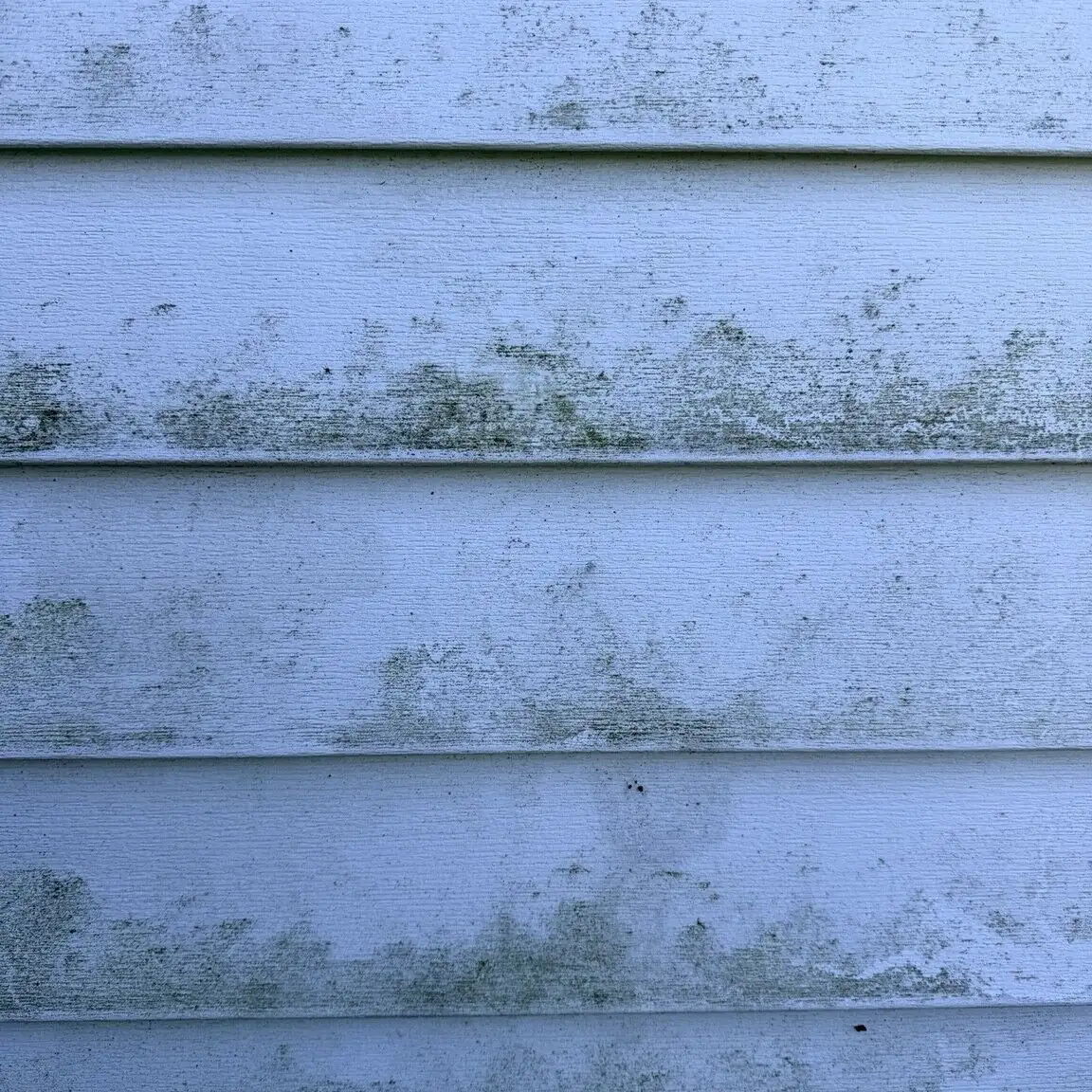 Before
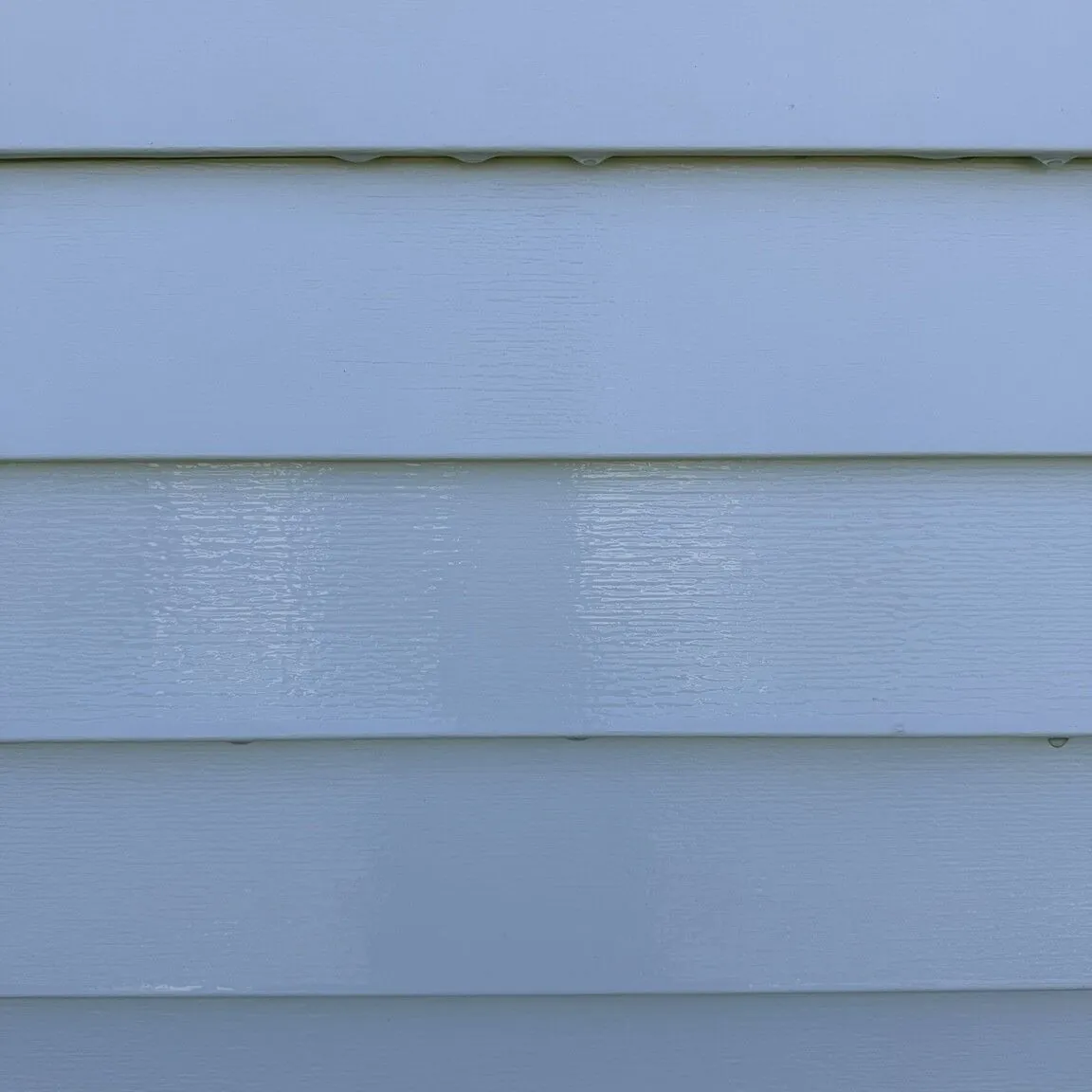 After
Why soft wash rather than pressure wash?
Because the growth is alive and rooted into the surface texture, and pressure alone does not kill it. A high-pressure jet strips what it can reach and leaves the rest to regrow, while also doing things to the house you would rather it did not:
- It can force water up and behind lapped siding, into the wall cavity
- It can scar or fur the surface of painted wood and strip weakened paint
- It can crack or dislodge older vinyl and loosen trim
- It can drive water past window seals and into vents
- It sends a fine spray of loosened growth across windows and neighbouring surfaces
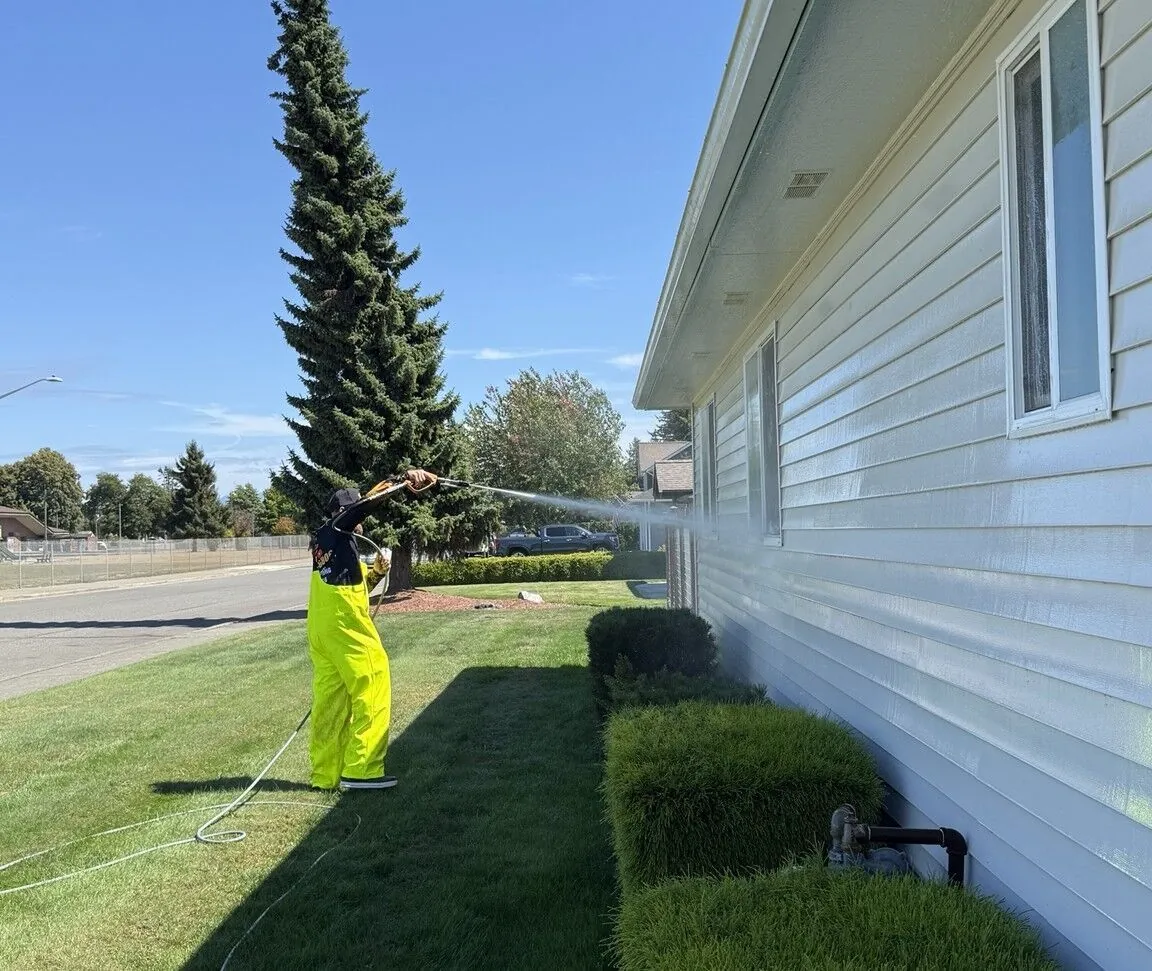
A soft wash reaches the whole surface at a pressure closer to a garden hose, gives the solution a few minutes to work, and then rinses. On vinyl, the most forgiving common siding, it is still the right approach, for reasons covered in the vinyl siding profile.
What is included in a house wash?
The standard wash covers every accessible wall of the house:
- Beds, shrubs and lawn along the walls pre-wetted before any solution goes on
- Vents, outlets and light fittings checked and protected where needed
- Solution applied from the bottom of each wall up, so it does not streak
- Dwell time for the solution to break down the growth
- A low-pressure rinse from the top down, with planting rinsed again
- Soffits, fascia and the outside of the gutters included where they are washable
- A walk round with you at the end, in daylight
Decks, driveways, fences and outbuildings are quoted separately. Those black streaks on the outer face of the gutters come off with a dedicated treatment called gutter brightening, which we can add to the same visit.
What does Lynden’s code say about wash water?
It says two things that need to be read together. Section 13.24.160(C)(4) of the Lynden Municipal Code lists routine external building wash-down as a conditional discharge to the storm system, permitted only when no detergents are used. Section 13.24.160(A), meanwhile, lists illicit discharges, and item 15 on that list is soaps, detergents or ammonia. Item 14 is steam-cleaning wastes.
The practical reading is simple. Plain water rinsed off a building is tolerated. Water carrying a cleaning solution is not allowed into the storm system at all. And the city’s own stormwater page asks residents to clean up debris before and after pressure washing, which applies equally to what a wash loosens from a wall.
How do you keep the rinse out of the storm drains?
By deciding where it goes before the first wall gets wet. Most of what enters Lynden’s storm drains flows to Fishtrap Creek and then the Nooksack River, so a wash that runs across a driveway and into the gutter at the kerb is not just untidy; it breaks the rule above.
On the quote, we look at which way each wall drains. Where lawn or planting sits below the siding, the rinse goes into the ground, which is where it belongs. Where a wall stands over paving that slopes to the street, we change how that section is washed and rinsed so the water is taken up before it reaches a drain, and where that is genuinely not achievable, we tell you on the quote instead of finding out on the day. Loosened growth and grit get swept up afterward. Our wash water and storm drain page describes the approach across all our work.
Does an older Lynden house need a different wash?
Often it does. Lynden’s housing is mostly young, with about 45 percent of its 6,210 units built in 2000 or later, but the census still counts 483 homes from 1939 or earlier and 410 from the 1950s. Those older houses are more likely to carry painted wood, several generations of paint, or original trim, and every one of those takes a gentler wash than a factory-finished panel.
On an older house we test a small area first, use a milder mix, and pay closer attention to paint that is chalking or lifting. Washing cannot restore a failing finish, and a firm spray can make it worse, so if paint is coming away we point it out before we start rather than after.
What drives the price here?
The quote is per house and reflects:
- Wall area and height, since a two-storey house has more of both to cover
- Siding type and age, with older painted wood taking more care and time
- How much growth there is, and how long it has had to establish
- Drainage, meaning how much of the house sits over paving that slopes to a drain
- Access past fences, decks, tight side yards and dense planting
- Add-ons such as gutter faces, a detached garage or the windows
When is the right time to wash a Lynden house?
The dry end of the year. Nearby records show July as the driest month by a wide margin, and a wash done between late spring and early autumn dries properly, lets us judge the result in good light, and gives the siding a clean start before the wet season. Washing in freezing weather is off the table, because the solution does not work well and the rinse can ice on paths.
If you are also having the windows done, book them to follow the wash on the same visit, as described on the Lynden window cleaning page.
How can I slow the growth coming back?
Mostly by giving the wall a chance to dry. The growth we removed in August 2026 had settled on the lower courses and a shaded wall, the spots siding stays wet longest, and the same logic works in reverse: shorten the wet spells and regrowth slows.
A few changes make a real difference on most Lynden houses:
- Trim shrubs and hedges back so there is a hand’s width or more of air between planting and siding
- Keep bark and soil in beds a little below the bottom board, so splash has further to travel
- Point sprinkler heads away from the walls, since summer irrigation keeps the lower courses damp in the one season they should be drying
- Make sure the gutters are carrying water away rather than spilling it down the face of the wall, which our Lynden gutter page covers in detail
- Rinse the bottom of a shaded wall with plain water now and then through the summer, before new growth gets a foothold
None of this replaces a wash on a wall that has already gone green. It does stretch the time between washes, sometimes considerably, and it costs nothing.
How do I book a wash?
Call (360) 303-6806 or send a request online. We will come out, walk the walls with you, show you where the growth is heaviest and which way each side drains, and give you a price for that house. Whoever arrives to do the work has been trained by the owner in exactly this method, pre-wetting and rinse control included. The rest of what we do in town, and how it fits together, is on the Lynden overview page.
House washing questions from Lynden homeowners
- What is soft washing?
- A low-pressure wash where a cleaning solution does the work, applied and then rinsed at roughly garden-hose force. It kills and lifts the growth rather than blasting it off, which is why it does not drive water behind siding or etch the surface the way a narrow high-pressure jet can.
- Is soft washing safe for my plants?
- We wet beds and shrubs down before any solution goes on the wall, keep them wet while we work, and rinse them again afterward. Anything especially delicate we cover or ask you about on the quote, so there are no surprises in the garden a week later.
- How long does a clean Lynden wall stay clean?
- It depends mostly on shade and splash. An open, sunny elevation can go several years between washes, while a shaded side wall or the bottom courses above a planted bed may green again sooner. Keeping beds trimmed back from the siding helps more than anything else.
- Can you wash my house with detergent in Lynden?
- Yes, as long as the rinse stays out of the storm system. The city allows detergent-free wash-down into the system but lists soaps and detergents as illicit discharges, so we plan where the water goes, send it to lawn and beds, and keep it off pavement that drains to the street.
- Do you wash the windows at the same time?
- A house wash rinses the glass along with the walls, but it does not leave it clean enough to look through happily. If you want clear windows, book the window cleaning to follow the wash on the same visit so the glass is done last.
- What siding can you wash?
- Vinyl, fibre cement, painted wood, and most factory-finished products. Older painted boards are handled more gently, and anything flaking, chalking badly or soft underfoot is pointed out before we start, because washing will not fix a failing finish.
- Can I see what a finished Lynden wash looks like?
- Yes. The before and after photographs from the August 2026 Lynden job, white lap siding with green growth on the lower courses and a shaded side wall, are in the site gallery. We are also happy to show you a test patch on your own wall before the whole house is done.