
Whatcom County
Exterior Cleaning in Sudden Valley, WA
The short answer
We clean windows, gutters, roofs and siding across Sudden Valley, the unincorporated community on Lake Whatcom. The detail that shapes every job here is water: the lake that Sudden Valley's storm drains feed is also where its tap water comes from, so rinse water is planned and contained before anything is applied.

Randy Fee — Owner, King of Kings Window Cleaning
Washington business licence, UBI 605476674 · L&I insured · BBB rated A
Randy runs the company himself, so you are dealing with the owner, not a call centre — and every technician here is personally trained by him. Working Whatcom and Skagit County since 2024.
We run the Sudden Valley route on a regular rotation.
Sudden Valley is a lake community before it is anything else. Close to three thousand homes sit beside Lake Whatcom here, most of them lived in by the people who own them, and the water that runs off their roofs, gutters and driveways is headed for the same lake that fills their kitchen taps.
That single fact shapes how we clean a house in Sudden Valley more than the siding, the roofing or the age of the glass does. It is why this page, and the four service pages that sit under it, spend as much time on where the rinse goes as on what comes off the walls.
What is the housing like in Sudden Valley?
Mostly detached houses, mostly owner-occupied, built in two clear bursts. Census estimates count 2,671 of Sudden Valley’s 2,985 housing units as detached single-family homes, roughly 89%, and record no mobile homes at all. About 93% of occupied homes are lived in by their owners, which matters to us: the person booking the work is usually the person who will still be looking up at that roof a decade from now.
The building history shows plainly in the numbers:
- Development began after Sudden Valley Inc. bought 1,200 acres in 1968, and the community association took control in December 1976.
- The 1970s alone produced 993 of today’s homes.
- A second wave between 2000 and 2009 added 844 more.
- Only 105 have gone up since 2010.
The median year built is 1991, but that figure sits in the gap between two peaks rather than describing a typical house. For exterior cleaning the split is useful. A first-wave home is now around fifty years old, and it may or may not be wearing a replacement roof, replacement windows and siding that has been painted several times; the only way to know is to stand in front of it. A home from the 2000s is usually on its first or second round of most exterior materials, and the conversation tends to be about keeping things in shape rather than bringing them back.
Why does Lake Whatcom change how the work is done?
Because the lake is the water supply. The Lake Whatcom Water and Sewer District draws from Basin 3 of the lake to serve Sudden Valley, Geneva and parts of North Shore and South Bay. Across all its users, the lake provides drinking water to more than 120,000 people, which Whatcom County puts at about half of everyone living in the county.
The lake also carries a documented water-quality problem. Washington placed it on the state’s 303(d) list of polluted waters in 1998 after it failed the dissolved-oxygen standard, and it now sits under a cleanup plan, a TMDL, for phosphorus and bacteria. Whatcom County describes the Sudden Valley Community Association as the largest development anywhere in the watershed, and the county is building stormwater improvements inside Sudden Valley specifically to reduce the phosphorus reaching the lake.
Put those facts side by side and the careless habits of this trade look different. Gutter sludge tipped into a ditch, a soft-wash rinse left to run down the driveway, a mossy path hosed toward the nearest grate: each is a small delivery of organic matter, and possibly cleaning solution, into a lake people drink from and that is already short of oxygen. On a Sudden Valley property we decide where every gallon of rinse is going before a single surface gets wet.
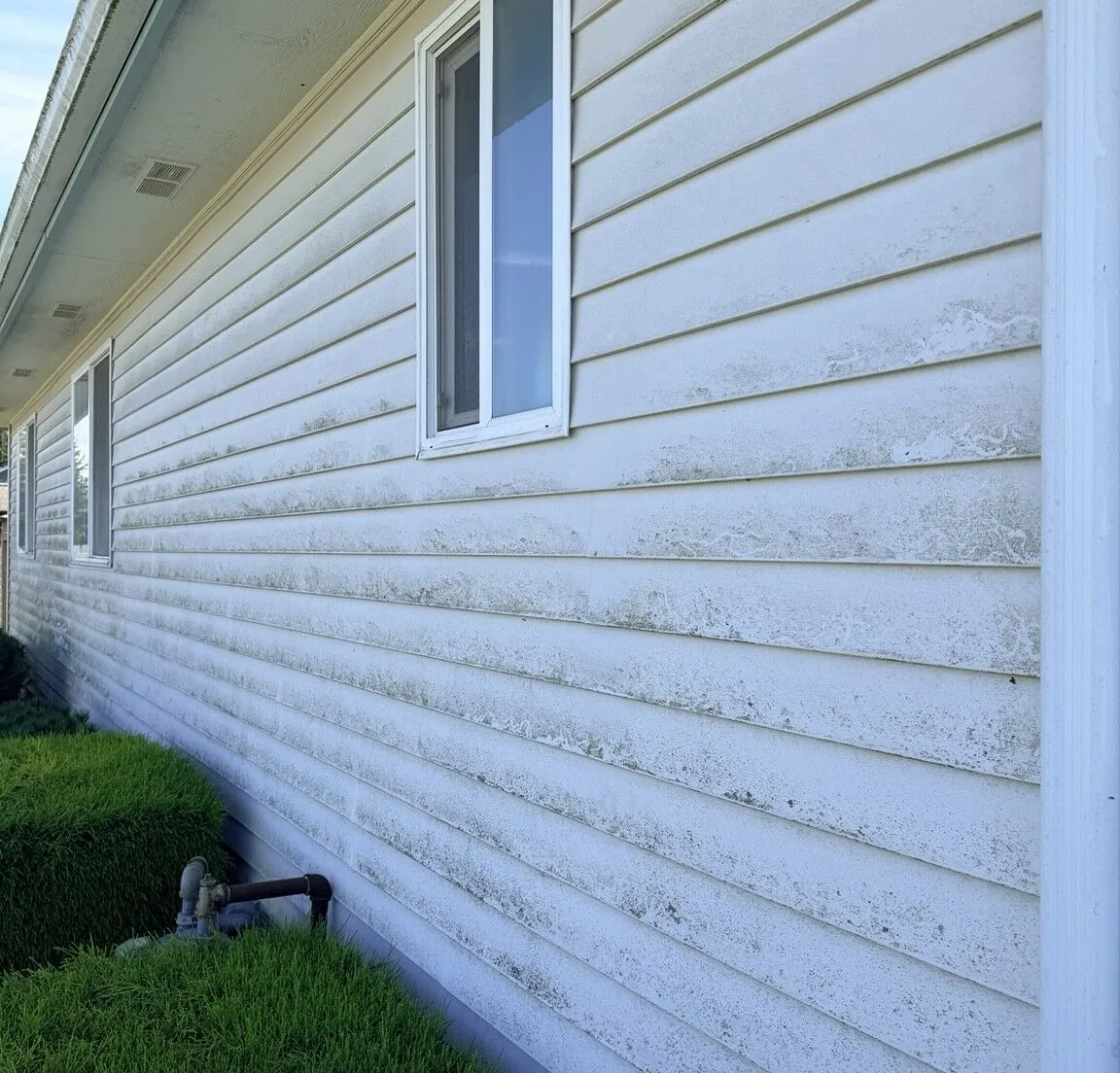 Before
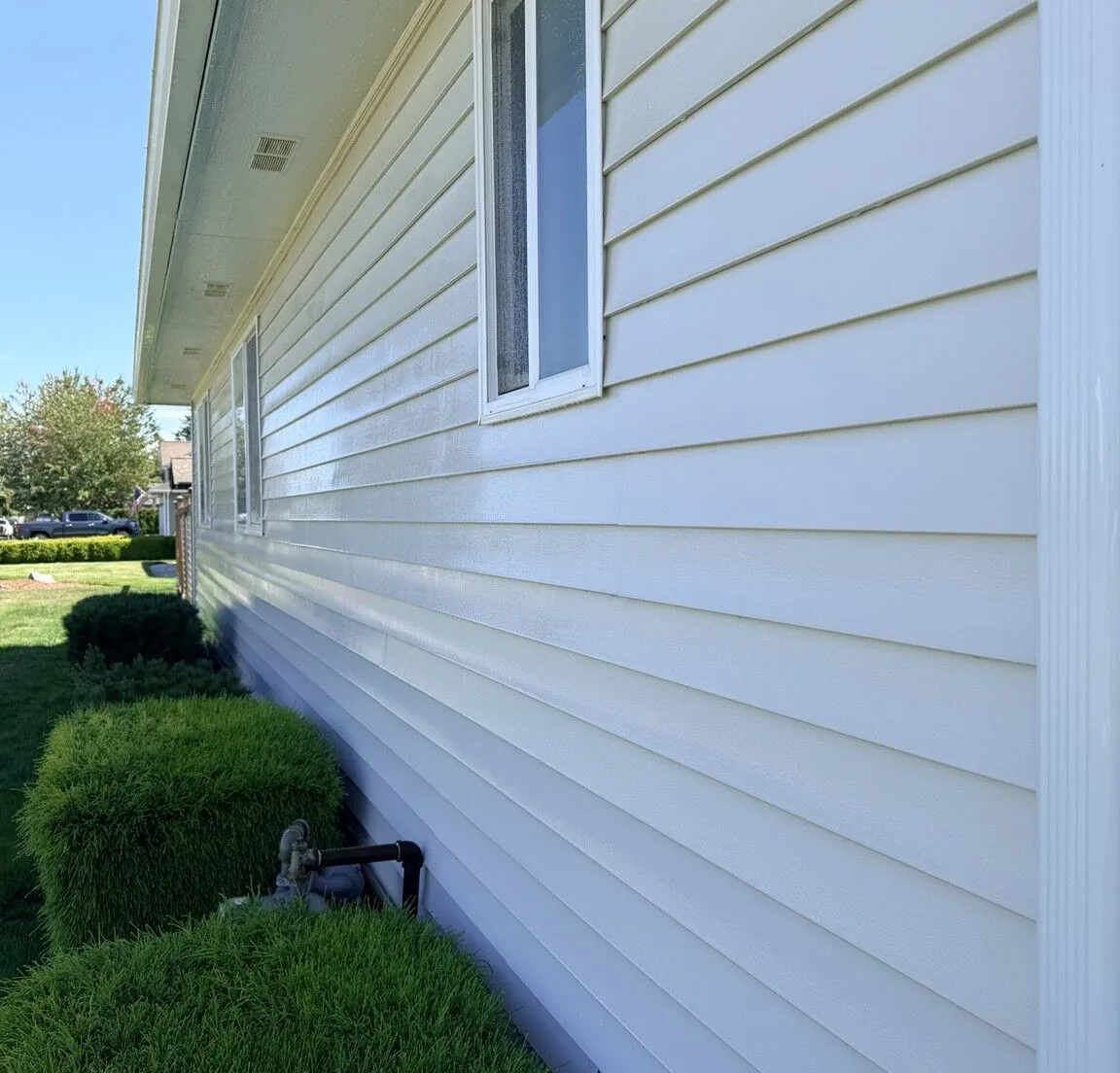 After
What does tree cover do to houses here?
It keeps them damp, and it keeps them supplied with debris. A good many Sudden Valley homes sit under a canopy, and a roof in shade dries slowly after rain, which is exactly the condition moss and algae need to settle in. The same trees drop needles, twigs and cones into the gutters over the whole year instead of in one tidy autumn fall.
Elsewhere the usual answer is to take a tree down or limb it back hard. Inside the Lake Whatcom watershed that is not a casual call: Whatcom County requires a Tree Removal Permit to remove any tree on a watershed lot, unless the removal is part of an approved development. For most owners the practical plan is to keep the canopy and clean on a schedule that matches it. We can tell you what that schedule looks like for your house. Whether a particular tree can come down is a question for the county, and we will not pretend otherwise.
How do we handle gutter cleaning in Sudden Valley?
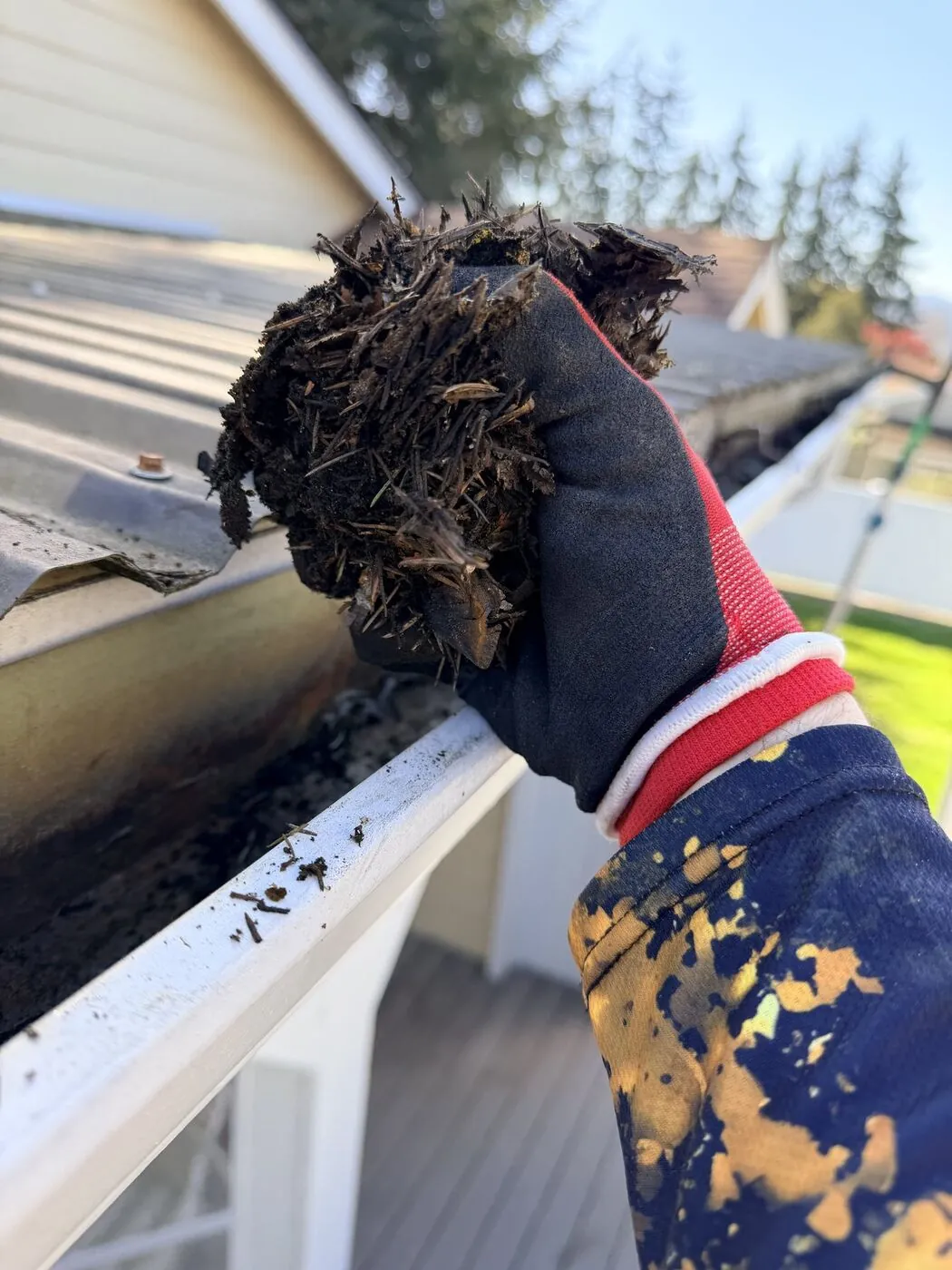
By hand, with the debris bagged and hauled off rather than dumped at the foot of the downspout. Under trees, a gutter here can fill faster than the calendar suggests, and a wet mat of needles lying flat in the trough is invisible from the lawn. We clear each run, confirm that every downspout actually drains, and tell you if the water is leaving the pipe somewhere it should not. The details, including how often a shaded lot usually needs a visit, are on the gutter cleaning page for Sudden Valley.
How do we clean roofs in Sudden Valley?
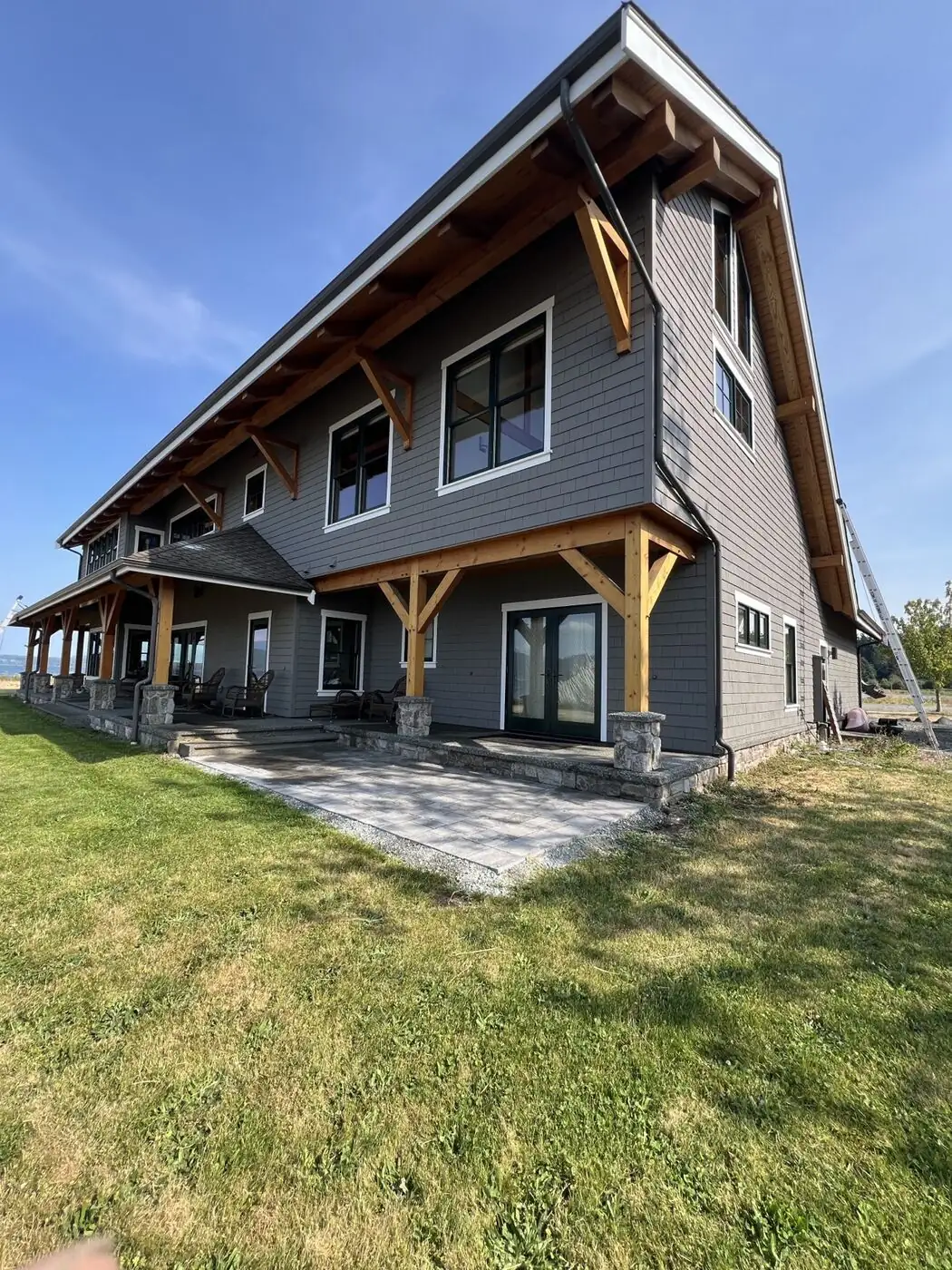
Low pressure, a solution matched to the roofing material, and a rinse plan that keeps runoff off the drainage system. Shaded roofs grow moss and the black streaking caused by algae, and both are treated rather than blasted; a pressure washer strips granules from composition shingle and splinters cedar. Dead moss then weathers away over the following weeks. The roof is the largest surface on the house and it empties straight into the gutters, so it is where watershed care matters most. The Sudden Valley roof cleaning page explains how we handle it.
What does house washing involve here?
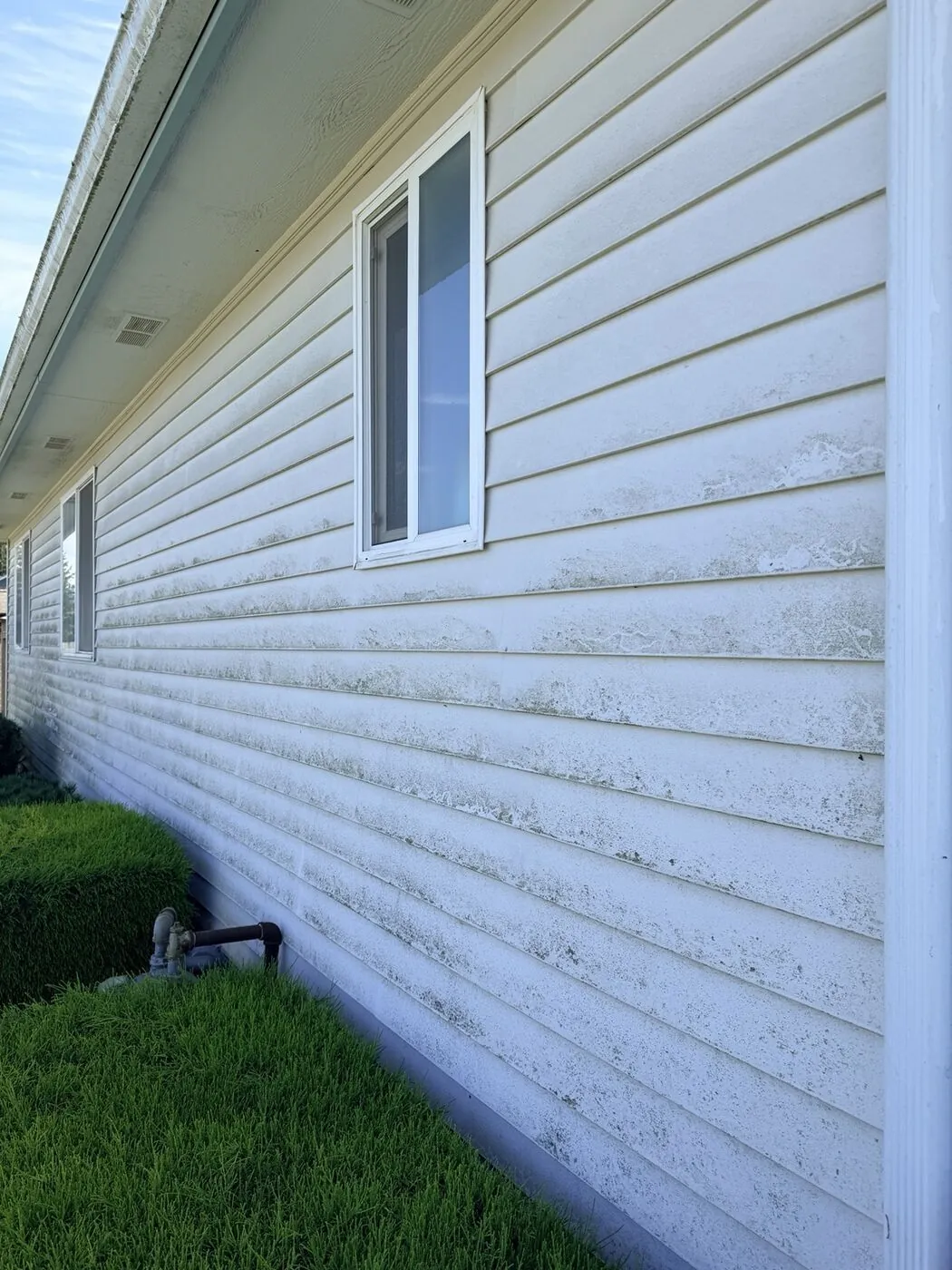
A soft wash that lifts green film from shaded walls without forcing water behind the siding laps. A fifty-year-old house and a twenty-year-old one may carry very different cladding, and the solution strength, dwell time and rinse all change with it. The house washing page for Sudden Valley sets out what the job includes and what the county expects to happen to the wash water afterwards.
What about window cleaning?
Inside and out, with screens, tracks and sills included, and purified water on the upper glass so it dries without spotting. Nobody has published a verified hardness figure for the district’s supply, so we carry our own filtered water rather than depending on your outside tap. If the house looks toward the lake or the golf course, point out the windows that face the view; those are the ones worth a second look at the final walk-round. More on the Sudden Valley window cleaning page.
Which runoff rules apply in Sudden Valley?
Whatcom County’s, because Sudden Valley is unincorporated. The City of Bellingham’s stormwater chapter does not reach here, whatever the mailing address suggests. The county’s own guidance on pressure washing and car washing cites WCC 16.36.050 and is plain about the expectation: collect the wash water and keep it out of storm drains and waterways. Sudden Valley is also one of the areas named inside the county’s NPDES Phase II municipal stormwater permit area, the permit under which the county manages its drainage system.
The watershed layers more on top. Under WCC 16.32.050, commercial lawn fertiliser containing any phosphorus at all may not be used on residential lawns in the Lake Whatcom watershed, which gives a fair sense of how seriously phosphorus is taken. Ground-disturbing work in the watershed is limited to June 1 through September 30. Cleaning does not dig, but if a gutter visit turns up a downspout that needs a new drain line, that window is worth knowing about before the repair gets scheduled.
On the ground, that becomes a short routine:
- Find the drain inlets near the work area and cover them before anything is applied.
- Steer rinse onto soil and planting instead of onto paving that runs to the road.
- Bag roof and gutter debris and take it away, never rake it into a ditch or the woods.
- Move rinse-heavy work to another day in a downpour, when runoff cannot be steered at all.
The wider reasoning, with the relevant codes quoted, is on the wash water and storm drains page.

Do I need to check with the community association first?
Possibly, and you are the person in a position to find out. Sudden Valley’s association has run the community since December 1976, but we have not been able to read its current rules, and we are not going to guess at them on a web page. If you want to be sure whether any part of the work needs sign-off, check the association’s rules or ask its office before you book. We are happy to plan around whatever answer comes back.
Which areas near Sudden Valley do we cover?
The rest of the Lake Whatcom shore as well. The district that supplies Sudden Valley from Basin 3 also serves Geneva and parts of North Shore and South Bay, and the approach described on this page applies to every one of those addresses. Bellingham has a page of its own, with a city code of its own. If you are not sure which side of a jurisdiction line your house falls on, ask when you call; working that out is part of the quote.
How do I book a visit in Sudden Valley?
Phone (360) 303-6806 or send a request through the contact page. Someone comes out, walks the house with you, sorts what is growth from what is debris and what is simply age, and prices the work in front of them. The visit costs nothing and commits you to nothing. Randy Fee owns the company and trains every person who works for it, and the business holds a Washington State business licence and Labor & Industries coverage.
Mention at the start that the house is in Sudden Valley. It changes how we plan for the water from the first minute.
What we do in Sudden Valley
Nearby
- Bellingham
- Geneva (served, no page of its own)
Sudden Valley questions
- Do you work in Sudden Valley?
- Yes. Sudden Valley is part of the route we run out of Bellingham, alongside Geneva and the rest of the Lake Whatcom shore. Windows, gutters, roofs and house washing are all available here, and each has its own page for this community.
- Why do you treat Sudden Valley differently from other addresses?
- Because the lake the storm drains lead toward is the lake the taps draw from. The water district serving Sudden Valley pulls from Basin 3 of Lake Whatcom, so every job is planned around keeping rinse water and debris out of the drainage system.
- Is Sudden Valley under Bellingham's stormwater code?
- No. Sudden Valley is unincorporated, so Whatcom County rules apply. The county's washing guidance cites WCC 16.36.050 and asks that wash water be collected and kept out of storm drains and waterways, which is how we plan the work.
- Do I need permission from the community association before you clean?
- We cannot answer that for you, because we have not been able to read the association's current rules. Check with the association directly if you want certainty. We will work around whatever it tells you.
- Can you cut back the trees that keep filling my gutters?
- We do not remove trees. On a Lake Whatcom watershed lot, Whatcom County requires a Tree Removal Permit to take down any tree unless it is part of an approved development, so that is a conversation with the county. Regular cleaning is what we offer instead.
- Can you do the roof, gutters, siding and windows in one visit?
- Often, yes. Roof first, then gutters, then the walls, then the glass, so nothing lands on a surface that has just been cleaned. One visit also means one containment setup for the rinse water instead of four.
- What does a quote involve?
- Somebody comes to the house, walks it with you and looks at each surface before naming a price. There is no charge and no obligation, and nothing is started until you have agreed what is included.