Wash Water and Storm Drains
The rule, in one paragraph
Whatcom and Skagit municipalities do not treat exterior wash water the same way. Ferndale's code expressly allows routine detergent-free building wash down. Bellingham's stormwater chapter carries no such allowance — its prohibition covers anything other than stormwater entering the system. Ten miles apart, two different jobs.
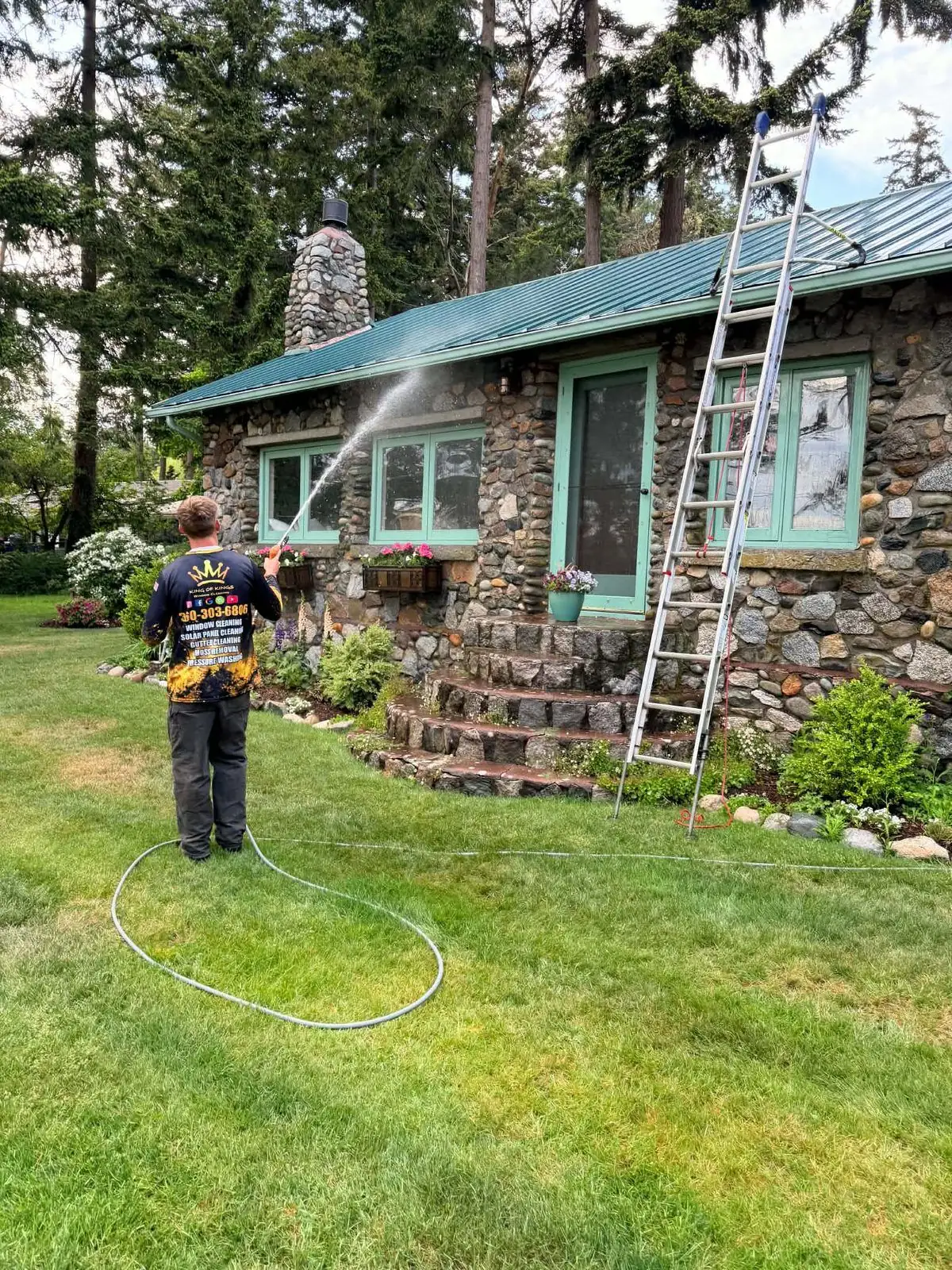
Most exterior cleaning companies in this region do not mention the stormwater codes at all, and on a lot of jobs it genuinely does not come up. It comes up on the ones where water runs somewhere it should not, and by then the conversation is with a municipality rather than with a contractor.
This page sets out what the two codes we work under most often actually say, with the sections cited so you can read them yourself.
The short version
Ferndale has an explicit allowance. FMC 13.35 is titled Water Quality – Prohibited Discharges, and subsection 13.35.020(B) lists allowable discharges. Item 4 covers “street and sidewalk wash water, water used to control dust, and routine external building wash down that does not use detergents.” That is a deliberate carve-out for exactly the kind of plain-water rinse an exterior cleaner does.
Bellingham has no equivalent. BMC 15.42 is the city’s stormwater management chapter, and 15.42.050(C)(2) prohibits any person from discharging — or allowing others under their control to discharge — into the stormwater drainage system or to surface and ground waters “any materials other than stormwater.” There is no allowable-discharge list in that section to fall back on.
Ten miles separate the two, and the compliant job is not the same job in both places.
What this changes on site
The practical consequence is about containment, not permission.
On a Ferndale property, a straightforward detergent-free rinse — a plain-water wash down of siding or hardscape — sits inside a written allowance. That is a genuinely useful thing to know, and it is worth confirming that what is planned actually is detergent-free, because the allowance ends the moment a cleaning solution enters the picture.
On a Bellingham property, and on any job anywhere involving chemistry, the work is planned around not discharging. In practice that means:
- Inlets in the work zone covered or bermed before anything is applied.
- Rinse directed to vegetation rather than to a drain, so it filters through soil instead of entering the system.
- Planting pre-wetted and rinsed, which both protects the plants and stops anything concentrating in one spot.
- Recovery rather than release where the job and the surface allow it.
- The sloping of the site read before starting, because a driveway that falls toward the street is a different problem from one that falls toward a lawn.
None of that is exotic and none of it is slow. It is the difference between a crew that has thought about where the water goes and a crew that has not.
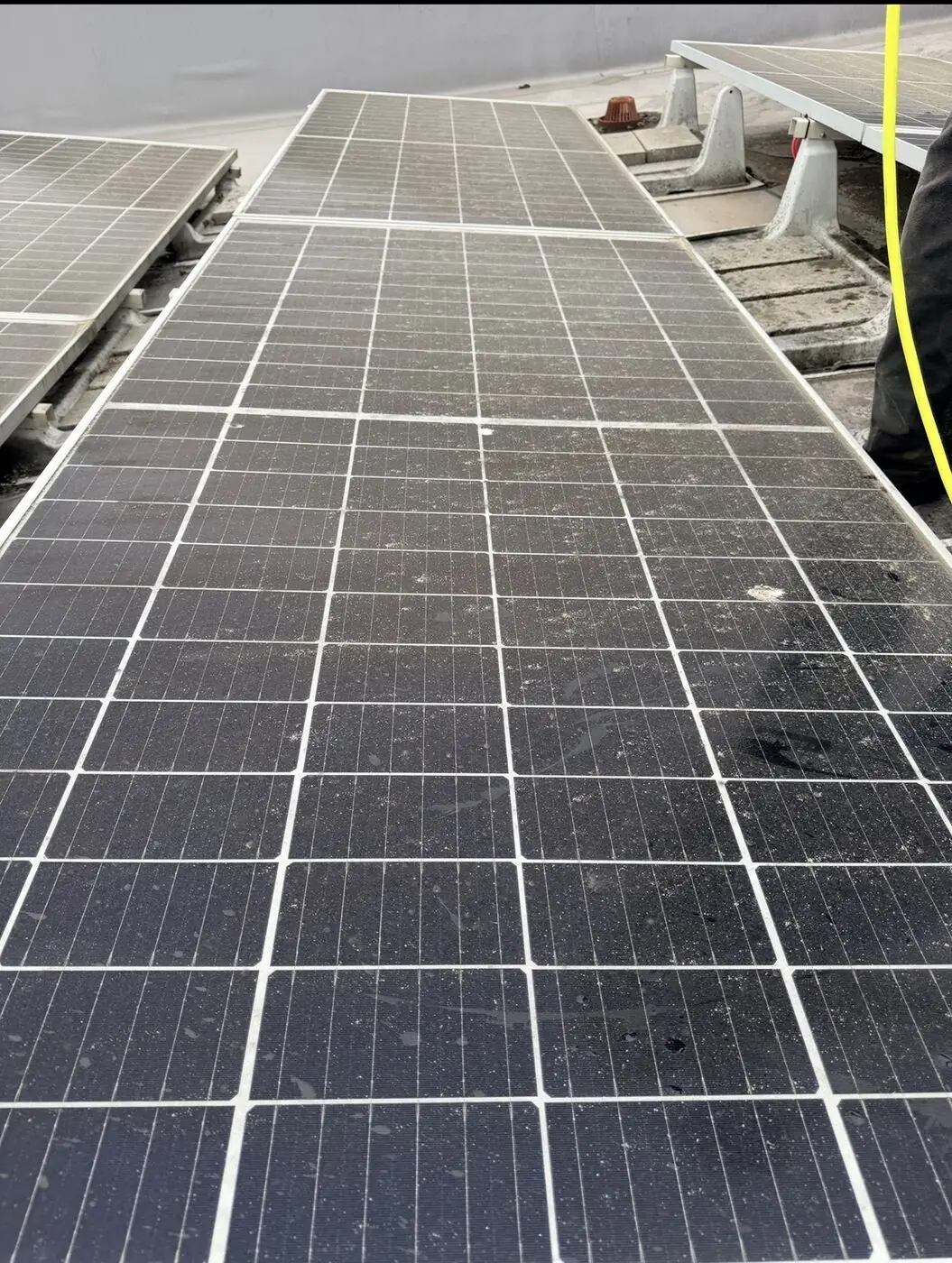 Before
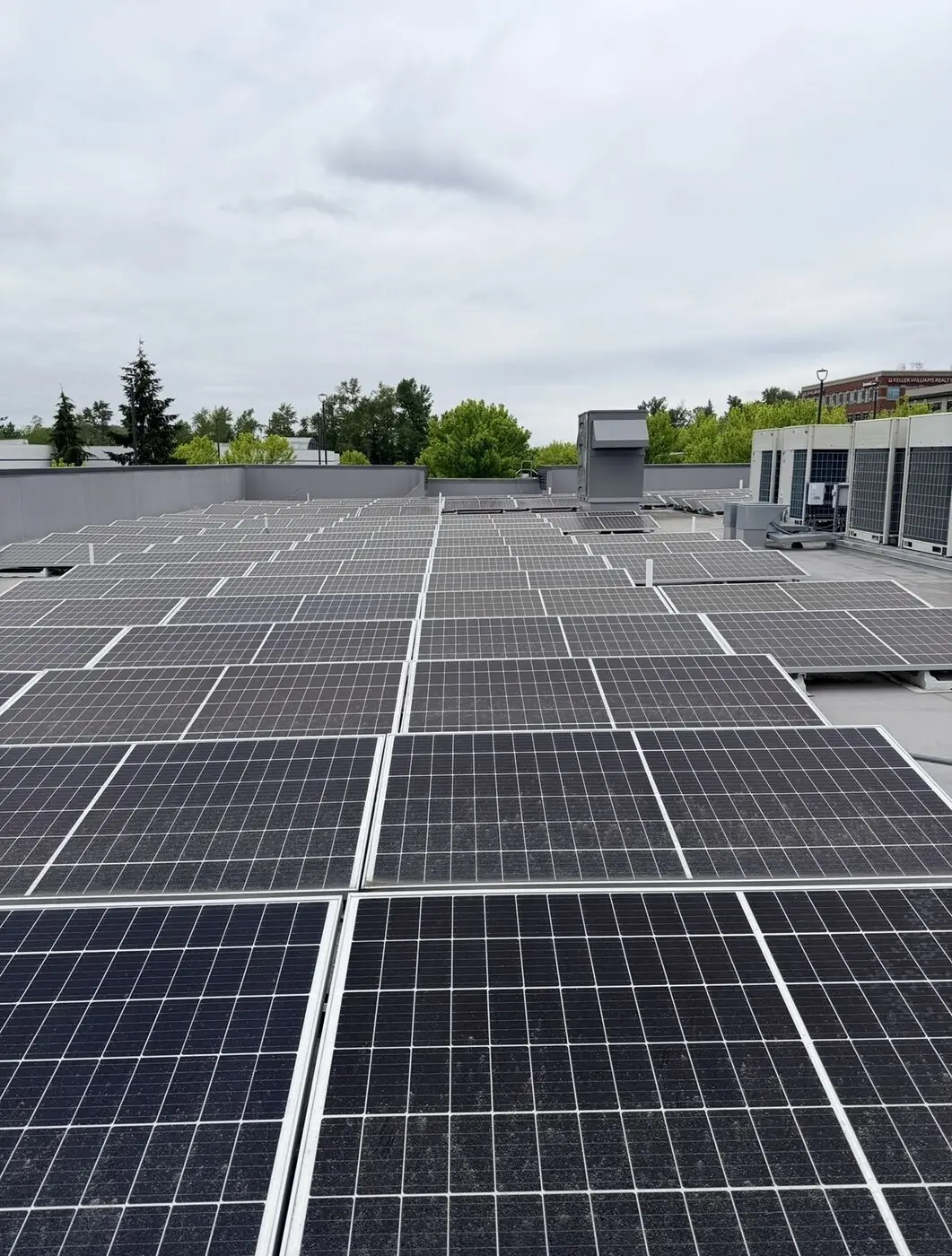 After
The Lake Whatcom watershed
Properties in the Lake Whatcom watershed — which includes Sudden Valley and a substantial part of the eastern side of Bellingham — carry protection beyond the city’s general stormwater provisions, because the lake is a drinking water source.
We treat watershed addresses as their own category when quoting rather than as ordinary Bellingham jobs. If a property is inside it, that is worth saying at the quote stage, because it shapes the method rather than the price.
Jurisdiction is not obvious from the address
This causes more confusion than the codes themselves.
A Ferndale mailing address does not establish that a property is inside Ferndale city limits. A great deal of what people describe as “Ferndale” or “Bellingham” is unincorporated Whatcom County, which is a separate regulatory regime again, and the boundaries are irregular around the edges of both cities.
Establishing which jurisdiction a property is actually in is part of quoting anything that produces runoff, and it is a question worth asking of any contractor who does not raise it themselves.
Who the rules apply to, and what they require
| Where the property is | What the code requires | What it means on a job |
|---|---|---|
| Ferndale city limits | FMC 13.35.020(B)(4) allows “routine external building wash down that does not use detergents” | A plain-water rinse sits inside a written allowance. Add a cleaning solution and it does not. |
| Ferndale, any job using chemistry | No allowance applies — the general prohibition governs | Containment, inlets covered, rinse directed to vegetation. |
| Bellingham city limits | BMC 15.42.050(C)(2) prohibits discharging anything other than stormwater to the system or to surface and ground water | No carve-out for wash down at all. Every job is planned around not discharging. |
| Lake Whatcom watershed | BMC 16.80 reservoir provisions apply on top of 15.42, targeting phosphorus under an Ecology TMDL response plan | Tighter again. Treated as its own quote category rather than an ordinary address. |
| Unincorporated Whatcom or Skagit County | Neither city code applies; county and state rules do | Jurisdiction established before quoting, because a mailing address is not a city limit. |
Penalties are set by each jurisdiction’s enforcement provisions rather than by this page, and enforcement in practice is complaint-driven. The liability is worth knowing regardless: it attaches to the property as well as to the contractor, so an illicit discharge at your address remains your problem after the crew has gone.
Why a cleaning contractor’s chemistry is a stormwater question
The codes above talk about discharge, not about products, so it is worth connecting the two.
Exterior cleaning in this region is mostly chemical rather than mechanical — that is the whole argument against pressure on a roof, on siding, on cedar. The solutions that do the work are effective precisely because they are biologically active, and the same property that kills moss on a north slope is the property that makes a release into surface water a real environmental event rather than a paperwork one.
Three things follow.
The rinse matters more than the application. What goes onto a roof is controlled and targeted. What comes off it, twenty minutes later, carries everything it dissolved and travels wherever the site slopes. The plan for the rinse is the compliance plan.
Dilution is not a defence, but volume genuinely changes the risk. A concentrated release at one point is a different event from a rinse spread across a lawn that filters through soil. Directing the water is the single most effective control available on a residential job.
Vegetation is the intended destination, and it needs preparing. Soil filters; a storm drain does not. That is why planting below a work area is pre-wetted before anything is applied and rinsed afterwards — a plant already saturated with clean water absorbs far less of whatever lands on it, and a lawn receiving a spread rinse handles it in a way a drain inlet never will.
Commercial and multi-unit sites raise the stakes
Everything above scales badly in the direction you would expect.
A commercial property or an apartment block has more hard surface, more inlets, and less soil for water to disappear into. Parking areas drain to the system by design. A site that was engineered to move water off it quickly is, by construction, a site with fewer places for a rinse to go.
Commercial work also tends to carry its own overlay: a property manager’s requirements, an HOA’s rules, a tenant’s lease obligations, and on some sites an industrial stormwater permit with conditions of its own. Those are contractual and regulatory layers sitting on top of the municipal code, not instead of it.
For scheduled commercial contracts this is settled once, at the start, rather than negotiated per visit — which is one of the practical arguments for a contract over a series of one-off calls.
What this page is and is not
It is a plain-language summary of two specific code sections as they read on the review date at the top of this page, written so a property owner can understand what governs work on their building and check it themselves. Every source is linked.
It is not legal advice, and it is not a substitute for reading the code or asking the municipality. Municipal codes are amended, section numbering changes, and a summary written in September is not automatically true in March. If a decision turns on this, read the current text at the links above or call the city.
What it is meant to demonstrate is simpler: that the question has been asked. An exterior cleaning contractor working across two counties and a dozen jurisdictions either knows which rules apply where, or is discovering it on your property.
Sources
- Ferndale Municipal Code 13.35 — Water Quality, Prohibited Discharges
- Bellingham Municipal Code 15.42 — Stormwater Management
- Bellingham Municipal Code 15.42.050 — General requirements
- Ferndale Municipal Code Title 13 — Public Utilities
Reviewed . Municipal codes are amended and section numbering changes. This is a plain-language summary, not legal advice — read the current text at the links above or call the city.
Questions about this
- Is it illegal to wash a house in Bellingham?
- No. What the code regulates is what reaches the storm drain, not whether you clean your building. BMC 15.42.050(C)(2) prohibits discharging into the stormwater system or to surface and ground water any material other than stormwater, and that section carries no allowable-discharge list. So the compliance question on a Bellingham job is about containment and where the water ends up, not about permission to do the work.
- Why can Ferndale do something Bellingham cannot?
- Because Ferndale wrote an allowance and Bellingham did not. FMC 13.35.020(B) lists allowable discharges, and item 4 covers "street and sidewalk wash water, water used to control dust, and routine external building wash down that does not use detergents." Different city, different council, different code. Municipal codes are not standardised across a county.
- Does that mean Ferndale jobs can just run the water down the drain?
- Only the ones that meet the wording. The allowance is specifically for wash down that does not use detergents — the moment a cleaning solution is involved, the job is outside that item and back under the general prohibition. A roof soft wash is not a detergent-free rinse.
- What about the Lake Whatcom watershed?
- It carries additional protection beyond the city's general stormwater rules, which is why properties around the lake and in Sudden Valley are treated as their own category on a quote rather than as ordinary Bellingham addresses. If you are inside the watershed, say so when you book.
- How is this actually handled on a job?
- Containment first: cover or berm the inlets in the work zone, control where the rinse runs, direct it to landscaping or a vegetated area that filters it rather than to a drain, and pre-wet and rinse planting so nothing concentrates. On a job with real chemistry, recovery rather than release.
- Does anyone actually enforce it?
- Enforcement is generally complaint-driven and the usual trigger is a visible discharge or a neighbour reporting one. That is a weak reason to comply and a poor one to rely on. The stronger reason is that the liability attaches to the property as well as the contractor, and an illicit discharge on your address is your problem after the crew has gone.
- Which municipality am I in?
- Worth establishing before the quote rather than after, because addresses near city limits are routinely misread. A Ferndale mailing address is not the same as being inside Ferndale city limits, and unincorporated Whatcom County is a third regime again. We check the jurisdiction as part of quoting anything with runoff.