
84 photographs · 11 jobs
Our Work, Photographed on the Day
What you are looking at
Photographs from real exterior cleaning jobs across Whatcom and Skagit County — windows, gutters, roofs, siding, concrete and solar panels. Each set is one property on one day, with the before and after shots kept together so the surface can be judged rather than taken on trust.
Before and after, same position
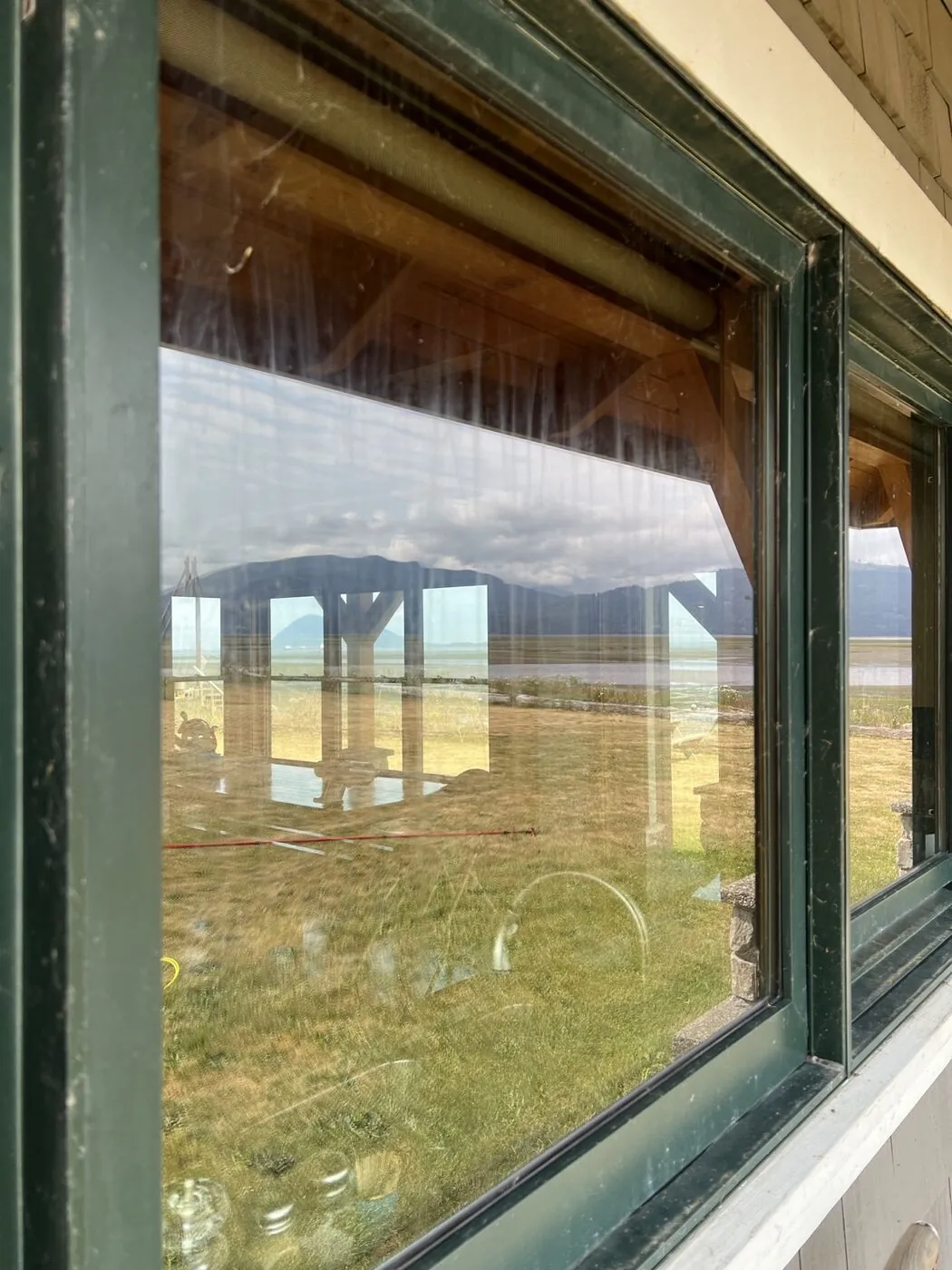 Before
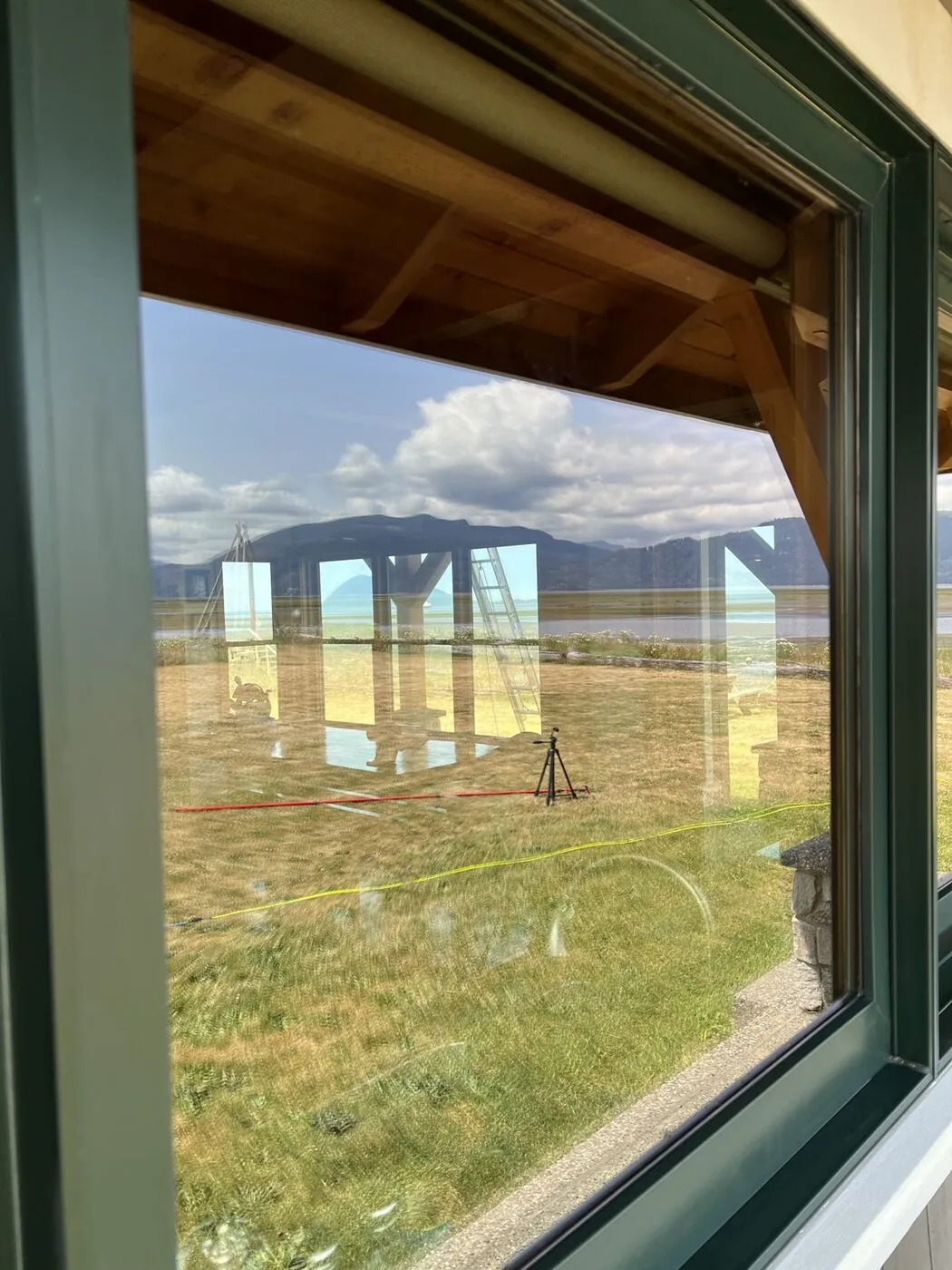 After
Waterfront window, Bow — Before. The streaking is mineral residue left behind as salt spray dries on the pane. 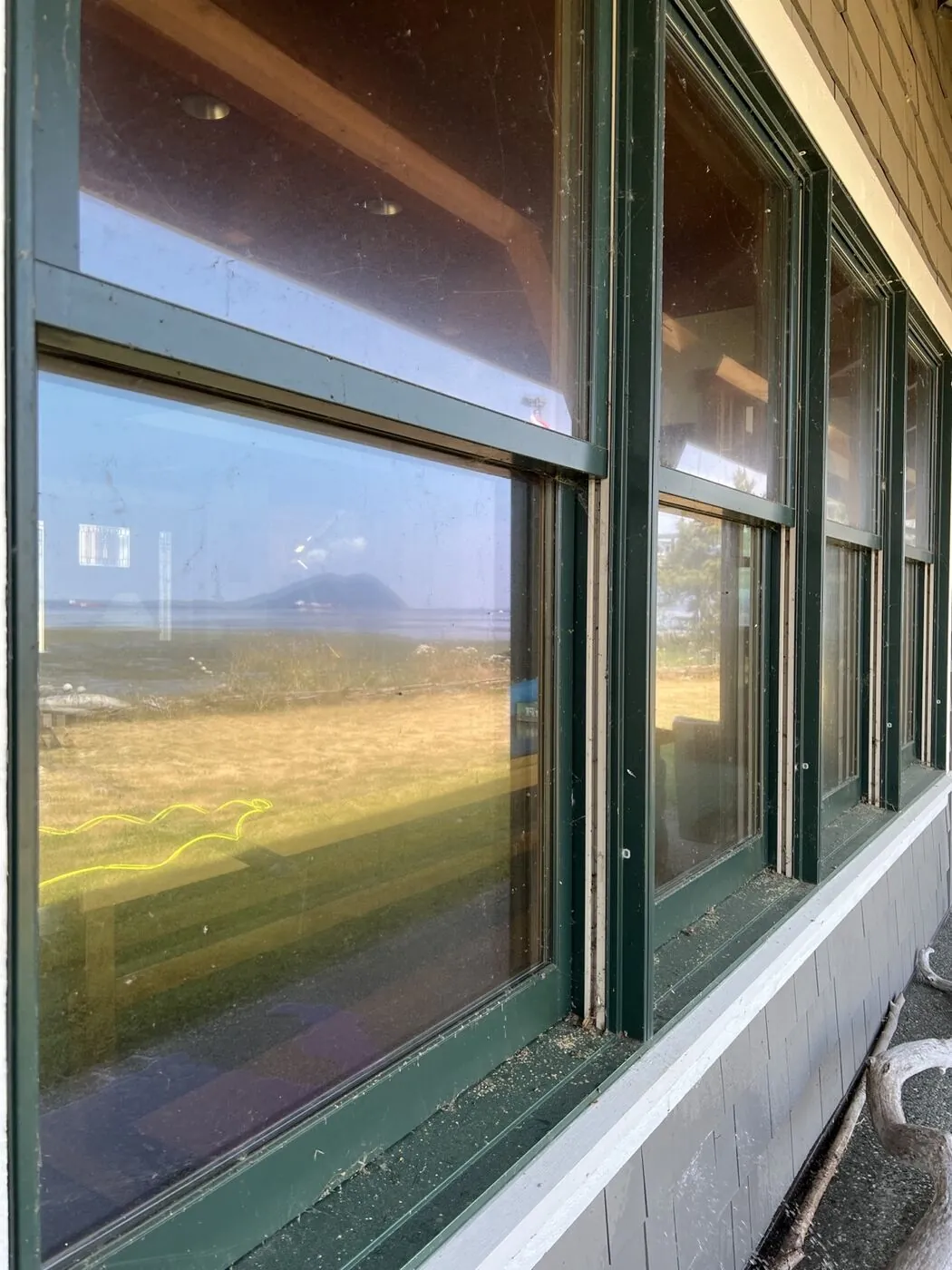 Before
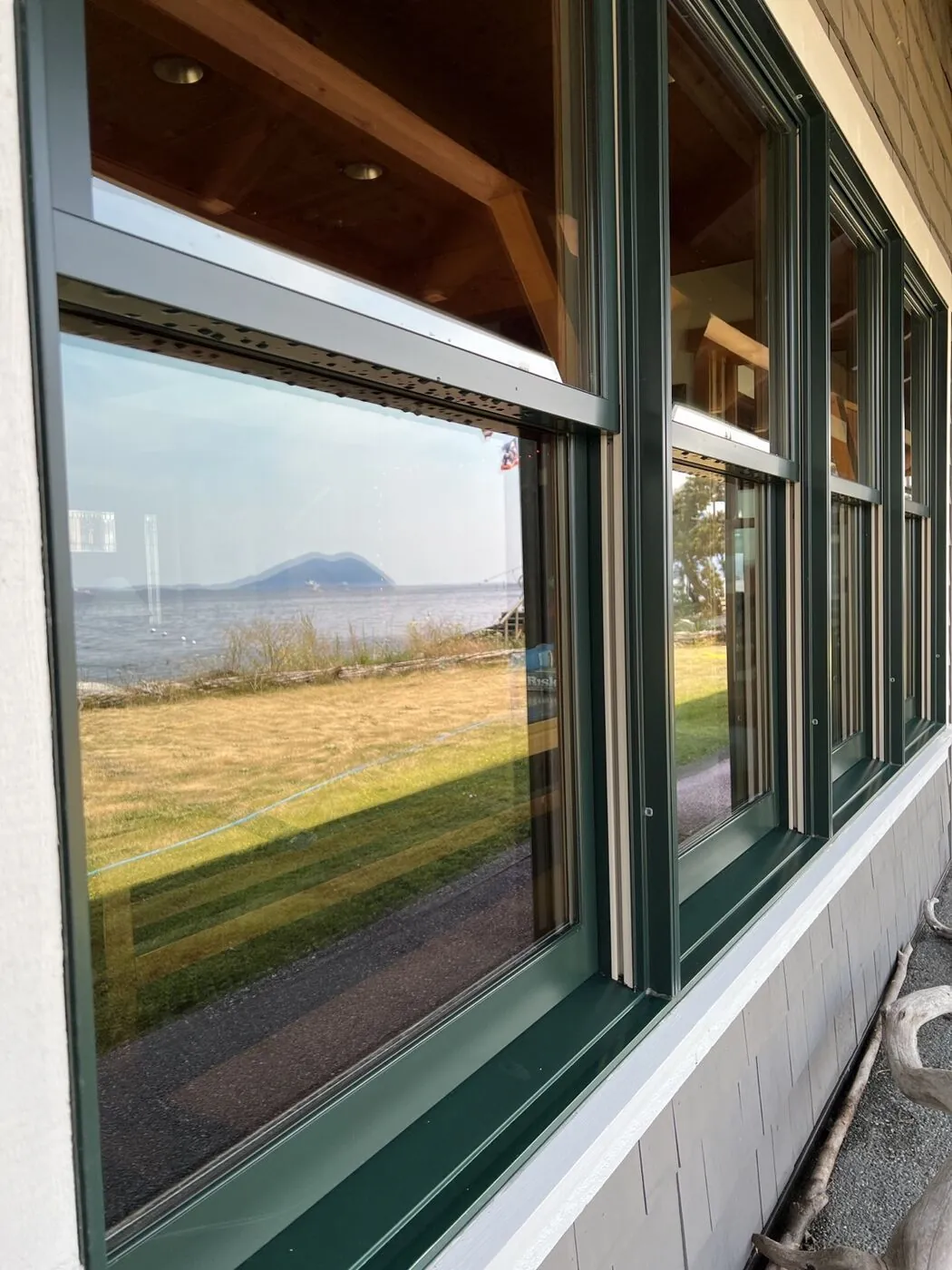 After
Window bank, Bow — Before. Salt haze does not rinse off in the rain — it has to be washed off, or it keeps dulling the view. 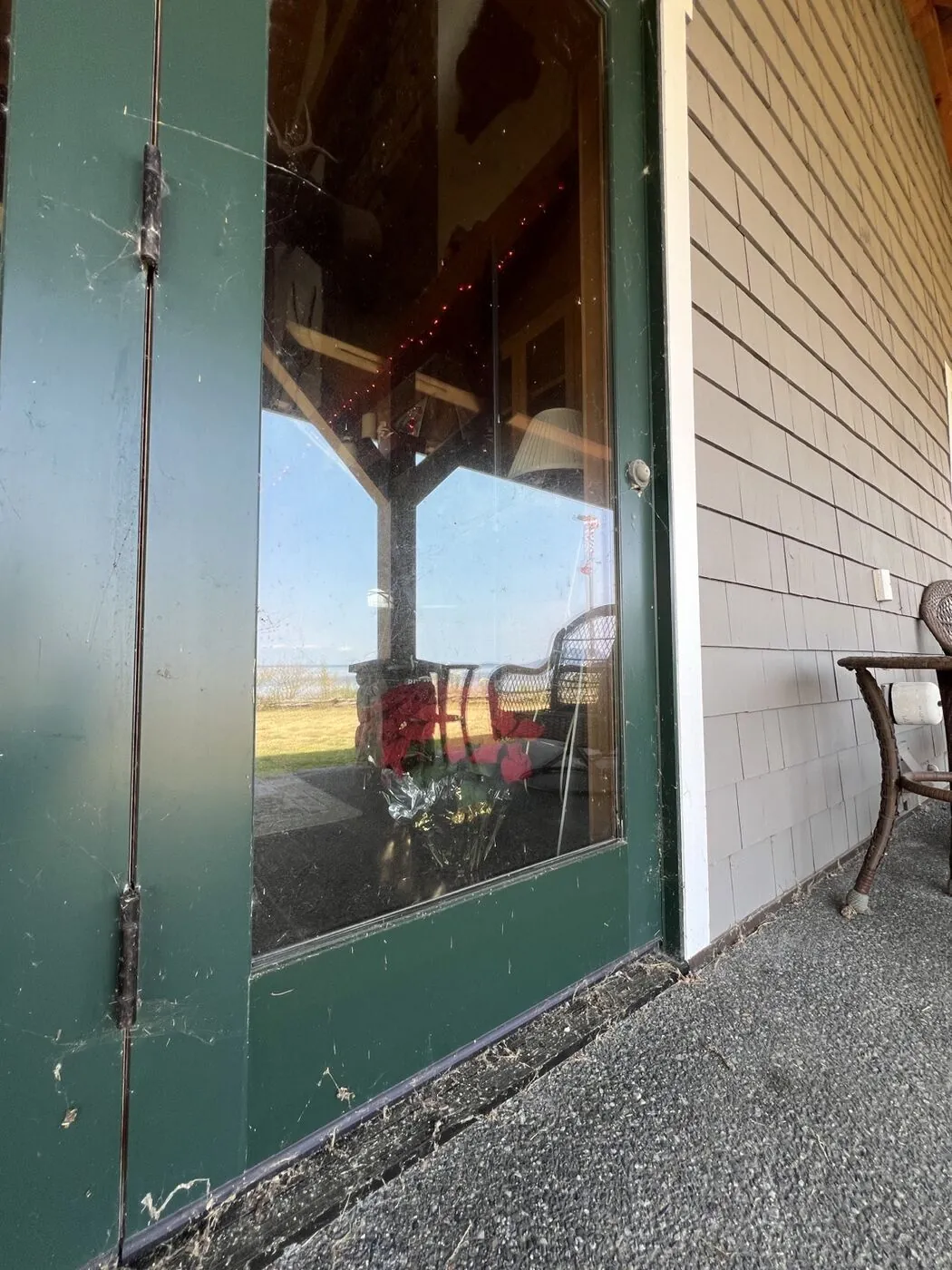 Before
 After
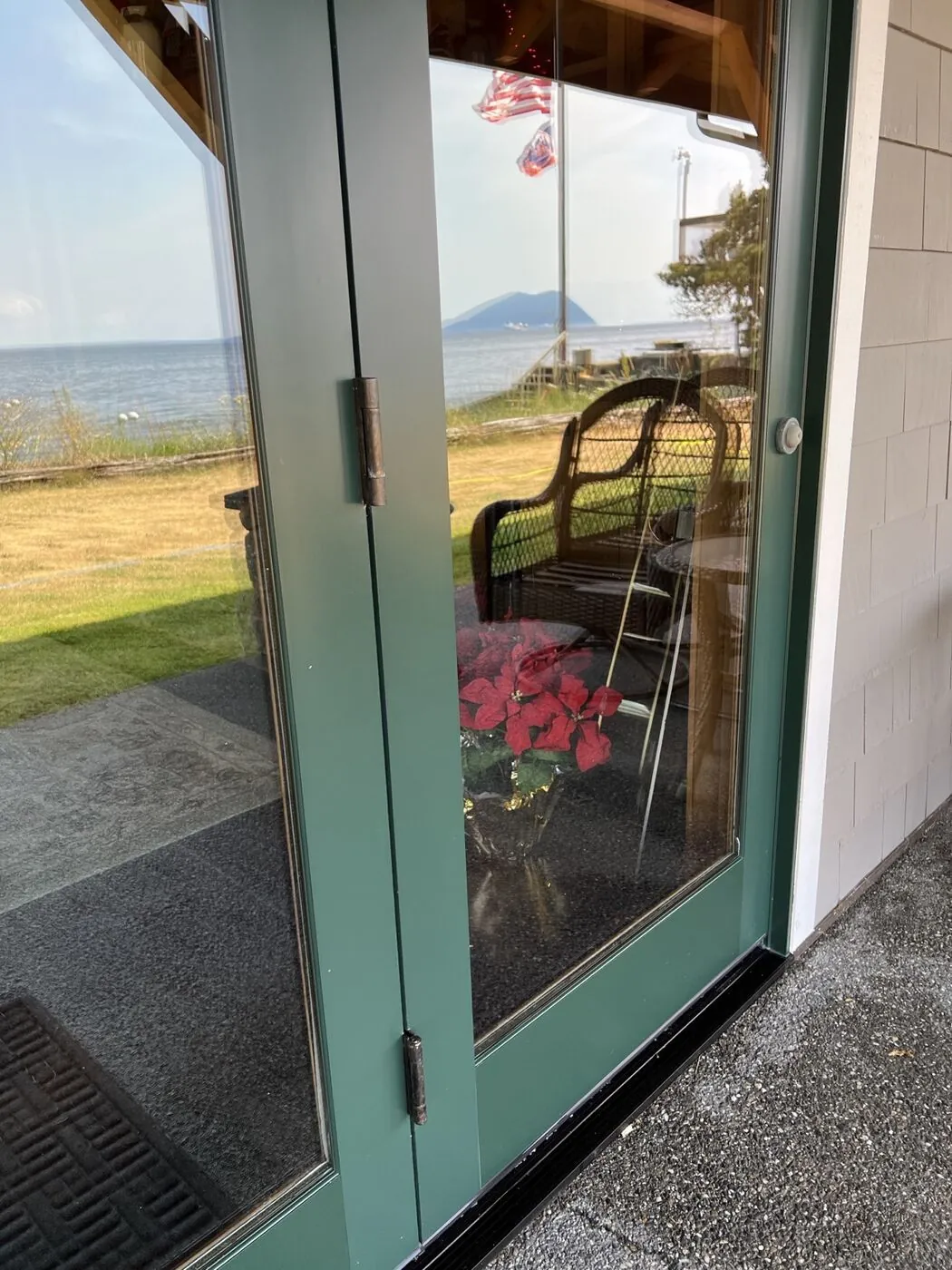
Glass door and frames, Bow — Before. Webs and debris collect in the frame channels, not only on the glass, which is why frames and tracks are part of the job. 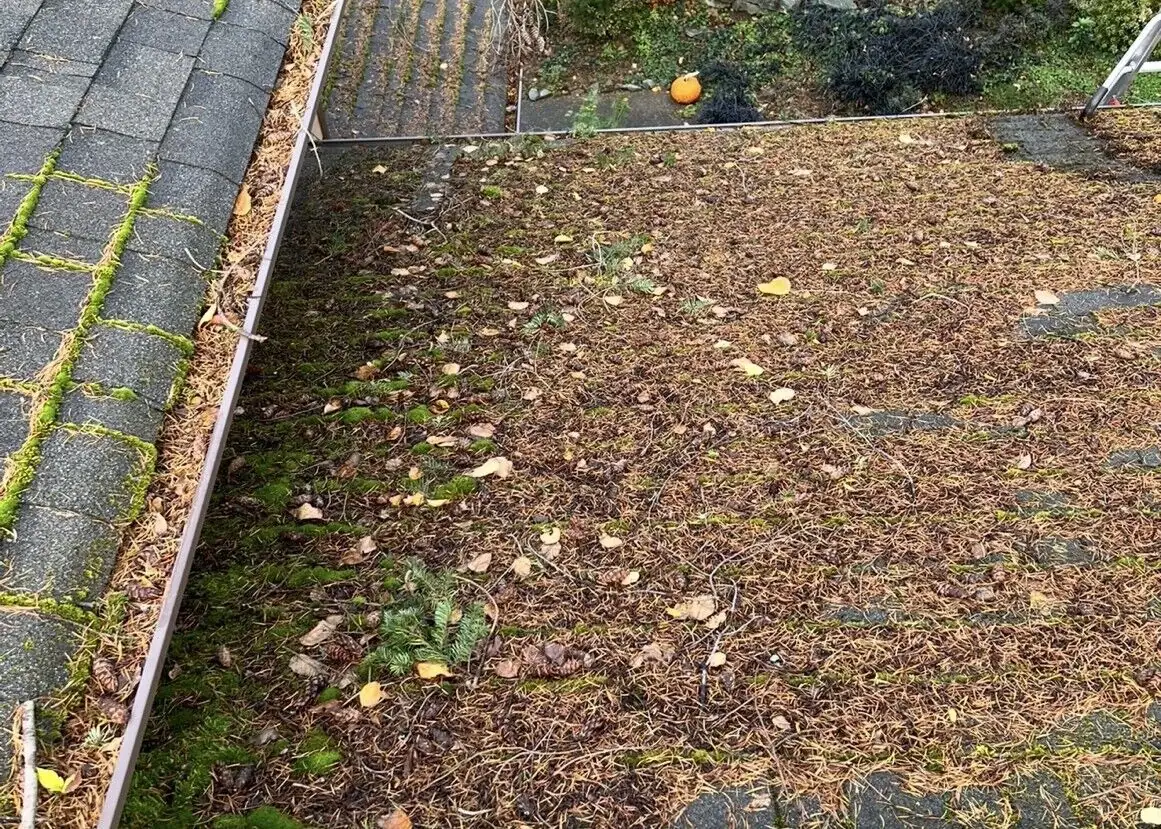 Before
 After
Roof edge and gutter, Sedro-Woolley — Before. A gutter in this state does not drip — it overflows at the back edge, behind the fascia. 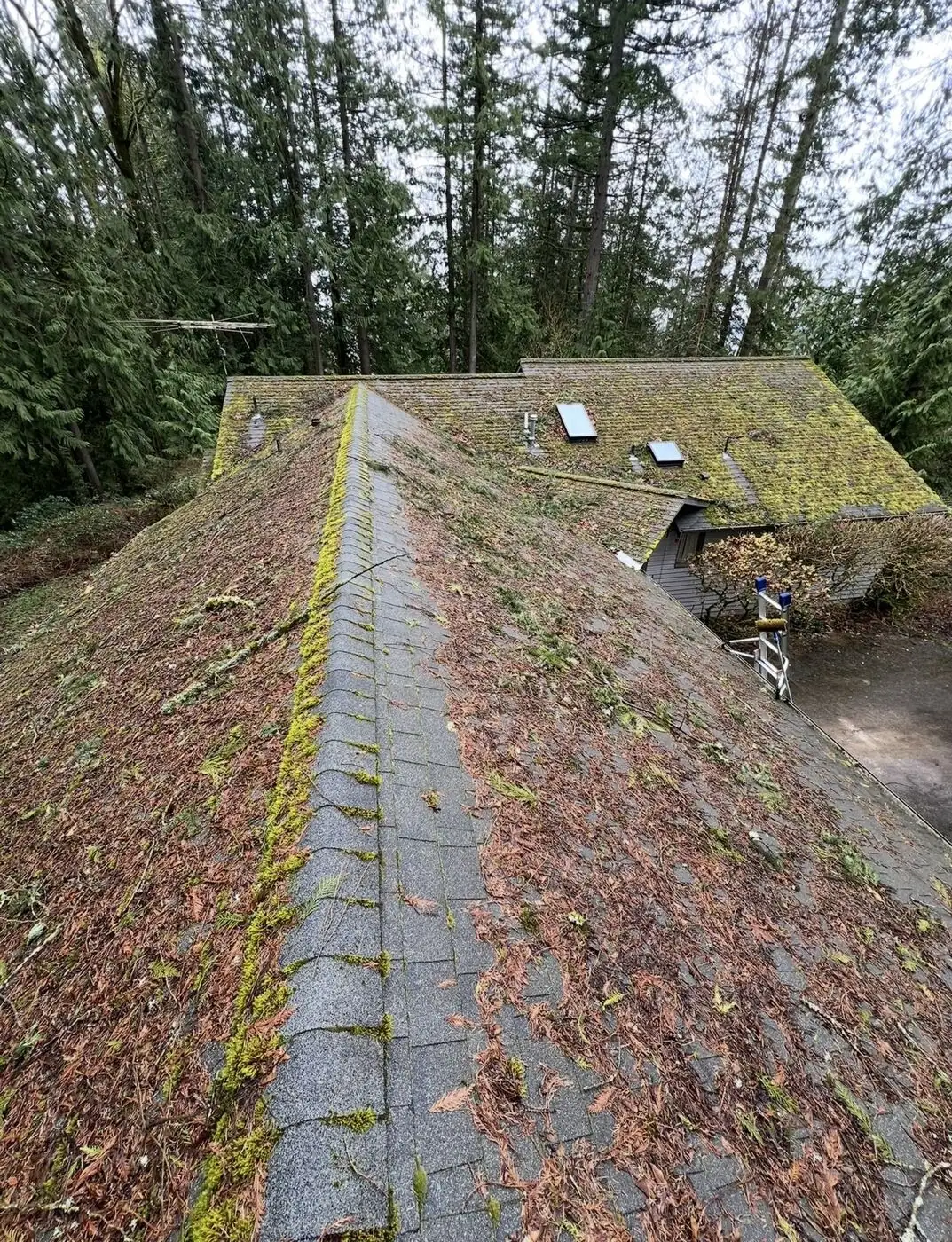 Before
 After
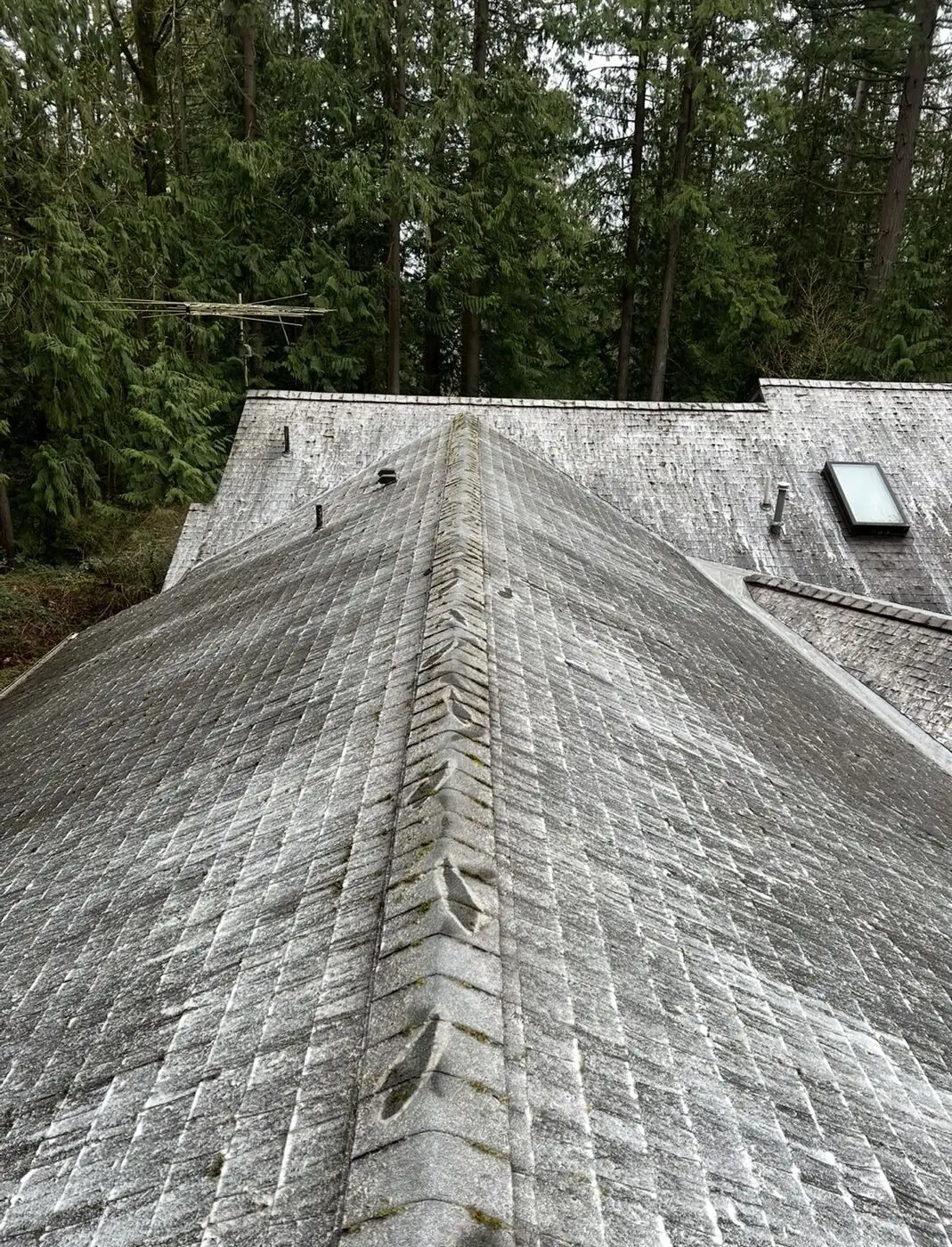
Roof moss, Sedro-Woolley — Before, Sedro-Woolley. This is what a shaded roof does under forest cover here. 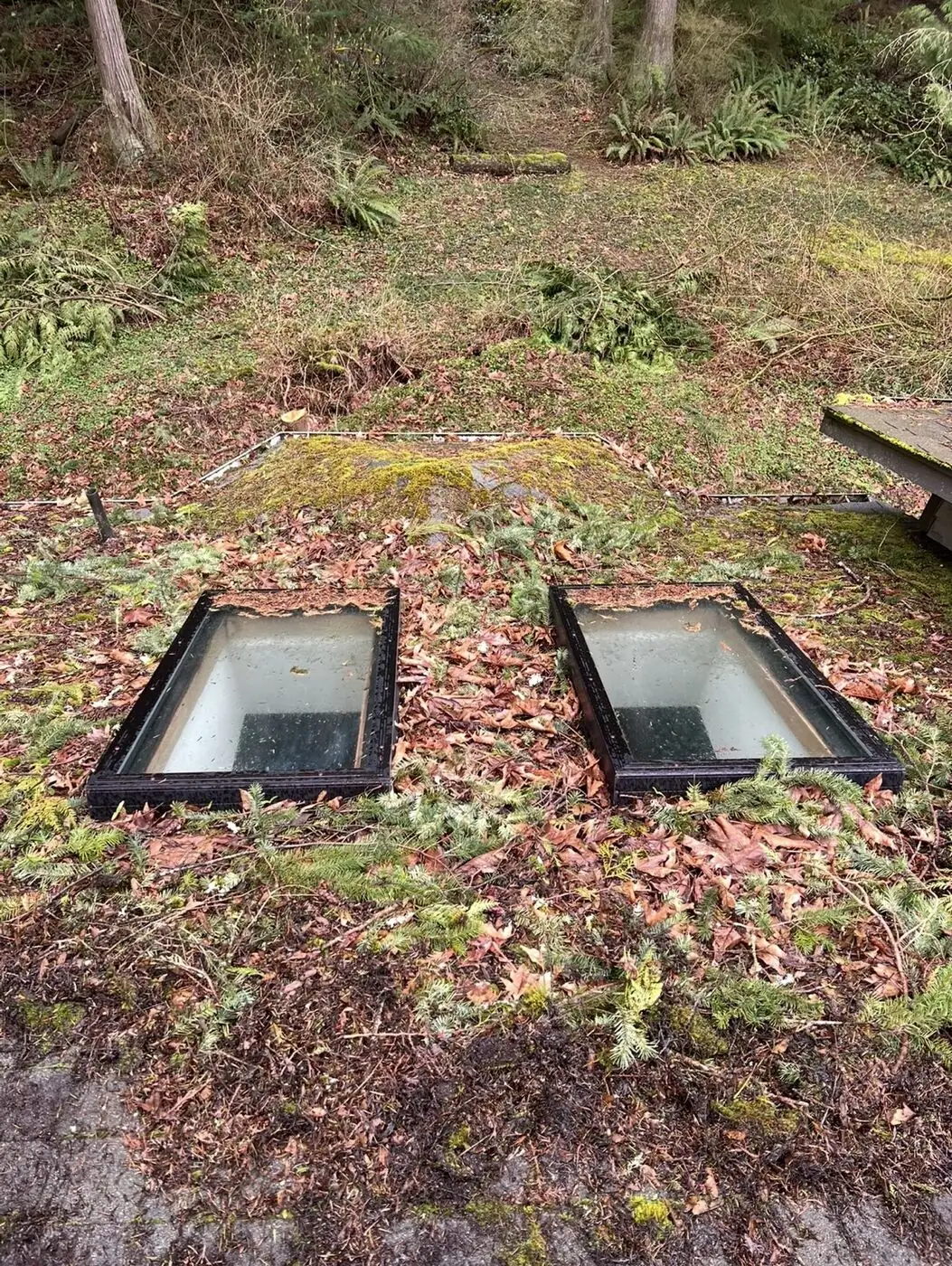 Before
 After
Buried skylights, Sedro-Woolley — Before. Both skylights are under there. 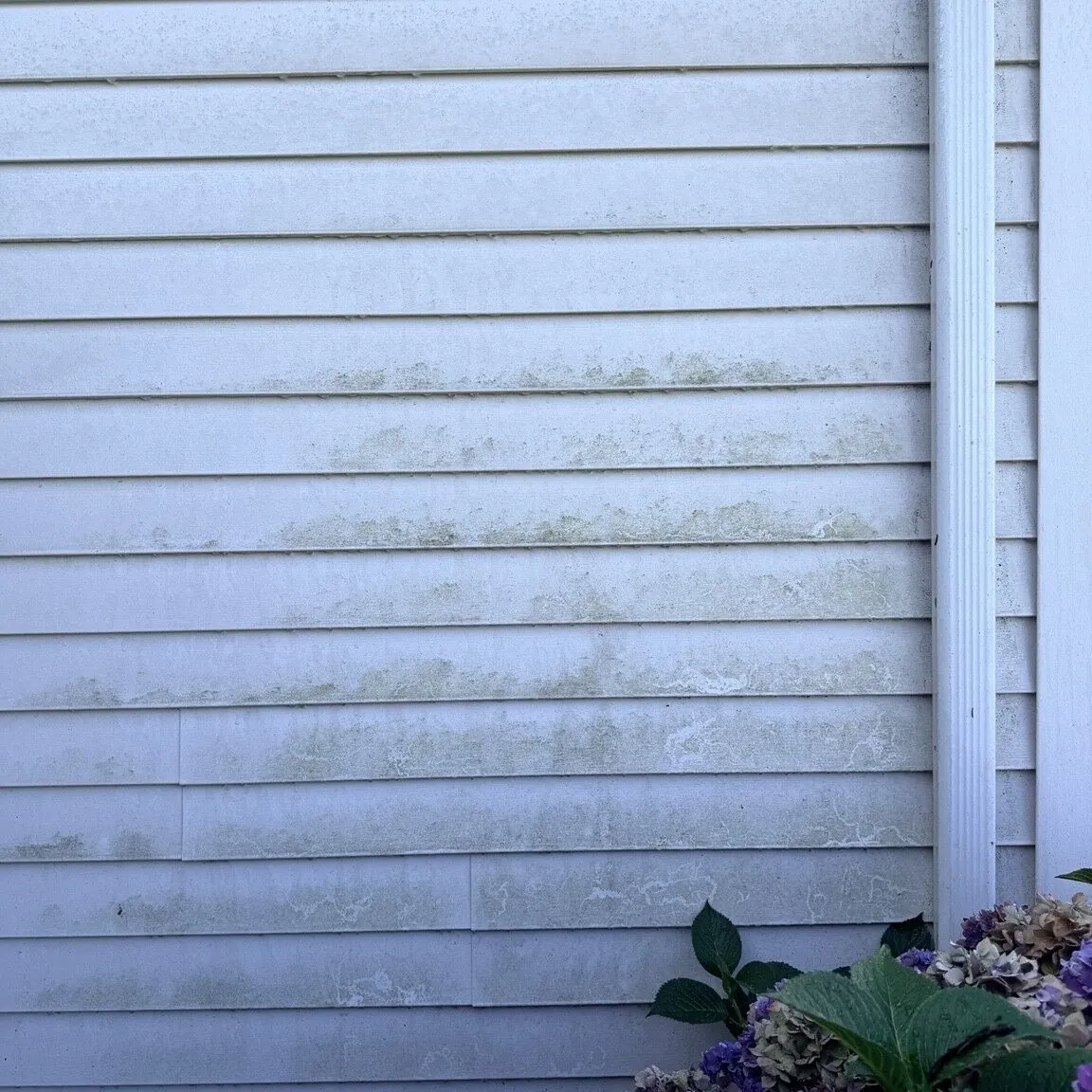 Before
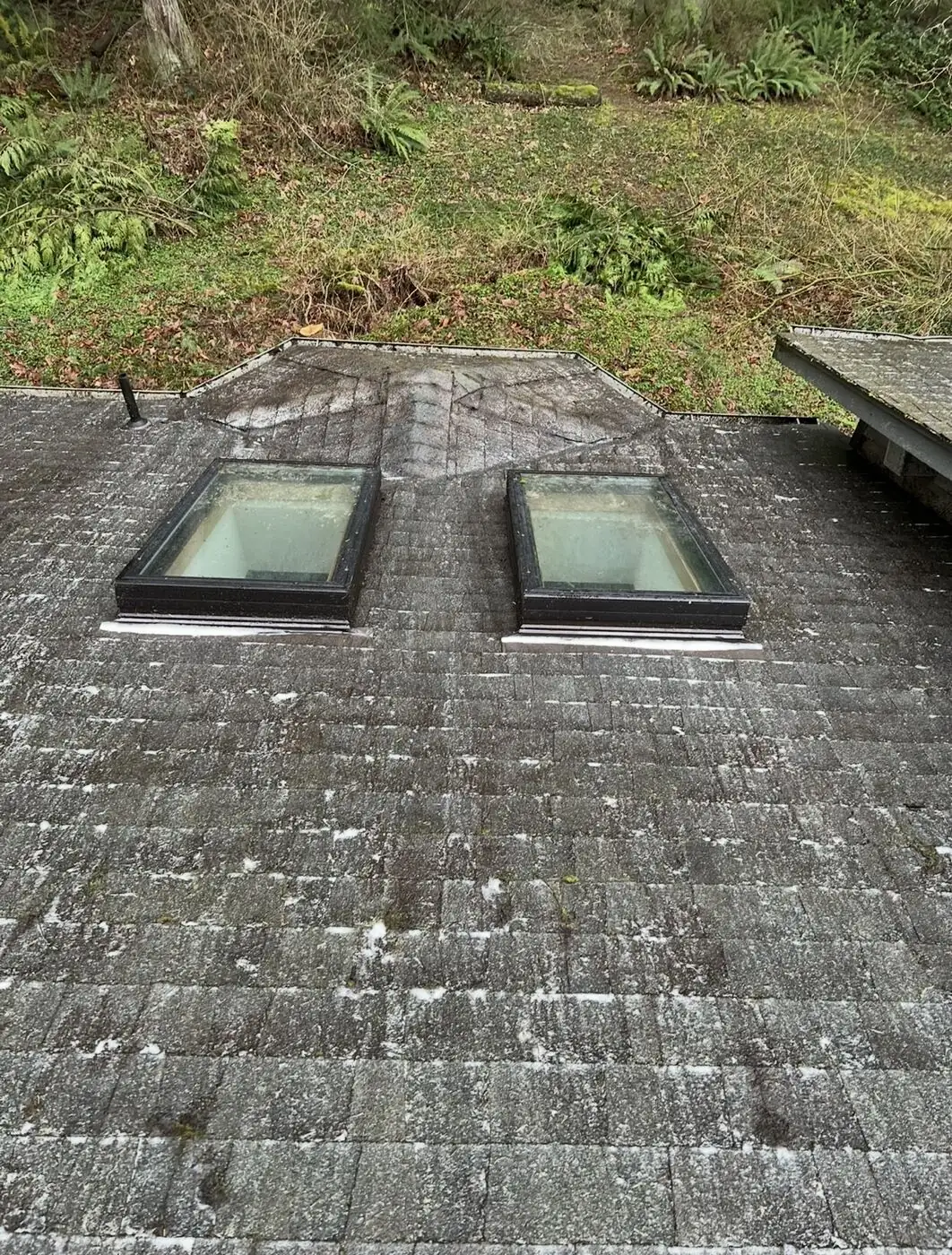
 After
Side wall, Lynden — Before, the shaded side wall. 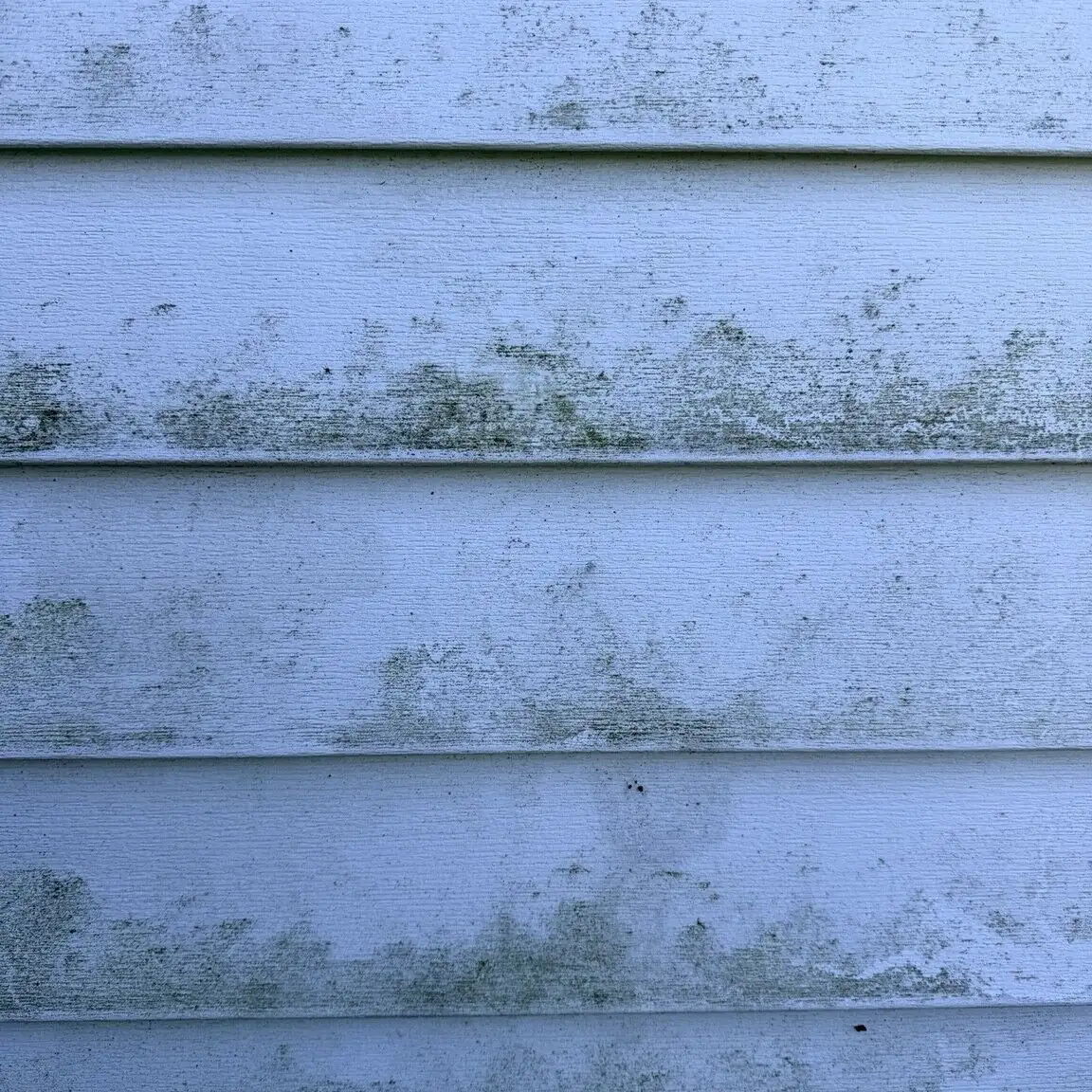 Before
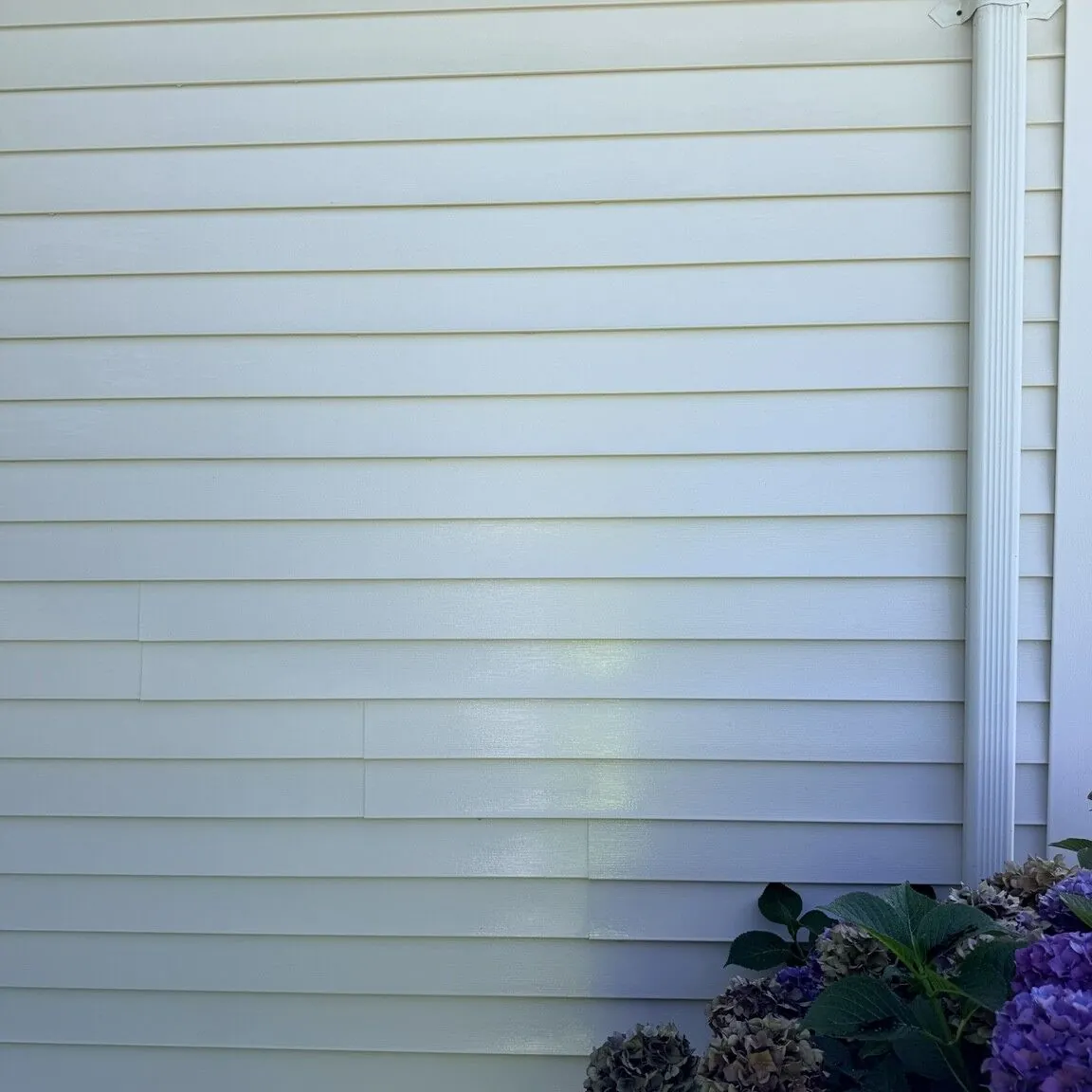
 After
Siding close-up, Lynden — Before, close enough to count the courses. 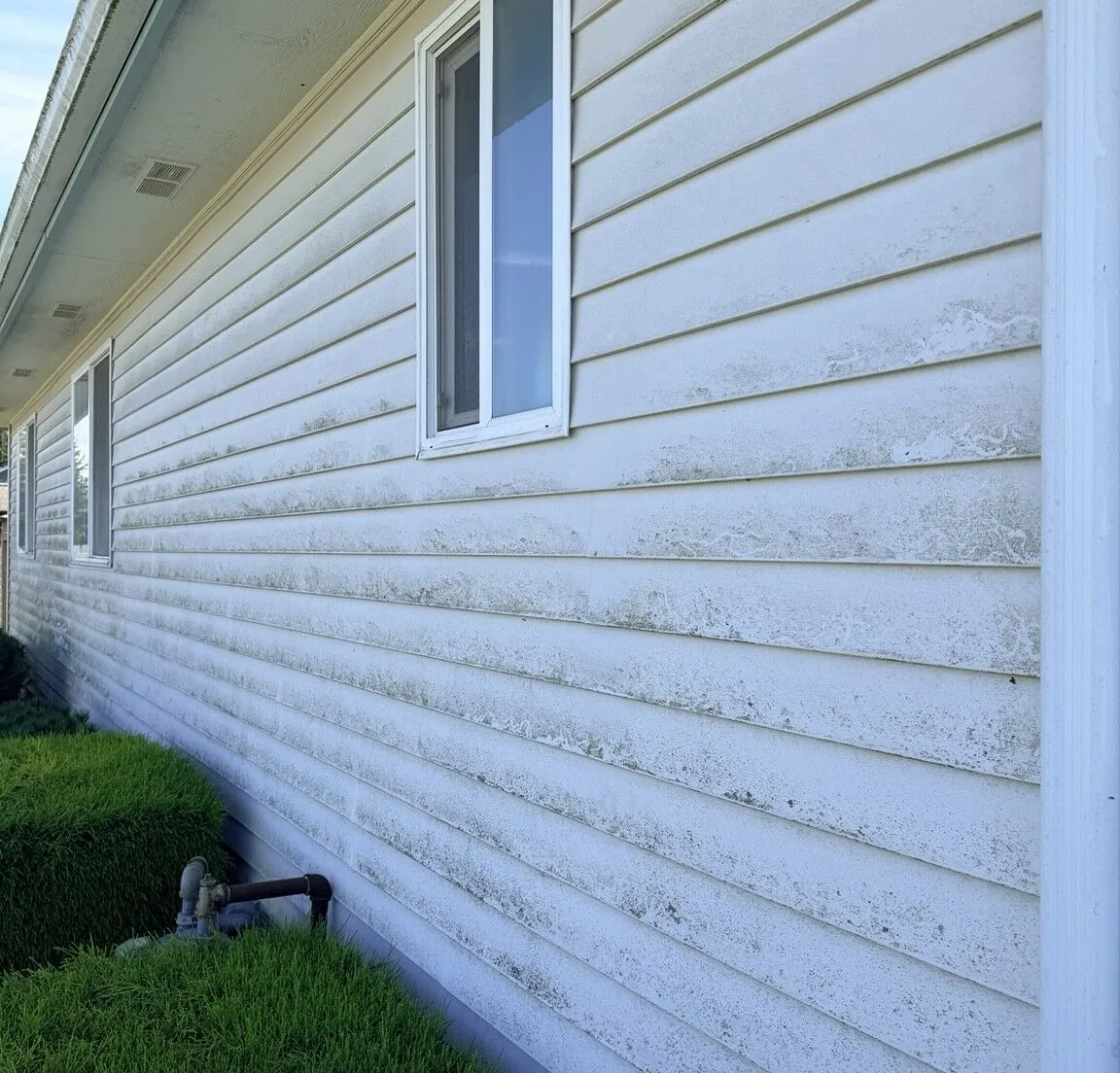 Before
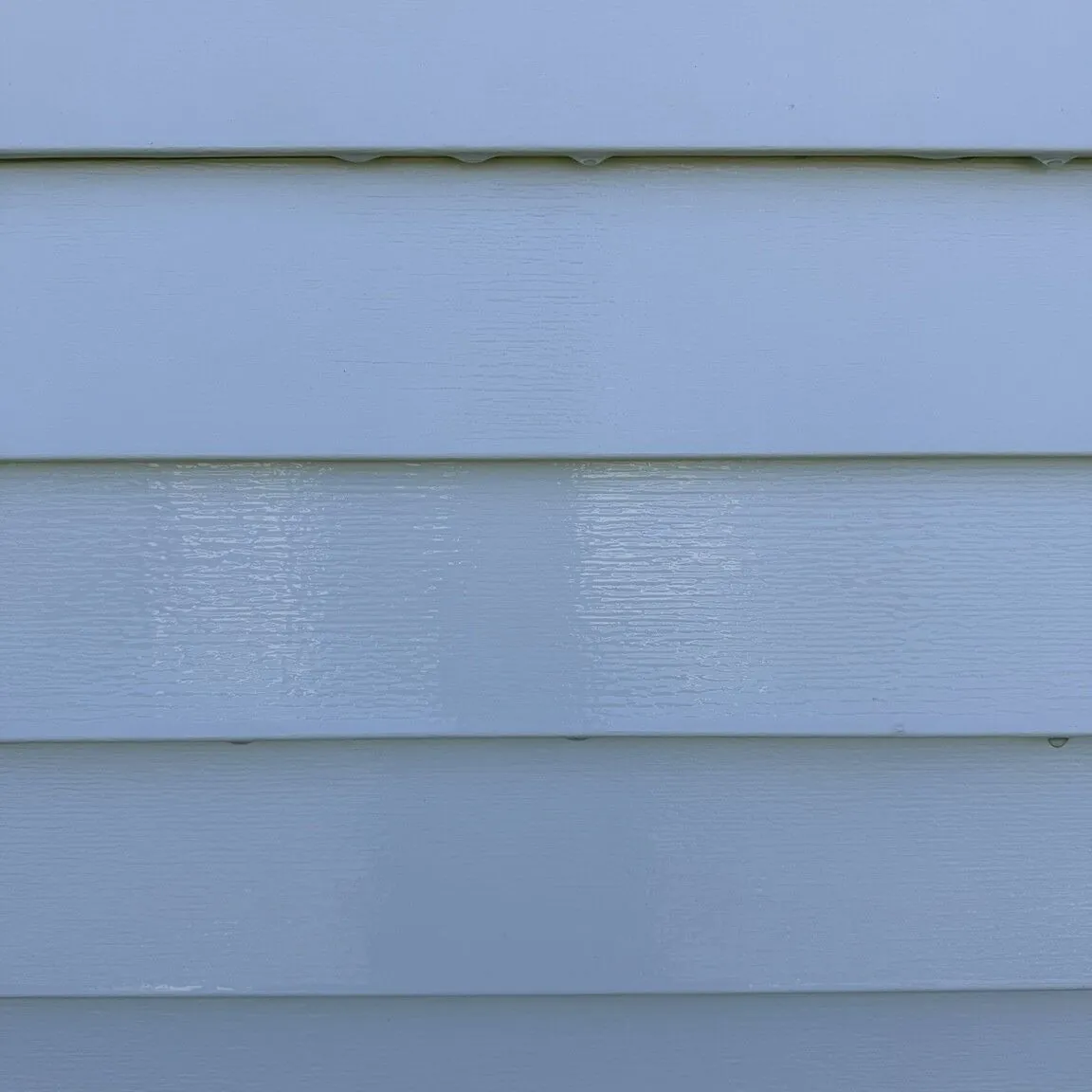
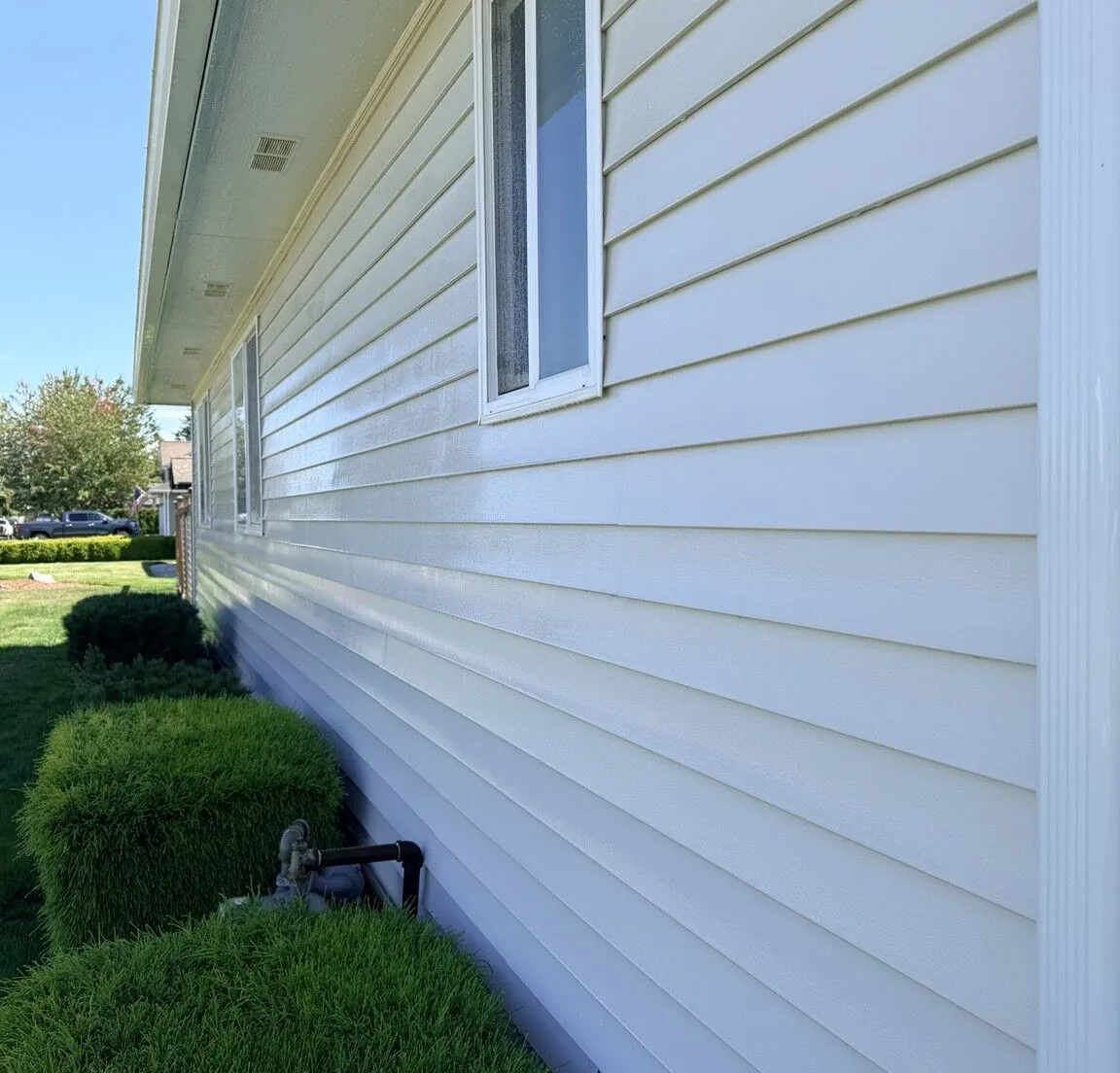 After
Long wall, Lynden — Before. From here it reads as "the paint has aged", which is usually growth rather than age. 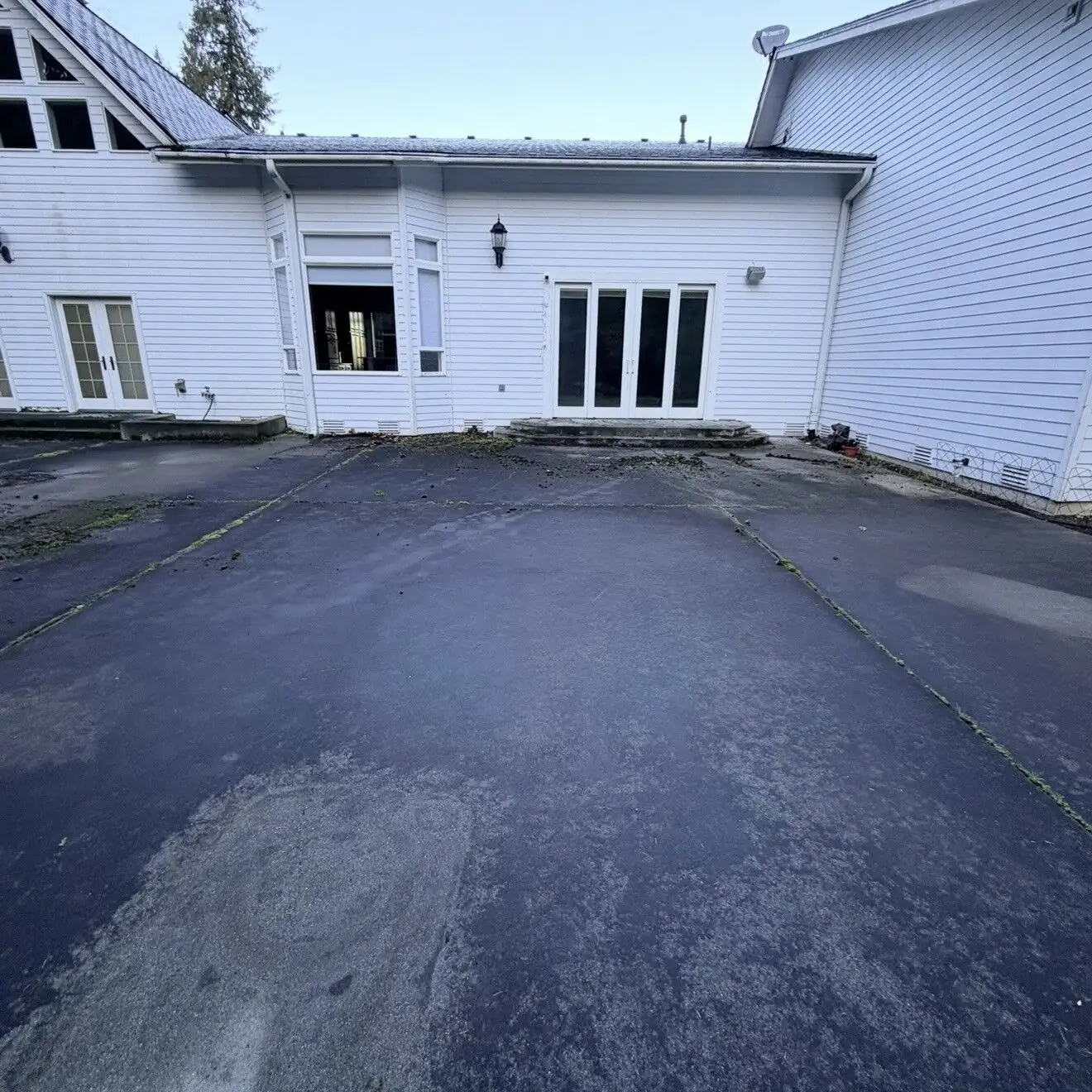 Before
 After
Front entry concrete, Mount Vernon — Before, the front entry. Black concrete is biological, and biological is what makes it slick underfoot. 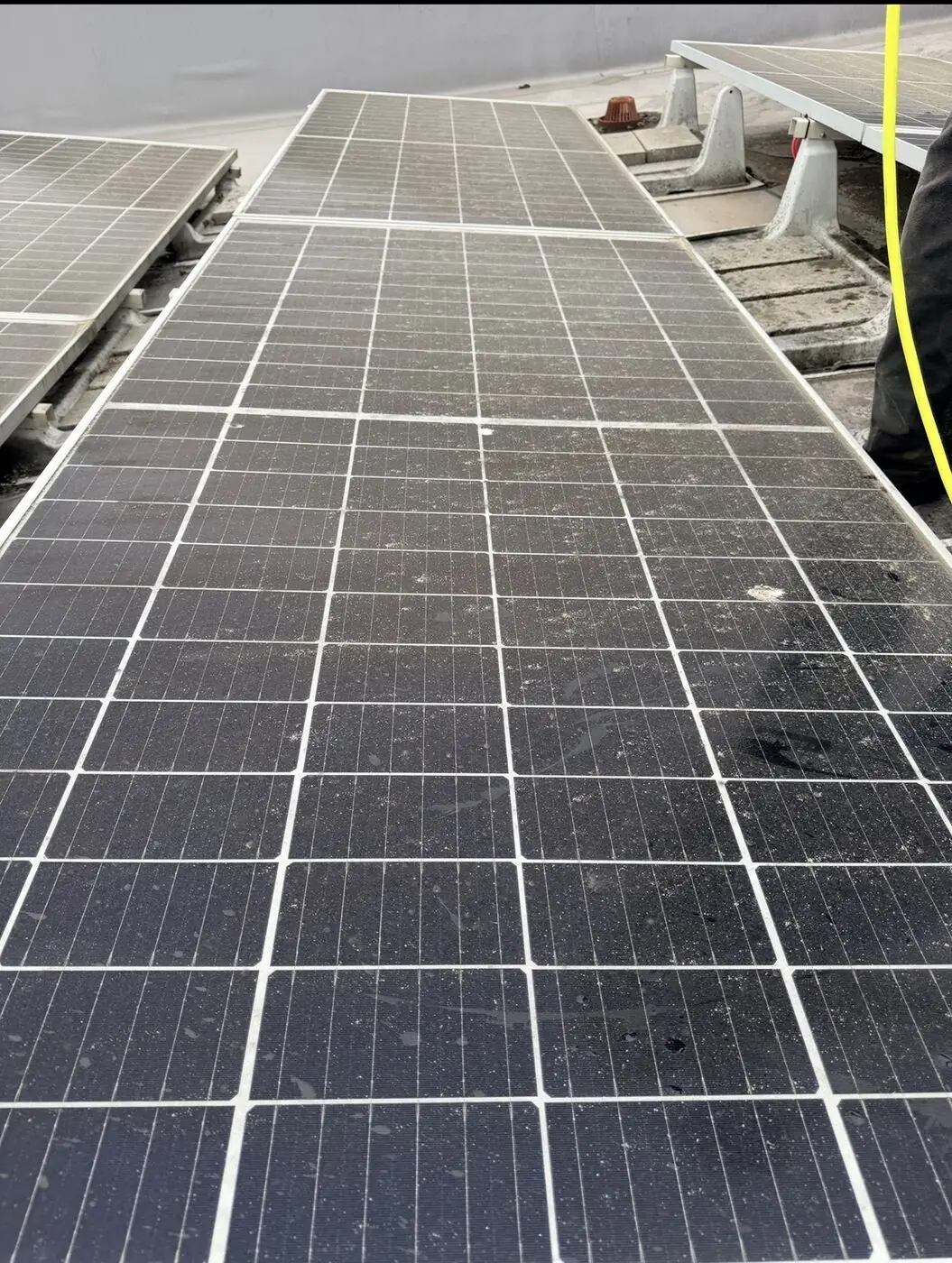 Before
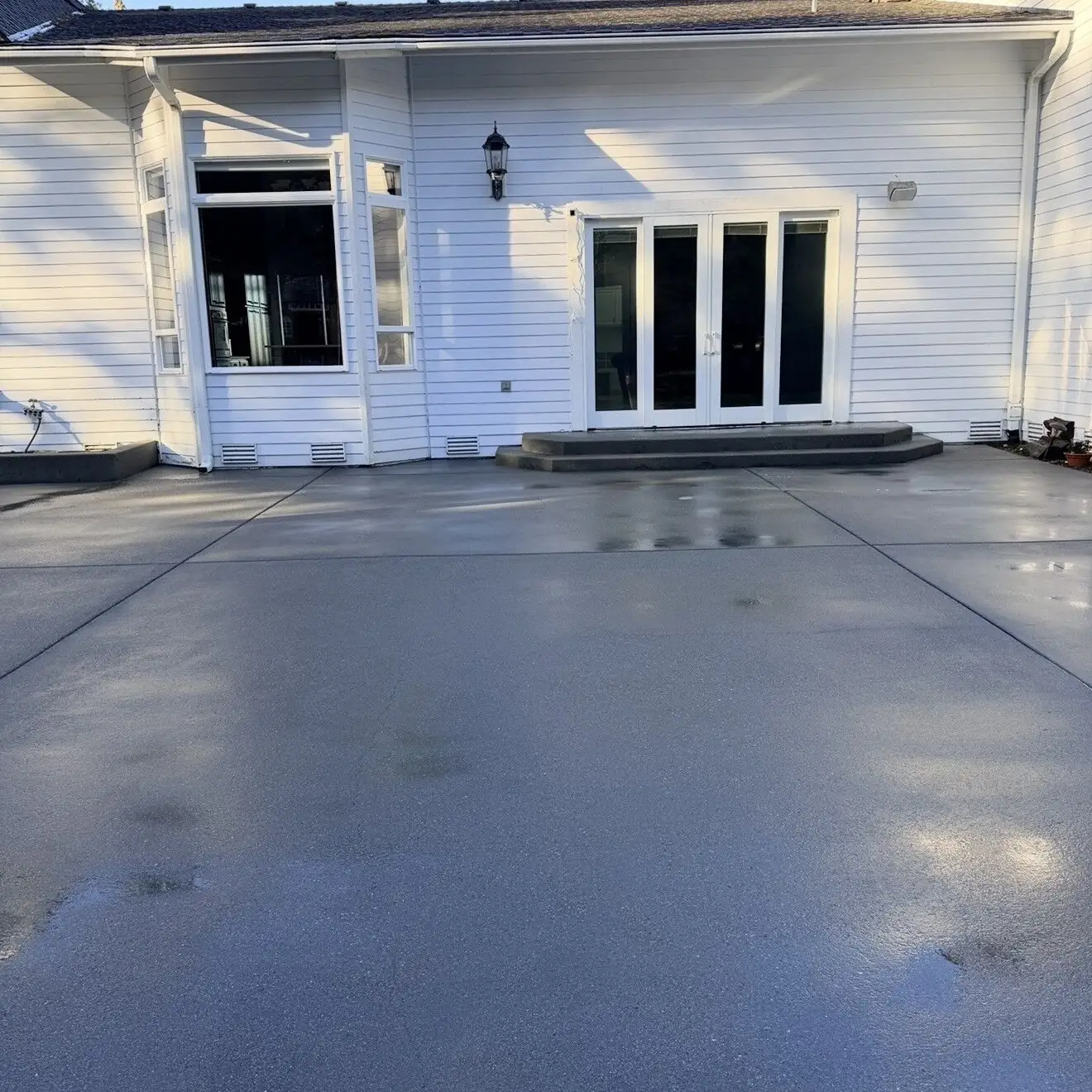
 After
Commercial solar array — Before. Panels do not need to look filthy to be down on output.
Window cleaning — waterfront home, Bow
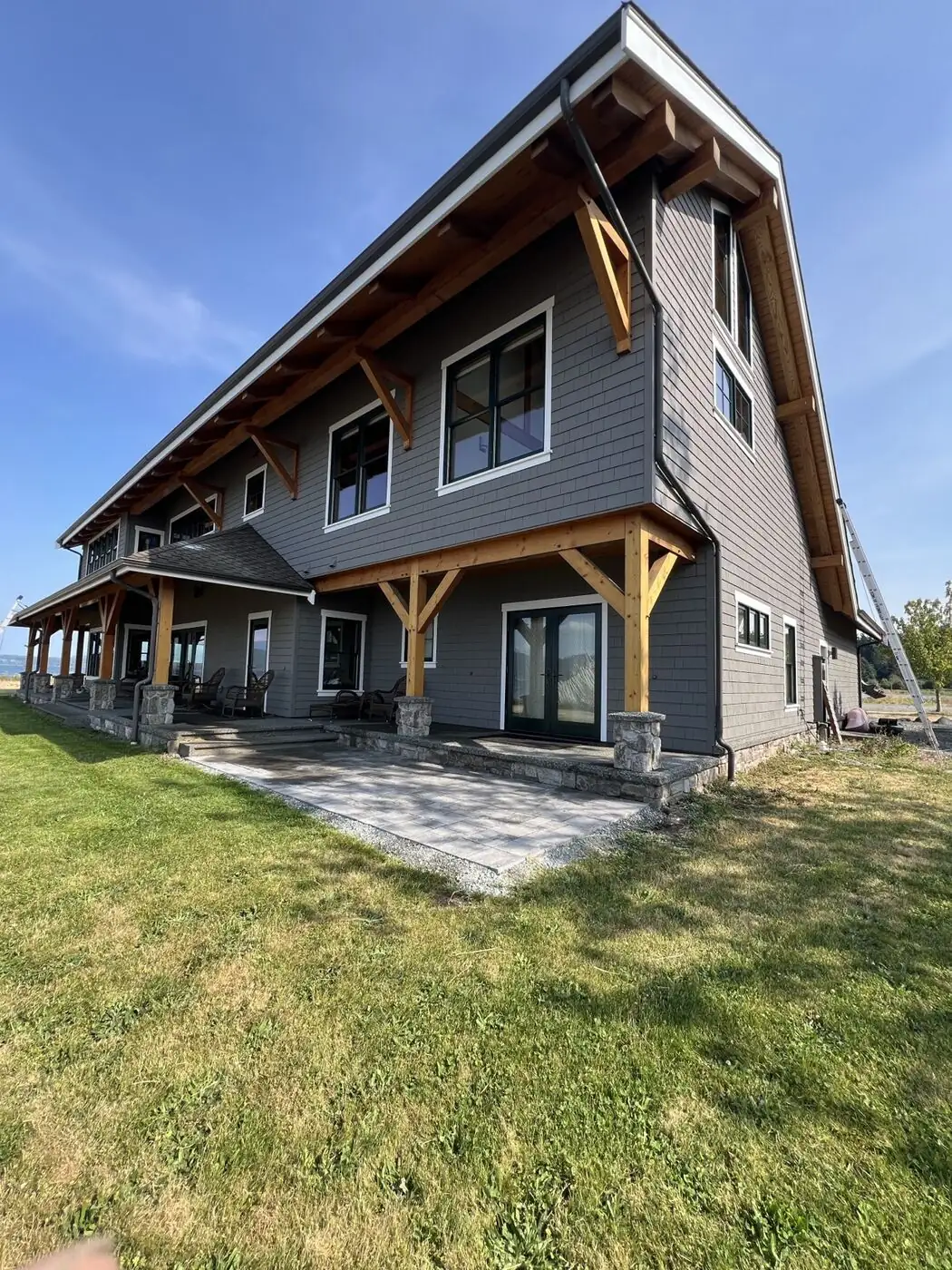
The property in Bow, Skagit County. Glass facing salt water is a different job from glass ten miles inland. -
Before. Webs and debris collect in the frame channels, not only on the glass, which is why frames and tracks are part of the job. -
Before. Salt haze does not rinse off in the rain — it has to be washed off, or it keeps dulling the view. -
Before. The streaking is mineral residue left behind as salt spray dries on the pane. 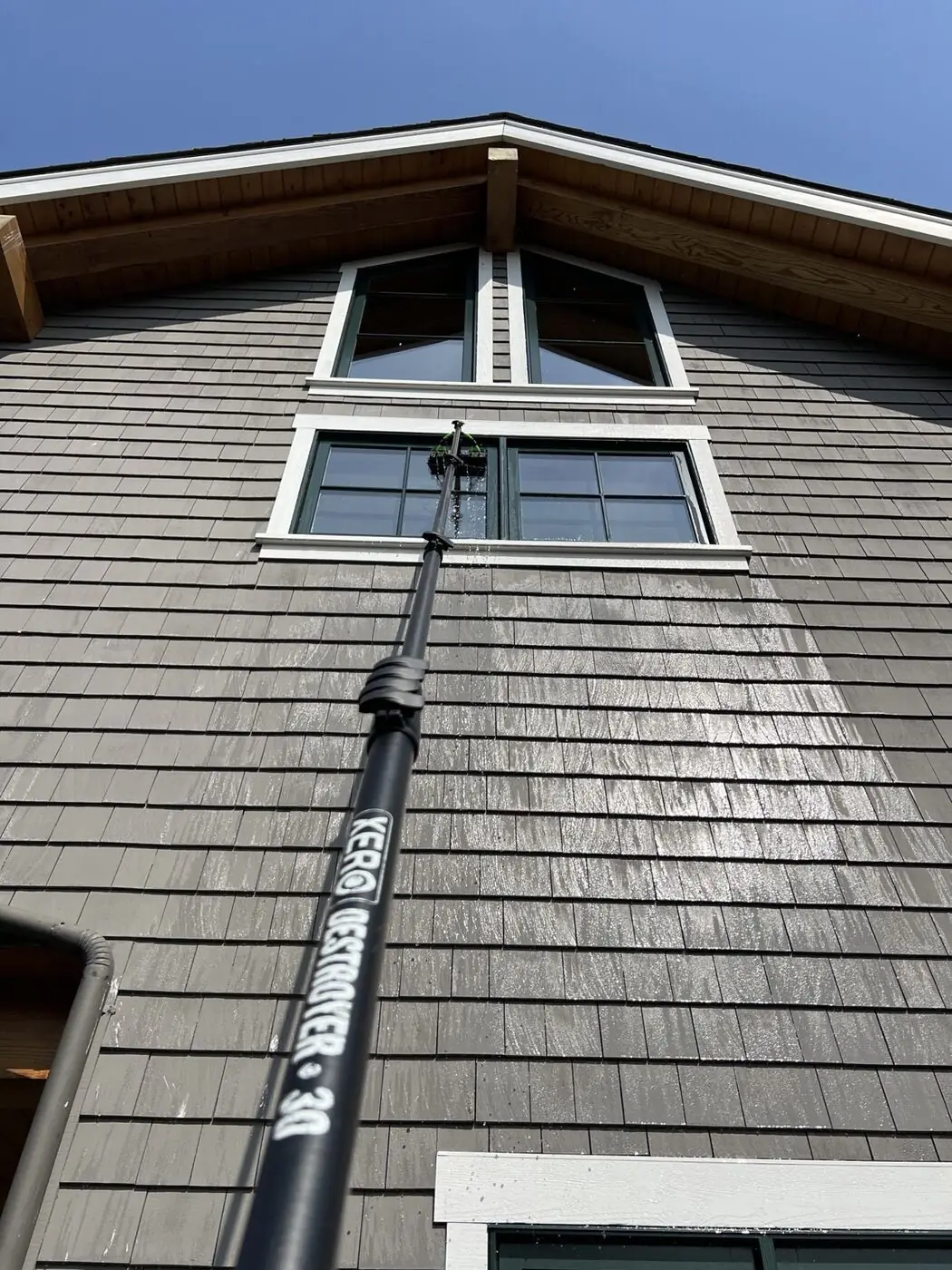
Upper gable glass reached from the ground. Purified water means nothing is left on the pane as it dries. -
After, same pane. -
After, same bank of windows. -
After, same door. Frames and sill cleared as well as the glass.
Window cleaning — houses across the two counties
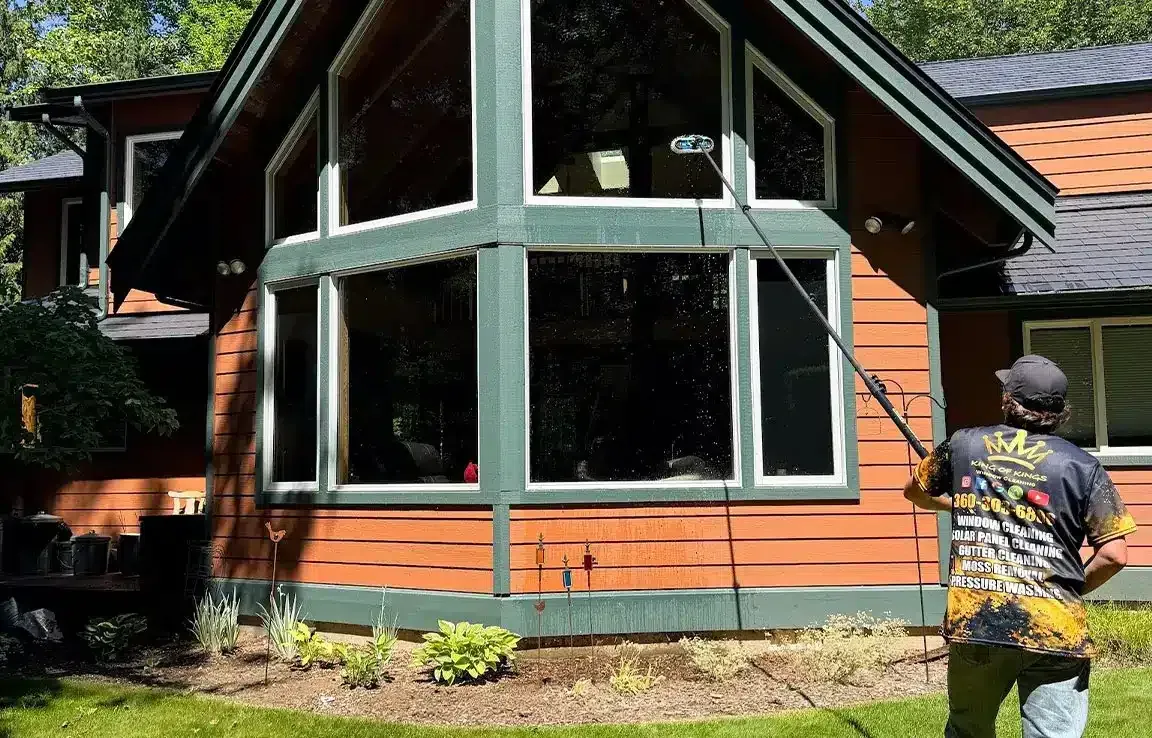
Multi-pane glass takes longer than the pane count suggests — every bar is an edge to work around. 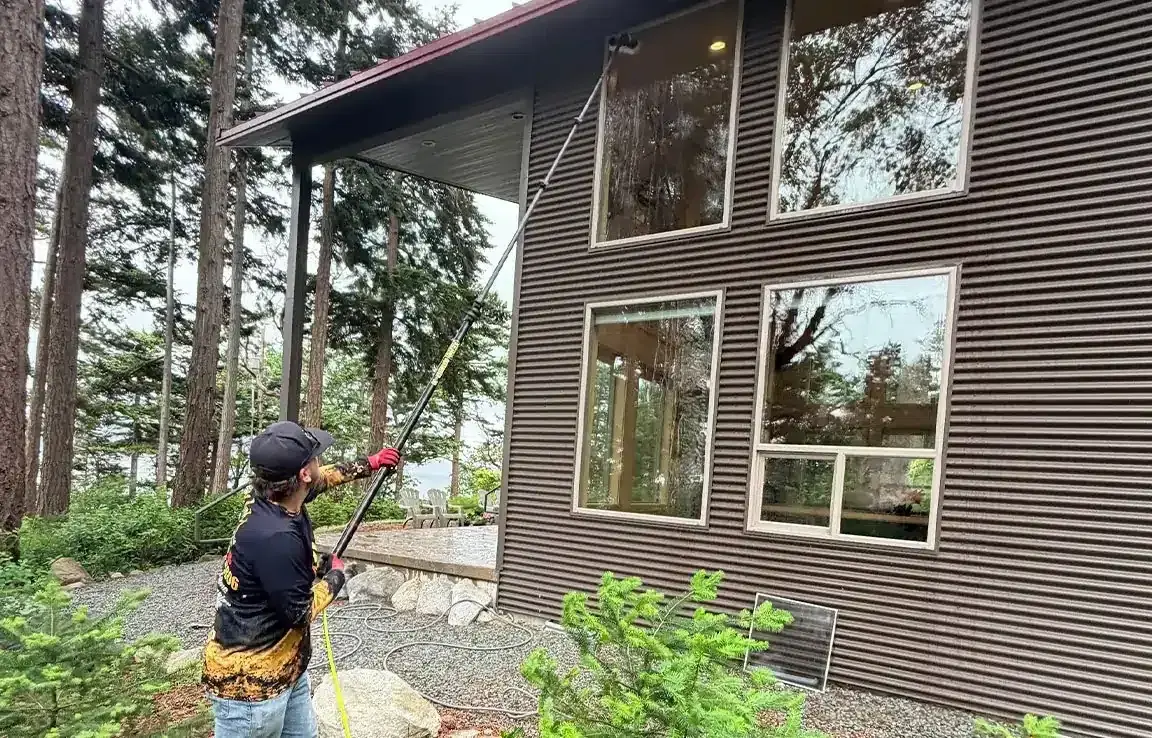
Second-storey glass without putting a ladder on soft ground or decking. 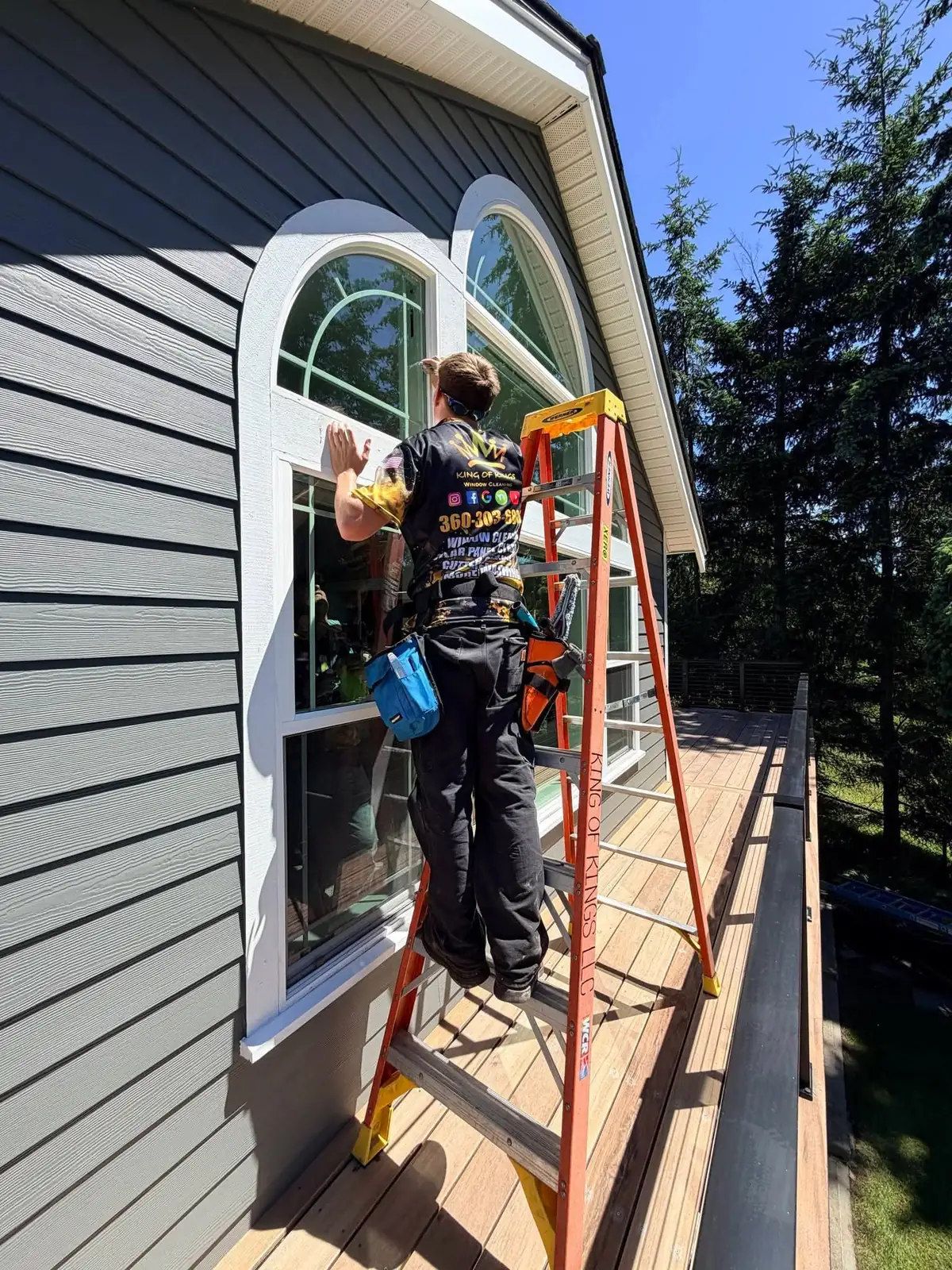
Where a pole cannot do it properly, the ladder comes out and gets footed correctly. 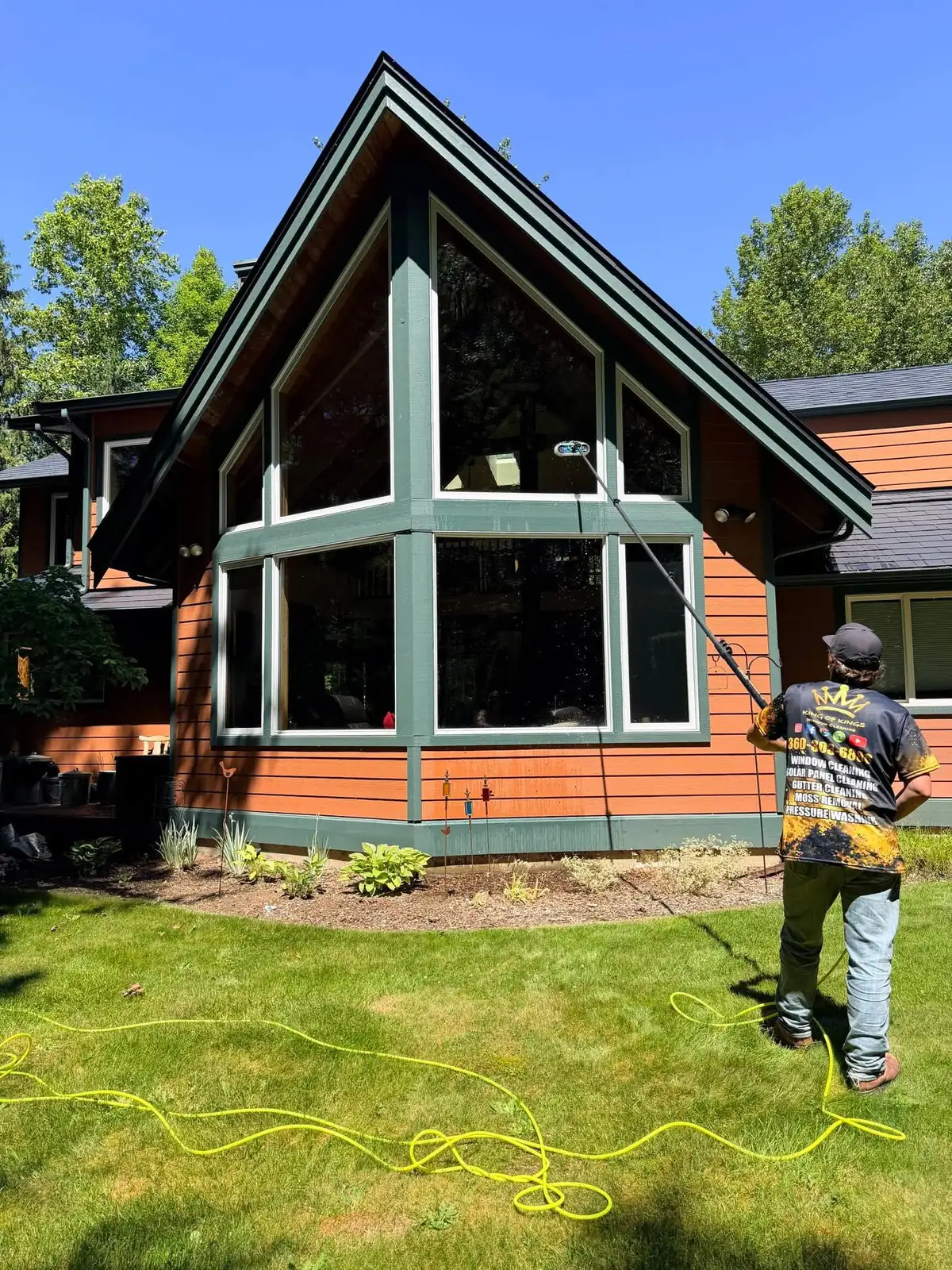
Gable triangles are the panes most often skipped by a cheaper quote. 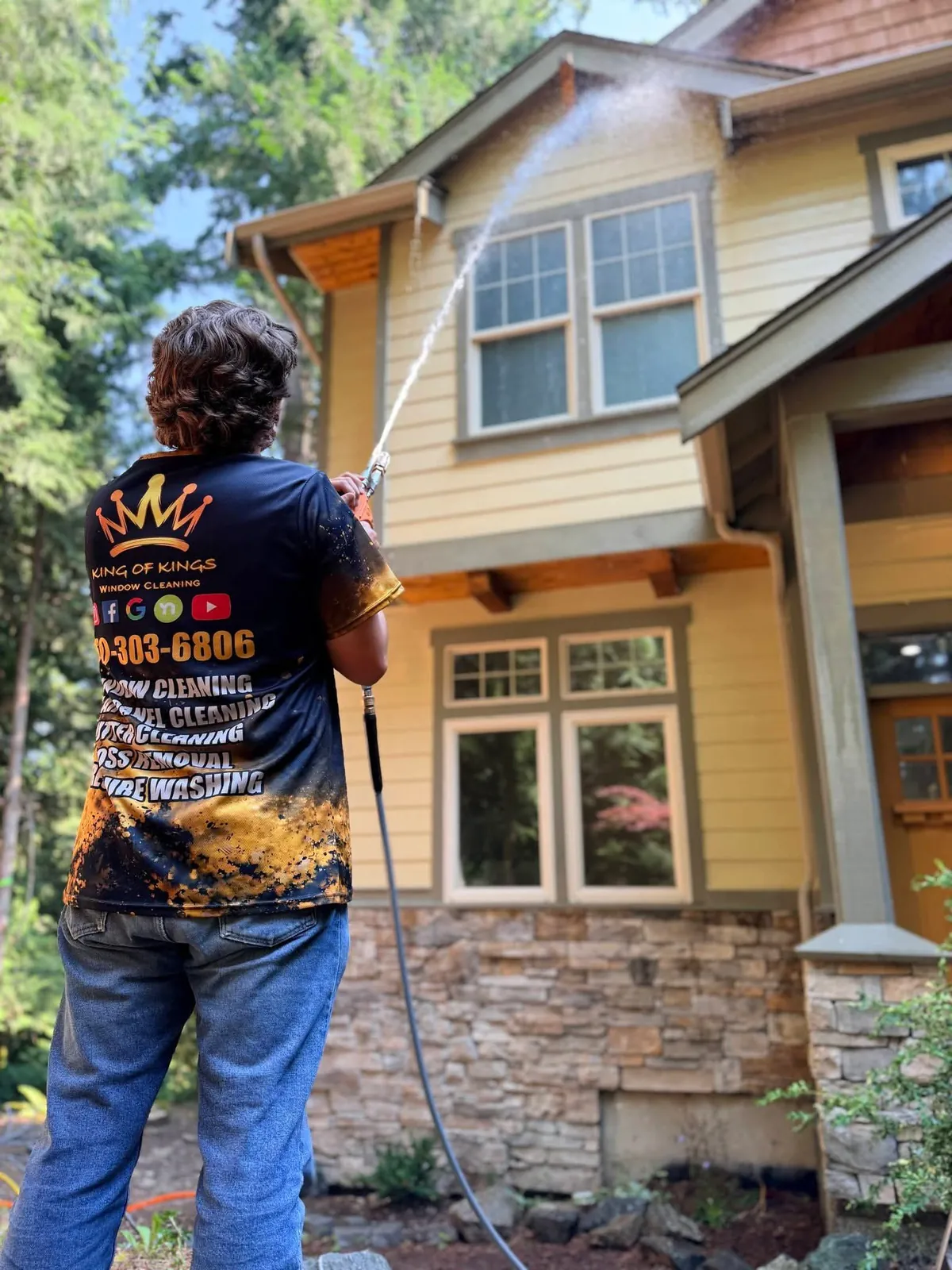
Rinsing down from the top so nothing dries on the glass below. 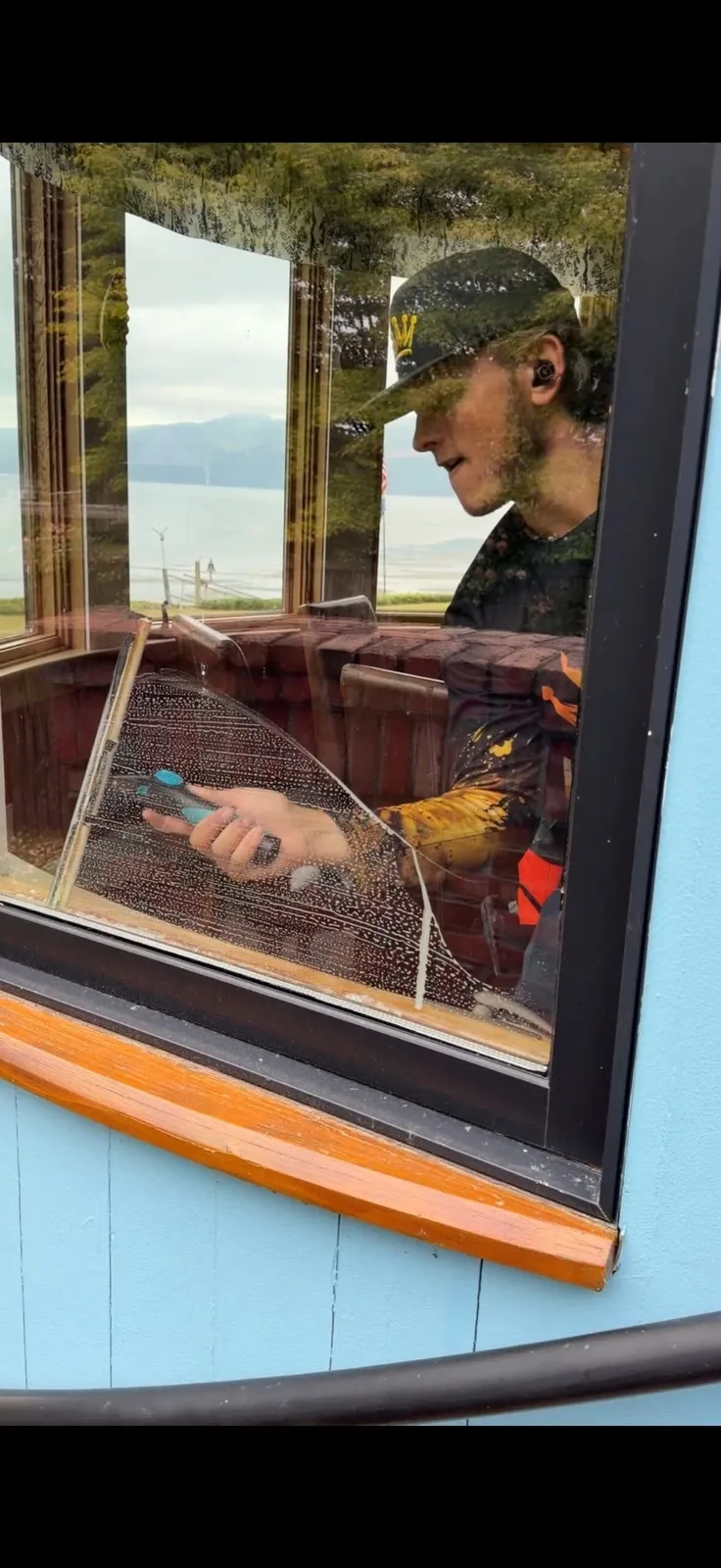
Interiors are half the job on a view property, and the half people notice from the sofa. 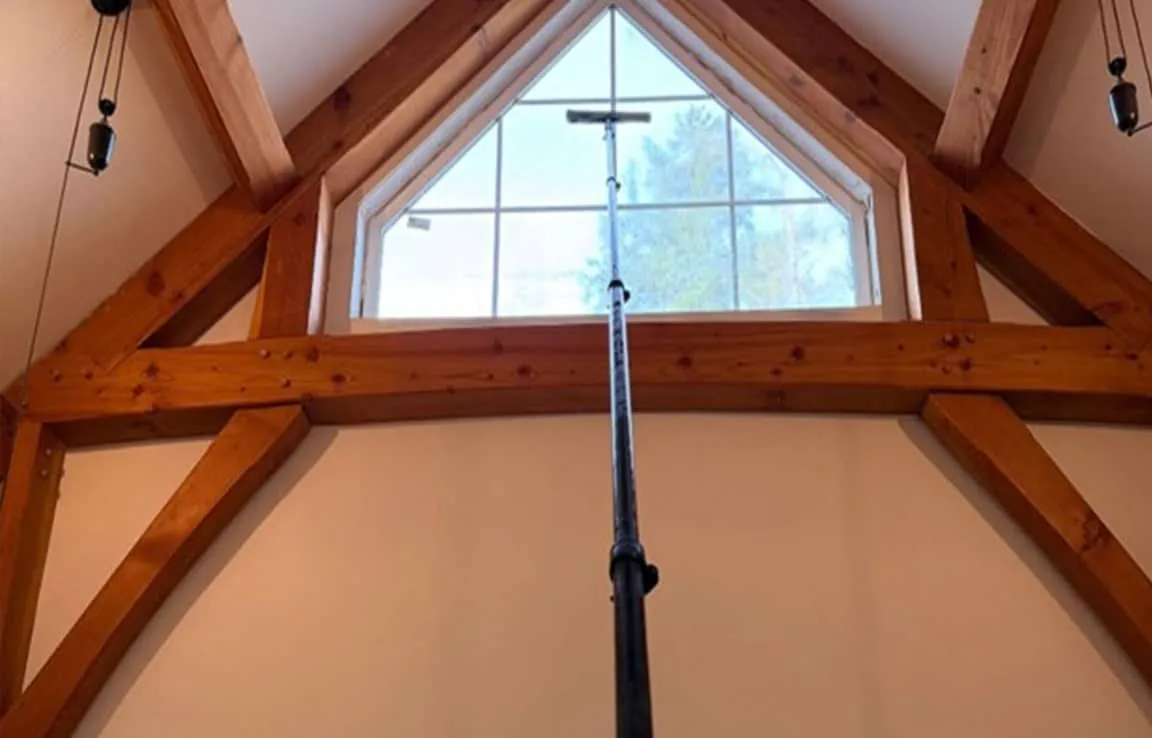
A Ferndale home. Vaulted rooms put the dirtiest glass where nobody can reach it.
Gutter clearing — Bellingham
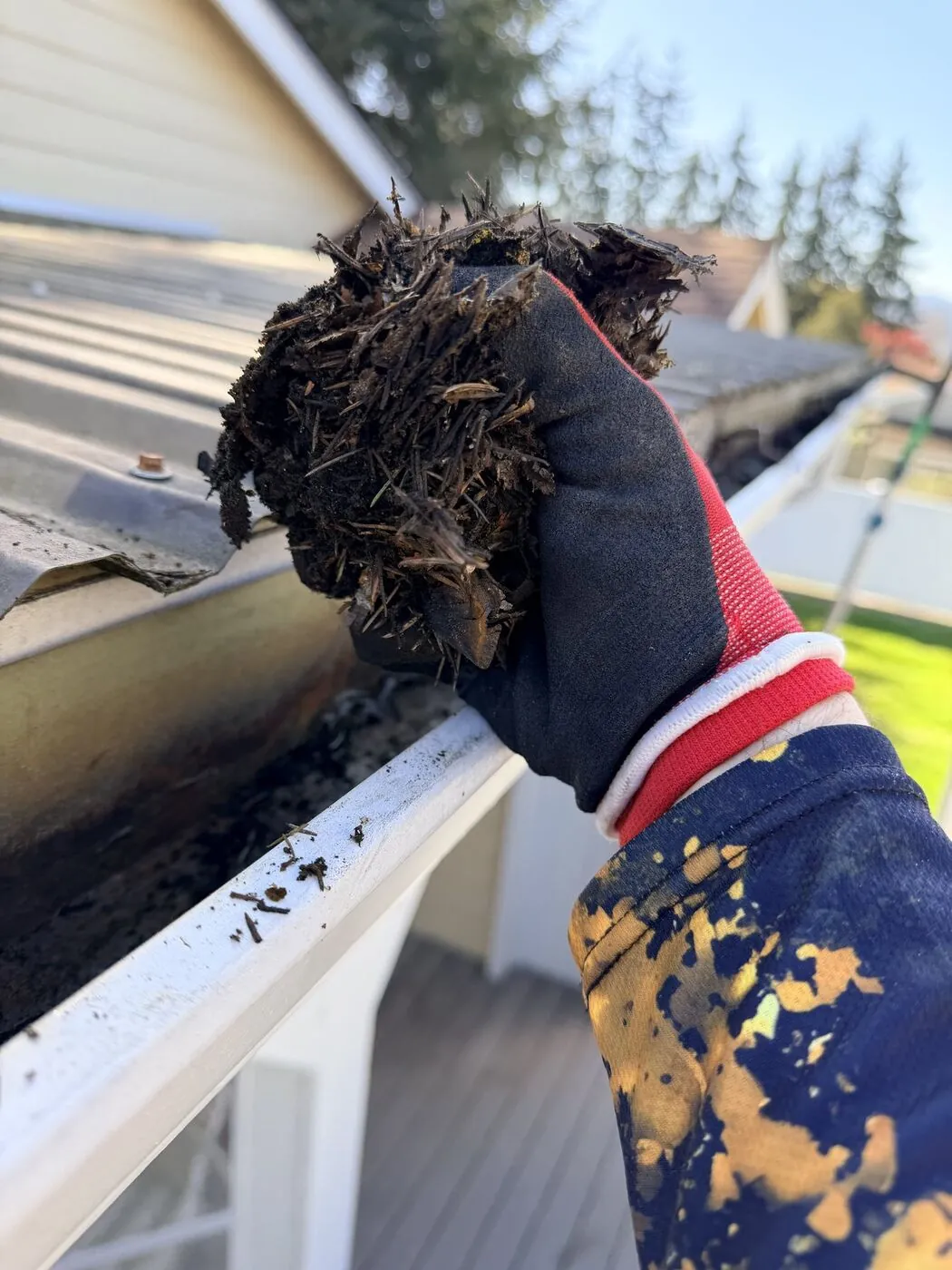
A Bellingham home. Gutters here fill with fir needles rather than leaves, and needles pack into a mat water cannot pass. 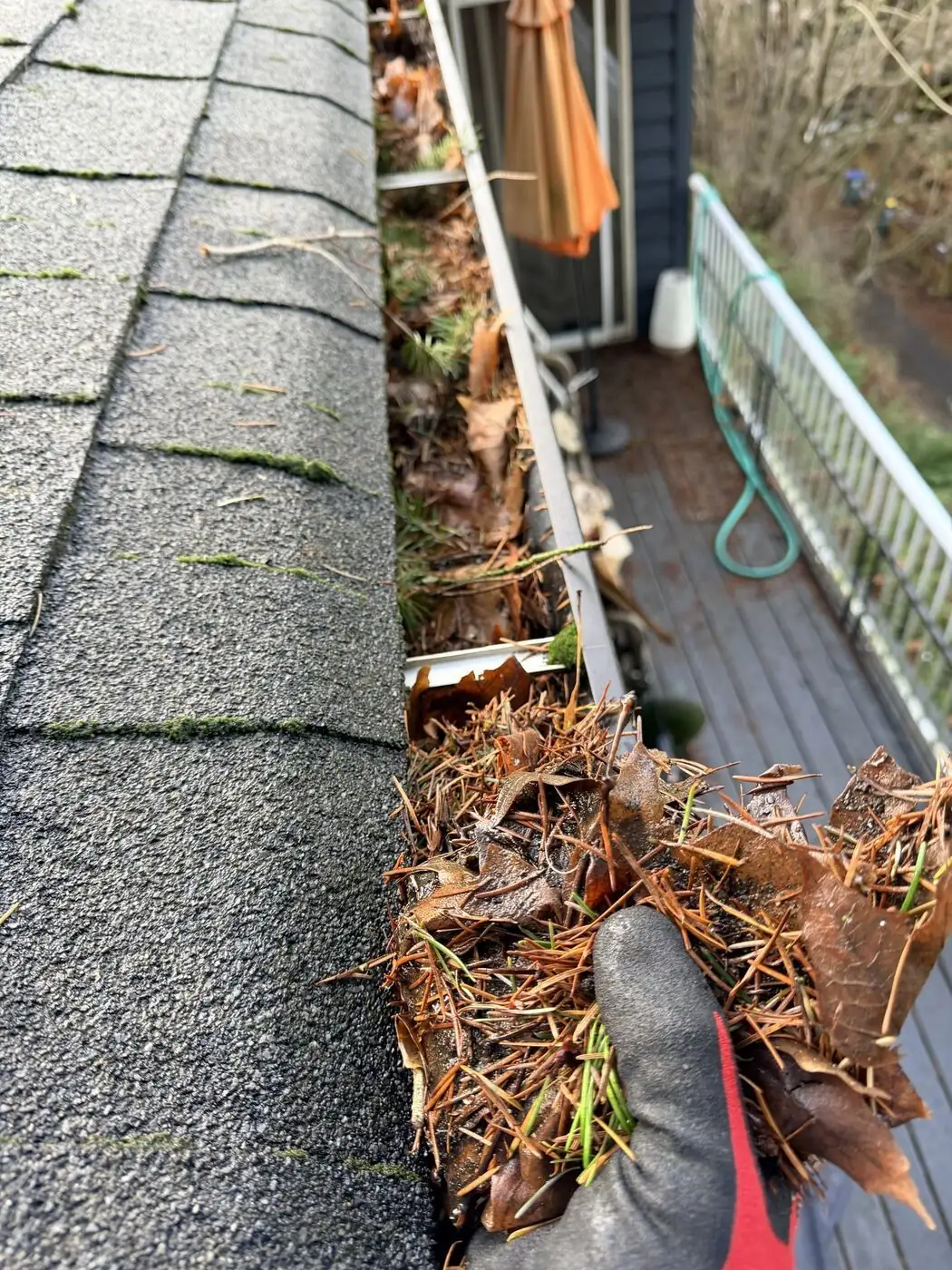
Cleared by hand and bagged rather than flushed down the downpipe — which is how a clear gutter ends up with a blocked drain. 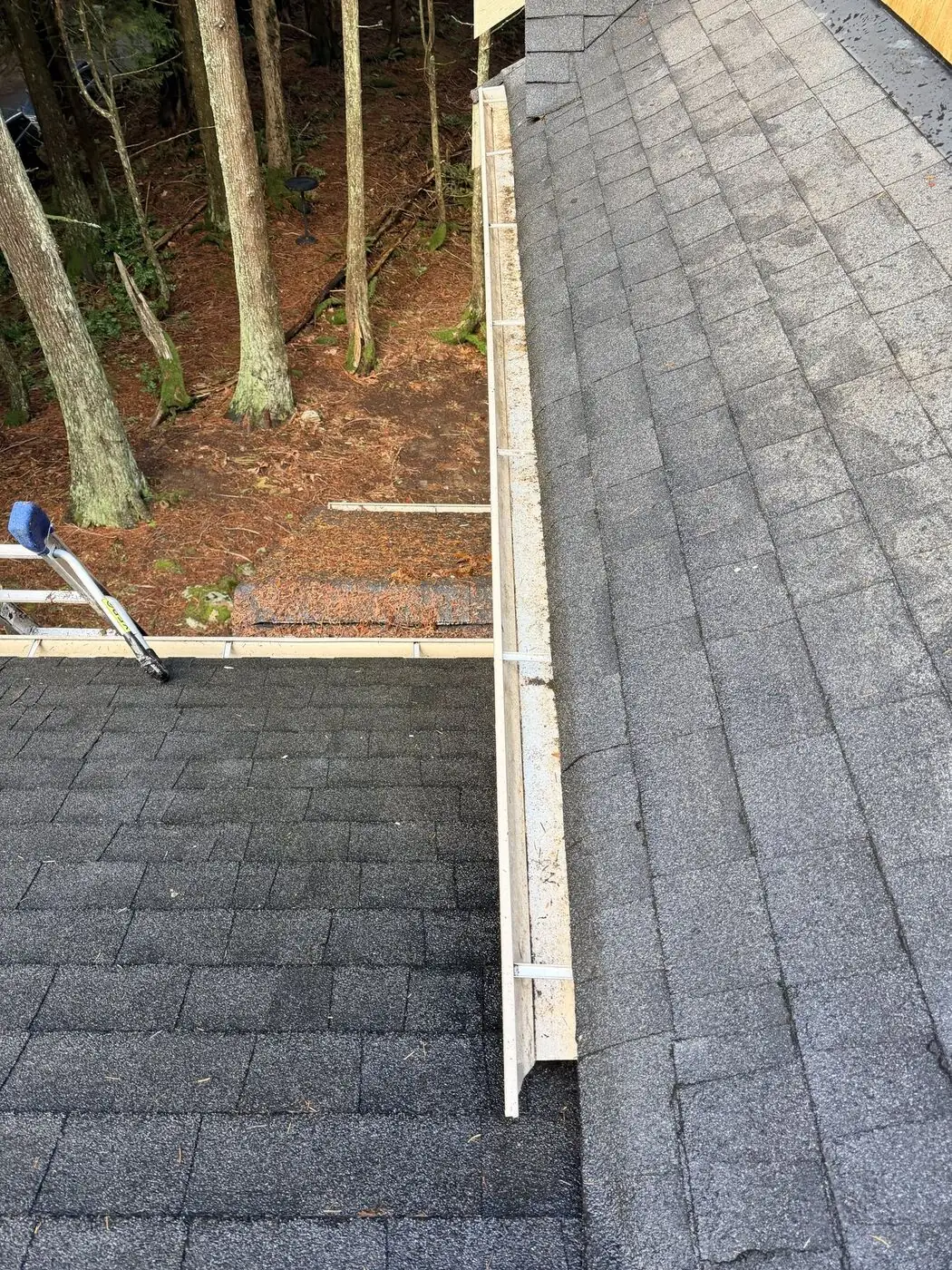
The valley matters as much as the gutter: debris held there keeps the shingles underneath permanently damp. 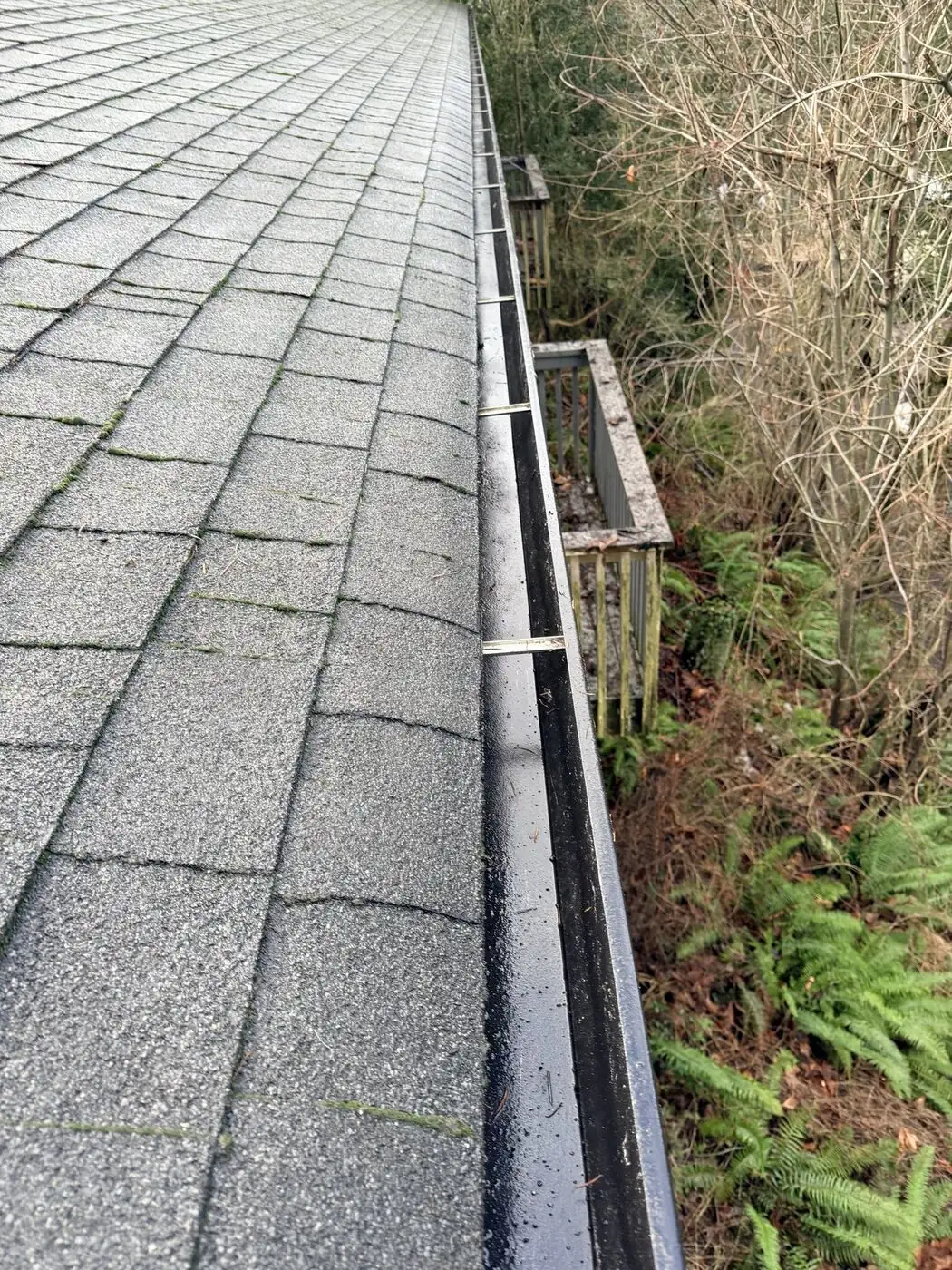
After. Bellingham. 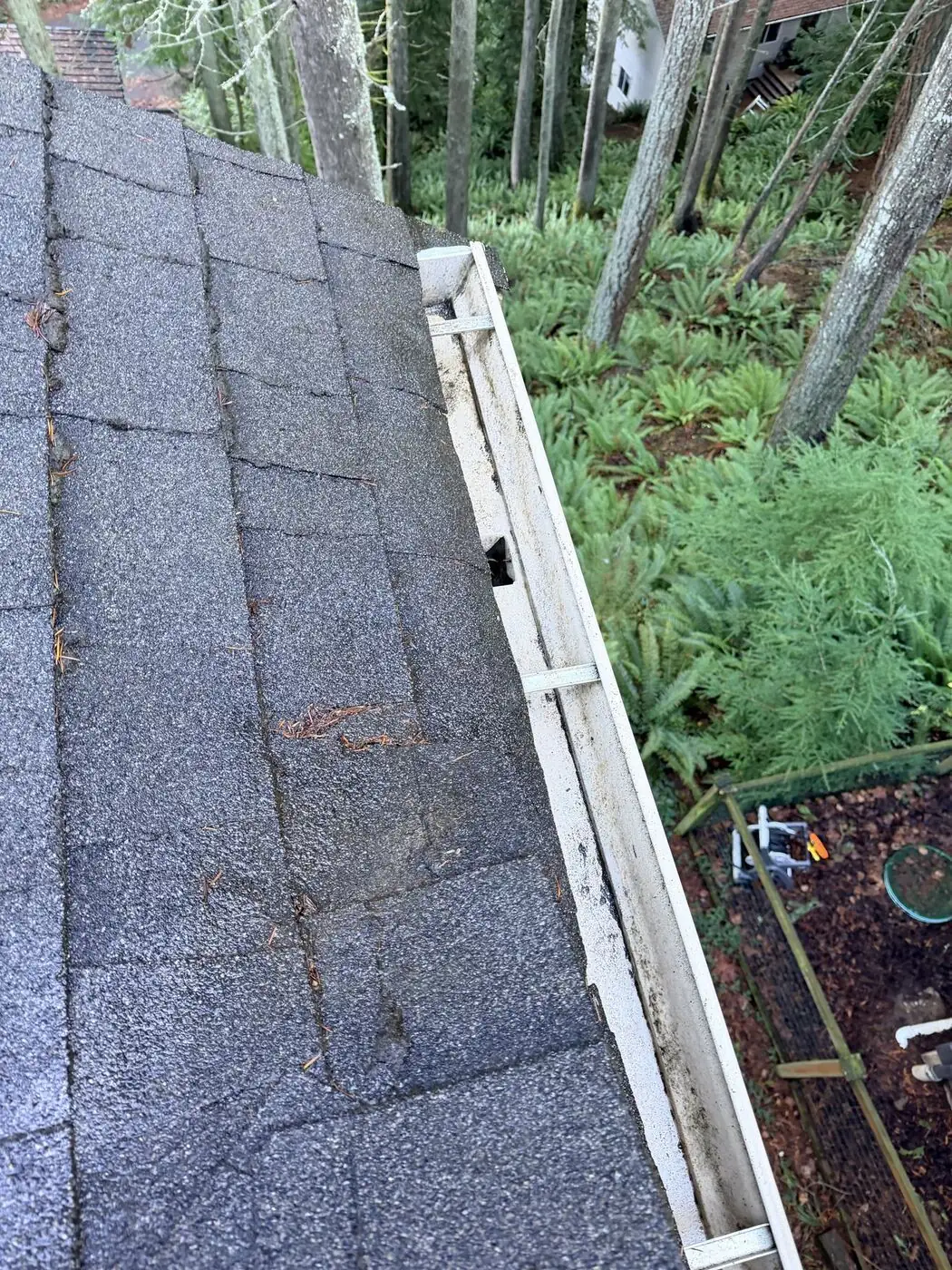
The test is not that it looks clean — it is that water has an unbroken path to the downpipe. 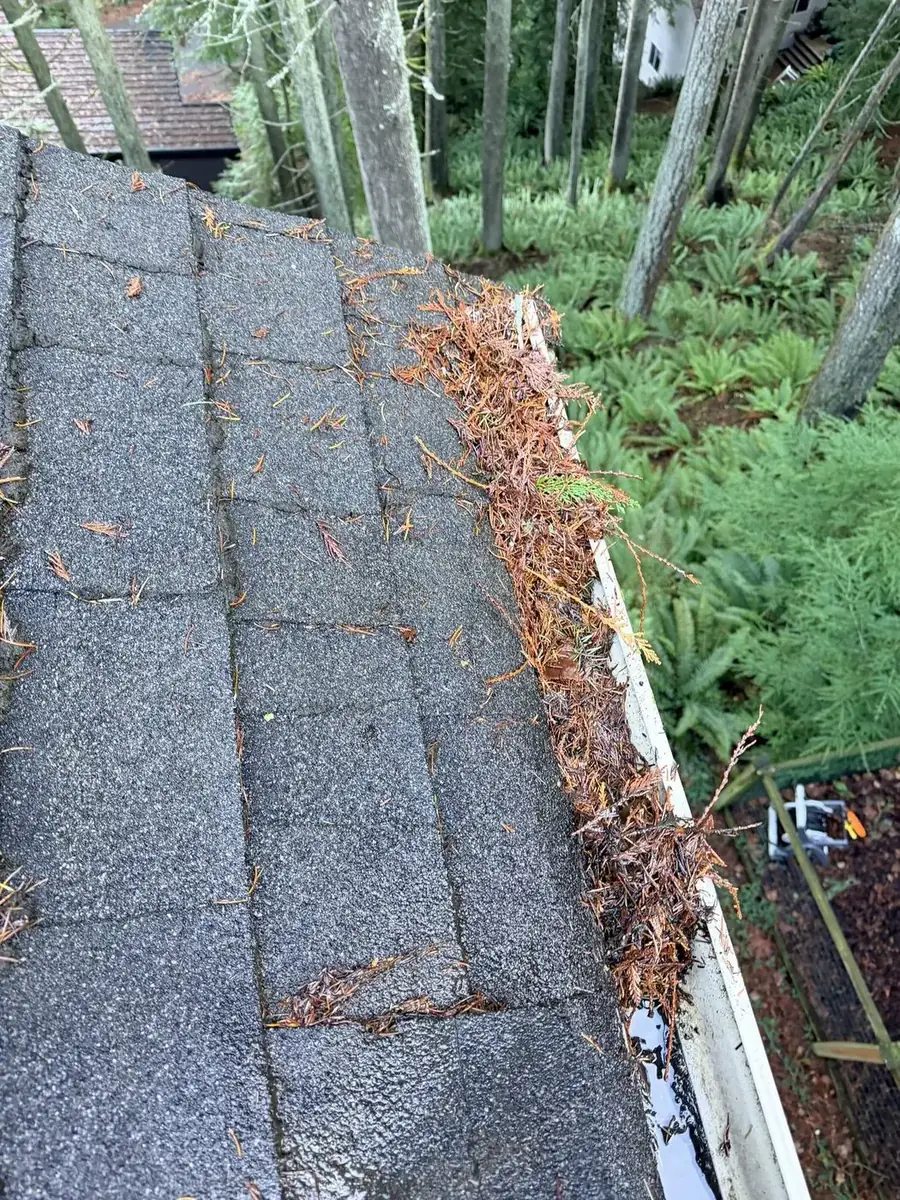
Before. Packed to the lip, which is why the downspouts had stopped taking water at all. 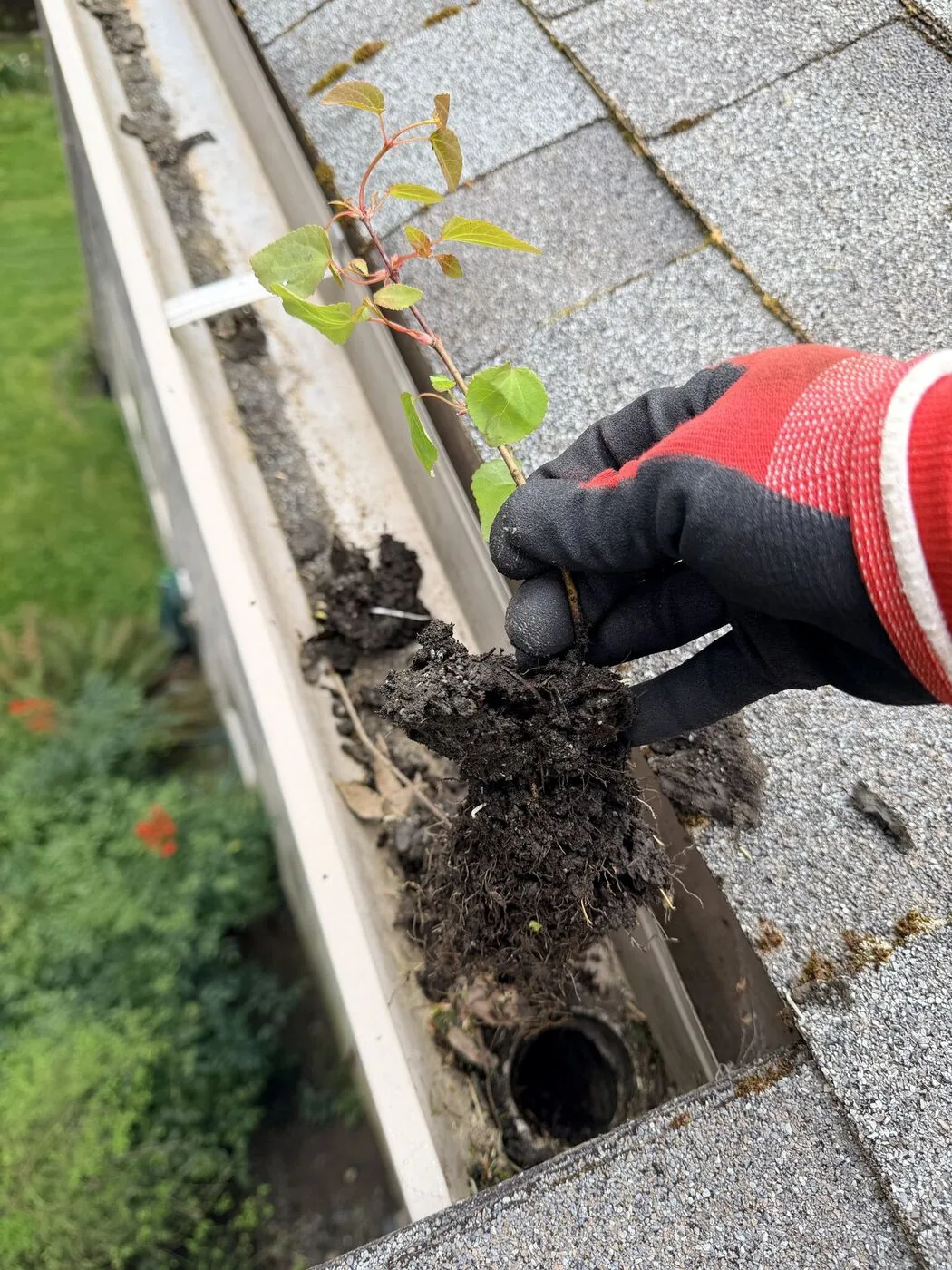
A seedling had rooted beside the outlet. Anything growing in a gutter means the debris has stayed wet long enough to hold a plant. 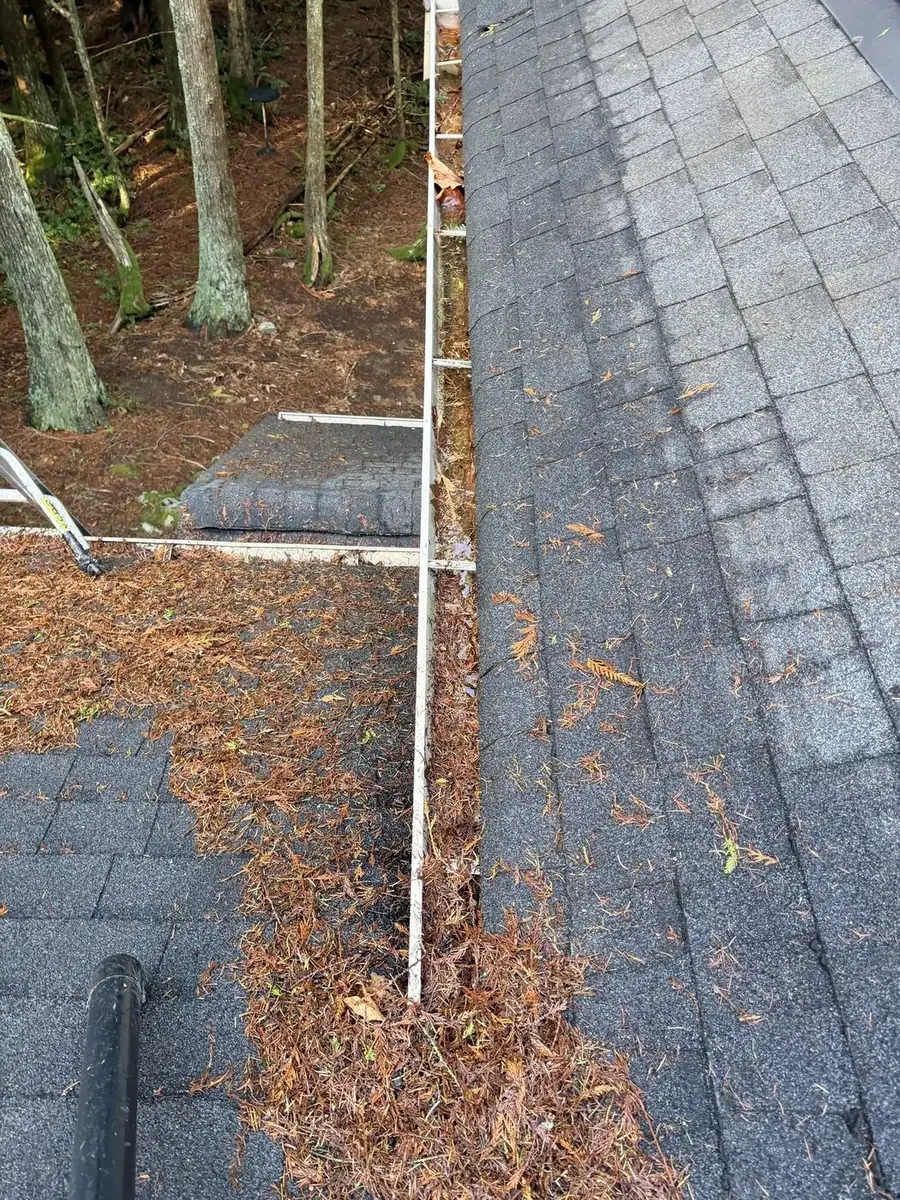
Cleared by hand from a ladder rather than blown out from above, which is what keeps the debris out of the downspouts. 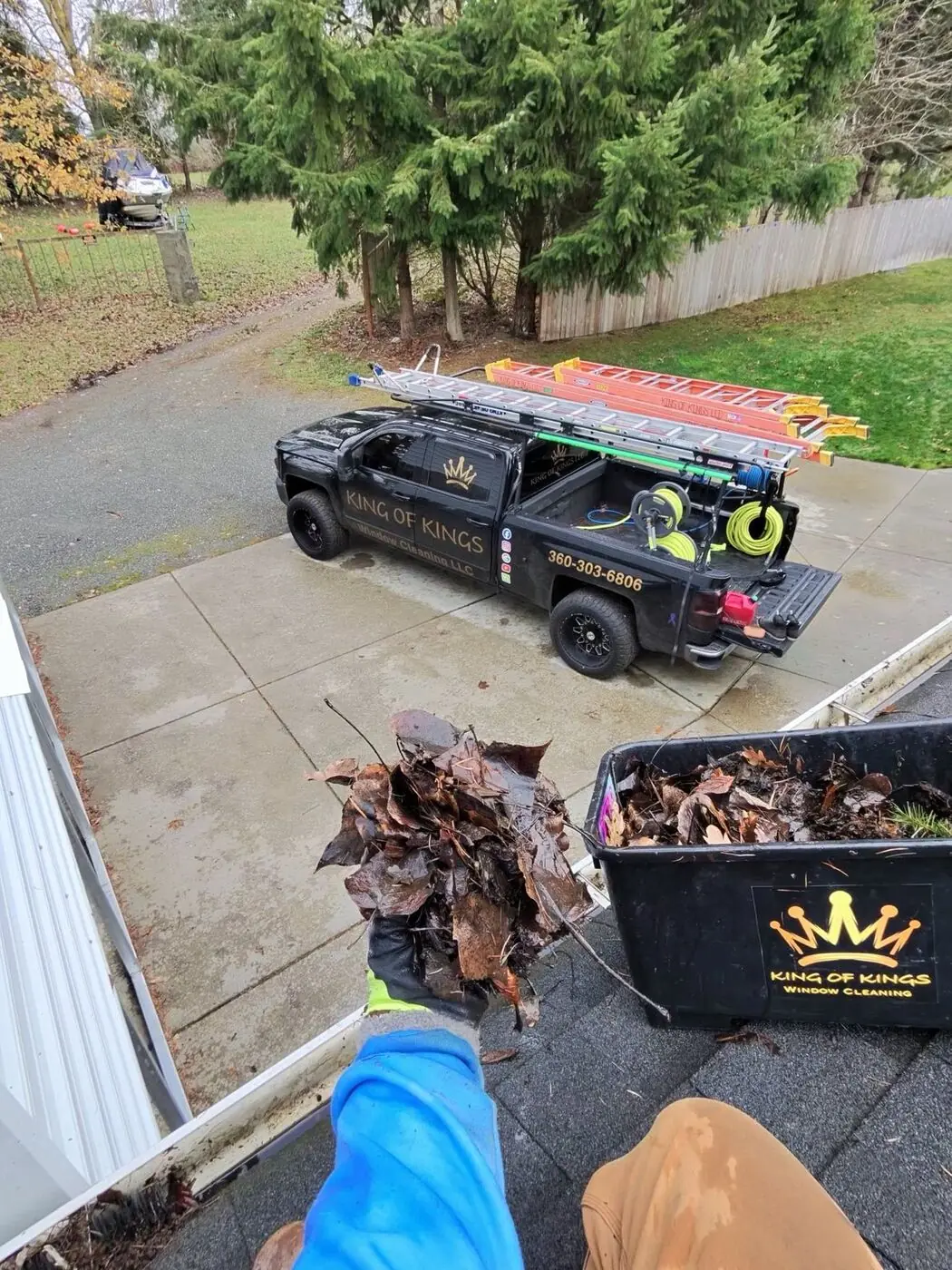
What came out of the gutters on this one property. It leaves with us. 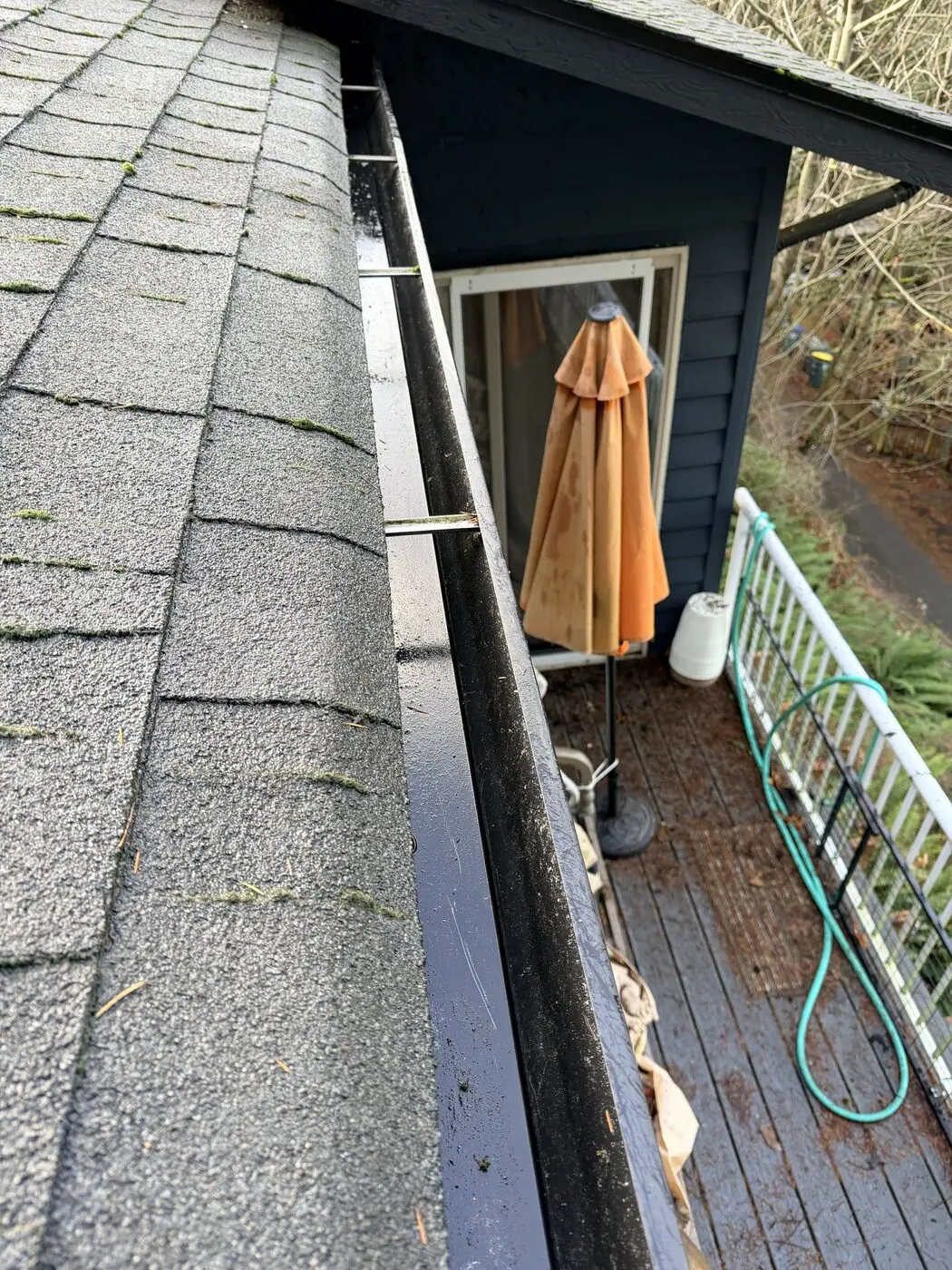
After, above the back deck.
Gutters — what they look like when they are late
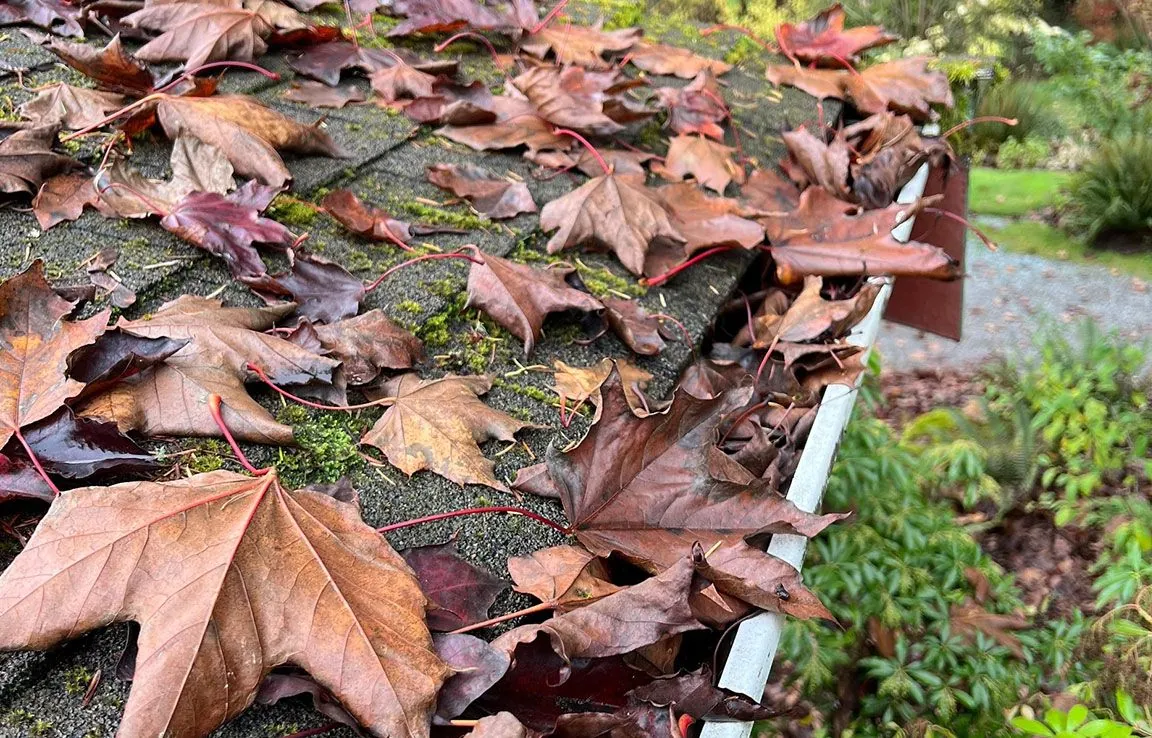
What a gutter looks like when it is already past overflowing. 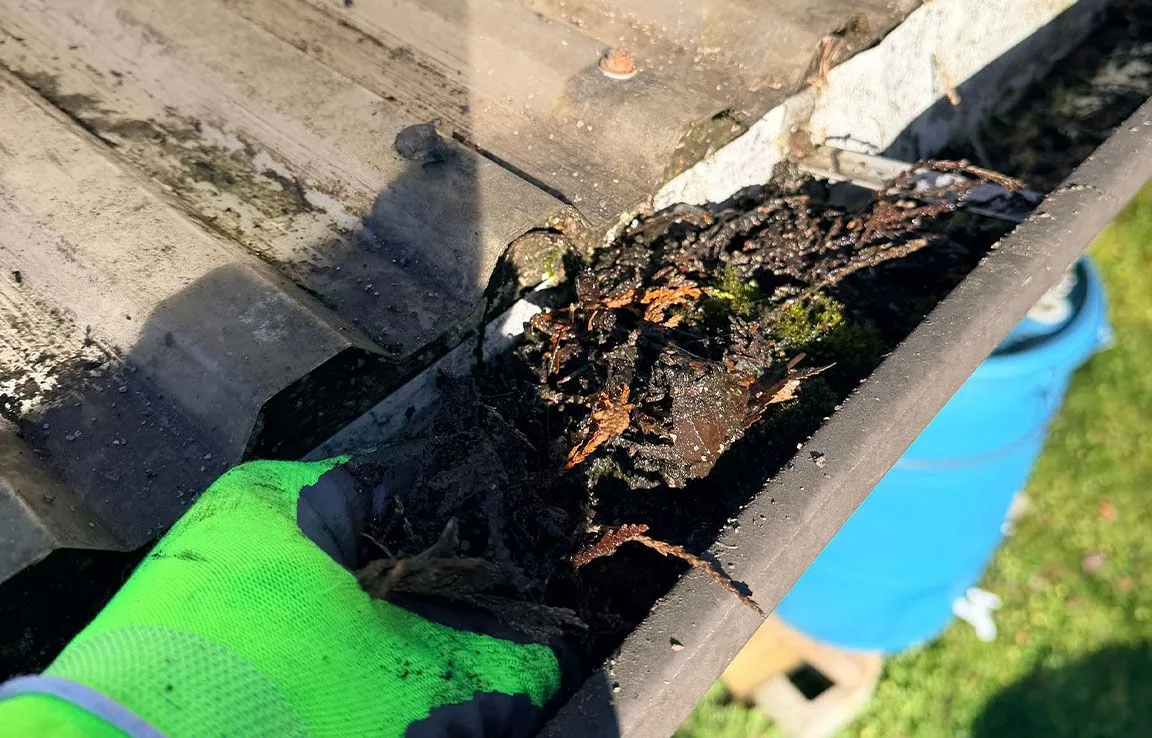
Ferndale. Leaves, moss and grit compact into a plug that water runs straight over. 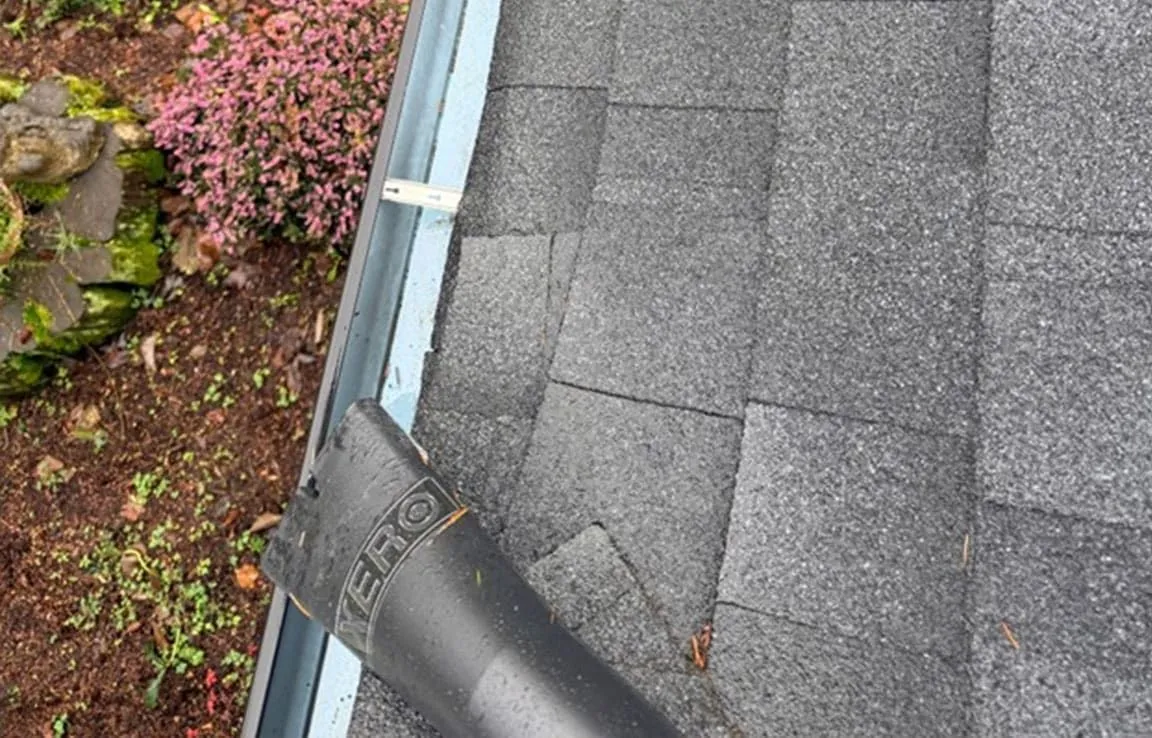
Sedro-Woolley. The roof edge and the gutter are one system, and they silt up together. 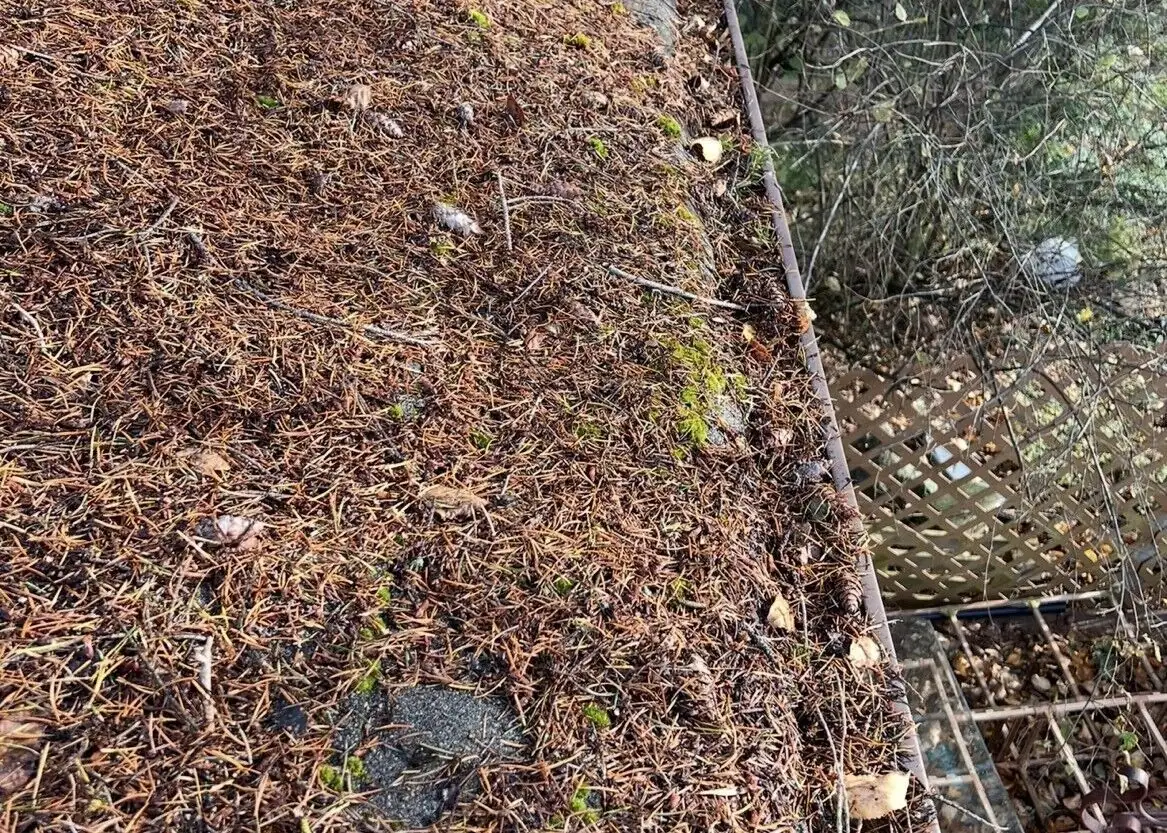
Before. Under forest cover the roof and the gutter fill together, so they are one job rather than two. -
Before. A gutter in this state does not drip — it overflows at the back edge, behind the fascia. -
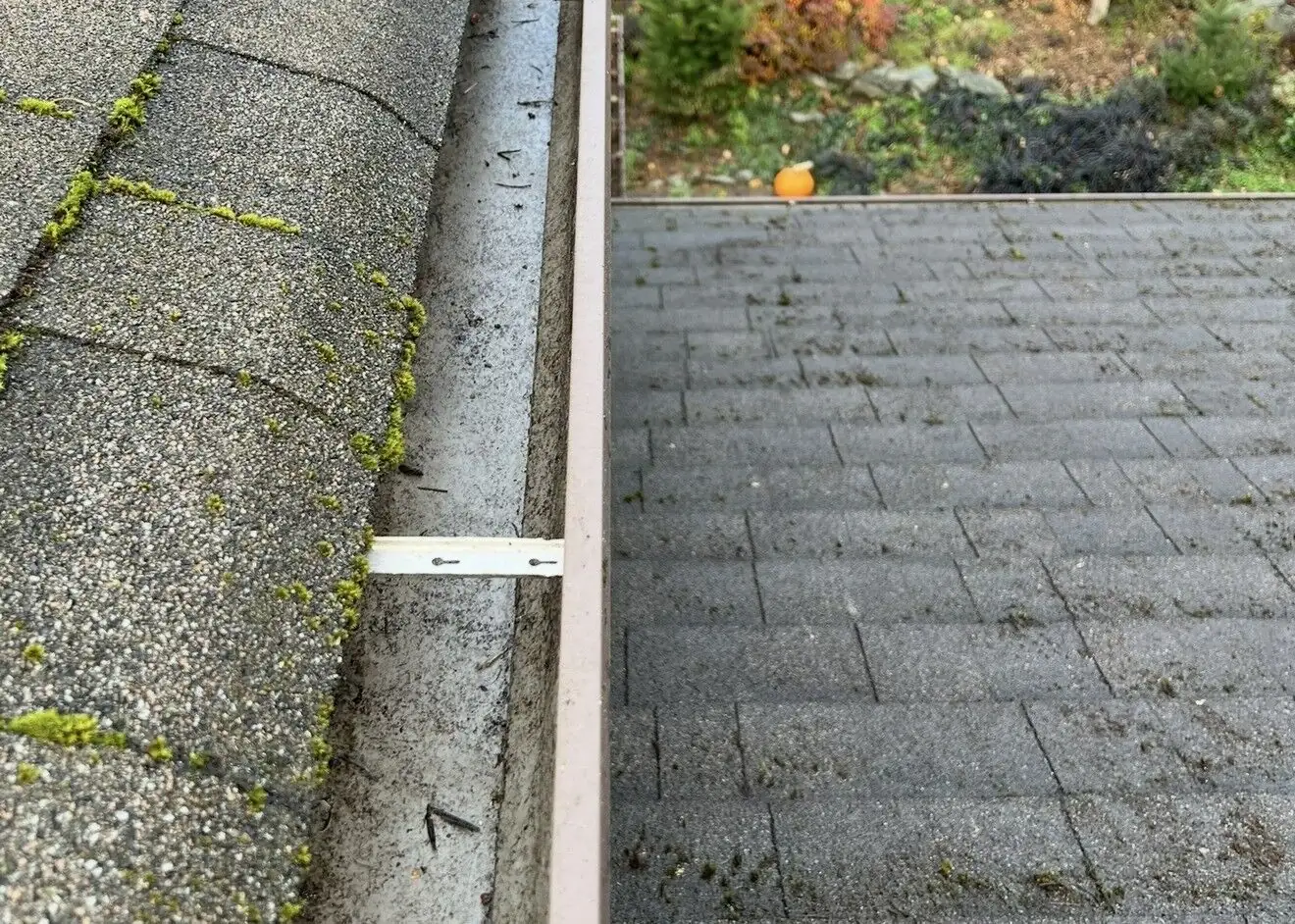
After, same roof edge.
Roof moss removal — Sedro-Woolley
-
Before, Sedro-Woolley. This is what a shaded roof does under forest cover here. -
Before. Both skylights are under there. 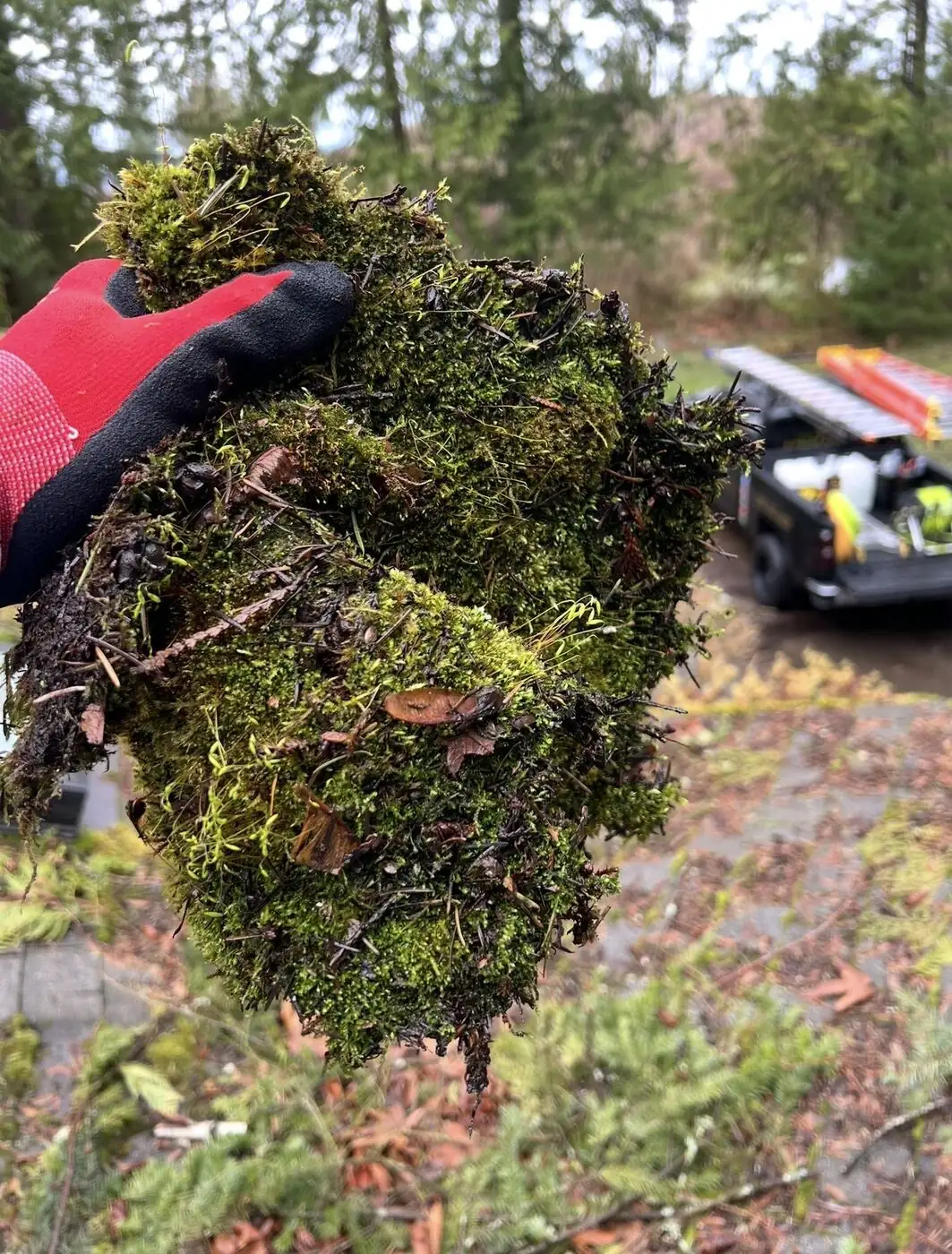
Moss comes off by hand and at low pressure. A pressure washer takes the shingle granules with it. 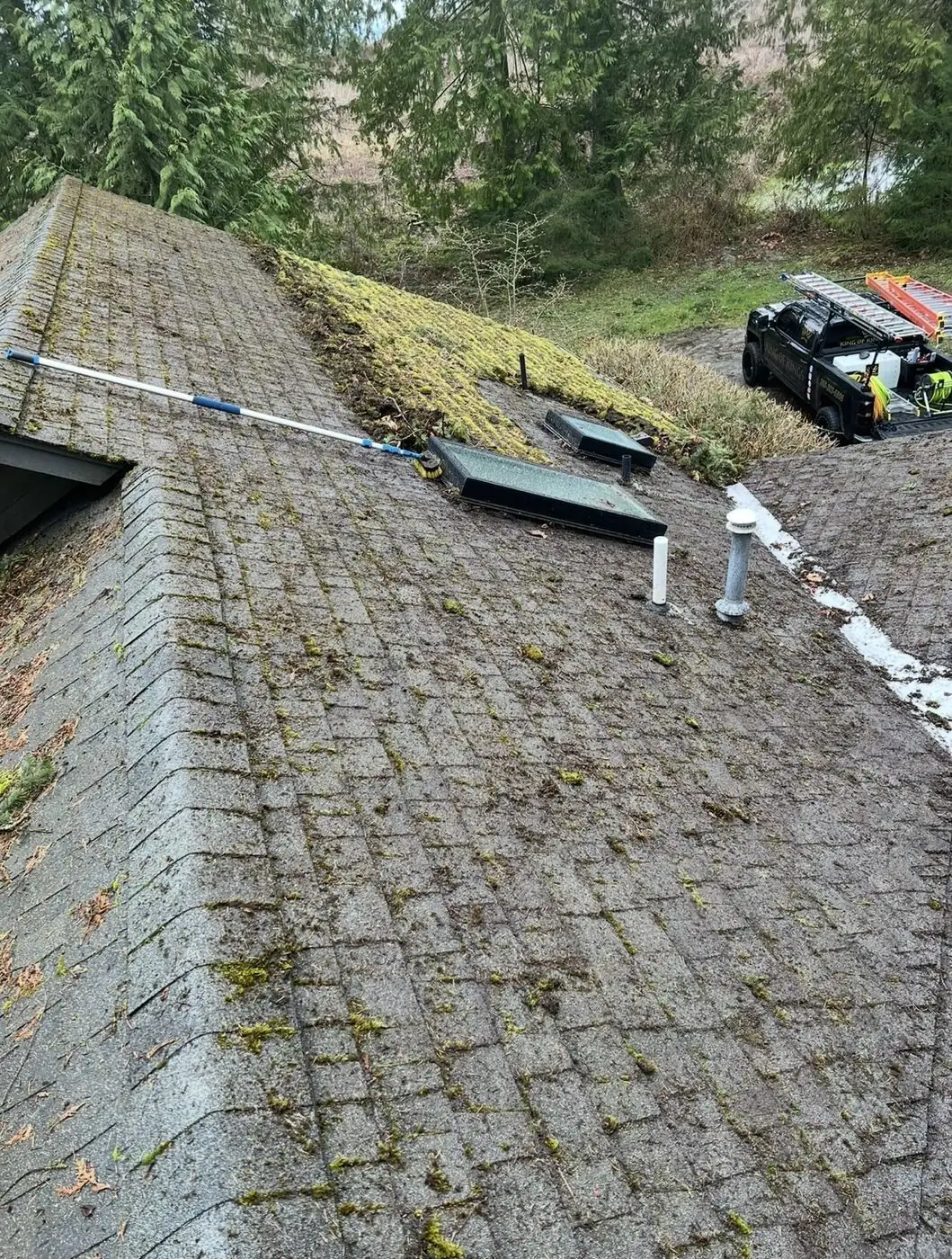
Halfway across, which is the clearest look at what was actually on the roof. -
After. Same roof as the first photograph in this run. -
After, same skylights. 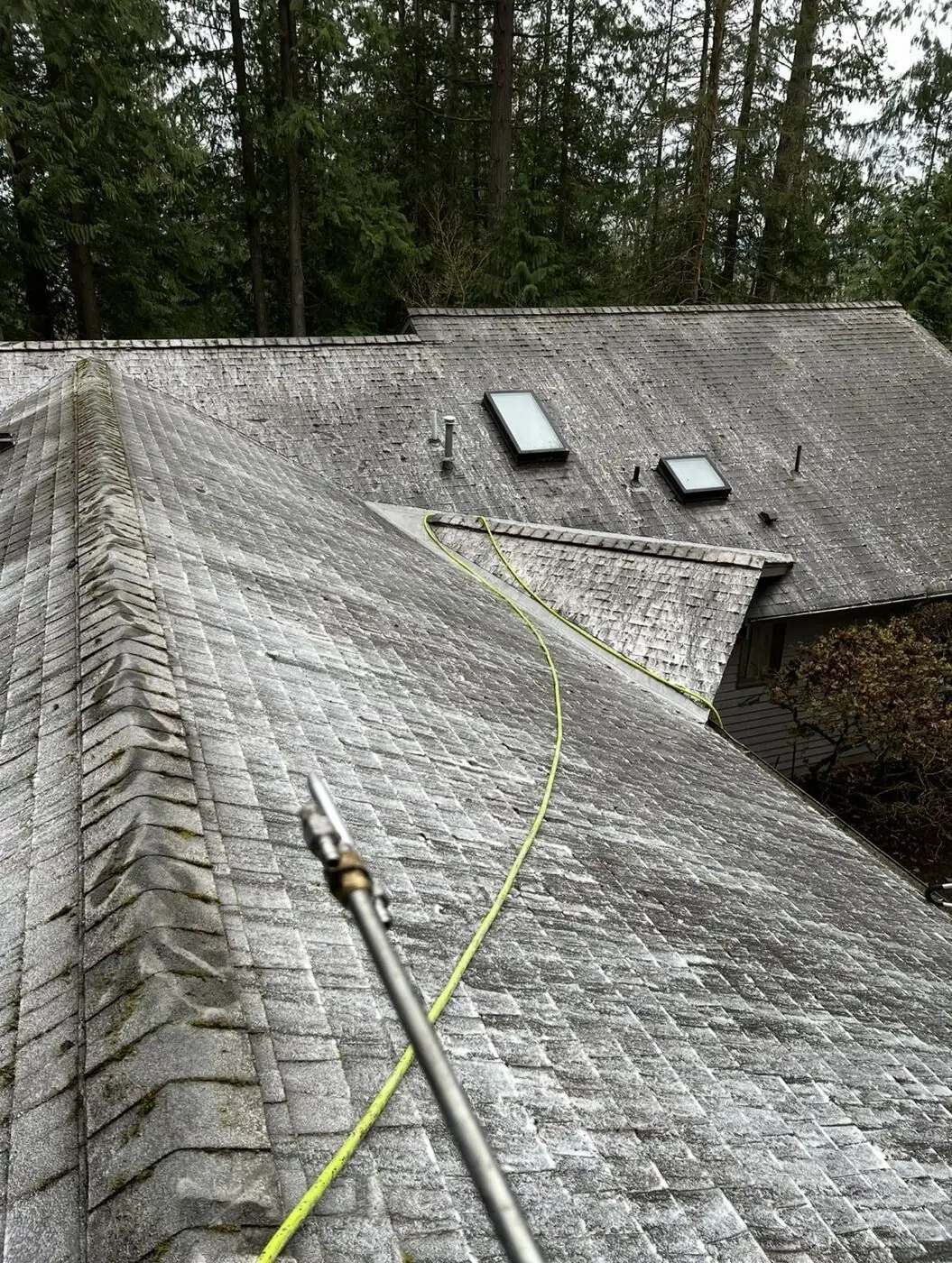
Clearing the moss is half of it. The treatment is what slows it coming back. 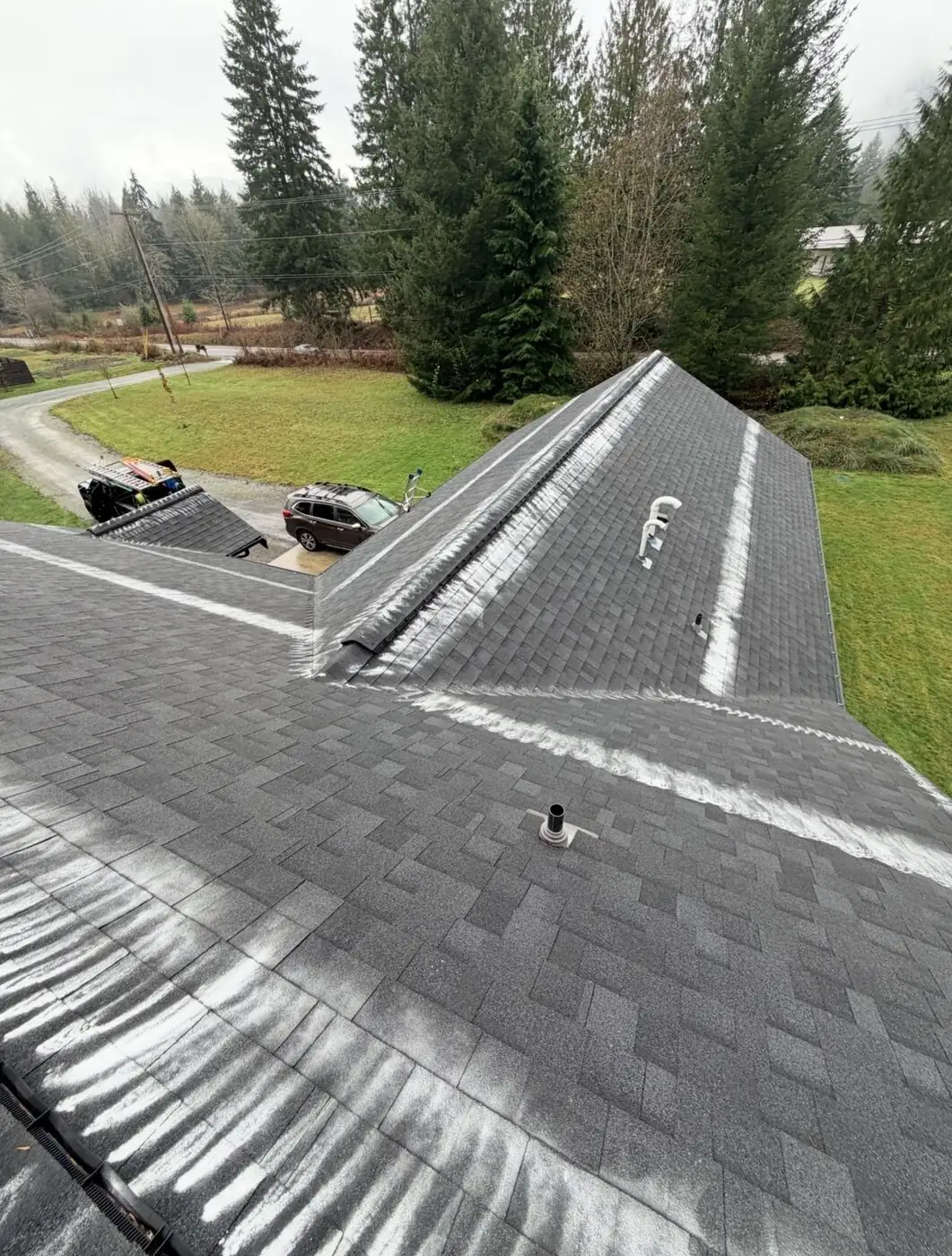
Powder along the ridge; rain carries it down the slope over the following weeks. 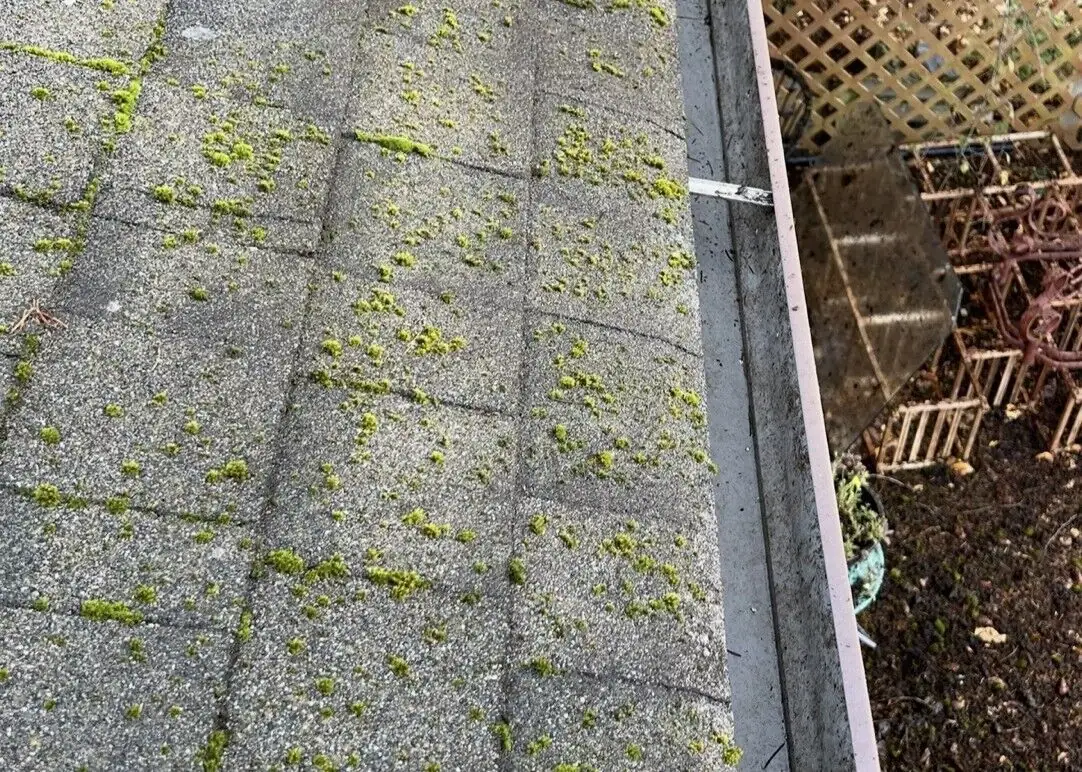
The debris came off and the moss underneath was still there — which is the problem with clearing without treating.
Roof cleaning — shingle roofs
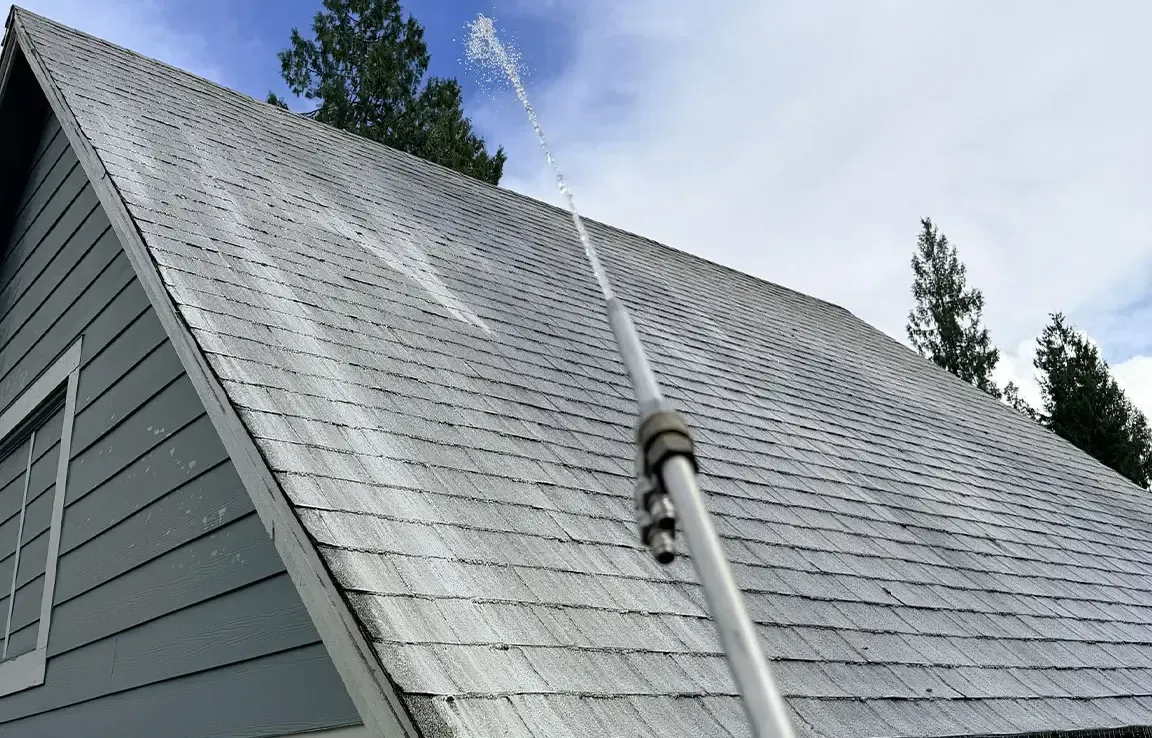
Rinsing down a steep pitch from the ridge, worked from a ladder rather than off the roof itself. 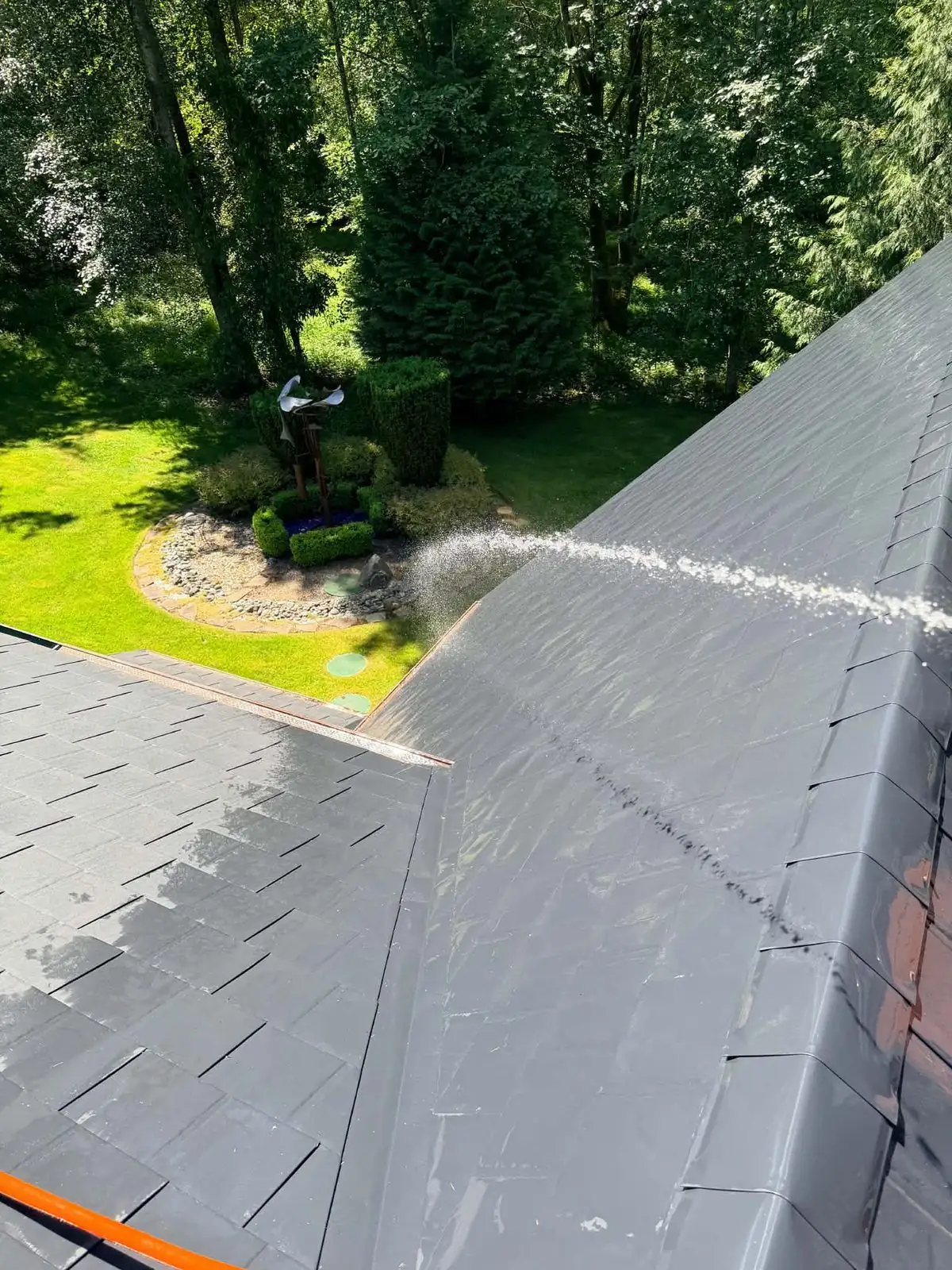
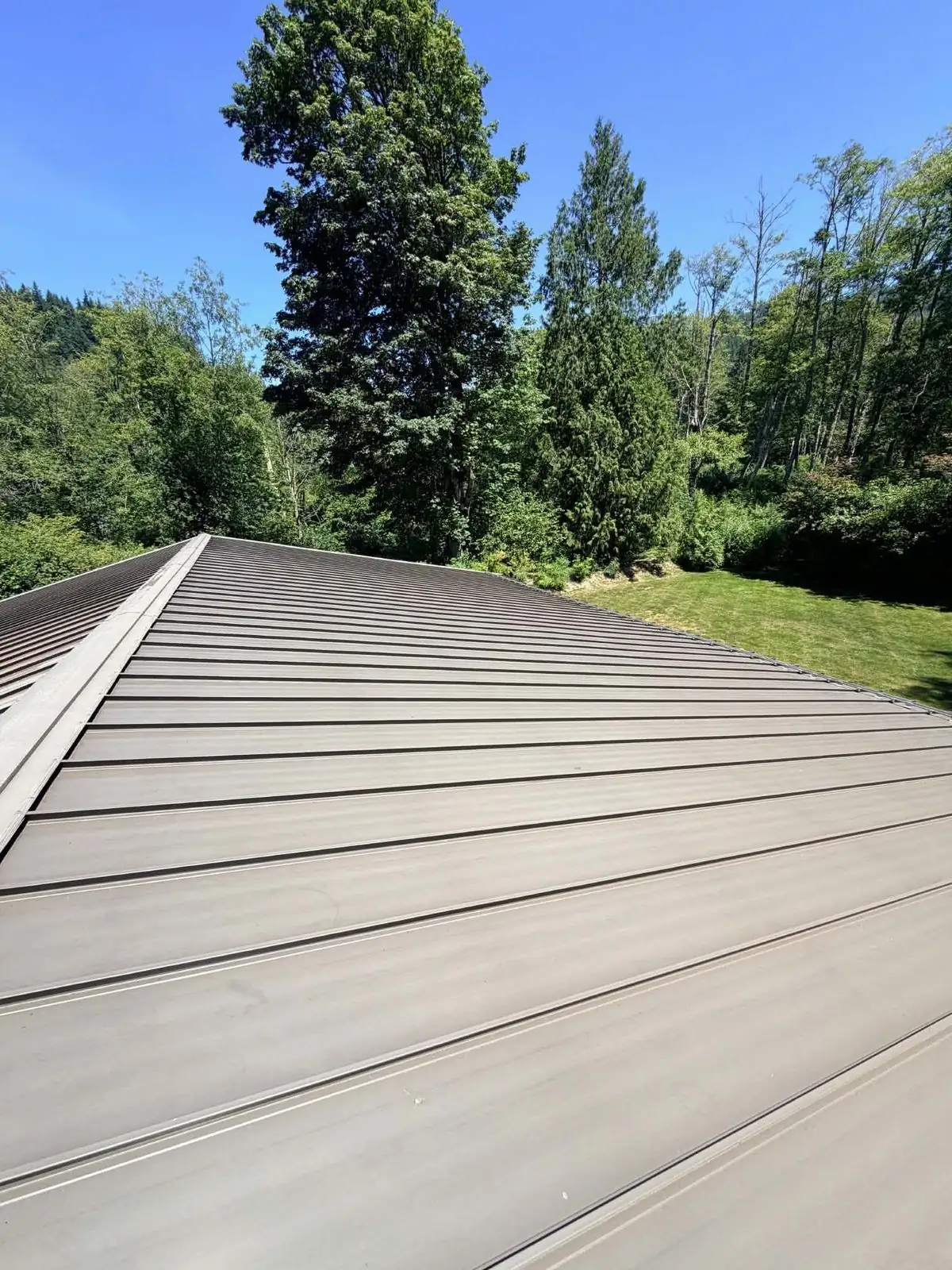
A metal roof pressed to look like asphalt shingle — easy to misread from the ground, and it changes what the roof can safely take. Low pressure either way: pressure strips coatings off metal. 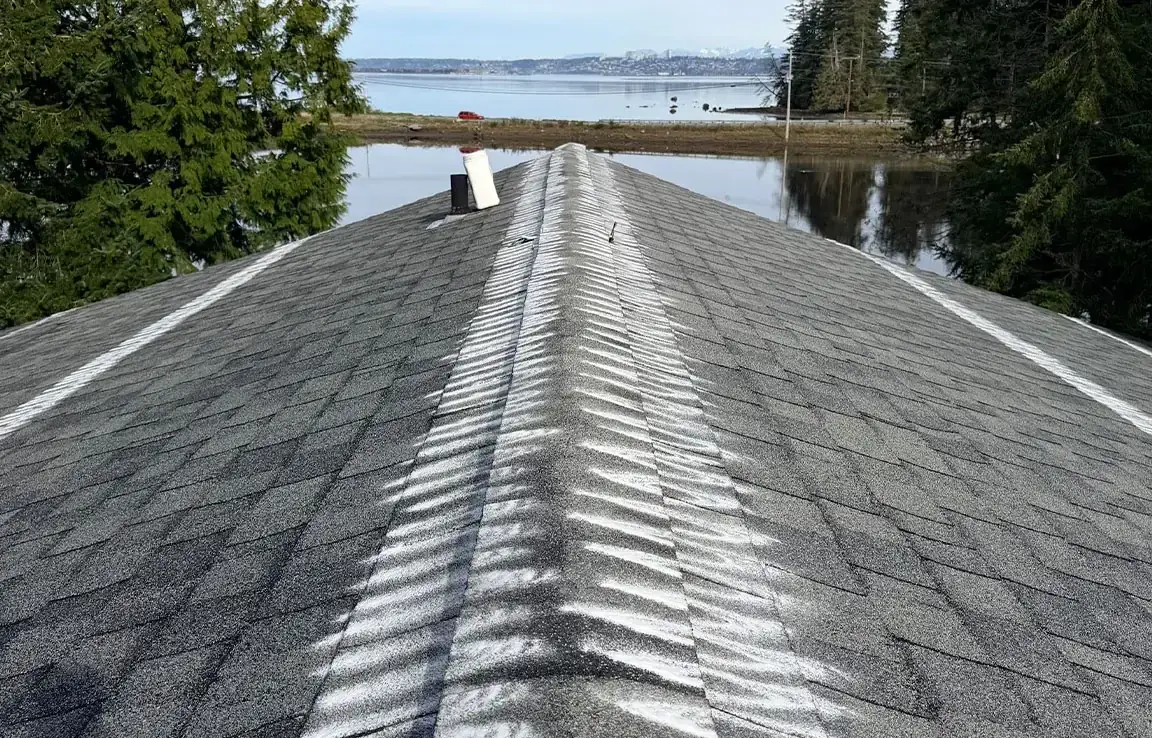
Composition shingle with the growth taken off it. The granules are the wearing surface and they do not grow back. 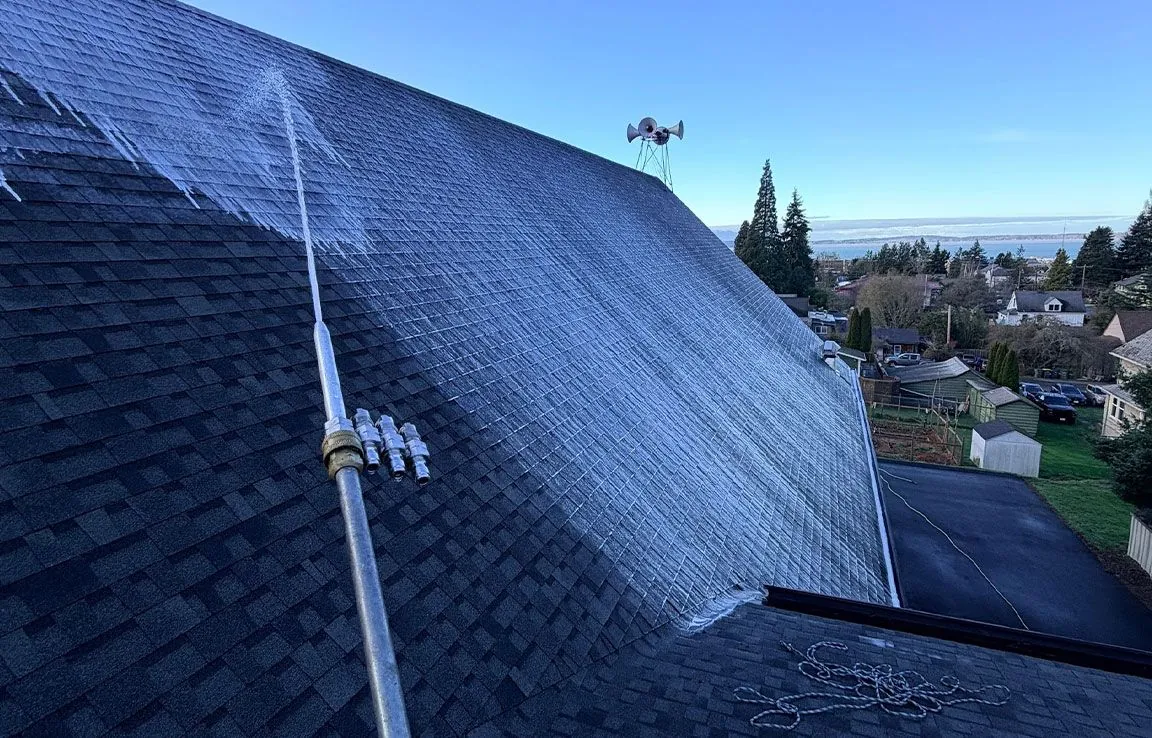
Worked from the ground where the pitch allows it. 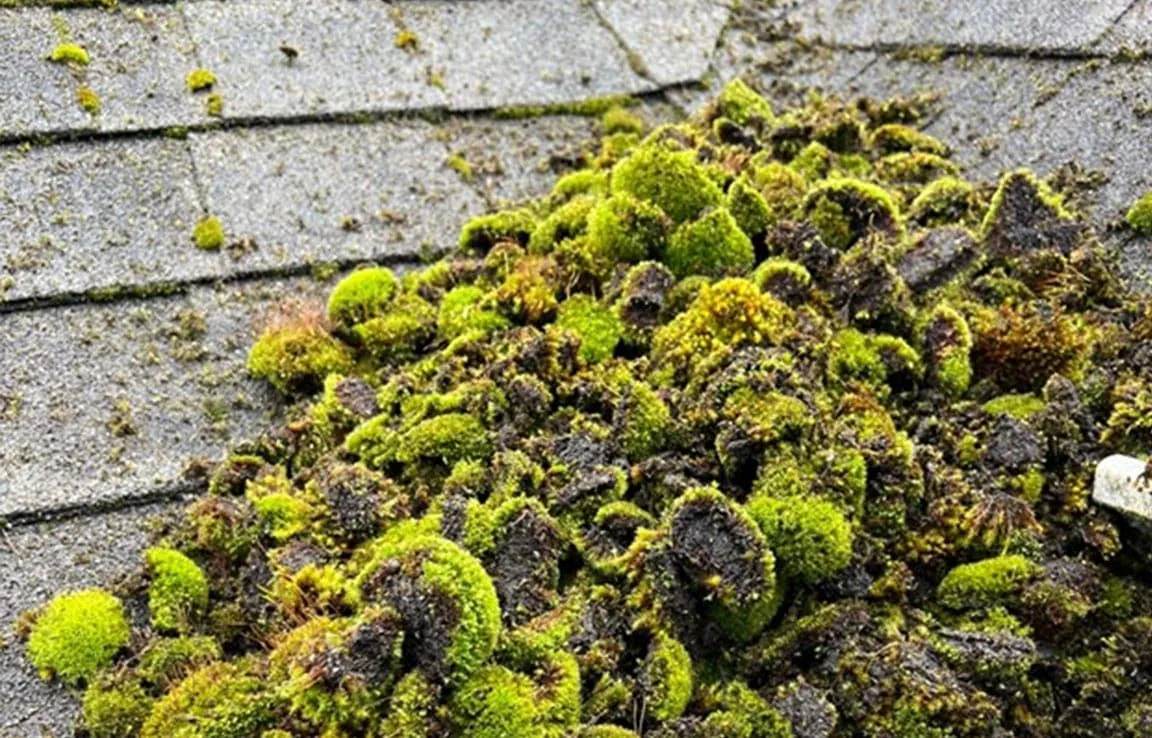
Moss this established has already lifted the shingle edges it is growing under. 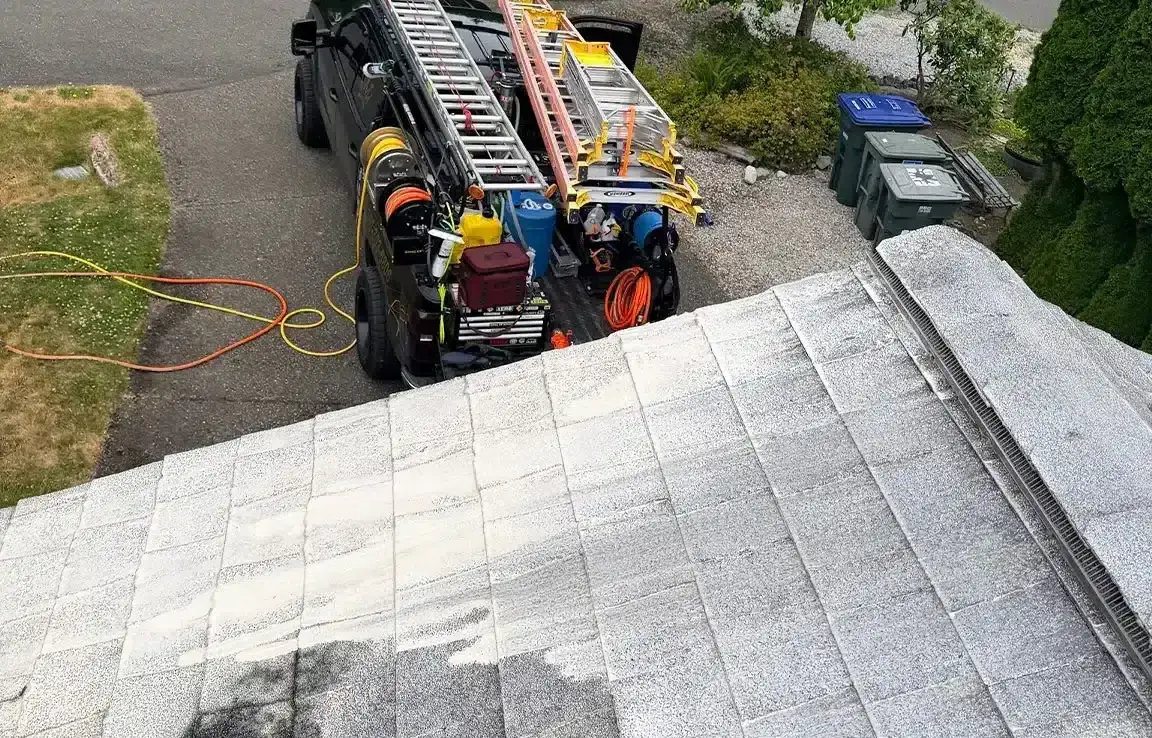
The view from the job. Ladders, hoses and tanks travel with the crew.
Metal roof soft wash — stone home, Whatcom County
Assessed before anything is applied — coating condition decides what the roof can take. 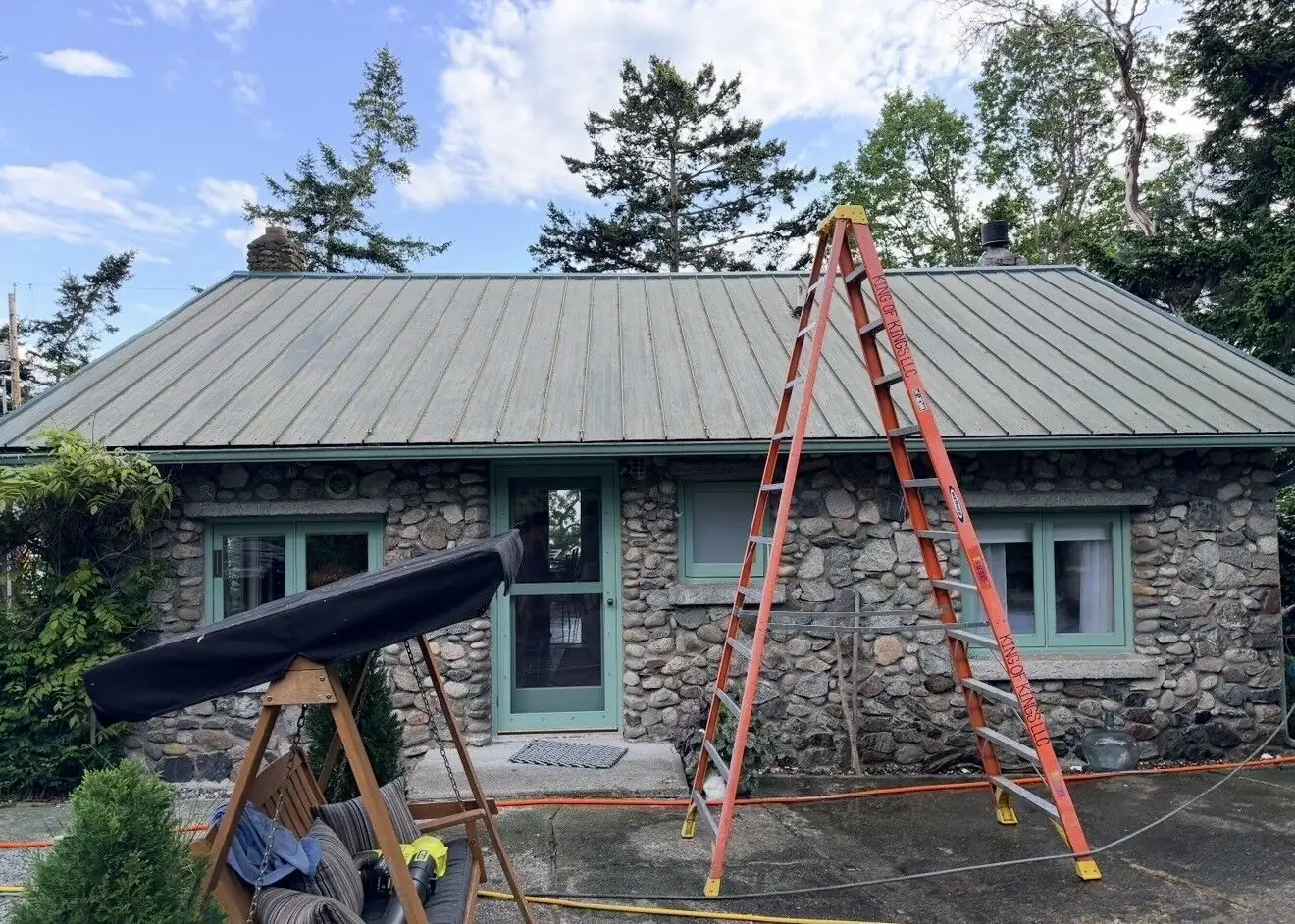
Access set up off the roof itself. Walking a wet standing-seam panel is how people fall and how panels dent. 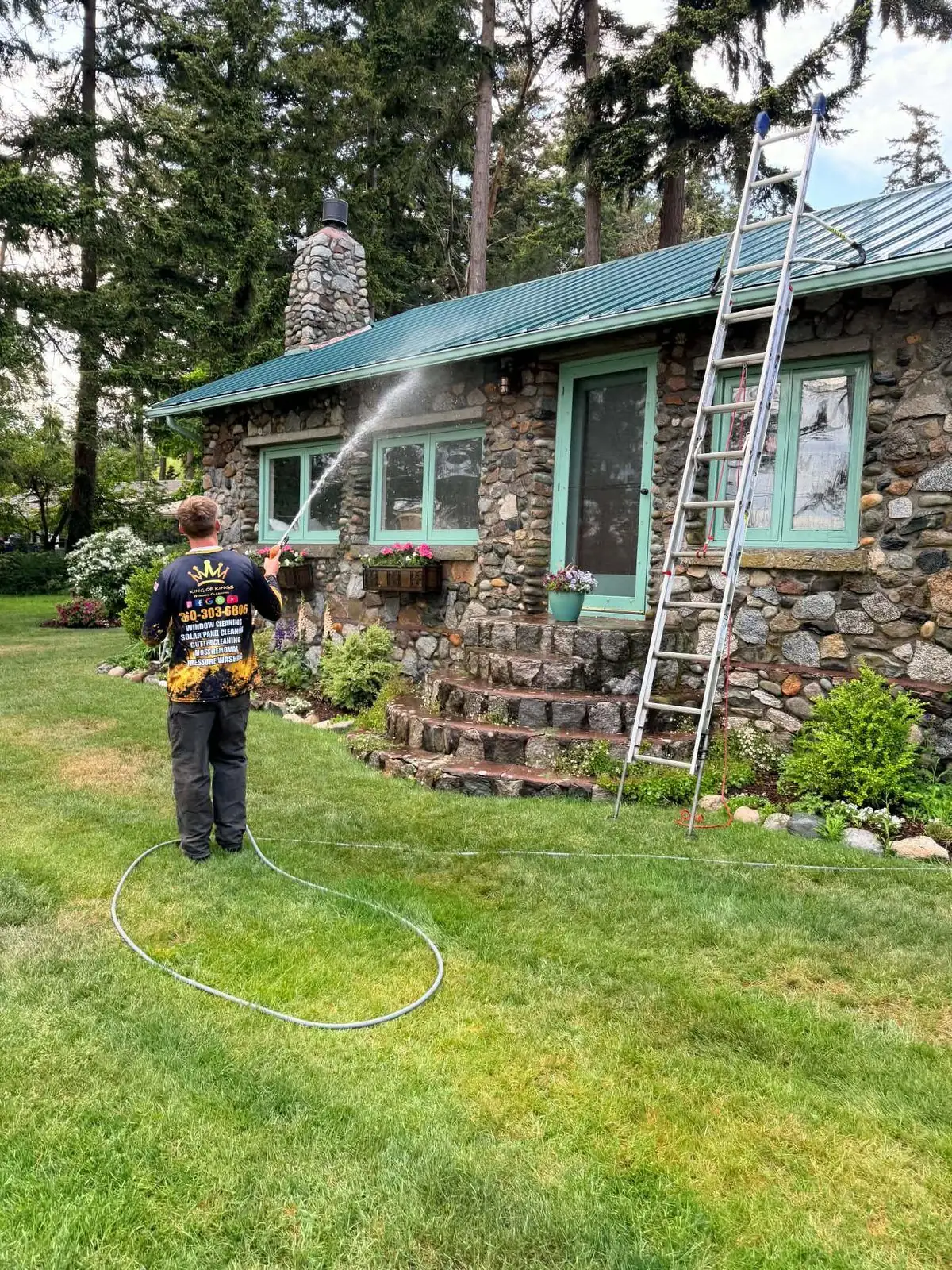
What goes on before the first drop: everything below the work gets covered or rinsed. 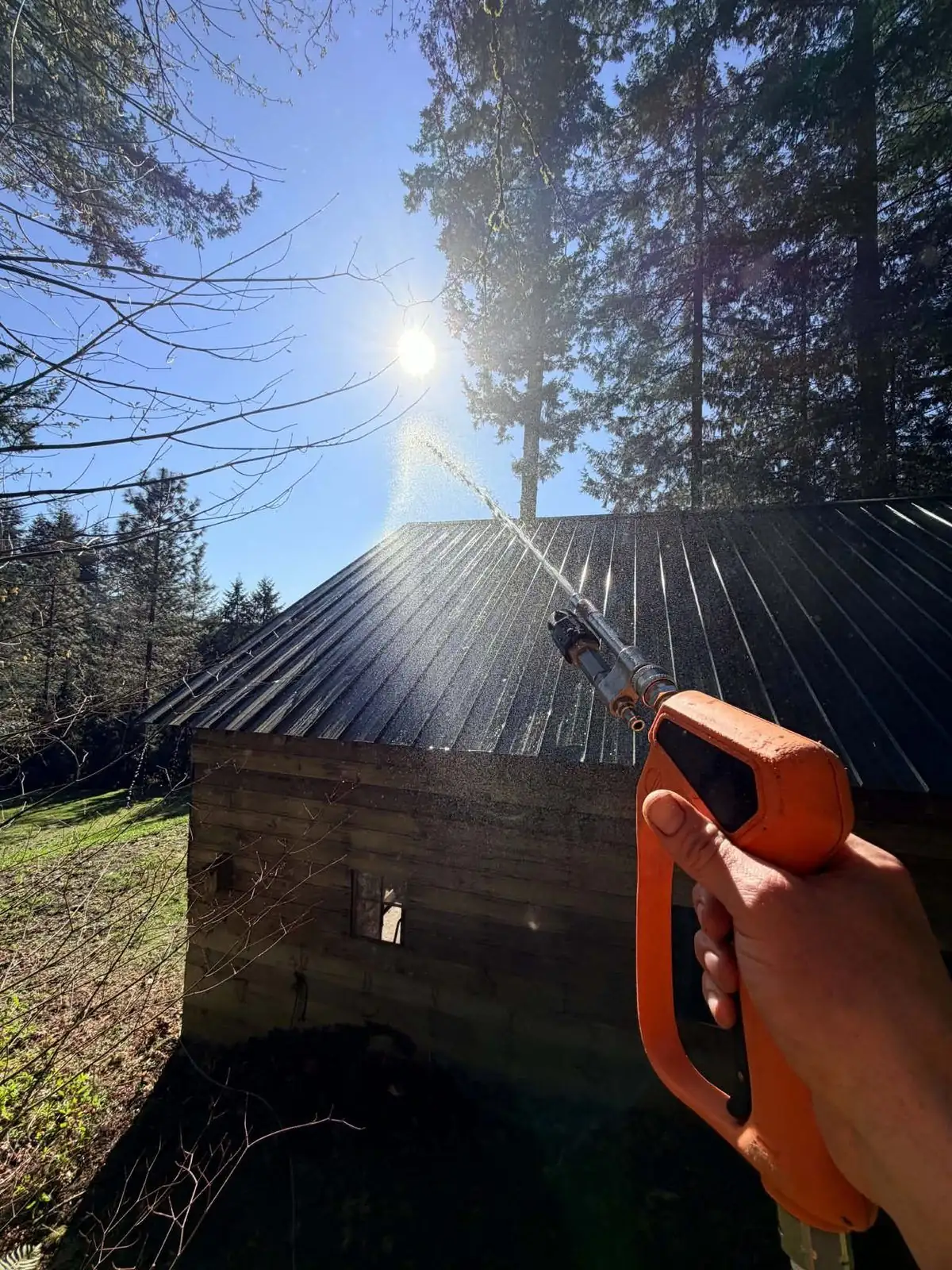
Low pressure and the right chemistry. Pressure strips coatings off metal, which is a repaint rather than a clean. 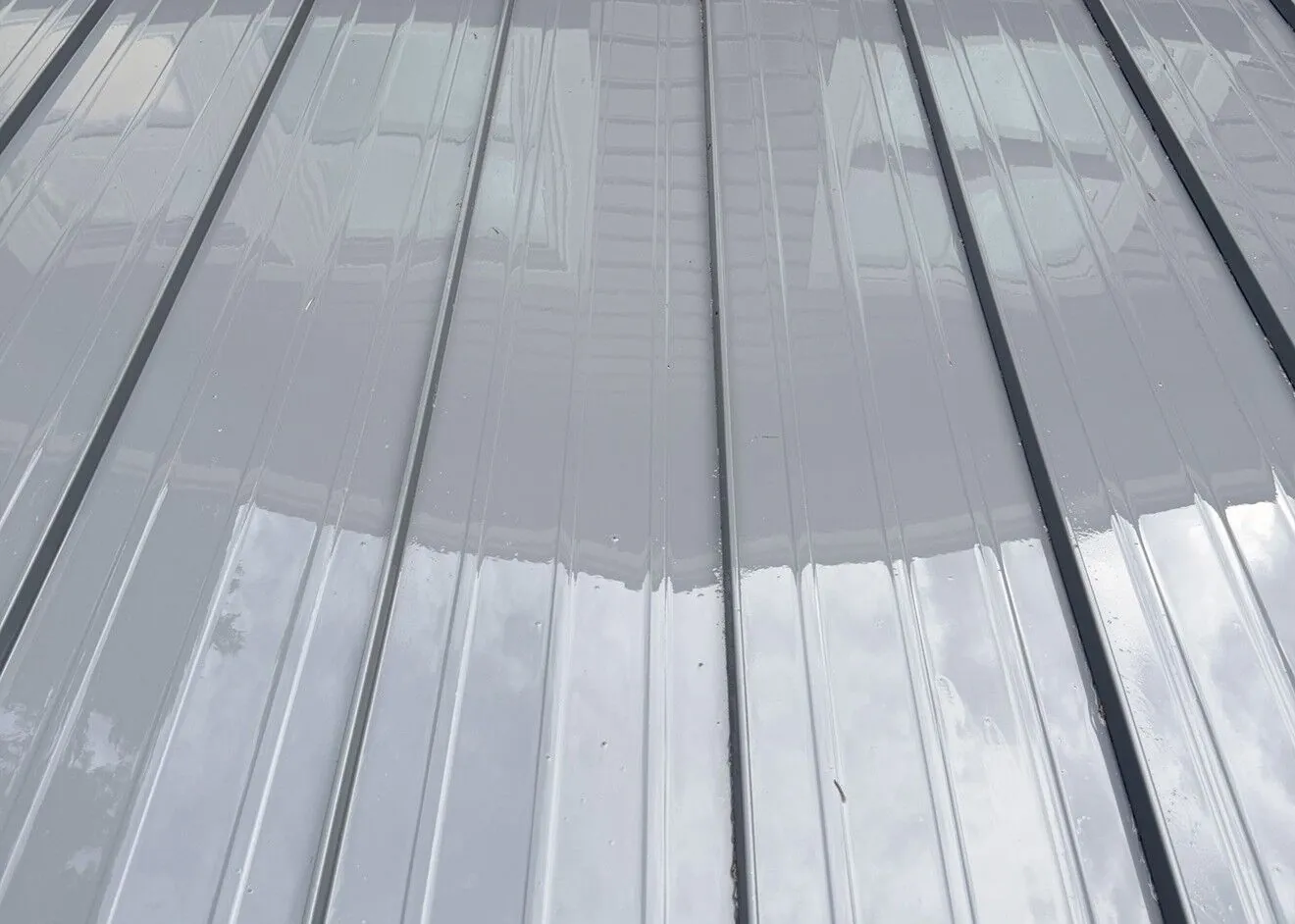
After. Nothing was recoated — that is the original finish with the growth taken off it. 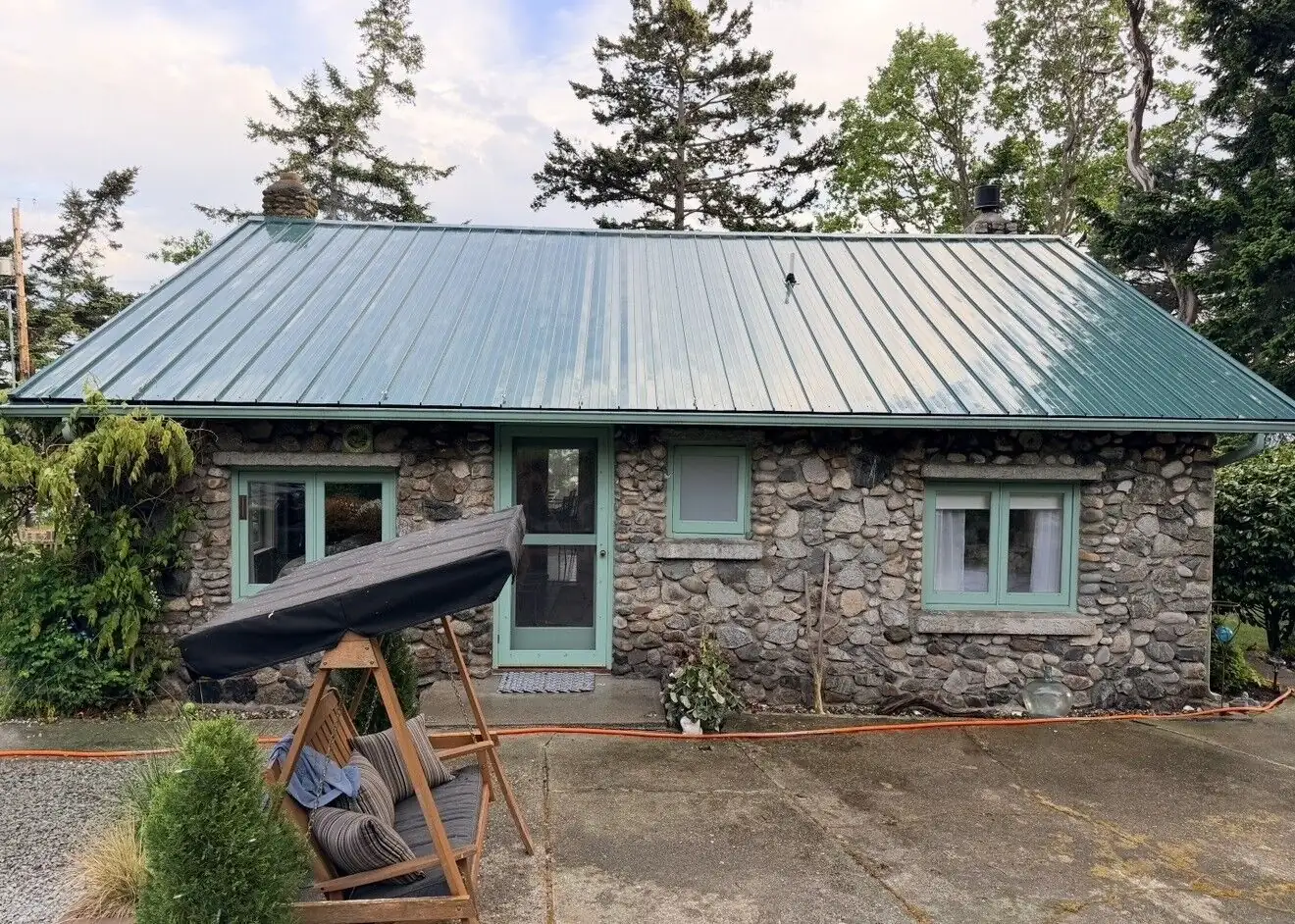
Whatcom County. Standing seam takes a soft wash and nothing harder — the colour is a coating, and pressure takes it off.
House washing — Lynden
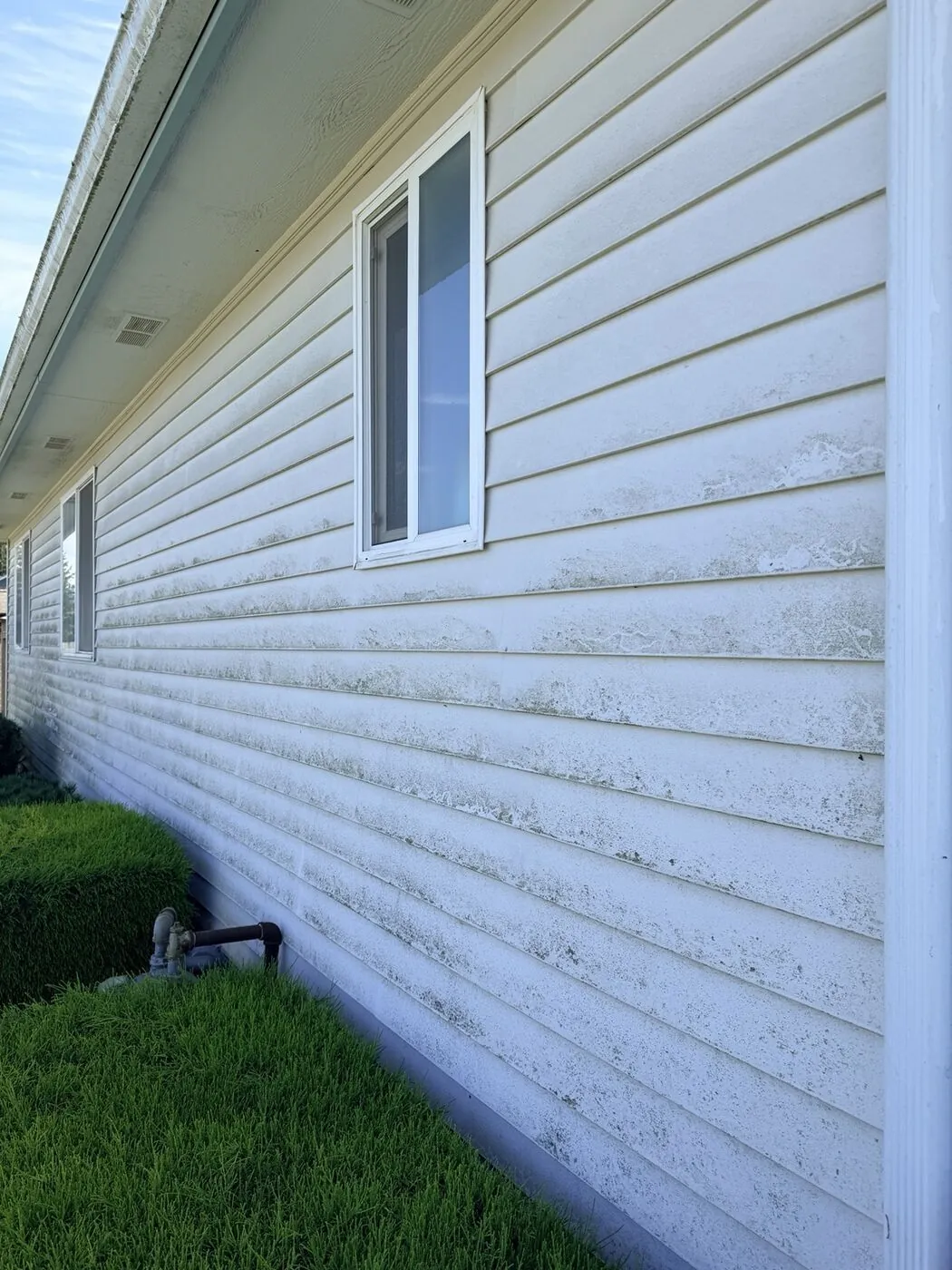
Before, a Lynden home. Growth starts low and on the shaded side, where the wall stays damp longest. -
Before. From here it reads as "the paint has aged", which is usually growth rather than age. 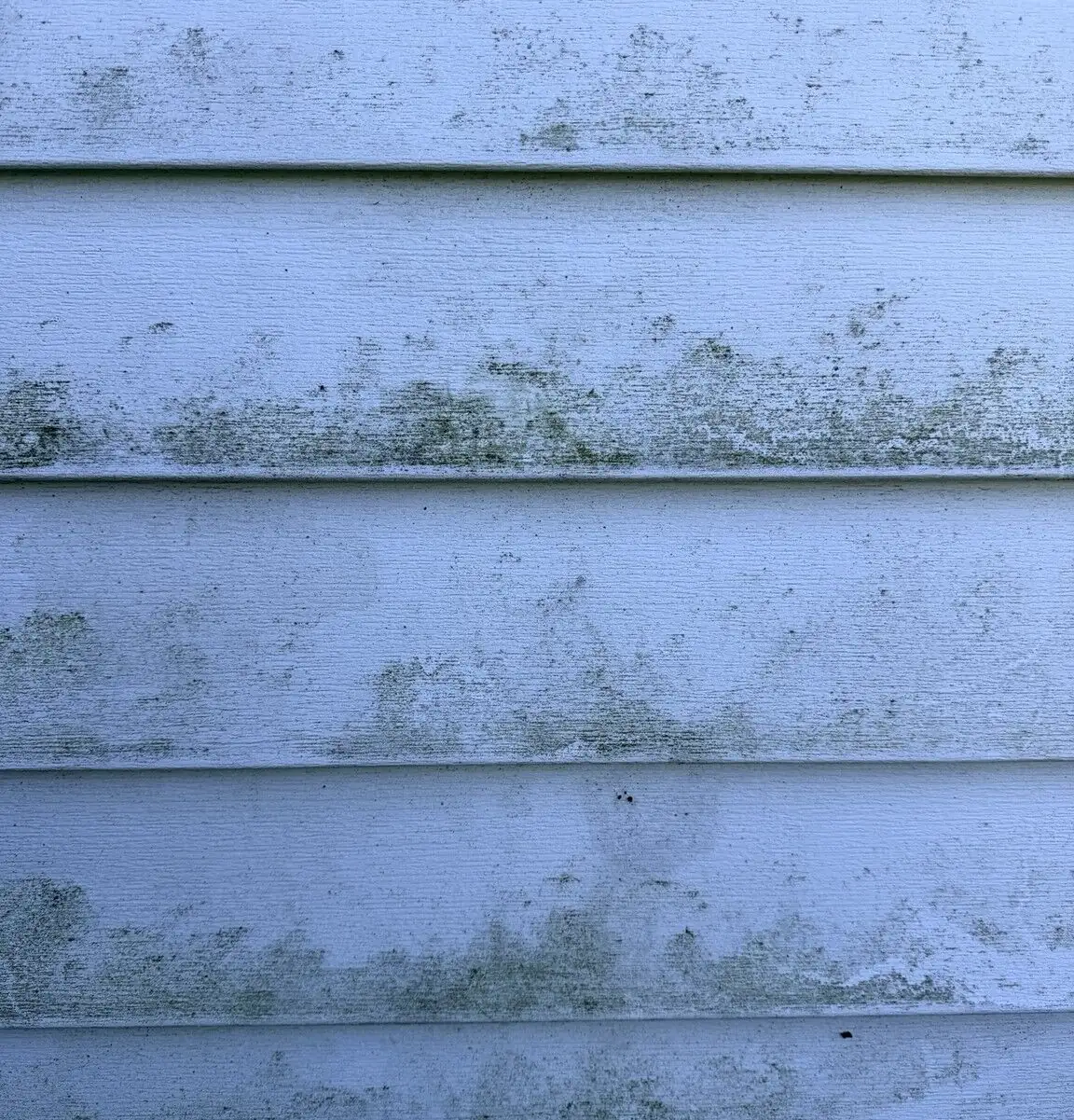
Close up, it is clearly biological — and it is in the surface, not on it. 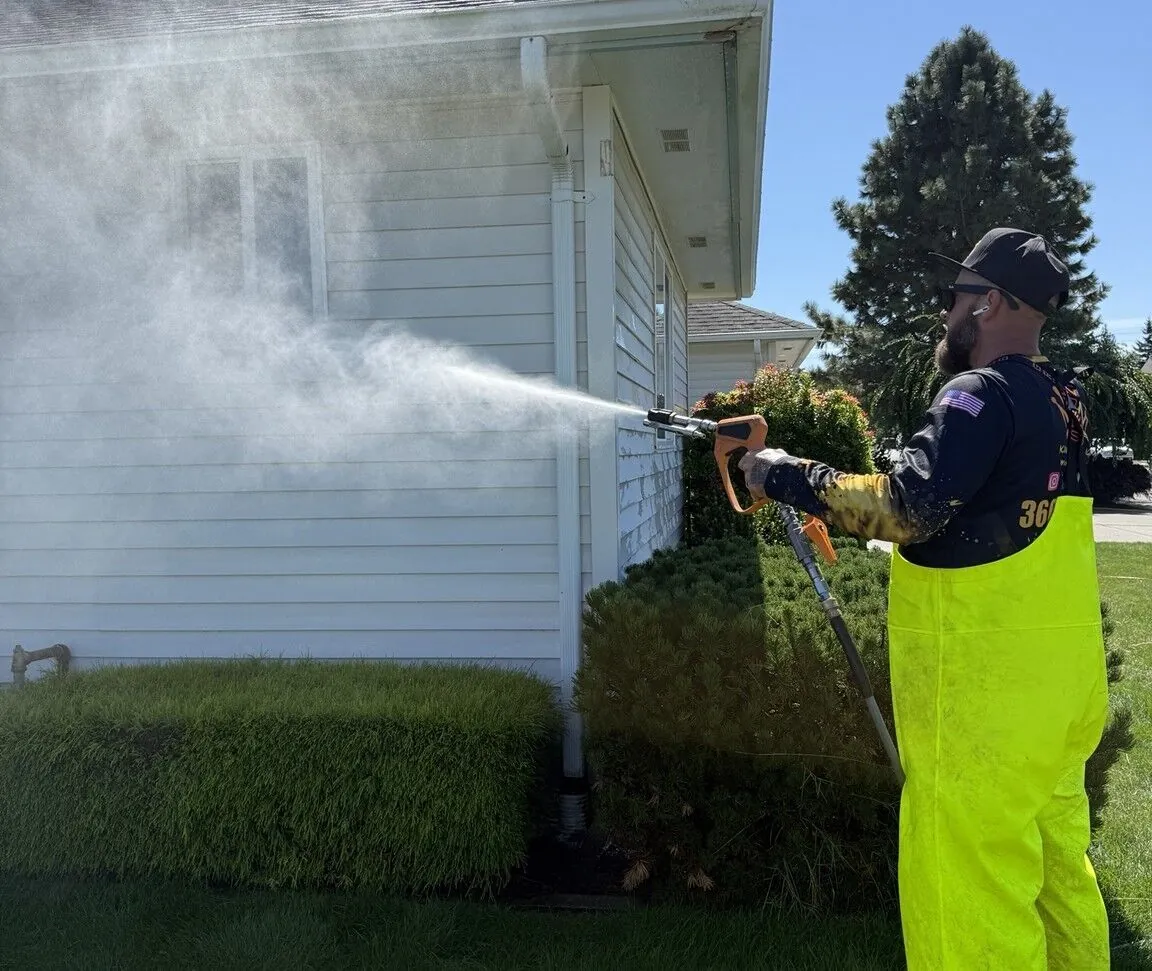
Applied from the ground. Water driven behind a lap board has to come out somewhere. 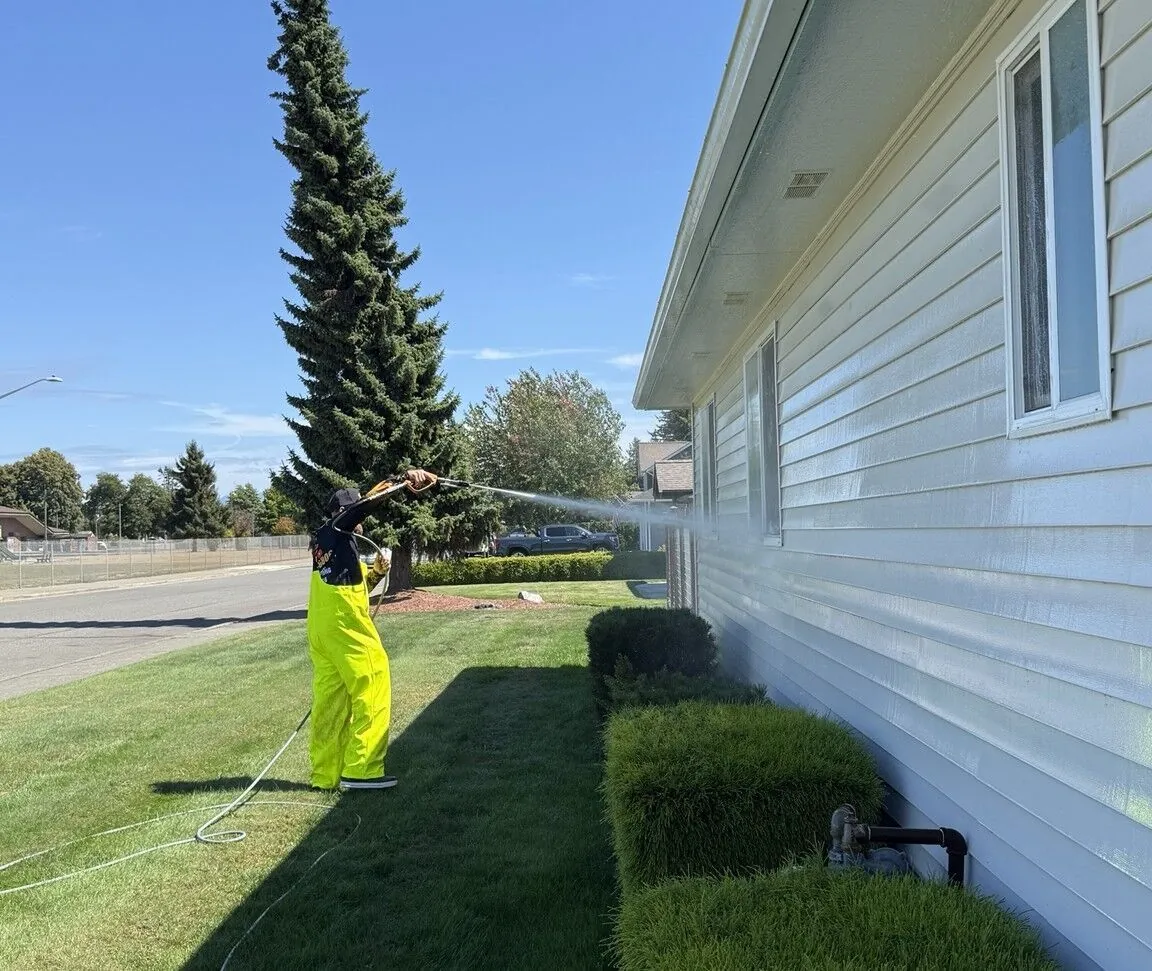
Siding gets washed, not blasted. -
Before, the shaded side wall. -
After, same wall, same day. -
Before, close enough to count the courses. -
After, same boards. -
After. Same wall as the second photograph in this run. 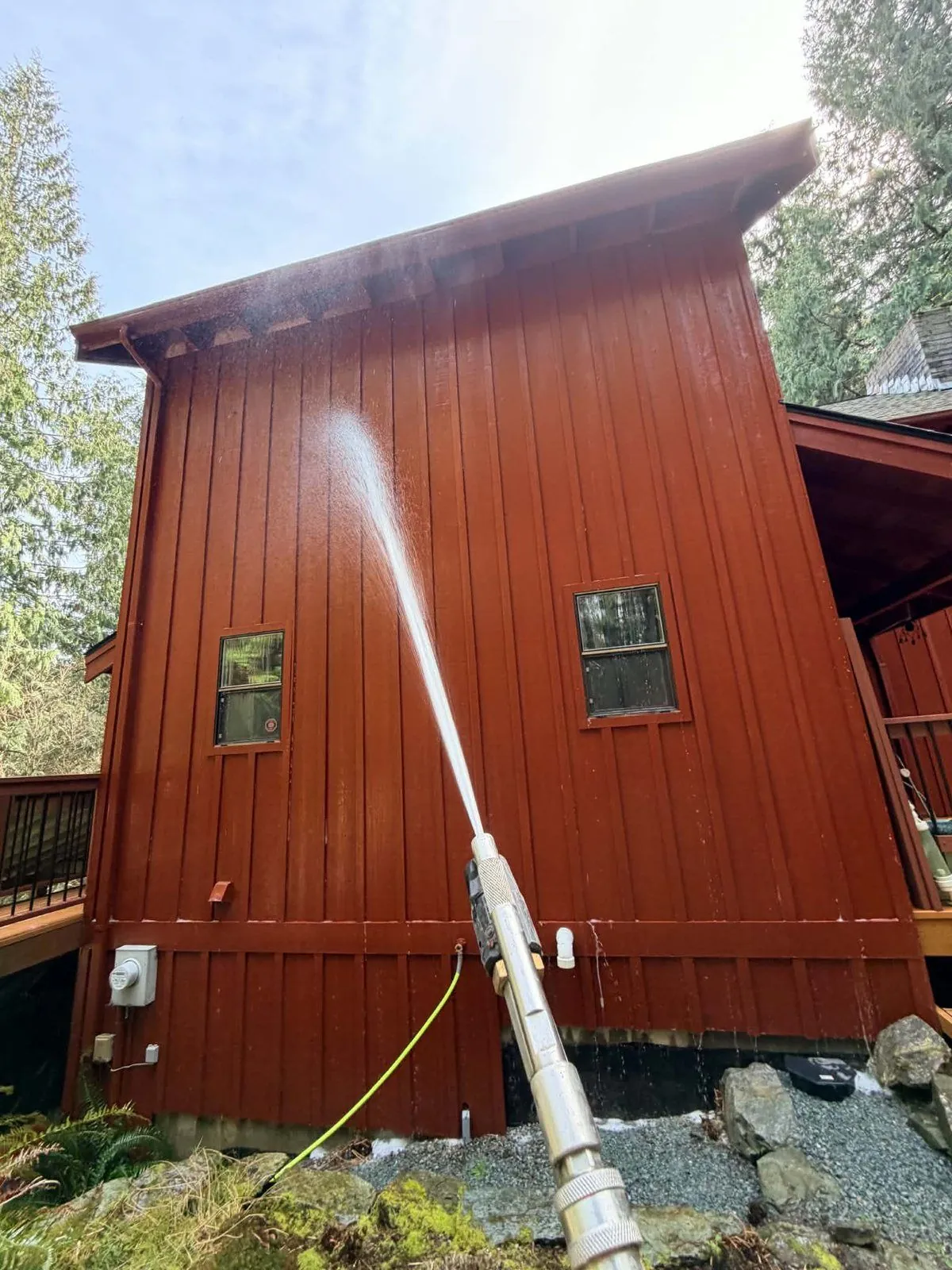
Board-and-batten on another Whatcom County property. The battens hold debris along every vertical seam. 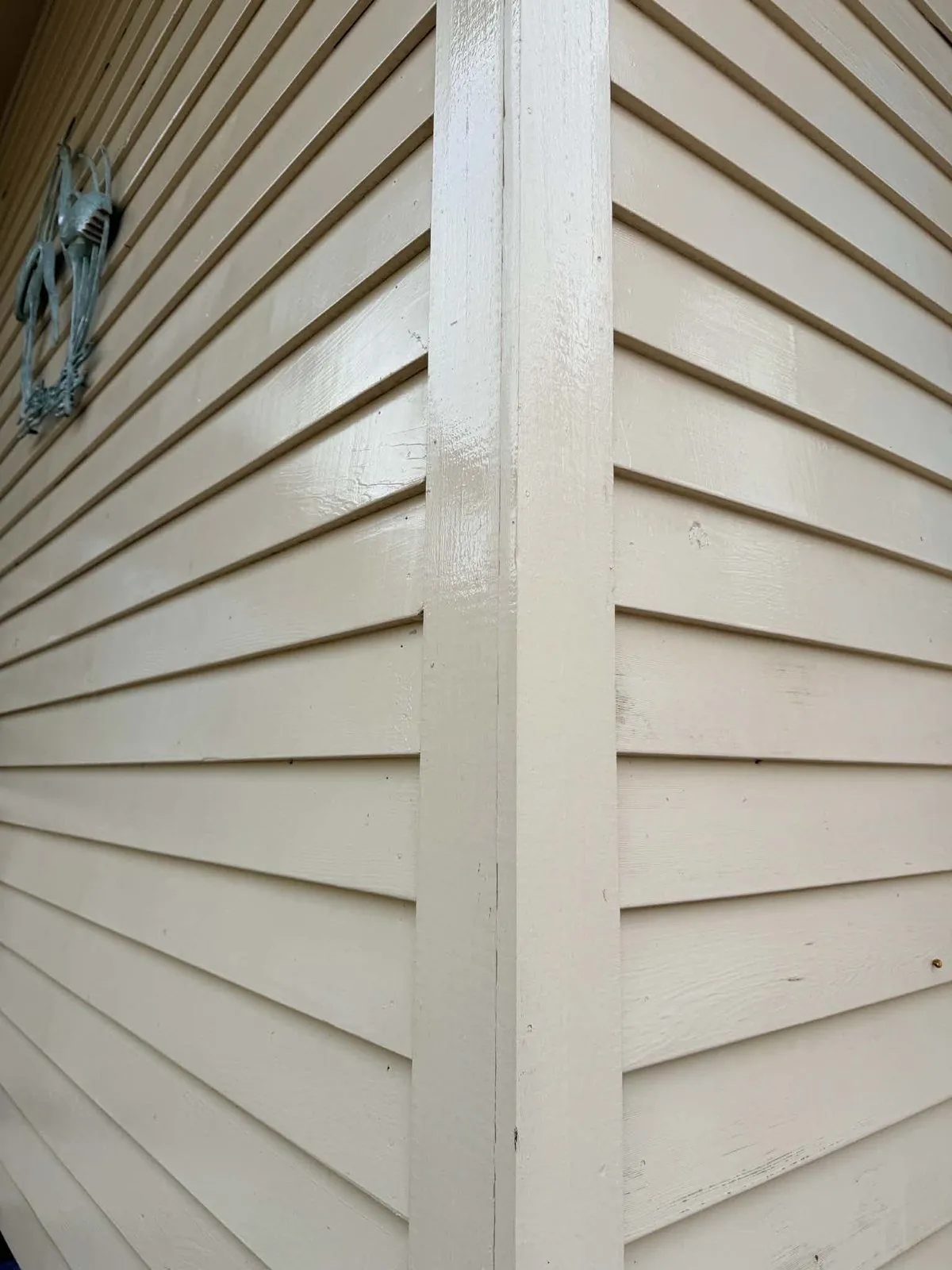
Corner boards and trim are where a rushed house wash shows.
Concrete, driveways and the truck — Mount Vernon
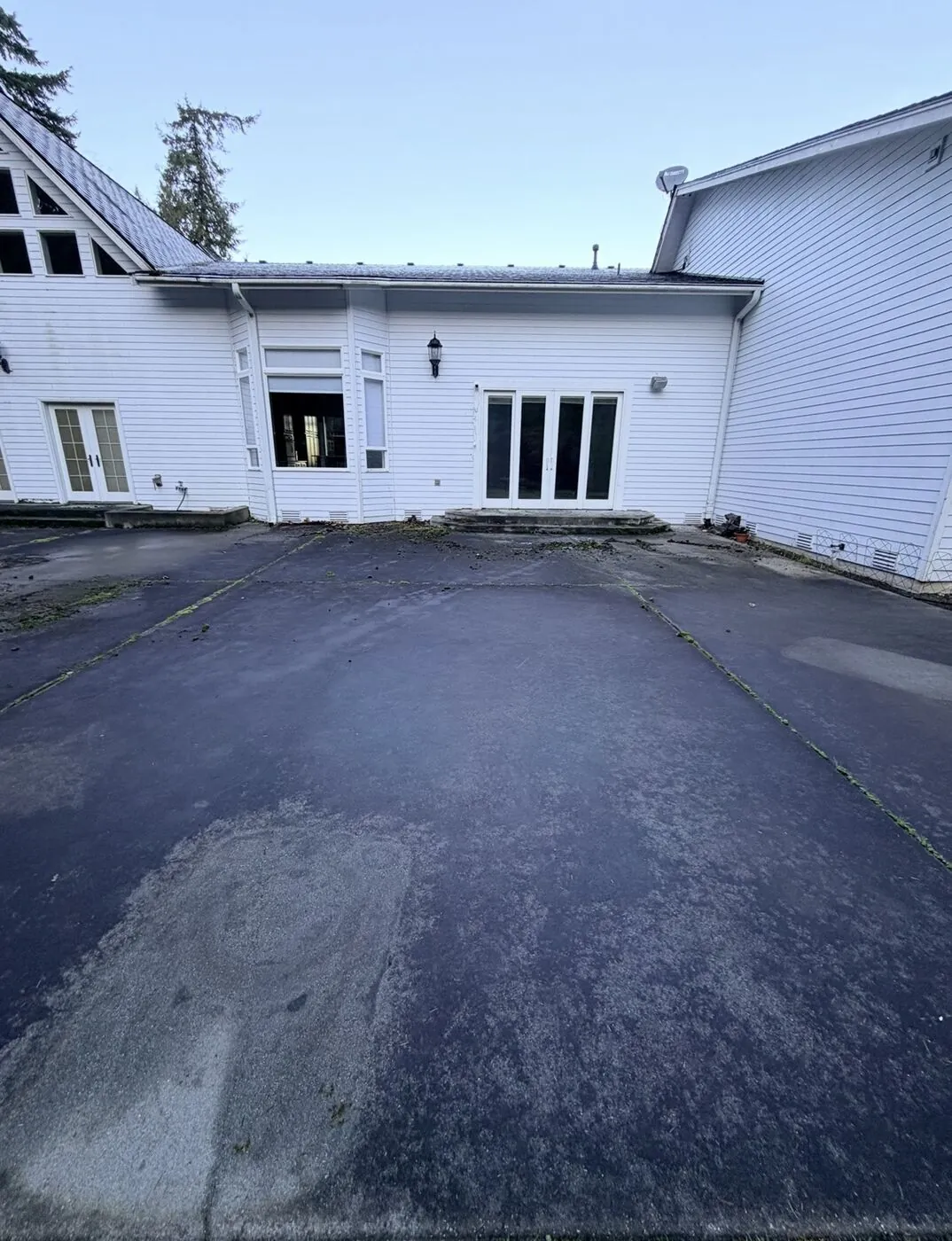
Before, Mount Vernon. Concrete goes black here from organic growth, not dirt — which is why sweeping never touches it. -
Before, the front entry. Black concrete is biological, and biological is what makes it slick underfoot. 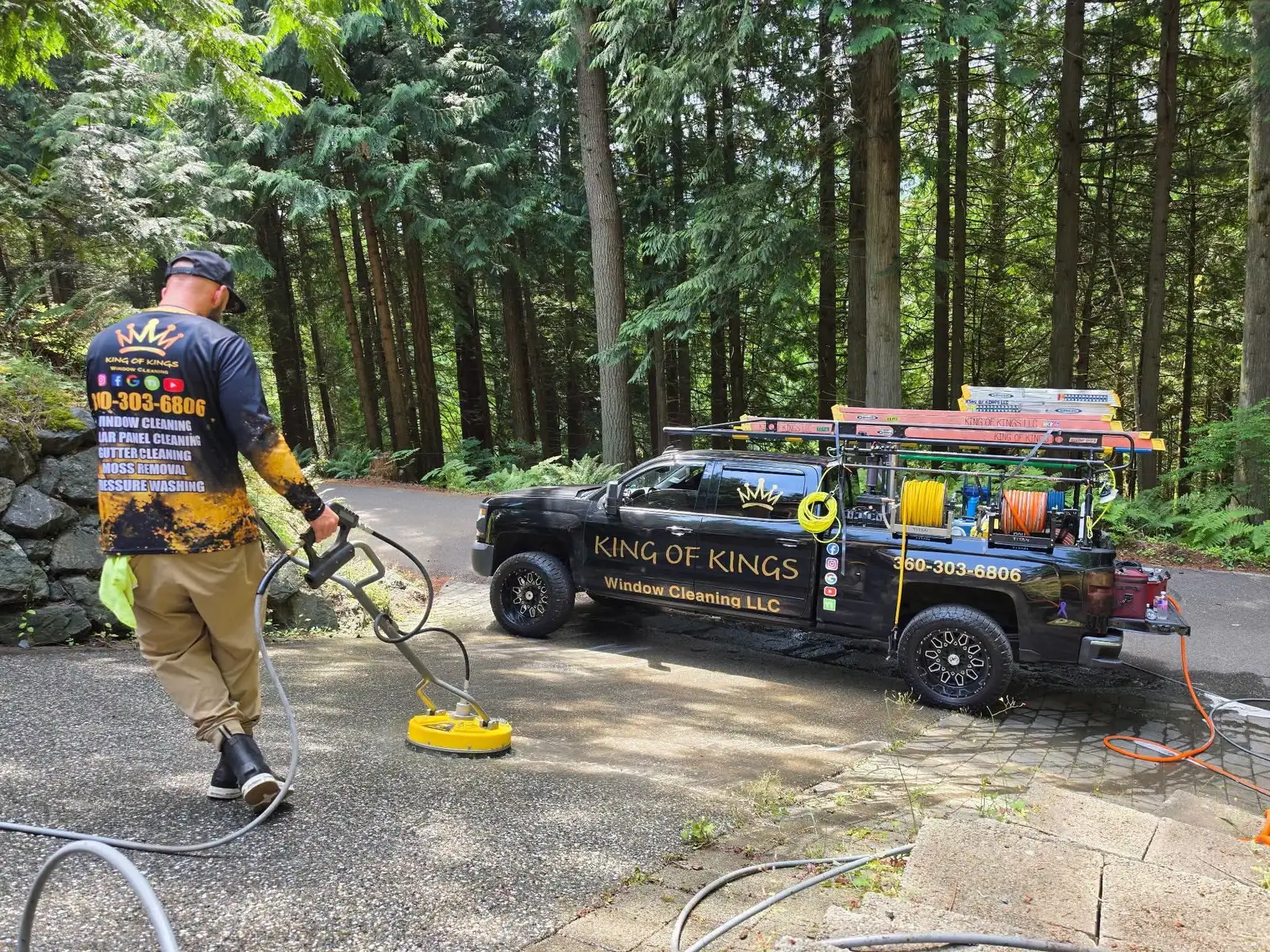
The truck carries its own water, tanks and power, so a job does not depend on the tap at the property. 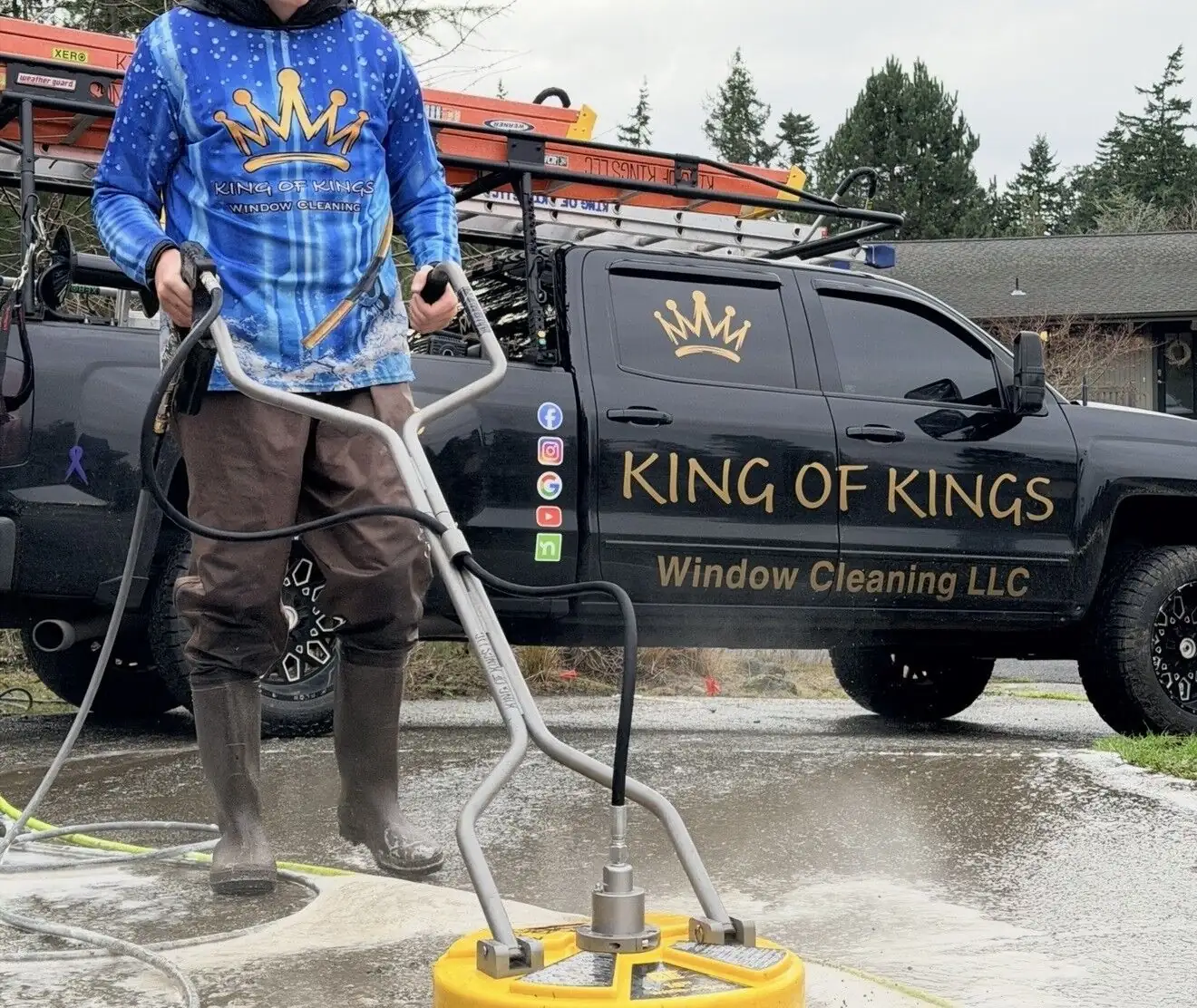
A surface cleaner rather than a wand, so there are no stripes left across the slab. 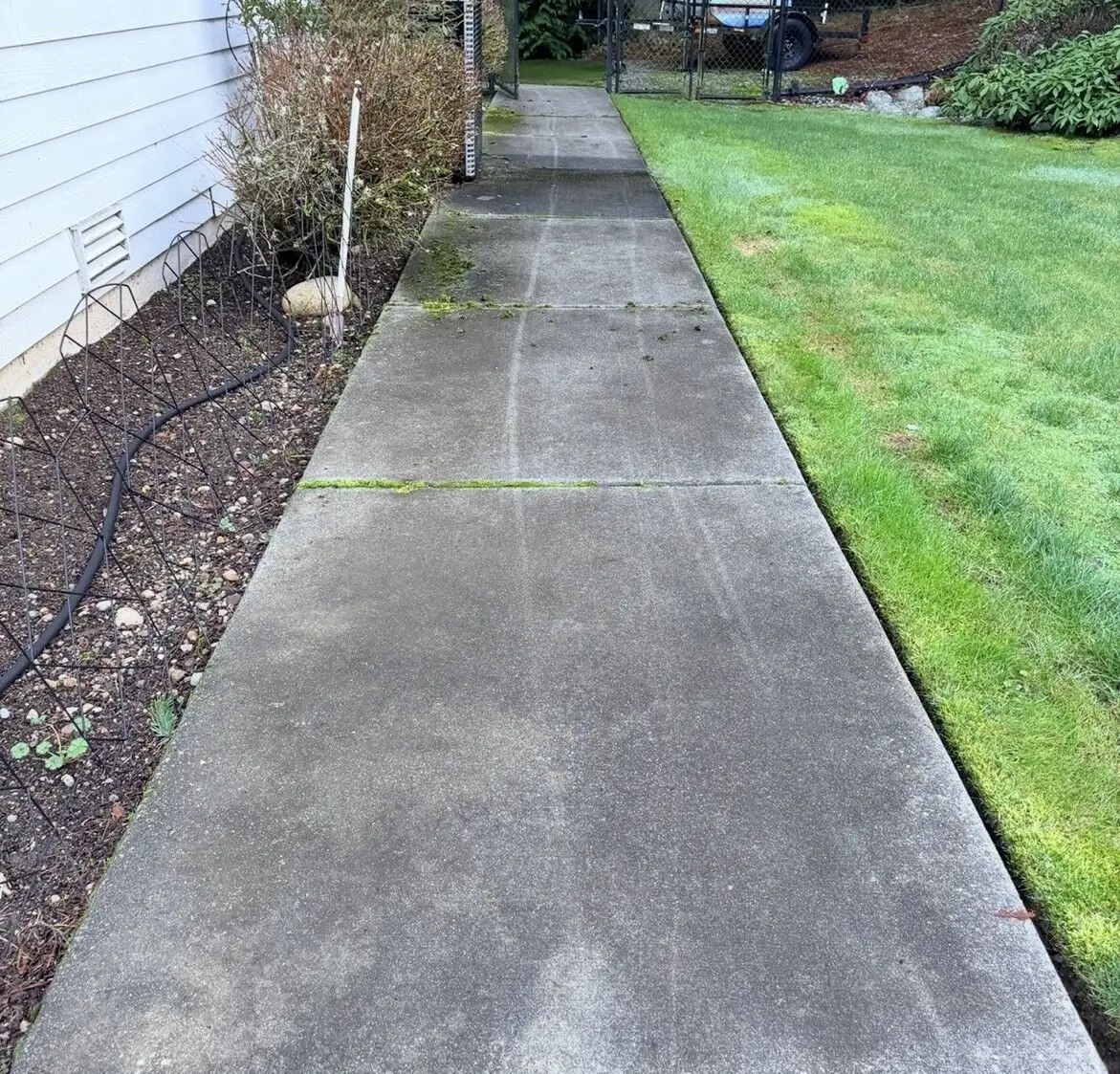
Mid-job on the walkway. The line is the honest measure of what was on the surface. 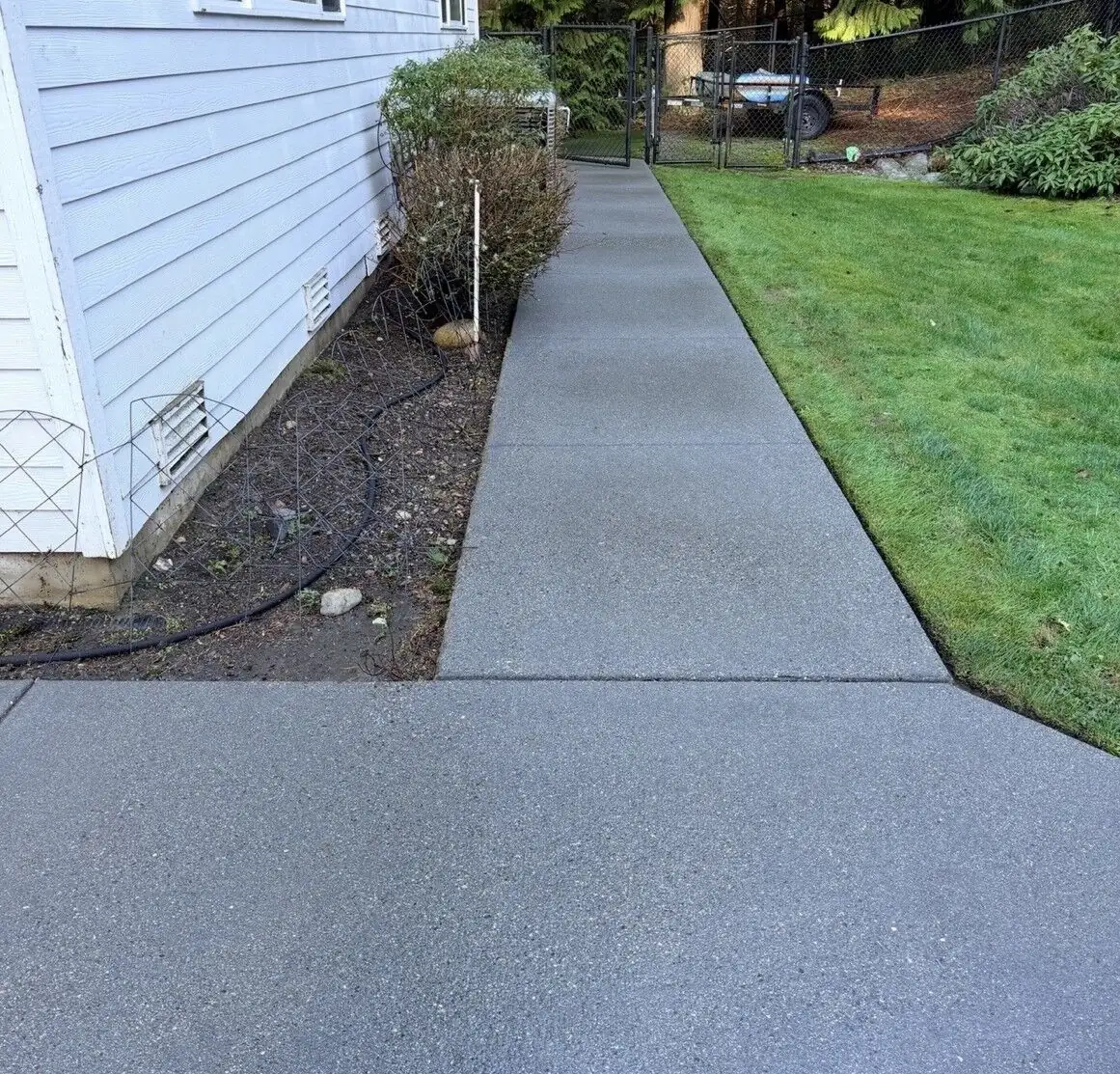
After. A walkway that goes black also goes slippery, which is the part that matters in a wet winter. -
After, the front entry. 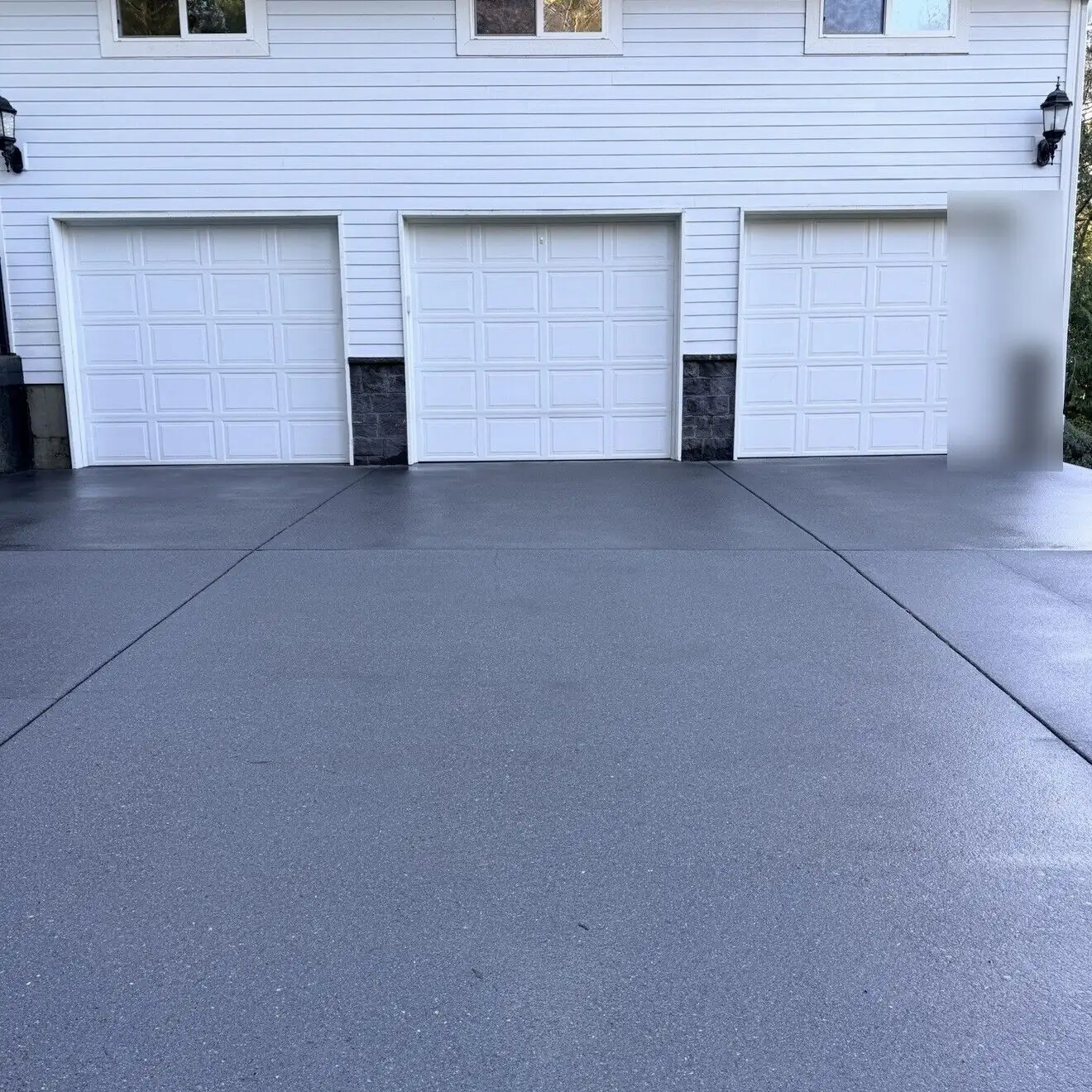
After, the driveway. 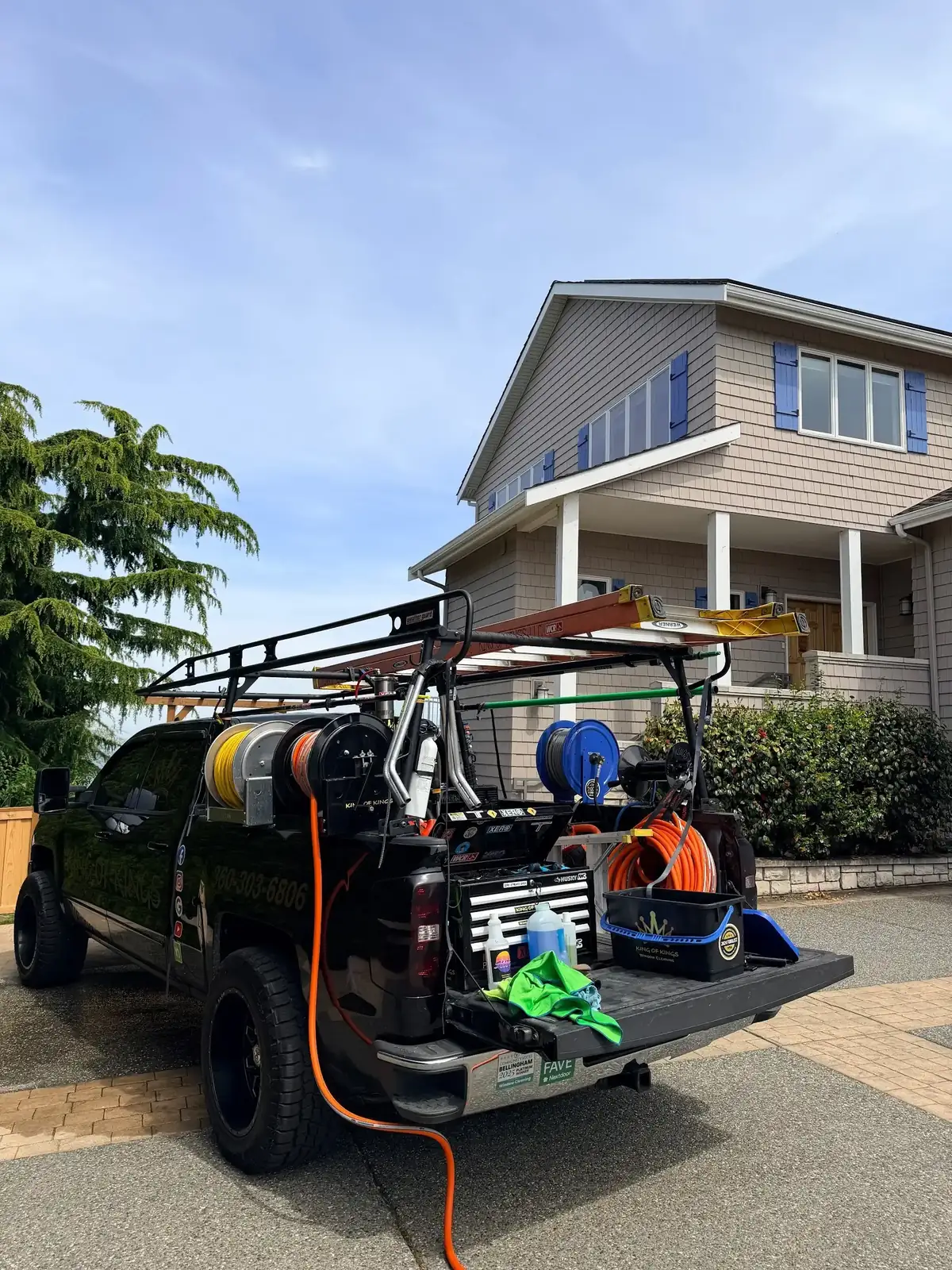
Parked up on a job. Everything needed for a day of work travels on the truck.
Solar panel cleaning — commercial array and homes
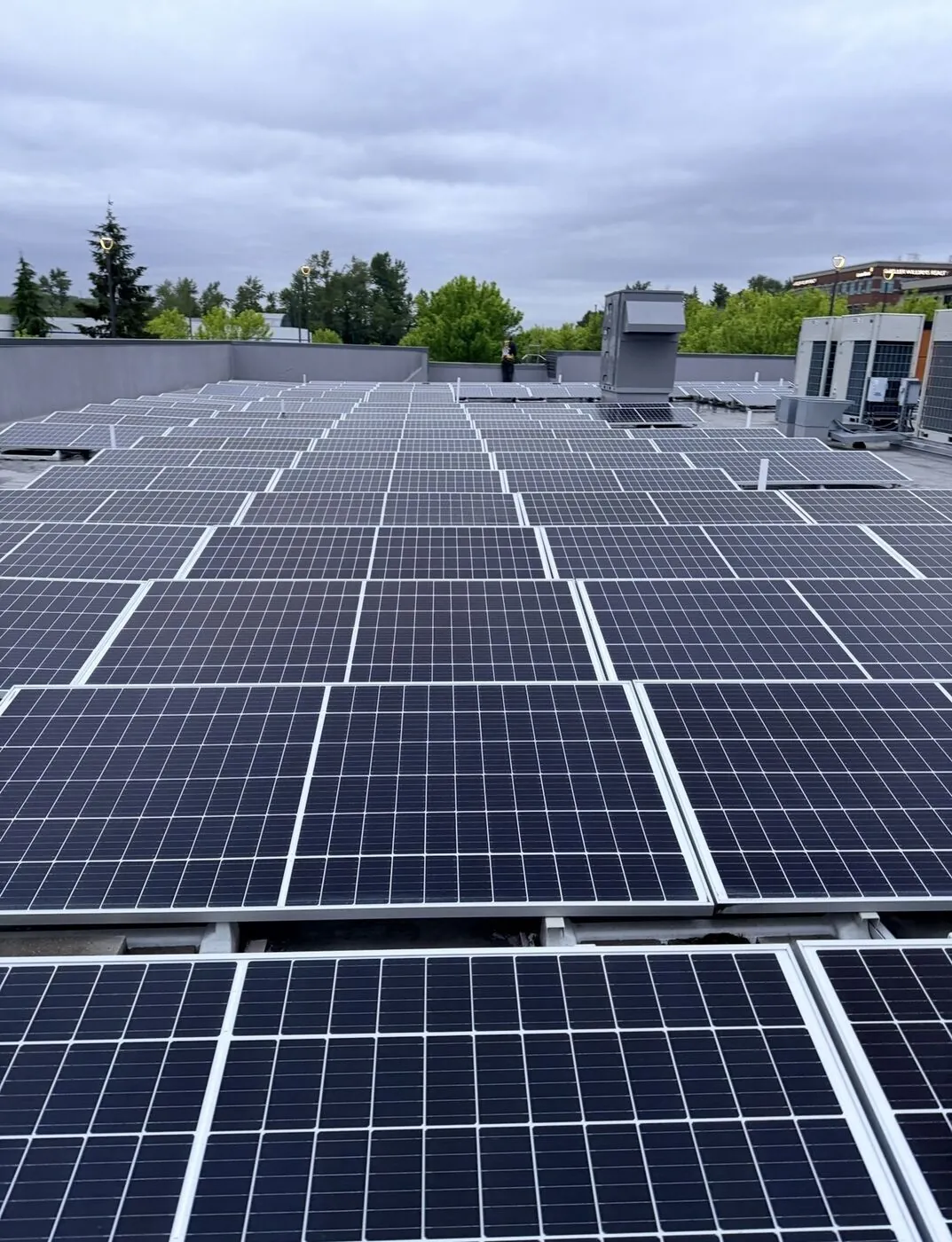
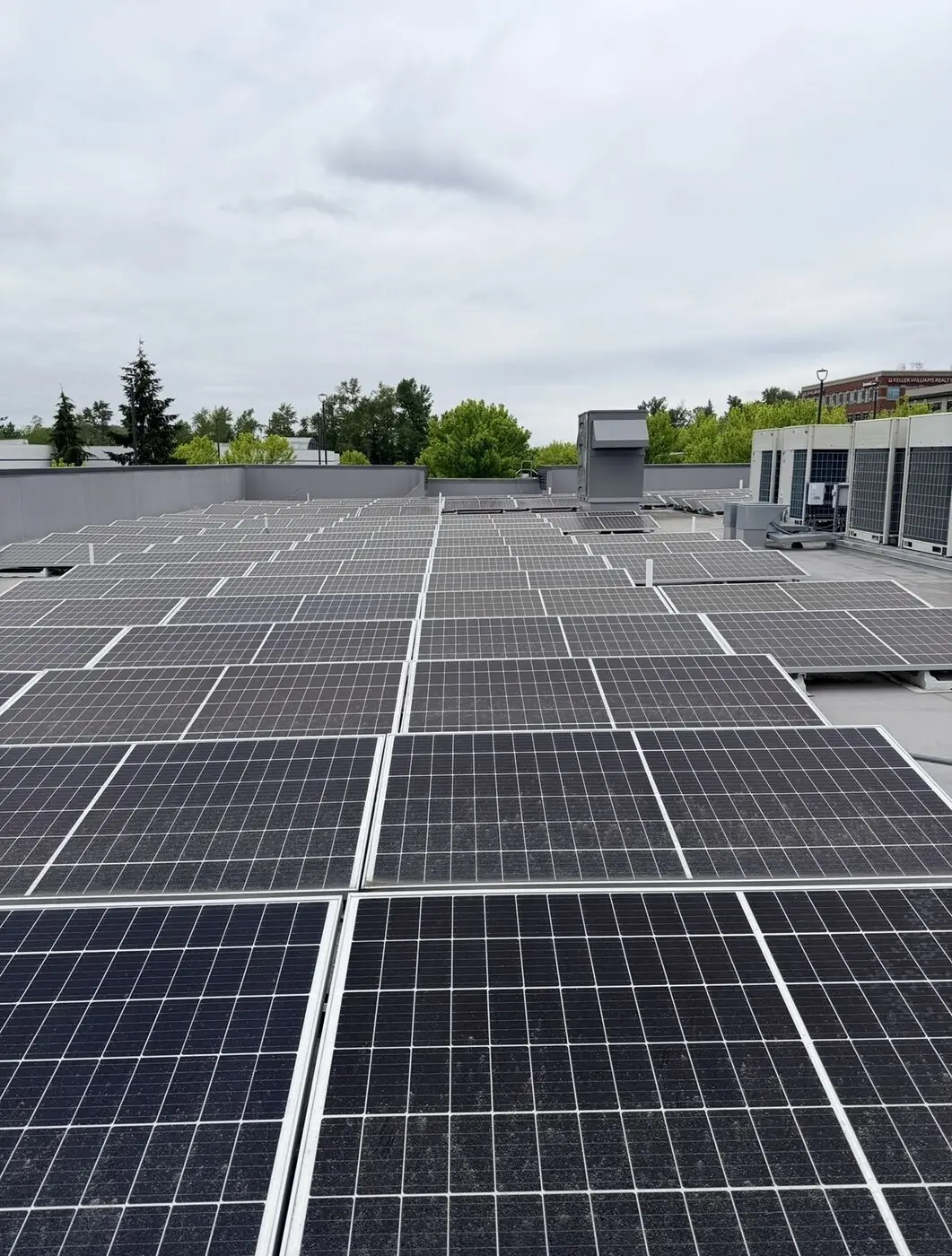
A 128-panel commercial array. Output is measurable, so on a roof this size so is the cost of leaving it dirty. -
Before. Panels do not need to look filthy to be down on output. 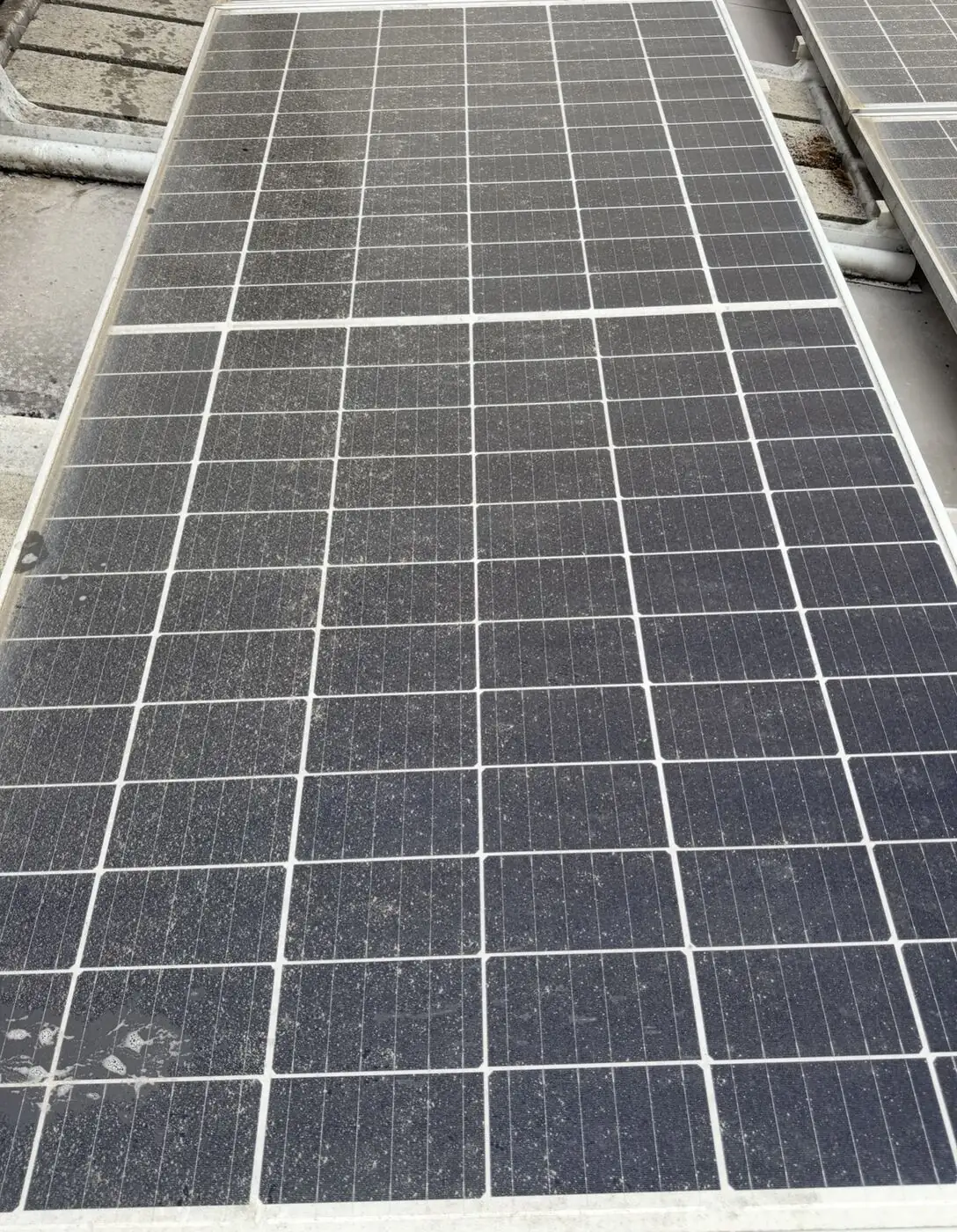
Pollen, dust and droppings. Any of it shades cells, and shaded cells cost output. 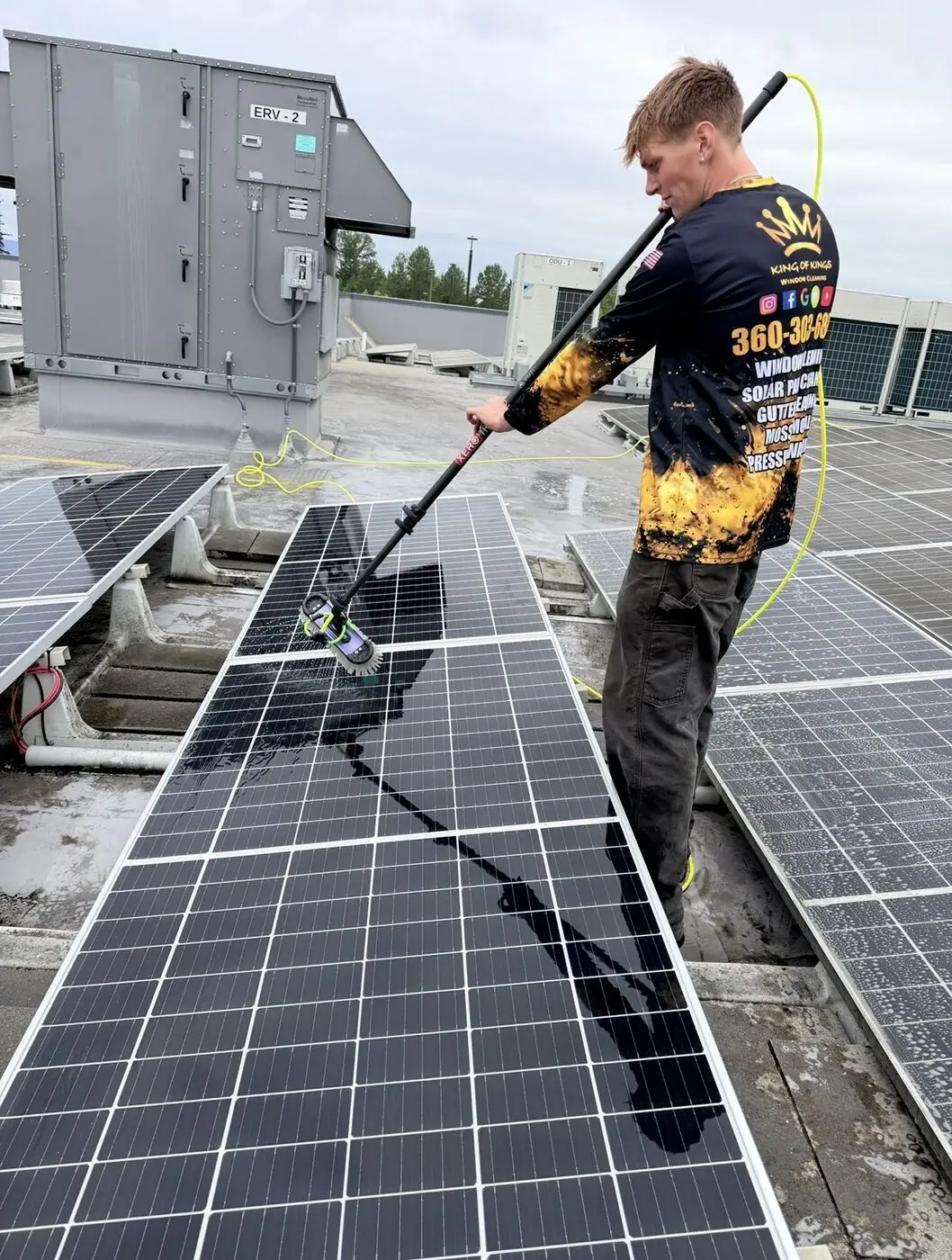
Purified water and a panel-safe brush — no detergent left on the glass to attract the next layer. -
After, same rows. Dried without spotting. 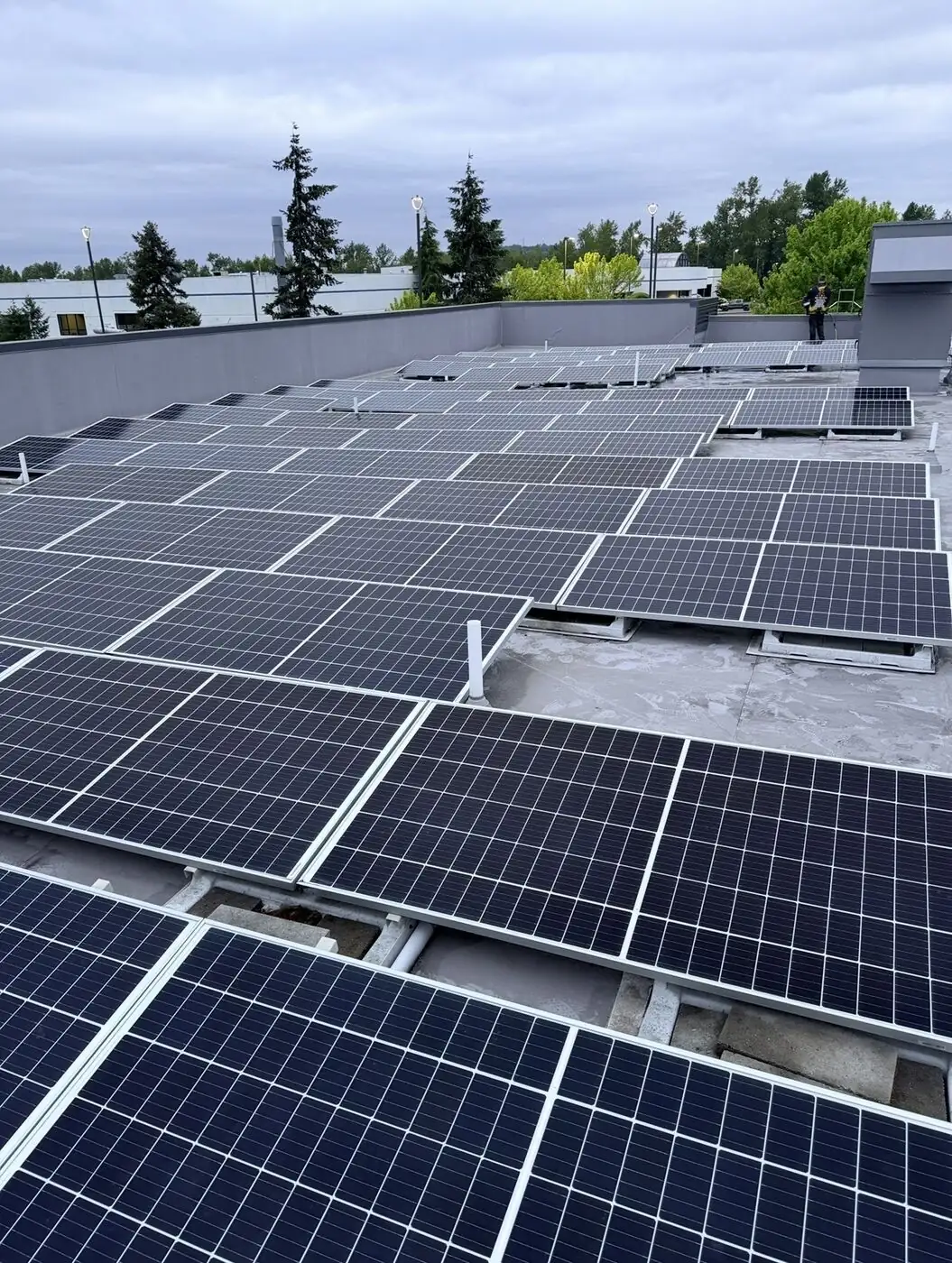
After, the whole array. 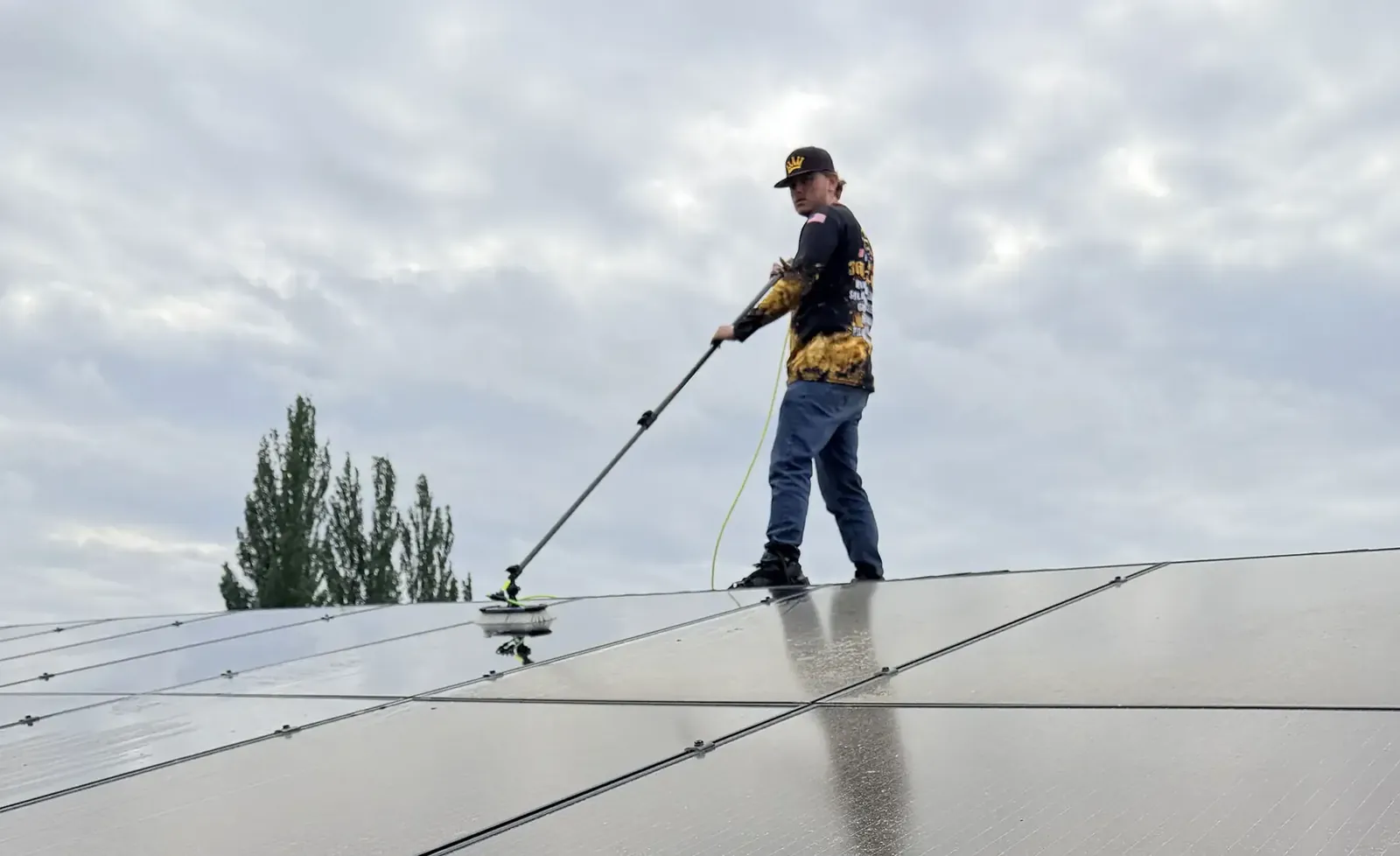
Residential arrays get the same water and the same brush as the commercial ones. 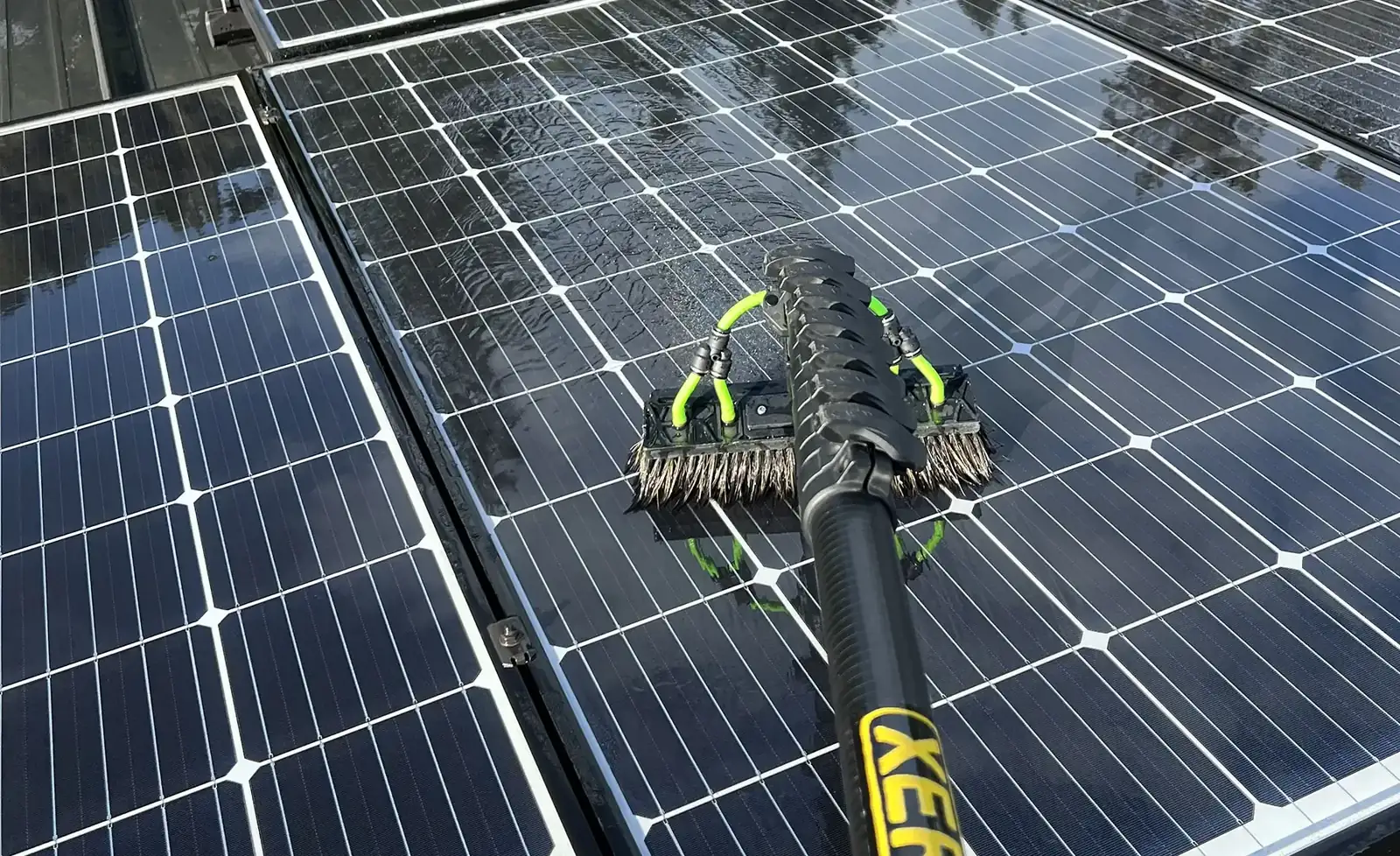
The brush agitates; the purified water carries it off and dries clear. 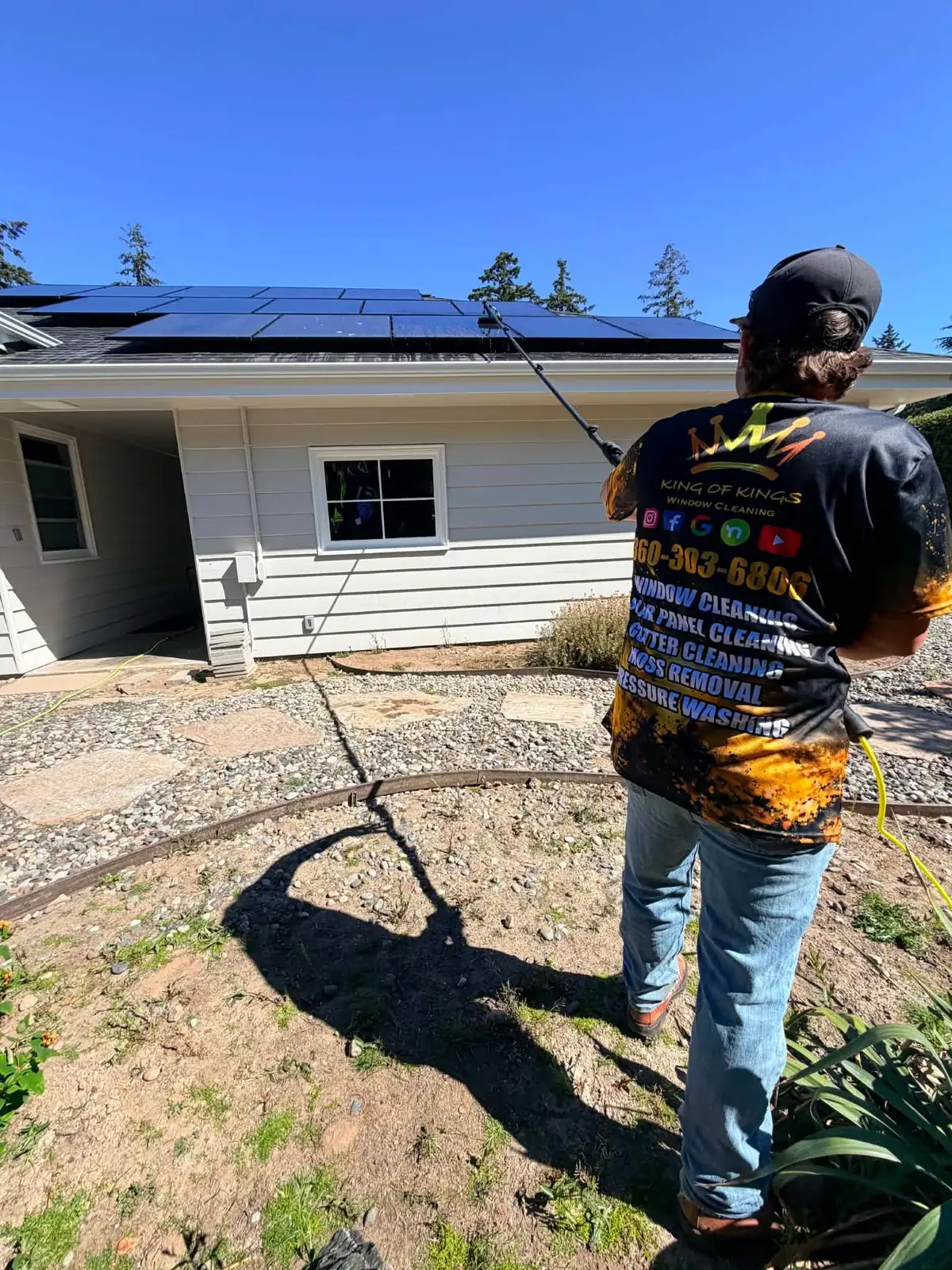
Worked from the ground where the roof allows it — safer, and no foot traffic on the panels.
Commercial glass
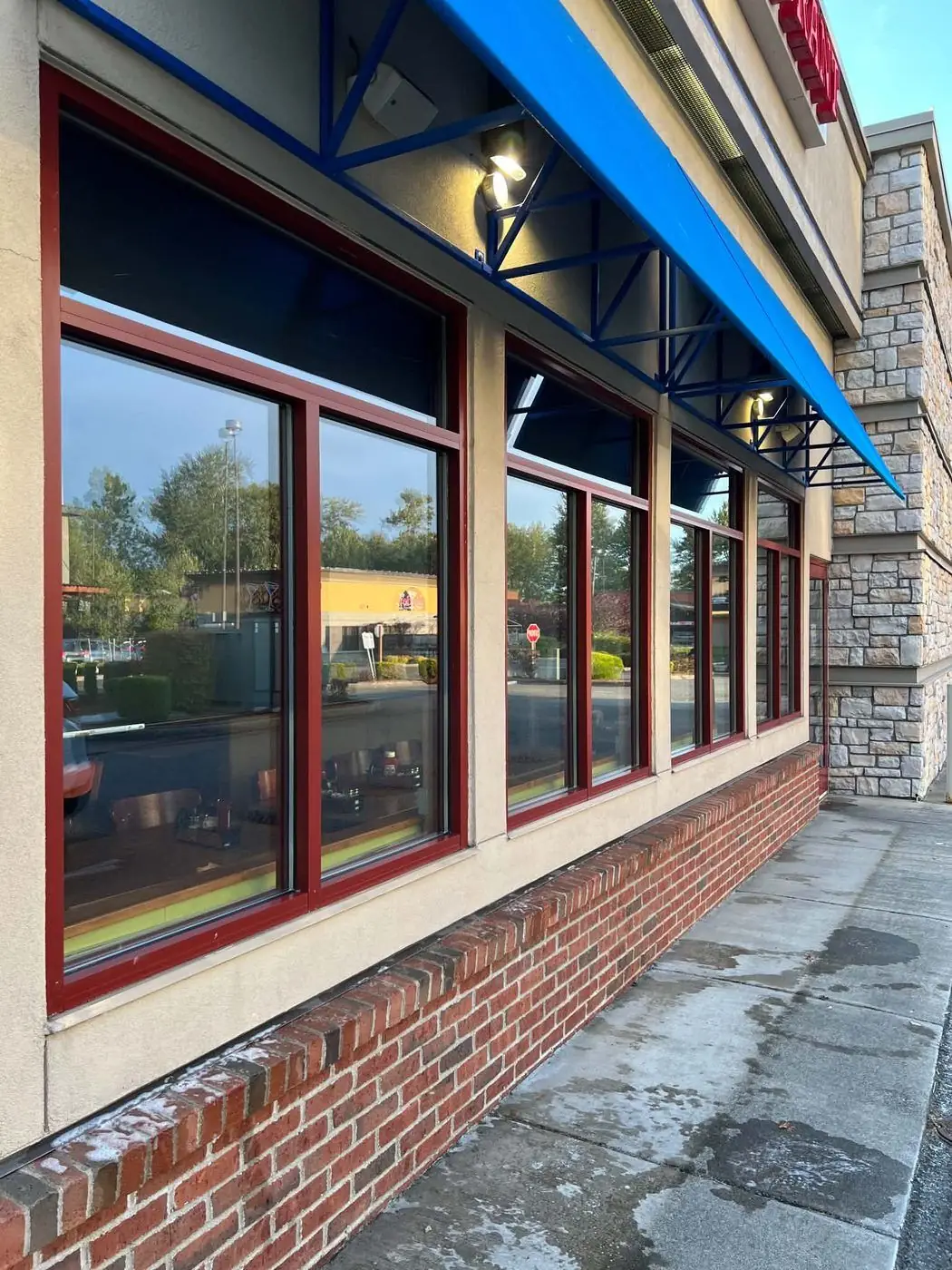
Storefront glass at a Whatcom County business. Commercial glass is judged from the pavement, in daylight. 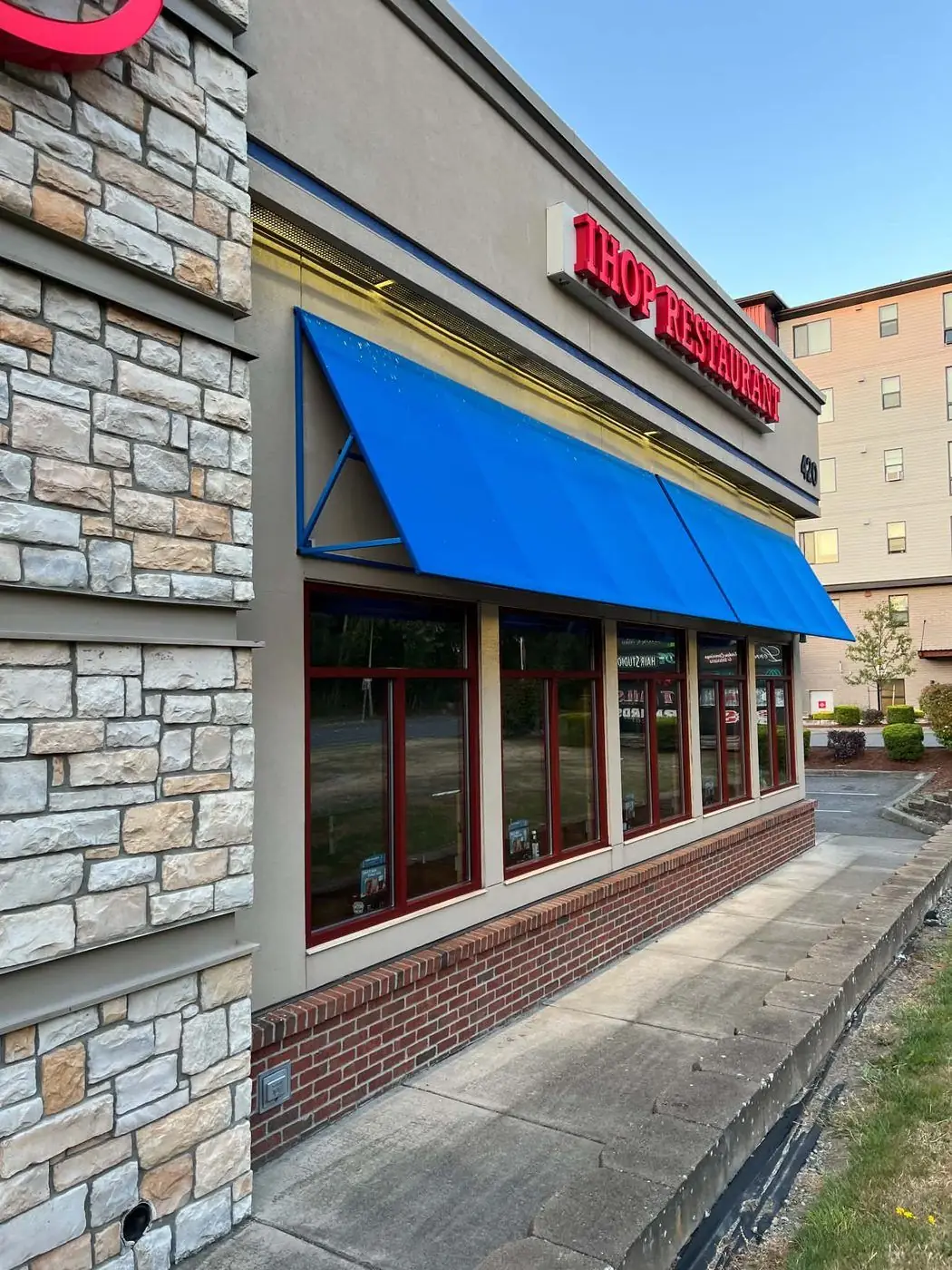
A restaurant frontage on the same round.
About these photographs
Every photograph here is our own work, taken on the job. Where a town is named it was recorded at the time; where it is not, the caption says the county and stops there. Nothing on this page is stock photography, and nothing has been staged for the camera.
Some surfaces we work on are not pictured yet — cedar shake and failed insulated glass units among them. They will appear here when we have photographed them properly rather than borrowed a picture of somebody else's.