Skagit County
Exterior Cleaning in Burlington, WA
The short answer
We clean windows, gutters, roofs and siding across Burlington, the Skagit County town where the river forms the southern edge and most storm runoff drains to Gages Slough. The housing is younger and more mixed than most of the valley, with a median build year of 1993 and roughly half of all units detached houses.

Randy Fee — Owner, King of Kings Window Cleaning
Washington business licence, UBI 605476674 · L&I insured · BBB rated A
Randy runs the company himself, so you are dealing with the owner, not a call centre — and every technician here is personally trained by him. Working Whatcom and Skagit County since 2024.
We run the Burlington route on a regular rotation.
Burlington grew up at a crossing. Two railroad lines met here in 1890 and gave the place its old nickname, the Hub City, and the town has kept that character since: I-5 runs through it, the Skagit River bends past its southern edge, and a large retail strip grew along Burlington Boulevard after the Cascade Mall opened in 1989. It is a working, busy, practical town, and its houses are a working mix.
This page covers what we see on Burlington exteriors, which of our services each problem calls for, and what the town’s own stormwater rules mean for how the work is done.
What kind of housing does Burlington have?
A younger and more varied stock than most people expect of a valley town. The median year built across Burlington’s housing is 1993, and 1,517 of its 4,246 units went up in 2000 or later. A house of that age has usually had long enough to collect moss, algae and grime, but not so long that its roof and siding are past the point where a careful clean still pays off.
The more unusual number is the split between houses and everything else. Only 2,137 of those 4,246 units are single-family detached homes, which leaves roughly half the town living in attached or multi-unit buildings of one kind or another. And of the 3,925 occupied homes, 2,178 are rented rather than owned.
That changes who is likely to call. In Burlington the person booking a gutter clean may well be a landlord between tenants, a property manager with several addresses, or an owner who lives in another county and wants the house kept up without driving over to check on it.
What do the river and the valley do to a Burlington exterior?
The Skagit River forms the city’s southern and southeastern boundaries, and it turns to the southwest here as it crosses a floodplain about eleven miles wide and nineteen long. Burlington sits low and open on that ground. The town has flooded badly several times, in 1909, 1917, 1921, 1990 and 1995, and the same flat terrain that let the water spread also shapes how a house weathers.
Three things follow from it:
- Long damp spells on shaded walls. Low, level ground with open fields around it holds moisture in the cool months, and a north or east elevation that never sees direct sun stays wet long enough for green growth to take hold.
- Farm dust in the drier months. Skagit County farmers work roughly 90,000 acres and grow more than 90 crops, and fieldwork on that scale puts fine soil into the air that settles on glass and siding.
- Traffic grime near the corridors. Homes close to I-5 and the busier commercial roads collect a grey road film on the side facing the traffic.
None of this is dramatic. It is steady, and steady is what fills a gutter and greens a wall.
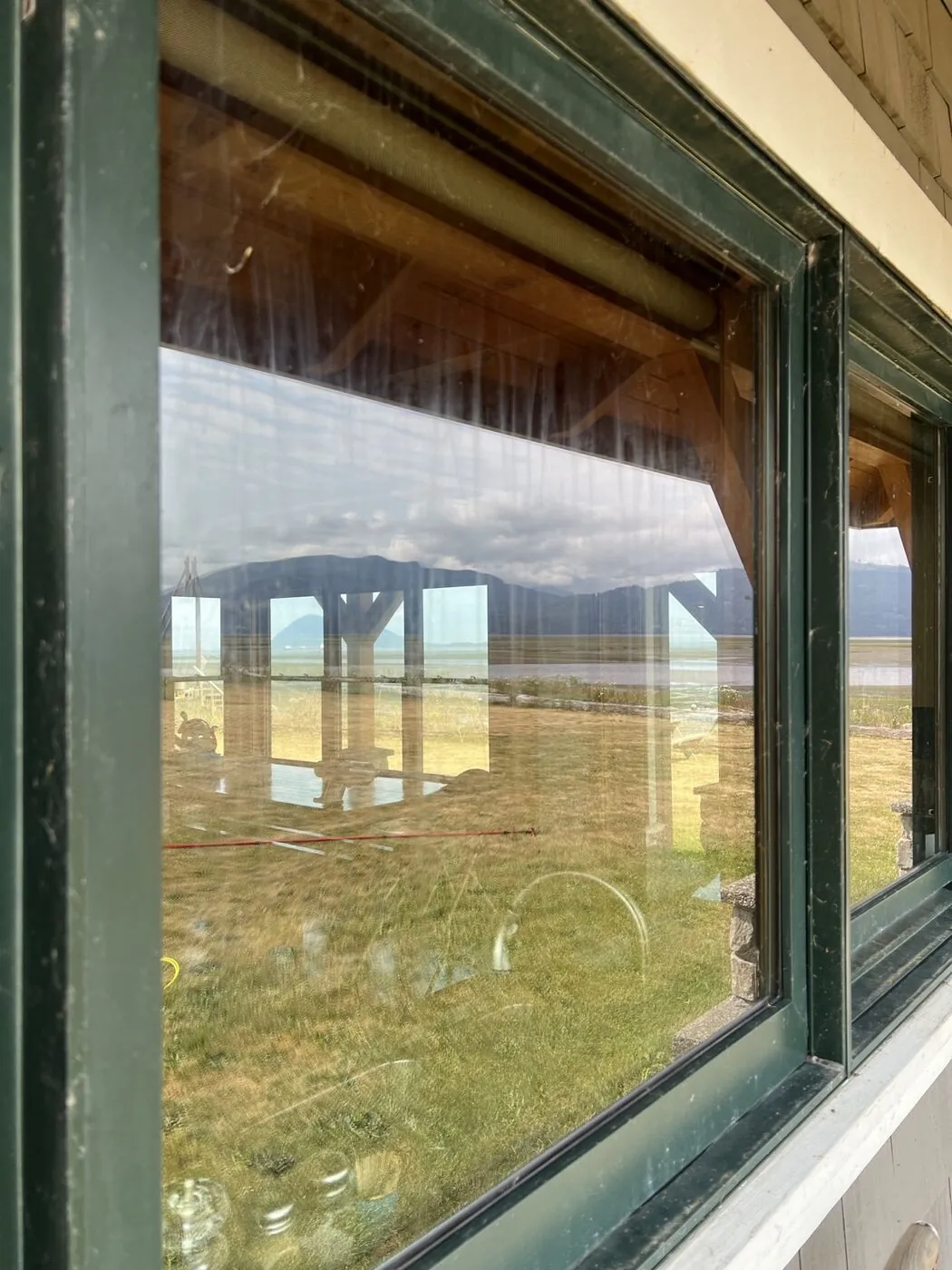 Before
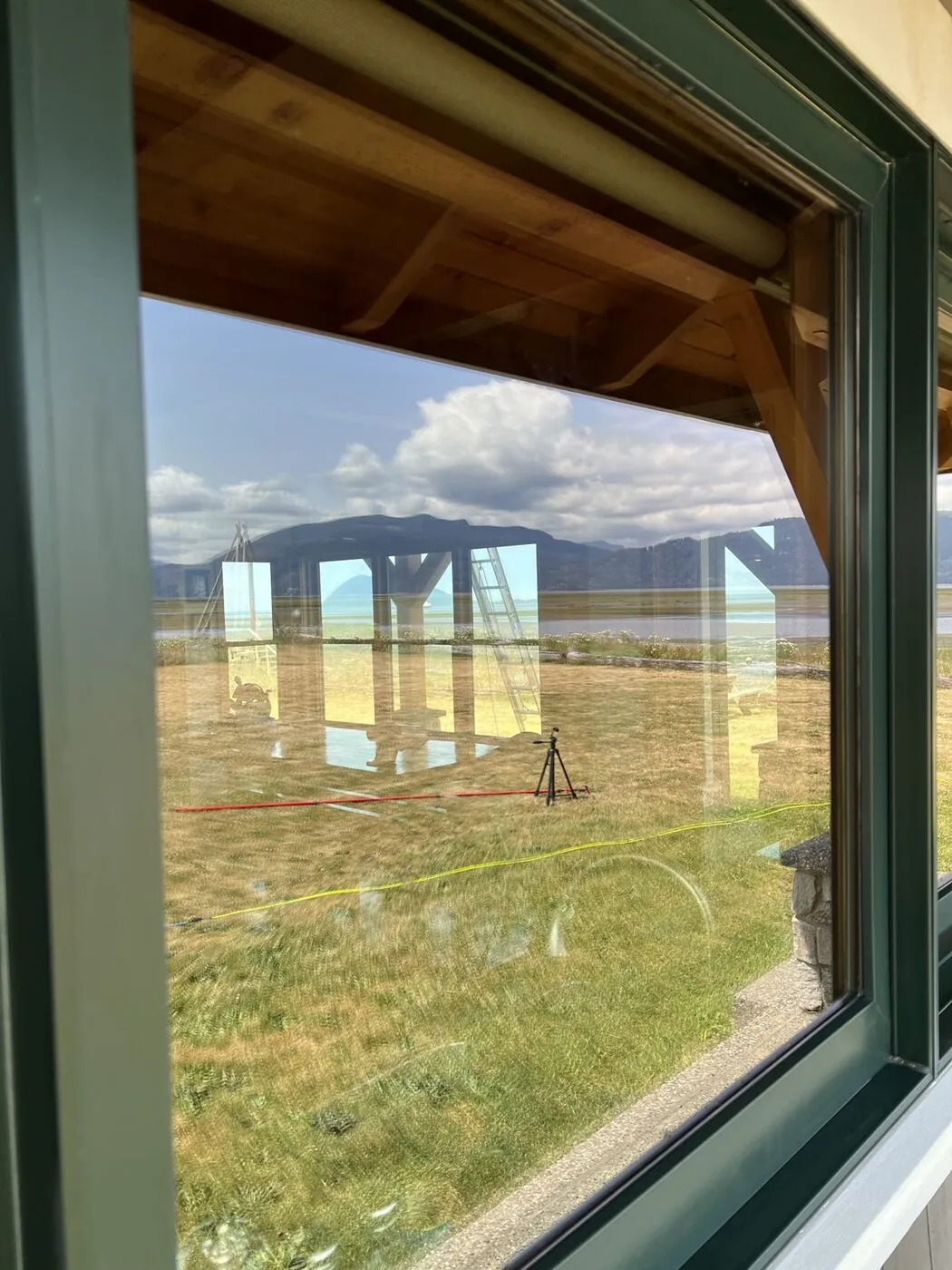 After
How much rain does Burlington actually get?
Burlington has no long-term weather station of its own, so the honest figure comes from the nearest one, the Mt Vernon 3 WNW station in the neighbouring town. Over its record from 1956 to 2005 that station averaged 32.58 inches of precipitation a year. November was the wettest month at 4.48 inches and July the driest at 1.16 inches.
For exterior work, the useful reading of those numbers is the shape of the year rather than the total. There is a genuine dry window in high summer when roofs and siding can be treated and left to dry properly, and a long wet stretch from autumn into spring when gutters carry the most water and shaded surfaces grow the fastest.
Put simply, the Burlington year sorts itself into three working seasons:
- July and August for roof treatments and house washing, when surfaces dry between applications and a treatment is not rinsed off by the next shower.
- October into early November for gutters, once the leaves are down and before the wettest month arrives.
- Spring for windows, after the winter film and before the long evenings when people actually look through their glass.
Window cleaning in Burlington
Glass here picks up a mix of valley dust, road film and winter rain spotting, and the bigger panes on a newer house show every mark when the sun sits low in December. Our Burlington window cleaning page covers what a full clean includes, how screens and tracks are handled, and why we bring our own purified water rather than filling from an outside tap.
For rentals, a clean between tenants does more for how a unit shows than almost anything else of similar cost, and it is simple to schedule around a move-out.
Gutter cleaning in Burlington
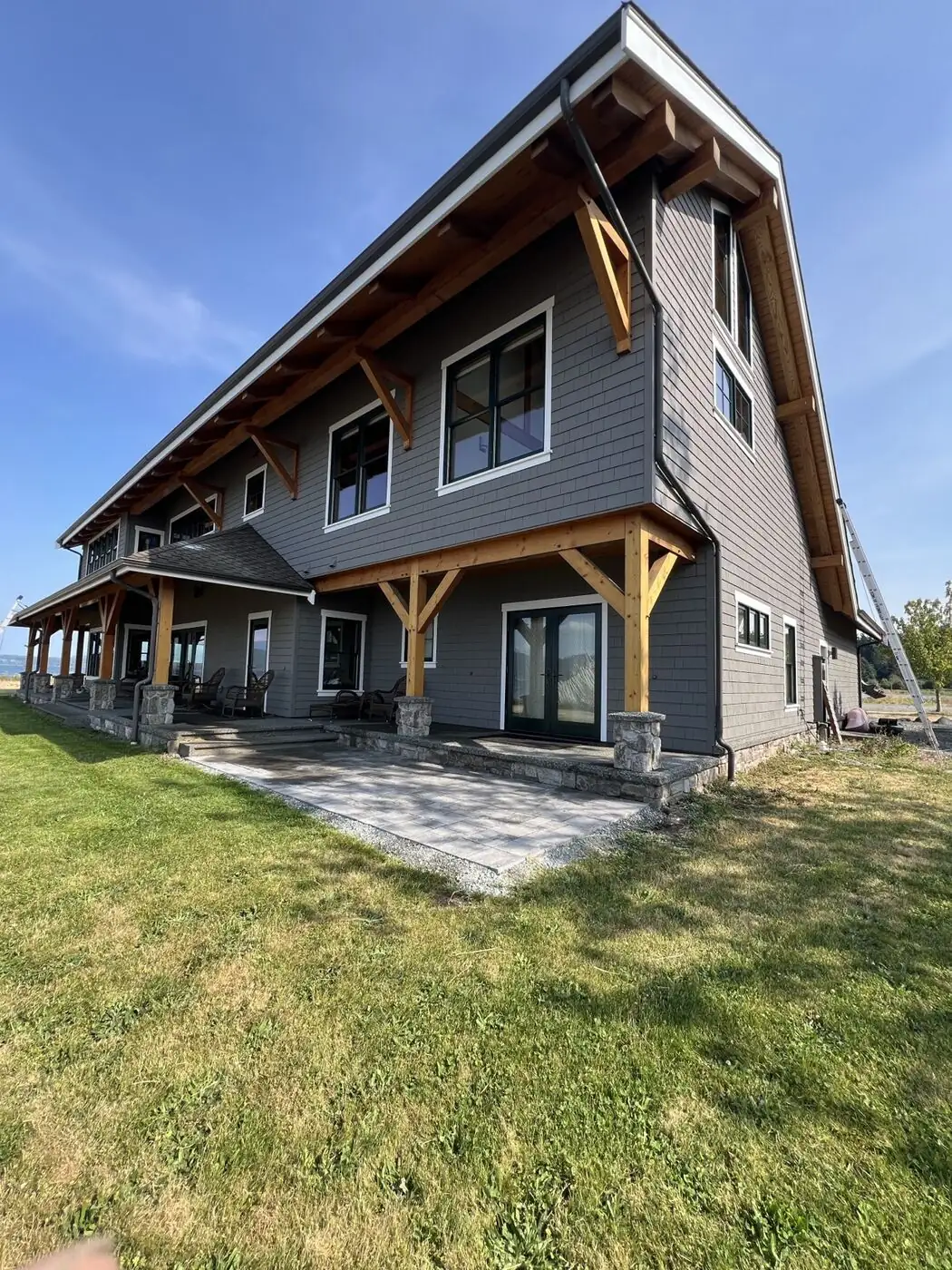
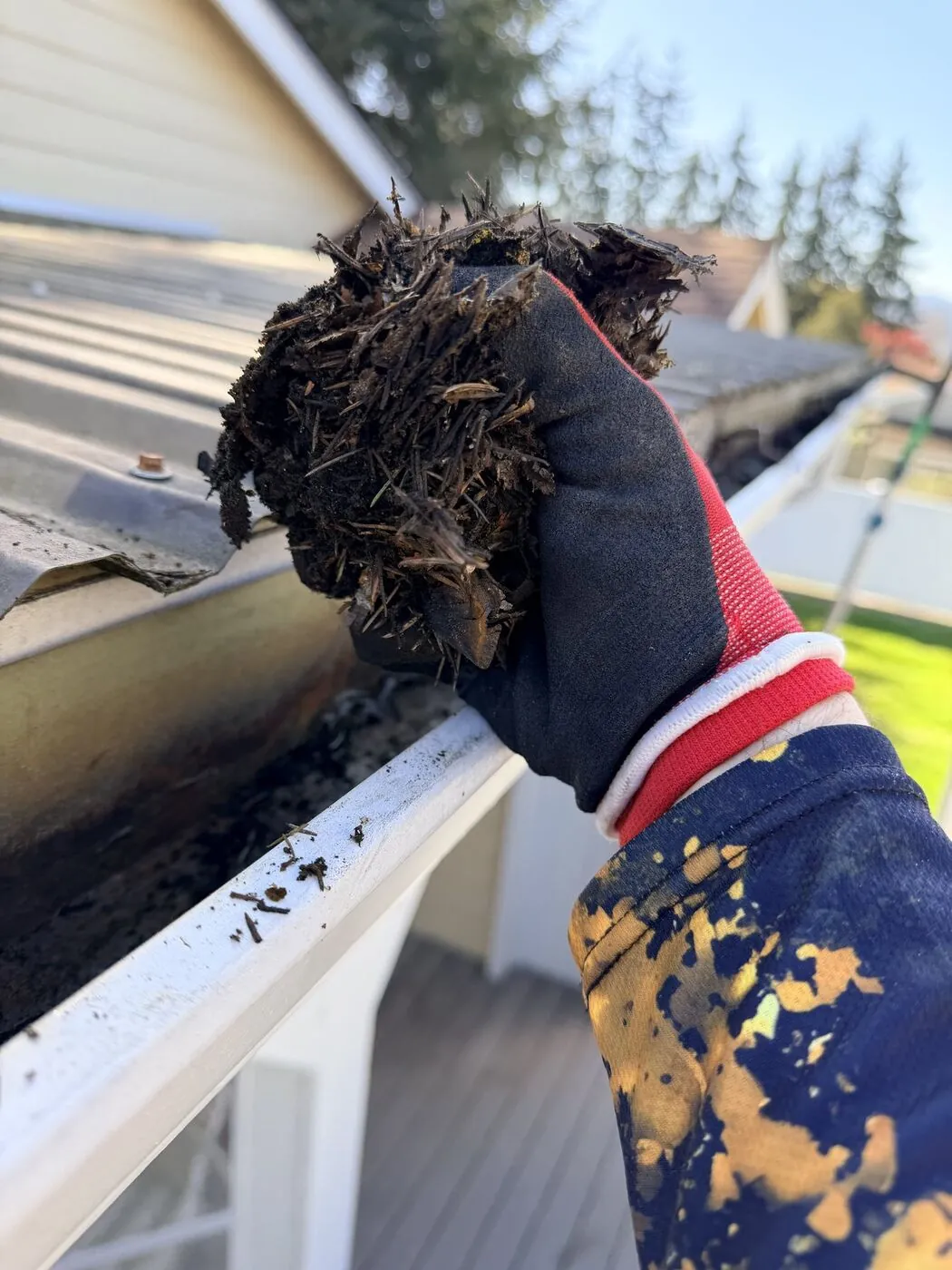
With the wettest month at the nearby station arriving in November, the gutter clean that matters most is the one done in autumn, after leaf drop and before the heavy rain. Our page on gutter cleaning in Burlington explains what we clear by hand, how downspouts are tested, and why an overflowing run on a flat lot can end up soaking a foundation rather than draining away from it.
Multi-unit buildings often have long continuous runs and shared downspouts, and we quote those on what is actually there rather than per unit. Where a building has several owners or a management company, tell us who signs off on the work so the quote goes to the right person the first time.
Roof and siding cleaning in Burlington
The roofs and walls on a house built in the 1990s or 2000s are old enough to have collected growth but, in most cases, young enough that a gentle clean is all they need. We treat roofs with a low-pressure chemical wash rather than a pressure washer, and siding the same way.
- Roof cleaning in Burlington covers moss, algae streaking and lichen on composition roofs, and the timing that suits Burlington’s dry summer.
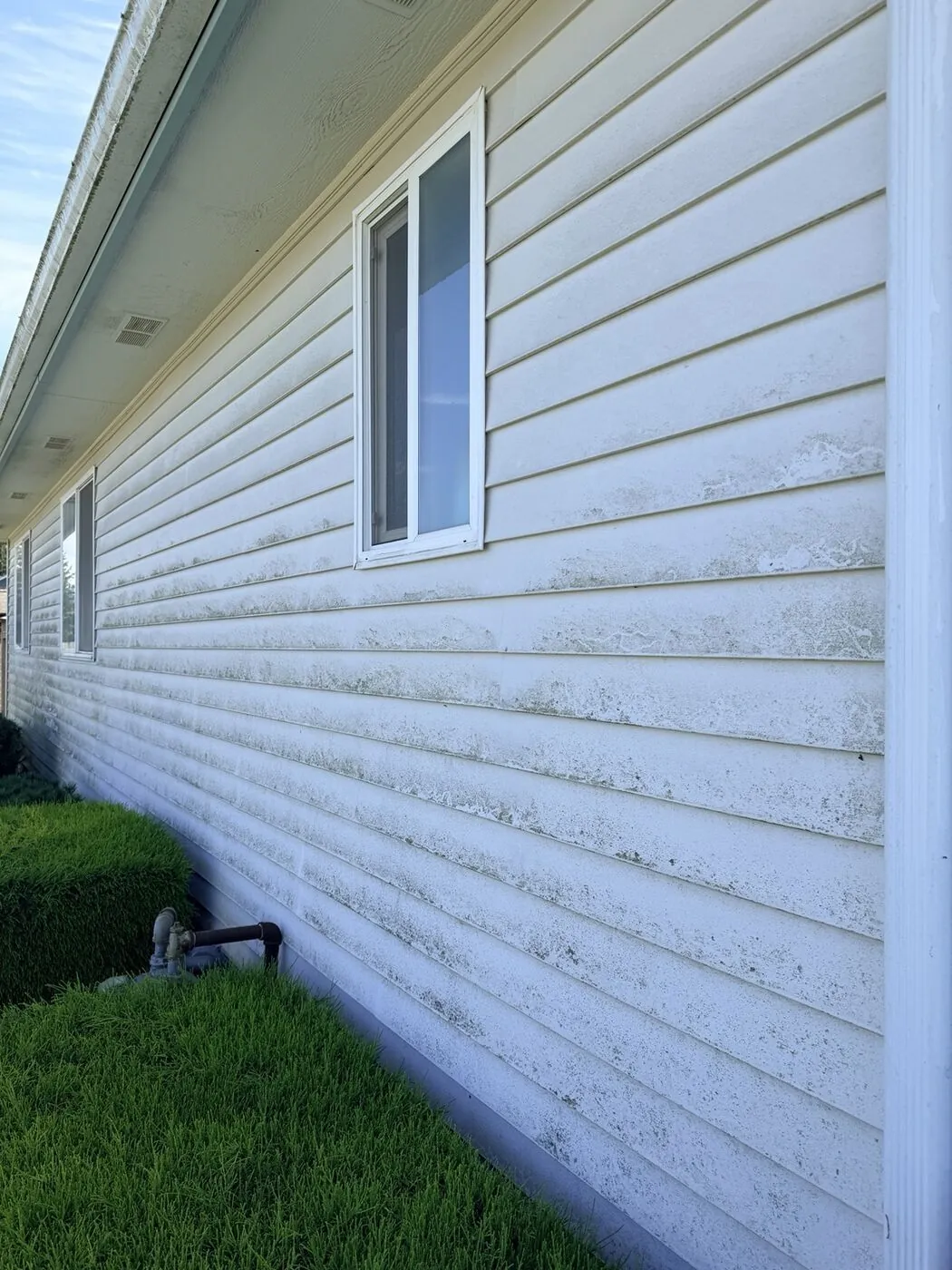
- House washing in Burlington covers the green film on shaded walls, road grime near the corridors, and exactly how the rinse is kept out of the storm system.
What are Burlington’s rules on wash water?
Stricter in detail than many homeowners realise. Burlington Municipal Code 14.05.070(B) prohibits putting anything other than storm water into the city’s drainage system. Subsection (C) goes on to name soaps, detergents and ammonia, and steam-cleaning wastes, among the illicit discharges. The one relevant allowance is in (E)(4): routine external building wash-down is permitted only if it does not use detergents.
Where that water goes gives the rule its weight. Most of Burlington’s runoff discharges into Gages Slough, the channel the Tammi Wilson Memorial Trail follows, and from there it is pumped into the Skagit River. The city rates cleaning up the slough a very high priority.
In practice that means we plan the rinse path before we start: drain inlets near the work get covered, rinse is steered onto lawn or planting beds, and cleaning solution is used only where the surface genuinely needs it. The detail is on our page about wash water and storm drains.
Does the drinking water matter to exterior cleaning here?
Less than it would on a private well. Burlington is supplied by Skagit PUD’s Judy Reservoir system, which draws on four Cultus Mountain creeks, with a pump station on the Skagit River as a supplemental source. No hardness figure for that supply is published that we could verify, so we make no claim about it.
It does not change our method either way. We carry filtered, purified water for glass so that whatever comes out of a customer’s tap never dries on a pane we have just cleaned.

Which nearby areas do you cover from Burlington?
Burlington has shared a water system with Mount Vernon and Sedro-Woolley since Skagit PUD bought all three in 1939, and we cover all three as part of the same Skagit County run. Addresses in Mount Vernon have their own page at Mount Vernon. The north end of town, out toward Burlington Hill, the 450-foot rise with the fire department’s cross on top, is covered too.
If you are not sure whether your address is inside the area we cover, ask. We would rather tell you plainly than book a job we cannot look after properly.
Who does the work?
Every technician is trained personally by the owner, who still runs the company day to day, so the standard you get on a Burlington job is the one set in Bellingham, where the business started in 2024. Company paperwork covers a Washington business licence and L&I coverage.
What that means on the ground is simple. Whoever turns up has been taught the method for each surface by the person who set the standard, including the customer side of the job: explaining what was found, and leaving a rental looking right for a landlord who will only ever see the photographs. The company is young, and it is still small enough that you deal with the owner rather than a call centre.
How do I book?
Call (360) 303-6806 or send a request through the contact form. Tell us whether you own the home or manage it for someone else, which services you have in mind, and whether a tenant needs notice. We will arrange a visit, look at the house with you, and give you a figure for what we find.
If you manage the property from a distance, we can meet a tenant or a key-holder instead, and follow up with photographs and a written figure so you can decide without making the trip.
What we do in Burlington
Nearby
- Mount Vernon
- Sedro-Woolley (served, no page of its own)
- Bay View (served, no page of its own)
- Alger (served, no page of its own)
Burlington questions
- Do you work in Burlington regularly, or only on request?
- Burlington sits on our Skagit County route, so it is worked on a rotation alongside the neighbouring towns rather than as a special trip. That keeps scheduling short and means a return visit for a missed screen or a gutter that needs a second look is realistic.
- Do you work for landlords and property managers here?
- Yes. More Burlington homes are rented than owned, so the person arranging the work often does not live at the address. We can quote from a walk-round with the tenant's agreement, coordinate access directly, and send photographs of the finished work to an owner who is elsewhere.
- What happens to the wash water at a Burlington address?
- It is managed so that nothing with soap in it reaches a street drain. Burlington's code lists soaps and detergents as illicit discharges, and most of the town's storm runoff goes to Gages Slough. We direct rinse to lawn and planting beds, cover drain inlets near the work, and use plain water wherever the job allows.
- Which service should I book first if the house needs everything?
- Work from the top down. The roof comes first because whatever loosens up there lands in the gutters; gutters next; then the siding; and the glass last, so nothing splashes onto windows that were just finished. Booked together, the whole sequence usually fits one visit.
- Is Burlington's weather harder on a house than Bellingham's?
- It is different rather than harsher. Burlington has no weather station of its own, but the nearby Mount Vernon station averages about 32.6 inches of precipitation a year, with a dry July and a wet November. The flat, open valley ground dries quickly in summer and stays damp for long stretches in winter.
- Are you insured to work on my property?
- The company holds a Washington State business licence and Labor & Industries coverage and is rated A by the Better Business Bureau. If you want to see the paperwork before anyone sets a ladder against your house, ask and we will send it.
- How do I get a price?
- Call (360) 303-6806 or use the contact form. We come out, look at the actual house or unit, and give you a figure for the work in front of us rather than a number guessed over the phone.