Skagit County
House Washing (Soft Wash) in Burlington, WA
The short answer
We soft wash Burlington siding at low pressure, lifting the green film from shaded walls and the grey road grime that builds near busy corridors. Burlington's code permits routine building wash-down only without detergents, and most local runoff drains to Gages Slough, so every wash here is planned around where the rinse goes.

Randy Fee — Owner, King of Kings Window Cleaning
Washington business licence, UBI 605476674 · L&I insured · BBB rated A
Randy runs the company himself, so you are dealing with the owner, not a call centre — and every technician here is personally trained by him. Working Whatcom and Skagit County since 2024.
I run the Burlington route personally.
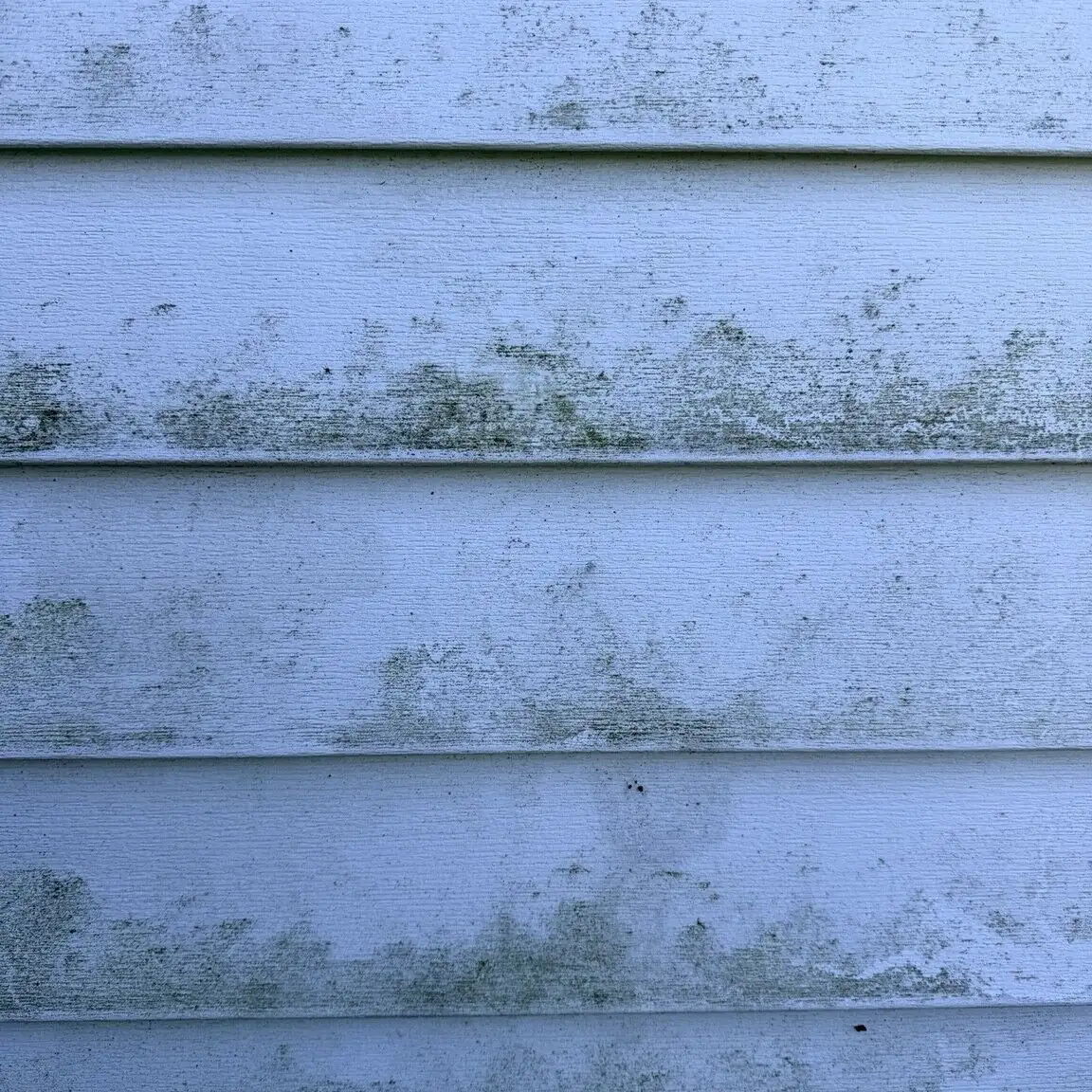
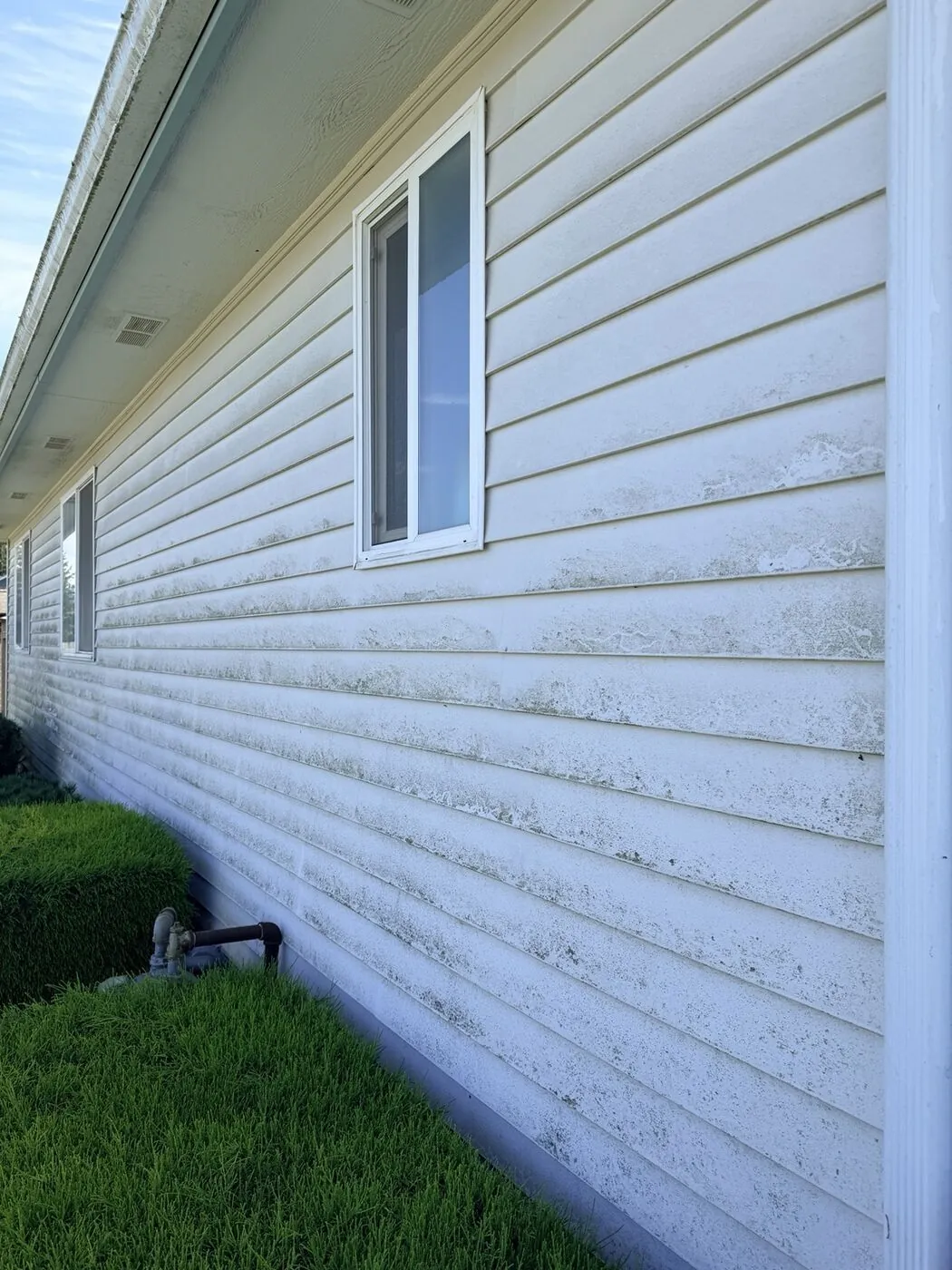
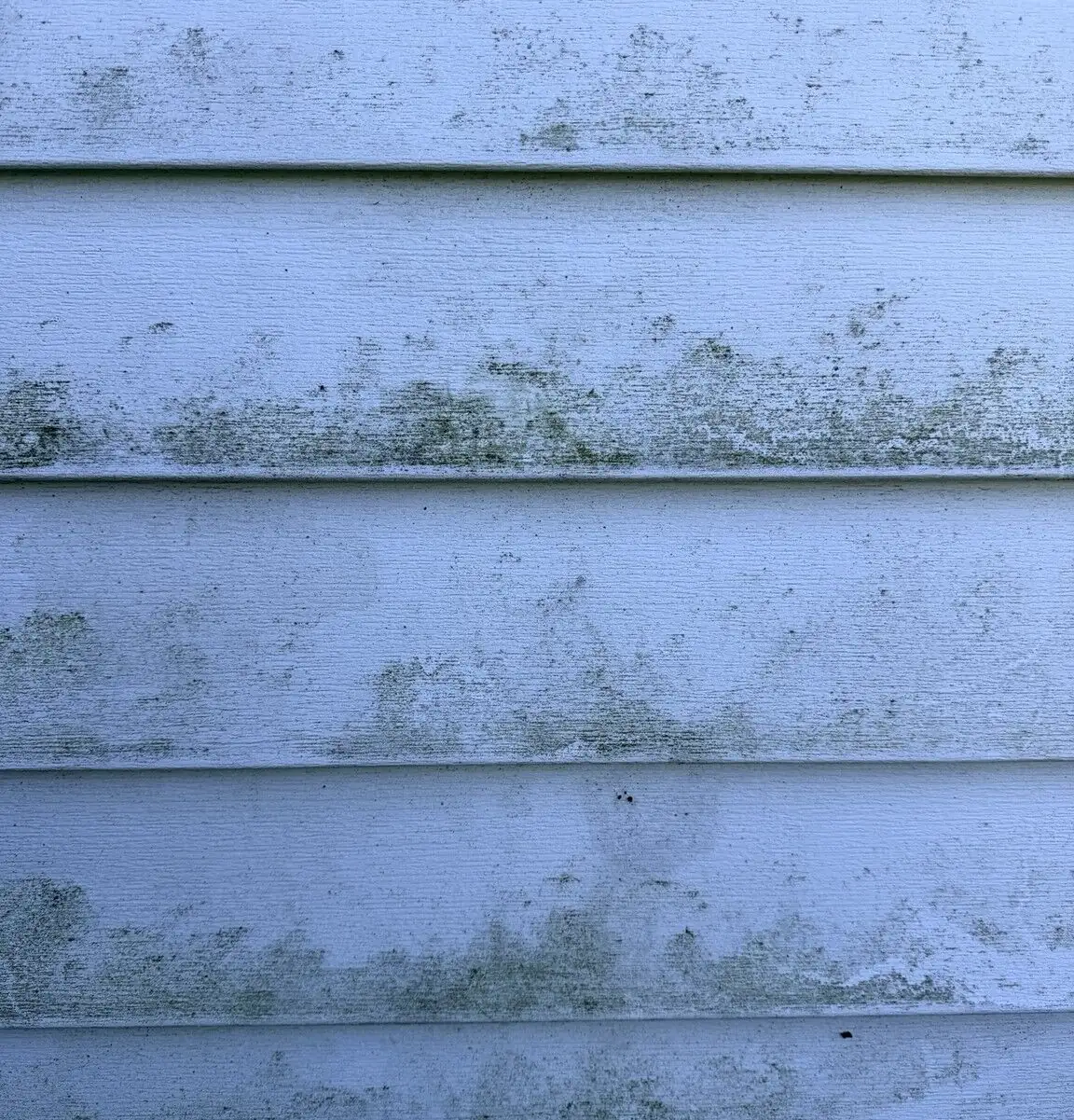
A Burlington house gets dirty in a quiet, even way. Nothing splashes it; it simply collects, a little more each season, until one bright afternoon the north wall looks green and the side facing the road looks grey, and the white trim is not quite white any more.
A soft wash takes all of that off without harming the siding. What makes the job particular to this town is the water: where the rinse ends up, and what the city’s code says it may and may not carry.
What builds up on siding in Burlington?
Three kinds of soiling, often on the same house.
Green growth on the damp side. Burlington lies on low, level ground where the Skagit River swings southwest across its floodplain, and walls that face away from the sun stay wet for long stretches between autumn and spring. Algae finds those walls first, starting at the lowest courses and under the eaves.
Fine dust from the farmland. Skagit County farmers work about 90,000 acres and grow upward of 90 crops. Cultivation and harvest put fine soil into the air in the drier months, and it settles on siding, sills and trim, where the next rain turns it into a thin muddy film.
Road grime near the corridors. Houses within sight of I-5 or the busier roads around Burlington Boulevard pick up a grey, slightly oily traffic film, heaviest on the elevation that faces the road.
The mix varies from street to street, which is why we look at each wall on the quote rather than pricing a house from its footprint.
Why is one side of the house always greener?
Because that side never fully dries. A wall that gets no direct sun from late October into spring can stay damp for weeks, and algae and mildew need little more than steady moisture and something to grip. Siding around downspouts and under overflowing gutters is the other favourite spot, for the same reason.
On most siding this growth is cosmetic and comes off cleanly. The catch is that it returns sooner on a wall that stays shaded, so a north elevation may want washing more often than the rest of the house. We cover the pattern in more detail on north-facing wall mildew.
If the green is concentrated under one stretch of gutter, the gutter is part of the answer too, and a wash alone will only buy a season.
 Before
 After
What does a house wash include?
A standard wash covers the whole exterior envelope from the ground to the eaves:
- Siding on every elevation, including the walls behind shrubs where access allows
- Soffits and eave undersides, where cobwebs and dust collect
- Fascia boards and the outer face of gutters rinsed as part of the pass
- Window and door trim, sills and frames
- Exterior light fittings, vents and the house number plate cleaned by hand where they sit within the wash area
- Pre-wetting and after-rinsing of planting along the foundation
Heavily streaked gutter faces need their own treatment, called gutter brightening, and are quoted as an add-on. Decks, fences, patios and driveways are separate jobs.
How is a Burlington house actually washed?
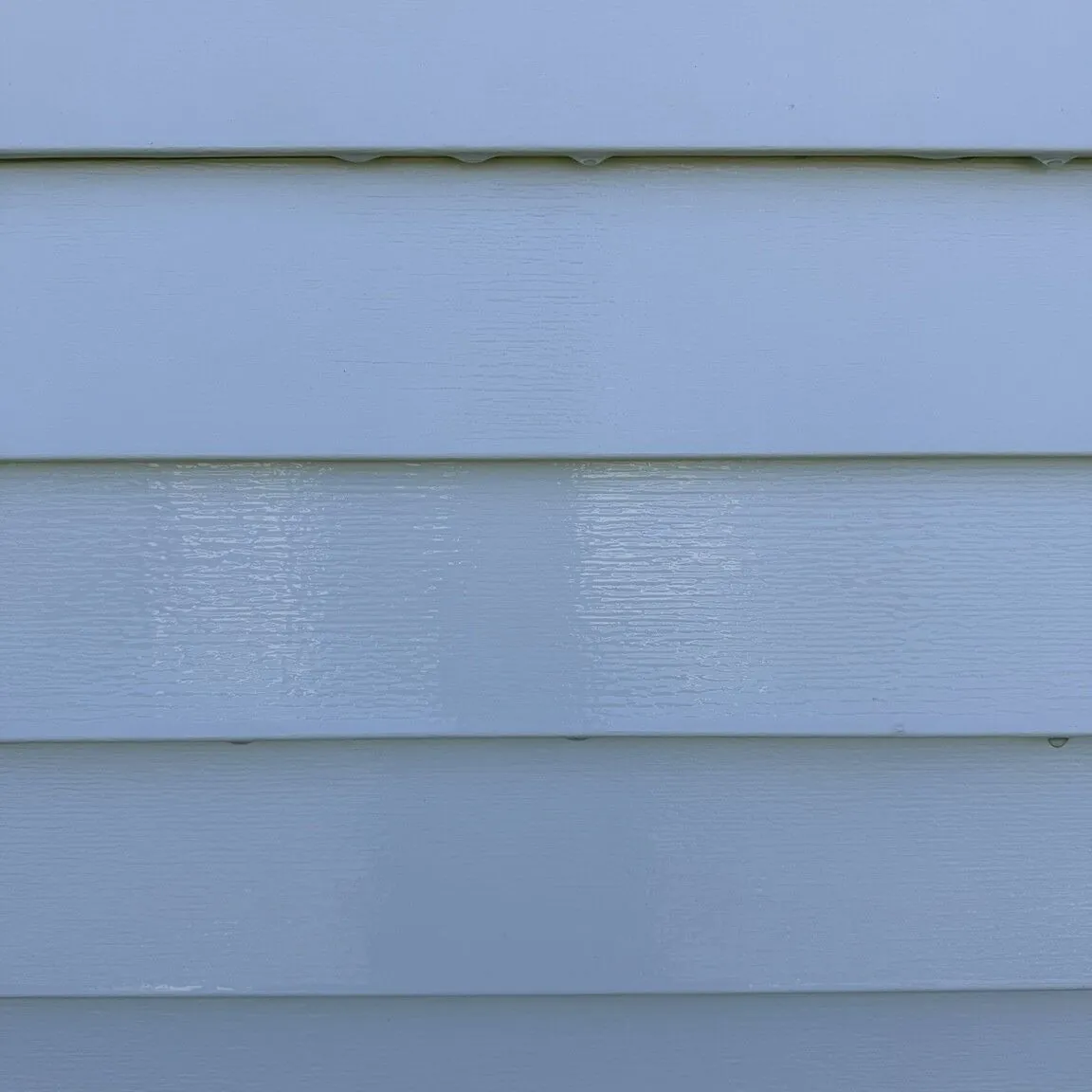
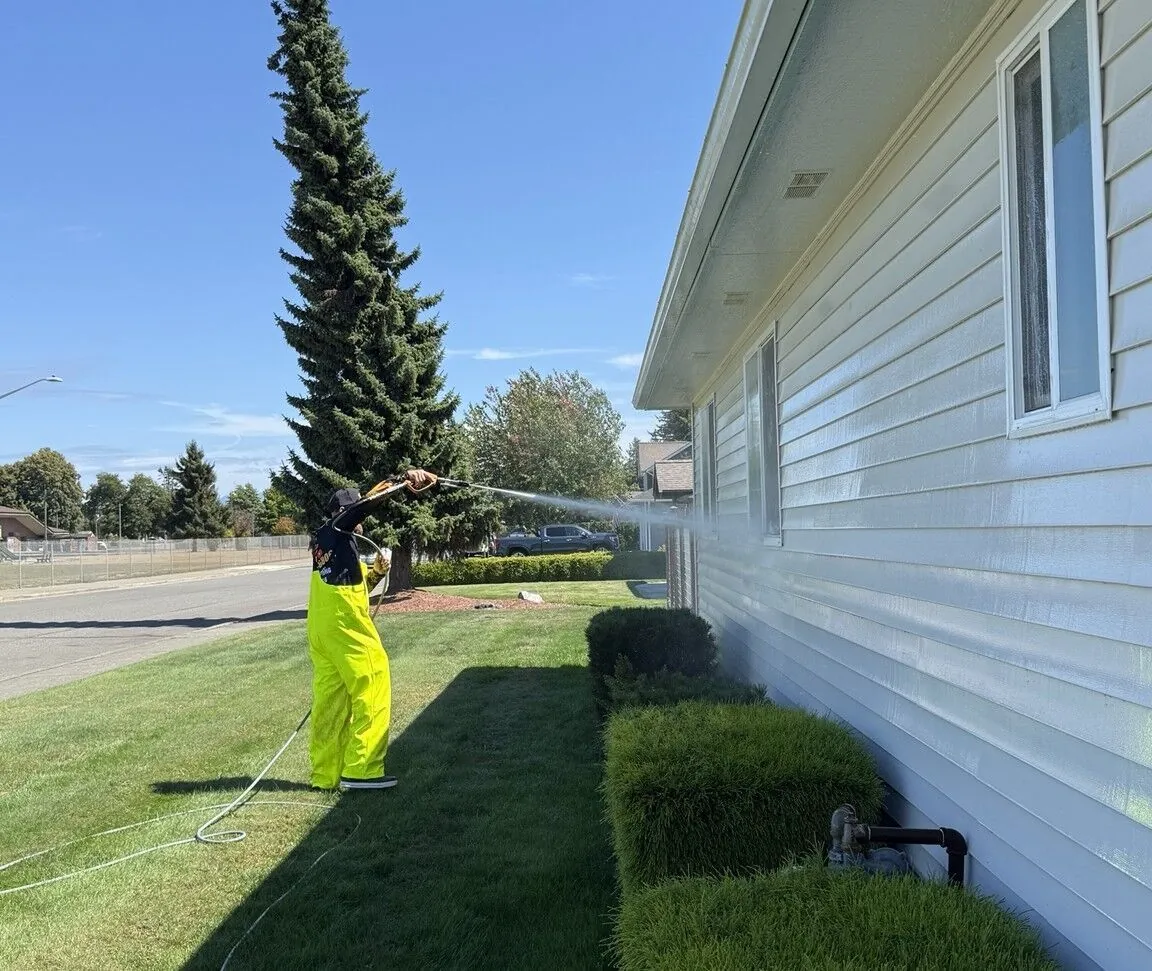
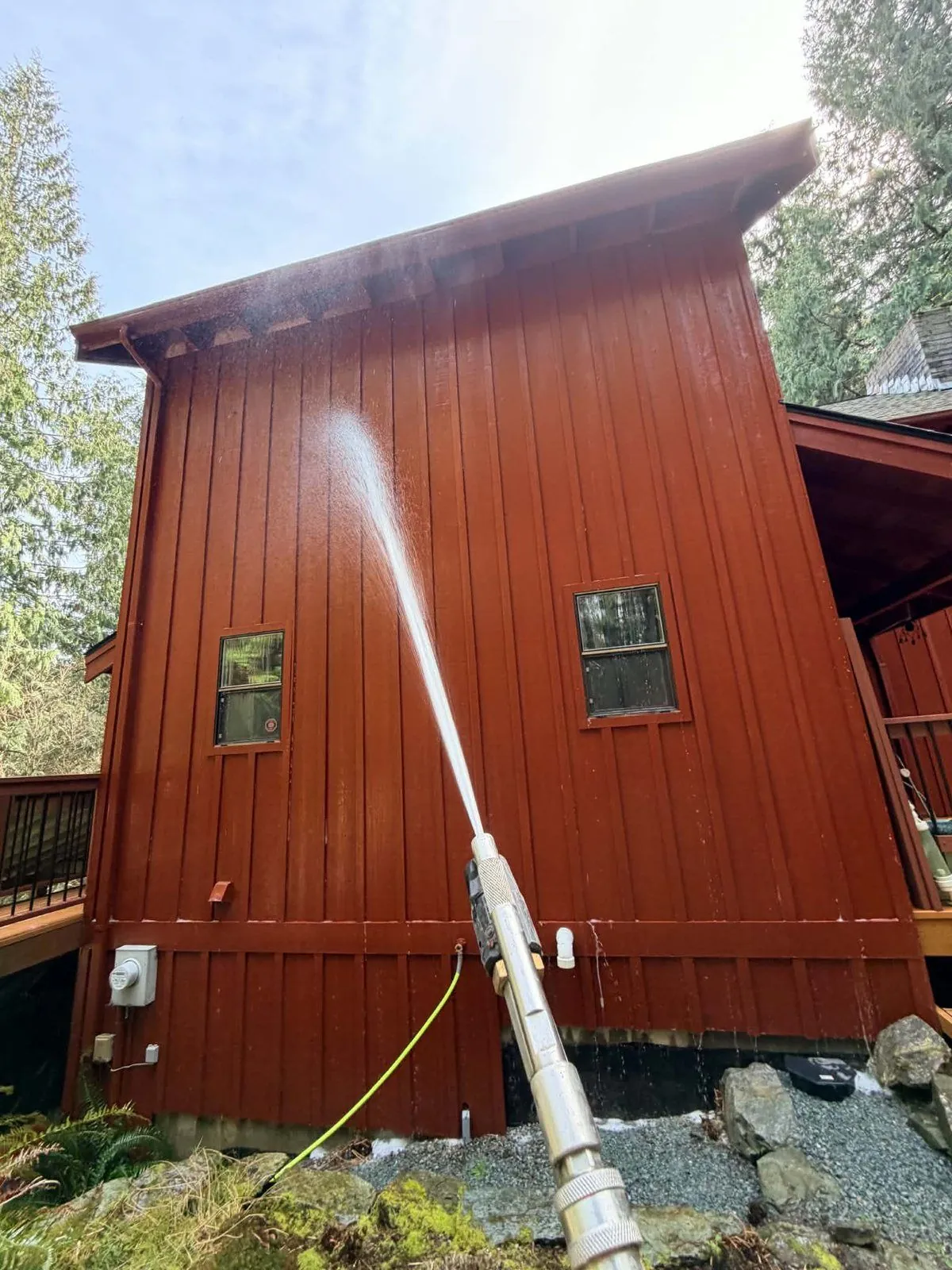
Softly. We apply a cleaning solution at low pressure, let it sit long enough to break down the growth and loosen the film, then rinse at low pressure from the top down. The solution does the work; the water only carries it away.
This matters because the materials on a house are not built to take a pressure washer. High pressure can force water up behind lap siding, lift paint from trim, etch softer surfaces and blow out window seals. Low pressure removes algae and road grime just as completely, and it leaves the surface intact. The approach on one widely used cladding is set out in our vinyl siding profile.
We mix solution strength to the problem in front of us, not to a fixed recipe. A lightly dusty wall needs very little. A north elevation carrying a few seasons of growth needs more, and more dwell time, which is one reason we would rather wash on a mild, overcast day than in hot sun that dries the solution before it has done its job.
What does Burlington’s code say about washing a house?
More than most homeowners would guess. Burlington Municipal Code 14.05.070(B) bars discharging into the city’s storm system any pollutant, or any water carrying one, other than storm water. Subsection (C) spells out what counts, and its list names soaps, detergents and ammonia, and steam-cleaning wastes.
There is a narrow allowance in 14.05.070(E)(4): routine external building wash-down is permitted, but only if it does not use detergents. A plain-water rinse of a wall sits inside that allowance. A wash that uses a cleaning solution does not, so its runoff must be kept away from the storm system altogether.
That is the working rule we follow on every Burlington house, whatever the size of the job.
Where does the rinse water go?
On to your property and into the ground, not down the street. It matters here because most of Burlington’s stormwater flows into Gages Slough, the waterway the Tammi Wilson Memorial Trail runs beside, and is pumped from there into the Skagit River. The city lists cleaning up Gages Slough as a very high priority.
Before we start, we plan the path the water will take:
- Find every storm inlet within reach of the runoff, on the driveway, the street edge and any yard drains that connect to the city system.
- Cover or block those inlets for the duration of the wash.
- Direct the rinse onto lawn and planting beds, where the soil absorbs and breaks it down, rather than onto hard surfaces that shed it.
- Use the least solution the wall needs, and plain water wherever the soiling allows it.
- Check the ground before we leave, so nothing is still running toward the kerb.
The full reasoning, with the sources, is on wash water and storm drains.
What affects the cost of a house wash here?
Every figure is quoted on site, after a walk round the building. The main drivers are:
- Size and height. Wall area sets the base; a second storey adds setup and reach.
- Condition. A house washed within the last few years needs a light pass. One with heavy growth on a shaded wall needs stronger mix and more dwell time.
- Containment. A house with lawn on all sides is simple. One with a driveway sloping toward a street drain, or a paved yard with its own inlets, takes more preparation.
- Access. Tight side passages, fences built against the wall and mature foundation planting all slow the work.
- Add-ons, such as gutter brightening or a window clean on the same visit.
A word on comparing quotes. A lower figure sometimes means the rinse plan has been left out: no inlets covered, solution sprayed straight off the driveway, and the wash finished in half the time. On a Burlington street that shortcut sends detergent toward Gages Slough, the very discharge the city code names. Ask any company you are comparing how they intend to handle the runoff, and weigh the answer alongside the price.
Repeat washes cost less than the first one. Once the heavy growth is gone, a maintenance wash every couple of years is lighter work, uses less solution and takes less time on site.
What time of year suits a house wash in Burlington?
Summer, for most homes. The nearest long-term station to Burlington is in Mount Vernon, since the town has none of its own, and its record puts July as the driest month, at just 1.16 inches on average. Dry weather matters for two reasons: the solution is not diluted by a passing shower before it works, and the walls dry out afterwards instead of staying damp for the growth to return.
Late spring and early autumn are good second choices on a dry spell. Winter washing is possible on a calm, dry day, but it is harder to schedule and the shaded side often stays wet anyway.
Washing rentals and multi-unit buildings
In Burlington, more homes are rented than owned: 2,178 of the 3,925 occupied homes, by the most recent census estimates. A tired exterior costs a landlord more than it costs an owner-occupier, because it is the first thing a prospective tenant sees and the last thing anyone thinks to fix.
For rentals we can arrange access through the tenant or a key-holder, work around parked cars and shared paths, and send before and after photographs to an owner who is not on site. Attached and multi-unit buildings are quoted as a single building, with the containment plan drawn for the whole site rather than each door.
What goes well with a house wash?
The wash is often the middle of a bigger job. If the roof is carrying moss, it should be treated first, because runoff from the roof streaks freshly washed walls. If the gutters are overflowing, clearing them stops the next streak before it starts. And windows go last: the wash wets the glass but does not clean it, so booking window cleaning in Burlington straight afterwards finishes the house properly.
Our general house washing page explains the service as we run it everywhere, and the Burlington page covers everything else we do in town.
How do I book a house wash in Burlington?
Call (360) 303-6806, or send your address and a line about what you are seeing, whether a green wall, road film or just a house that has not been washed in a while. We will come out, walk every elevation with you, show you where the rinse will go, and give you a figure. The technicians who do the work are trained by the owner, and the quote visit is free.
House washing questions from Burlington homeowners
- Will you use a pressure washer on my siding?
- No. Siding is washed at low pressure with a cleaning solution that does the work, then rinsed gently. High pressure can drive water behind lap siding, lift paint and scar softer materials, and it is not needed to remove algae or road film.
- Is it legal to wash a house with soap in Burlington?
- Washing is legal; letting soapy rinse reach a storm drain is not. The city code lists soaps and detergents among illicit discharges and allows building wash-down to drains only when no detergent is used. So we keep any rinse that carries solution on the property, in lawn and planting beds, and away from the street.
- What is the green stuff on the north side of my house?
- Usually algae, sometimes mildew, and it grows where the wall stays damp and shaded longest. It is superficial on most siding and washes off, but it comes back faster on a wall that never sees sun, so that side may want attention more often than the rest.
- Will the wash hurt my plants?
- Not if it is done properly. Plants beside the house are wetted with plain water before we start, which reduces what they absorb, and rinsed again afterwards. Anything especially delicate can be covered. Tell us about prized beds on the walk-round.
- How often should a house in Burlington be washed?
- Every two to three years suits most houses, with the shaded side sometimes needing a touch-up in between. A rental can be worth washing at each change of tenant, because the outside is the first thing a prospective renter sees.
- Do you wash windows at the same time?
- The house wash wets the glass but does not clean it properly. Booking window cleaning straight after the wash, on the same visit, is the usual order, so the windows are done last and nothing lands on them afterwards.
- Can you wash a duplex or a small apartment building?
- Yes. We quote from the building itself and plan access around tenants, parked cars and shared walkways. Let us know who approves the work, and we can coordinate notice and timing so nobody comes home to a wet path they did not expect.