
Skagit County
Window Cleaning in Burlington, WA
The short answer
Burlington glass collects valley field dust in the dry months, road film near I-5 and the busy commercial roads, and rain spotting through the long wet season. We clean inside and out, screens, sills and tracks included, with purified water on the upper floors, and we schedule easily around tenants in a town where most homes are rented.

Randy Fee — Owner, King of Kings Window Cleaning
Washington business licence, UBI 605476674 · L&I insured · BBB rated A
Randy runs the company himself, so you are dealing with the owner, not a call centre — and every technician here is personally trained by him. Working Whatcom and Skagit County since 2024.
I run the Burlington route personally.
A Burlington window gets dirty from three directions. Dust drifts in off the fields in the dry months. Traffic film builds on the side of the house that faces a busy road. And through the long wet season, rain dries on the glass in spots and runs, leaving a pattern you only notice when low sun hits it.
We clean all of it off, inside and out. The other thing that shapes window work in this town is who owns the glass, and that is covered further down.
What makes windows in Burlington dirty?
The setting, mostly. Burlington sits in the middle of working farmland: Skagit County growers cultivate about 90,000 acres and more than 90 crops, and the soil that tilling and harvest lift into the air comes down on glass in a fine, even layer. After an overnight dew it bonds to the pane as a dull film that a hose will not shift.
Then there is traffic. I-5 runs through the town, and a long stretch of commercial development grew up along Burlington Boulevard after the Cascade Mall opened in 1989. Homes near those corridors pick up a grey, slightly greasy road film, heaviest on glass facing the traffic.
Rain adds the third layer. Water that runs down a dusty window picks up the dirt, then dries as streaks and droplet marks. On a north-facing window that stays damp for days, green growth can start in the corners of the frame.
Why does it matter that so many Burlington homes are rented?
Because it changes when and how windows get cleaned. More homes here are rented than owned: 2,178 of the 3,925 occupied homes. And only 2,137 of the town’s 4,246 housing units are detached houses, which leaves roughly half in attached and multi-unit buildings.
For windows, that means a lot of the work is arranged by someone who does not live behind the glass. The common requests we plan for:
- Turnover cleans timed between one tenant moving out and the next moving in
- Exterior-only visits on occupied units, where going indoors is not practical
- Whole-building cleans on duplexes and small multi-unit properties
- Photographs sent to an owner who lives elsewhere and wants to see the finished result
Clean glass does more than almost anything else to make an empty unit look cared for in listing photographs, because it changes the light in every room.
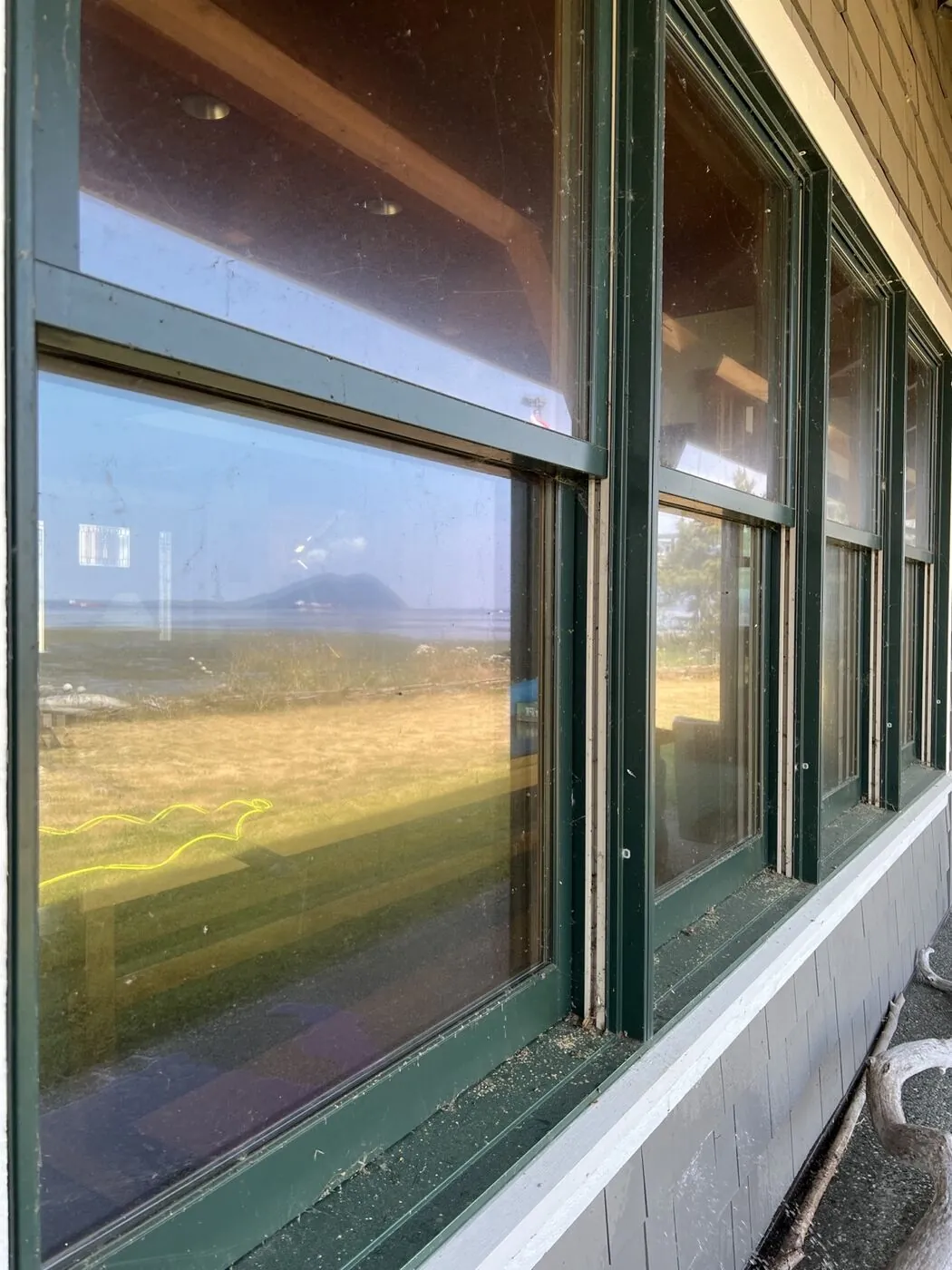
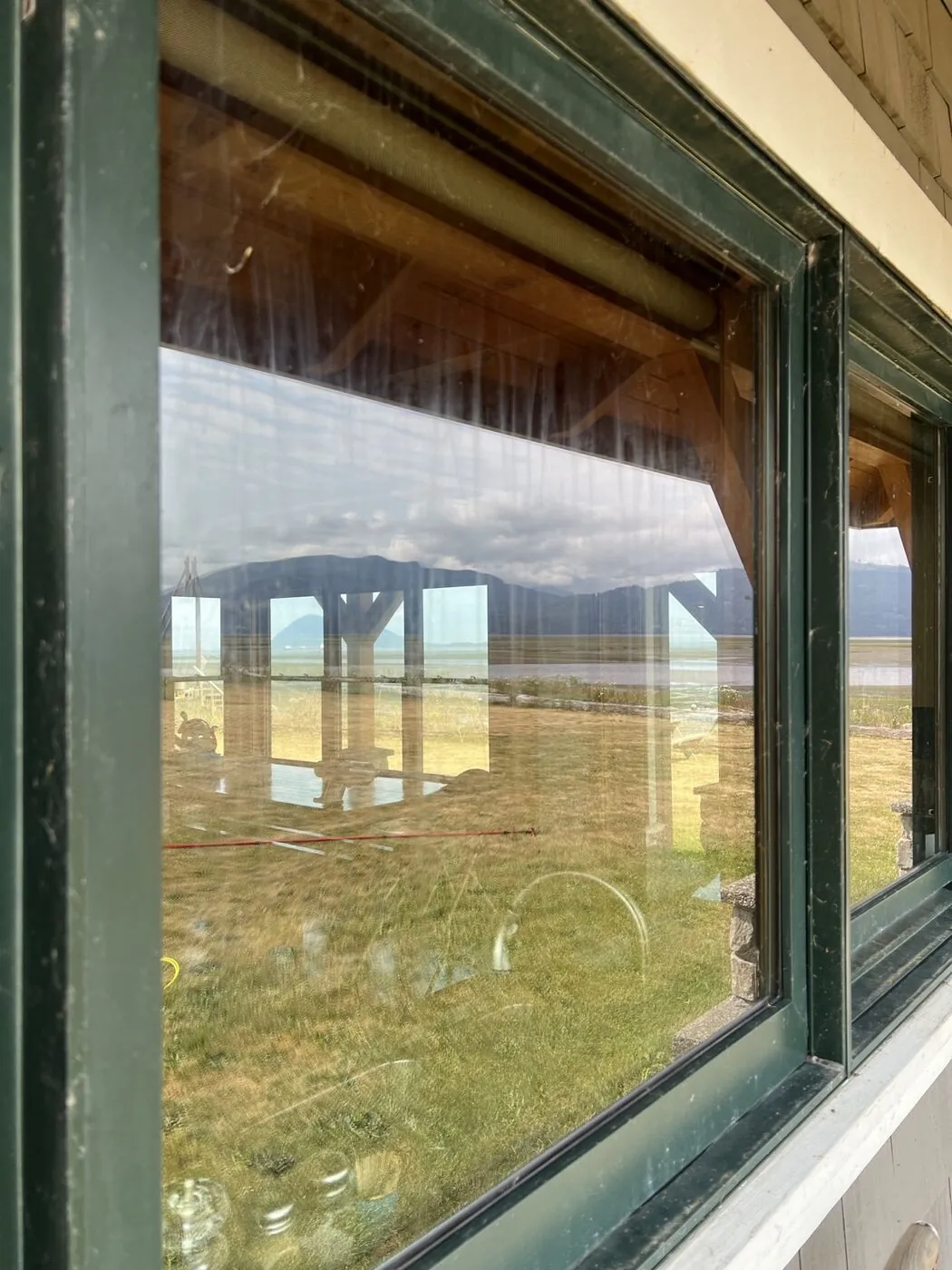 Before
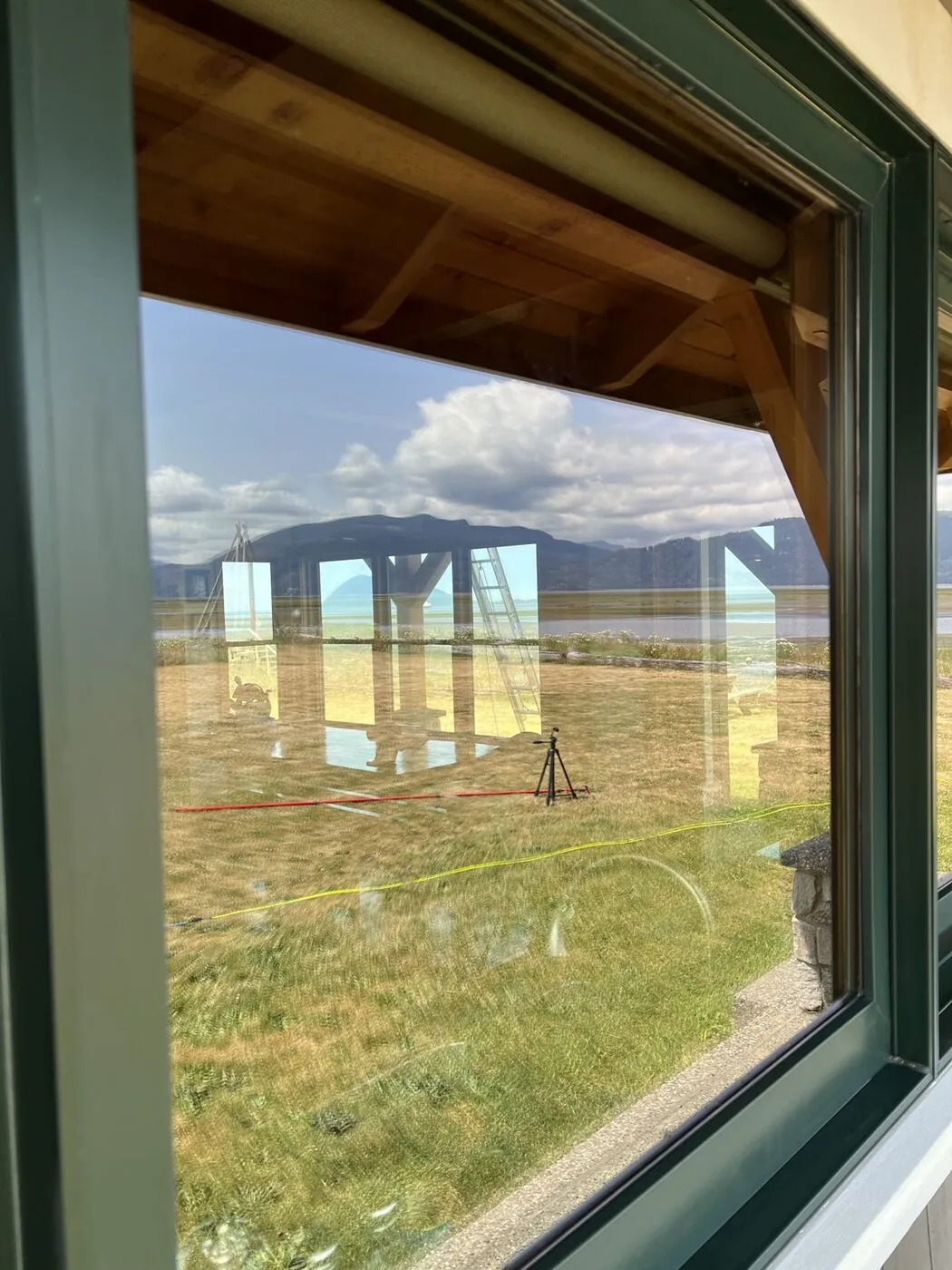 After
What is included in a window clean?
The standard residential clean covers:
- Both faces of every accessible pane, interior and exterior
- Screens taken out, washed, dried and returned to their own frames
- Sills and tracks vacuumed and wiped, since grit in a track wears the seals every time the sash slides
- Frames wiped down where the material allows
- Cobwebs cleared from around the openings
- A final look together before we leave, in daylight
Skylights, glass railings, storm windows and conservatory roofs are priced separately because access varies so much. Post-construction glass, with paint, mortar and label adhesive on it, is quoted as its own job.
How is the glass actually cleaned?
With two methods, chosen window by window.
Reachable glass is cleaned by hand: a cleaning solution applied with a scrubber to break the film, then a squeegee to take it off in one clean pull, with the edges detailed. Physical contact is the fastest way through bonded field dust.
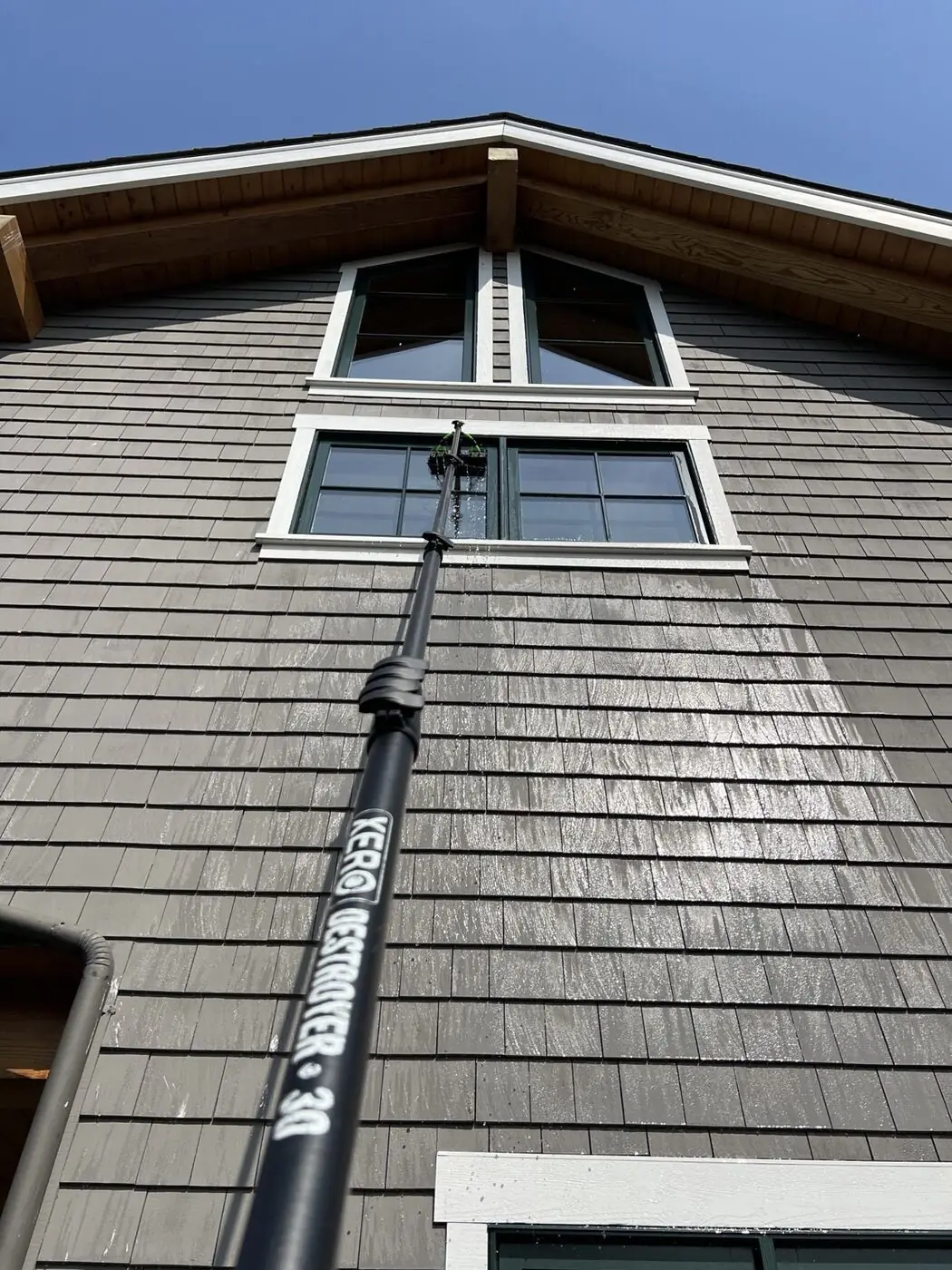
Upper floors and awkward reaches are cleaned with a water-fed pole from the ground. The pole carries purified water through a soft brush; the brush loosens the dirt, and the water, having had its minerals removed, dries without leaving marks. No ladder goes into your planting beds or onto a deck.
Screens get their own attention. Each one comes out, is washed and rinsed, dries in the air while we work on the glass, and goes back into the frame it came from. A screen full of summer field dust will put some of that dust straight back on a freshly cleaned pane the first time the wind blows, so skipping them is a false saving.
We bring our own purified water rather than filling from an outside tap. Burlington’s supply comes from Skagit PUD’s Judy Reservoir system, fed by four Cultus Mountain streams. There is no published hardness figure for it that we could verify, and we do not need one: filtered water off our own system dries clean whatever comes out of the tap.
What about fogged double glazing?
That is a failed seal, not dirt. When moisture appears between the two panes of a sealed unit, the seal around its edge has broken and damp air has got inside. No cleaning of the outside faces can reach it; the fix is a glazing repair or a replacement unit.
We will point these out on the quote and leave them off the bill. If you want to understand how these units work and why they fail, our profile of insulated glass units covers it. Spotting the difference early can matter on a rental, where a failed unit is easier to deal with between tenancies than during one.
How long does a window clean take?
Less time than most people expect for a small home, and more than they expect for a big one. A single-storey house or a ground-floor unit with a modest number of openings is usually finished within a morning. A two-storey house with large fixed panes, a stairwell window or a lot of glass over a deck can take most of a day, because the reach is harder and each pane is bigger.
Screens and tracks add real time. A home with every screen in place and tracks full of summer dust takes noticeably longer than one where the screens were stored for winter, and we build that into the booking rather than rushing it.
For a rental between tenants, the unit being empty helps: no furniture to move away from the glass, no one working from home at the window we need, and no need to plan around a household’s day. If you can give us a clear window of time on move-out, we can usually fit the clean inside it.
What affects the price of a window clean here?
Every quote is written on site after a walk round. The main drivers:
- Number of panes, the starting point.
- Size of the glass. Big picture windows take longer than their count suggests.
- Access. Ground-floor glass on open lawn is quick; upper floors over a deck, a roof or thick planting take more time.
- Condition. Glass cleaned last season is maintenance; glass carrying several years of field dust and road film is a restoration clean the first time and lighter work after.
- Inside, outside or both, and extras such as screens, tracks and skylights.
- Occupancy. Working around furniture and tenants takes longer than an empty unit between leases.
The second clean nearly always costs less than the first, because we are keeping the glass clear rather than rescuing it.
When should Burlington windows be cleaned?
Two times a year work for most households.
Spring clears the grime of a long wet season: rain spotting, frame-corner growth, and the film from months of damp. With July the driest month at the nearest long-term weather station, in Mount Vernon, the glass then stays clear into the summer.
Early autumn, once the dry-season dust has settled and before the rain sets in, is the second. Clean too early in the summer and the field dust puts the film straight back.
On demand covers the rest: a tenant changeover, a house going on the market, or the end of a renovation. None of these follow the calendar.
We avoid a hard frost, when water freezes on the glass before it can be worked.
What happens to the water from a window clean?
Very little of it goes anywhere. A hand clean uses a bucket of solution and a squeegee, and the volume that reaches the ground is small. The water-fed pole uses purified water with nothing added.
Even so, Burlington’s rules are clear. The city’s code lists soaps and detergents among illicit discharges to its storm system, and most of the town’s runoff flows into Gages Slough and on to the Skagit River. So solution buckets are emptied into a sink or onto soil, never into a street drain, and the pole work, which uses plain water, is kept to the property wherever possible.
Do you clean shop windows in Burlington?
Yes. Burlington has a large commercial side, much of it along Burlington Boulevard, and storefront glass runs to a different rhythm from a house: often weekly or monthly, timed around opening hours, with the entrance doors taking the most wear. That work is covered under commercial window cleaning, and we quote the frequency along with the first visit.
What goes well with a window clean?
Windows should be the last job on the house. If the siding is due a wash, that comes first, because it wets and splashes the glass; see house washing in Burlington. If the gutters are overflowing, water running down the face of the house will streak fresh glass within a week, so clearing them first protects the result.
Our main window cleaning page describes the service as we run it across the whole territory.
How do I book?
Ring (360) 303-6806 or send a request through the contact page. Tell us whether it is your own home or a property you manage, how many storeys it has, and whether anyone will be living there on the day. Every technician is trained by the owner of the company, the quote costs nothing, and the rest of our work in town is listed on the Burlington page.
Windows questions from Burlington homeowners
- How often should windows be cleaned in Burlington?
- Twice a year suits most homes: once in spring to clear the winter film, and once in early autumn after the summer dust. Houses close to I-5 or a busy road, and rentals changing hands, often go on a different schedule set by need rather than season.
- Can you clean the windows of a rental between tenants?
- Yes, and it is one of the most useful times to do it. We can work to a move-out date, collect a key or meet a property manager, and send photographs of the finished glass to an owner who is not on site.
- Do you clean inside as well as outside?
- Yes. The standard clean covers both sides of the glass, plus screens, sills and tracks. Exterior-only visits are available for occupied rentals where going indoors is awkward, or as a between-visits refresh.
- What about windows I cannot reach from a ladder?
- Upper-floor glass and anything above a deck or a roof line is cleaned from the ground with a water-fed pole running purified water. Where a window cannot be reached safely by any method, we tell you on the quote.
- Why is there fog between the panes of one window?
- That means the seal on a double-glazed unit has failed and moist air has got between the panes. Cleaning the outside faces does not reach it. It is a glazing repair, and we will point it out rather than charge you for trying.
- Do you clean shop windows and storefronts?
- Yes. Retail glass is a different rhythm from a house, often on a regular schedule and timed around opening hours. Tell us what you need and we will quote the frequency along with the job.
- Should I get the house washed before the windows?
- If both are due, yes. A house wash wets and splashes the glass, so the windows go last. Booking both on one visit avoids paying twice for access and leaves the glass as the final finish.