Whatcom County
Exterior Cleaning in Bellingham, WA
The short answer
We clean windows, gutters, roofs, siding, solar panels and hardscape across Bellingham — all 25 City neighborhoods, from Fairhaven to Cordata. What makes Bellingham its own job is the Lake Whatcom watershed on the east side, a housing stock heavy in cedar and mid-century glass, and a wet season that runs October into May.

Randy Fee — Owner, King of Kings Window Cleaning
Washington business licence, UBI 605476674 · L&I insured · BBB rated A
Randy runs the company himself, so you are dealing with the owner, not a call centre — and every technician here is personally trained by him. Working Whatcom and Skagit County since 2024.
We run the Bellingham route on a regular rotation.
Bellingham is the market this company was founded in, in March 2024, and after enough seasons working one city you stop cleaning houses and start recognising them — the same shingle from the same era on the same street, the same north wall doing the same thing every February.
This page is what that adds up to.
What makes Bellingham its own job
Three things, and none of them are true of everywhere in the county.
The watershed. Bellingham’s drinking water comes out of Lake Whatcom, and the city regulates the reservoir under its own chapter of municipal code — BMC 16.80 — which sits on top of the general stormwater chapter rather than replacing it. The specific target is phosphorus, under a Department of Ecology TMDL response plan. A property inside the watershed is governed by both chapters at once. That covers a substantial part of the eastern city and it changes how a job is planned, not how much it costs.
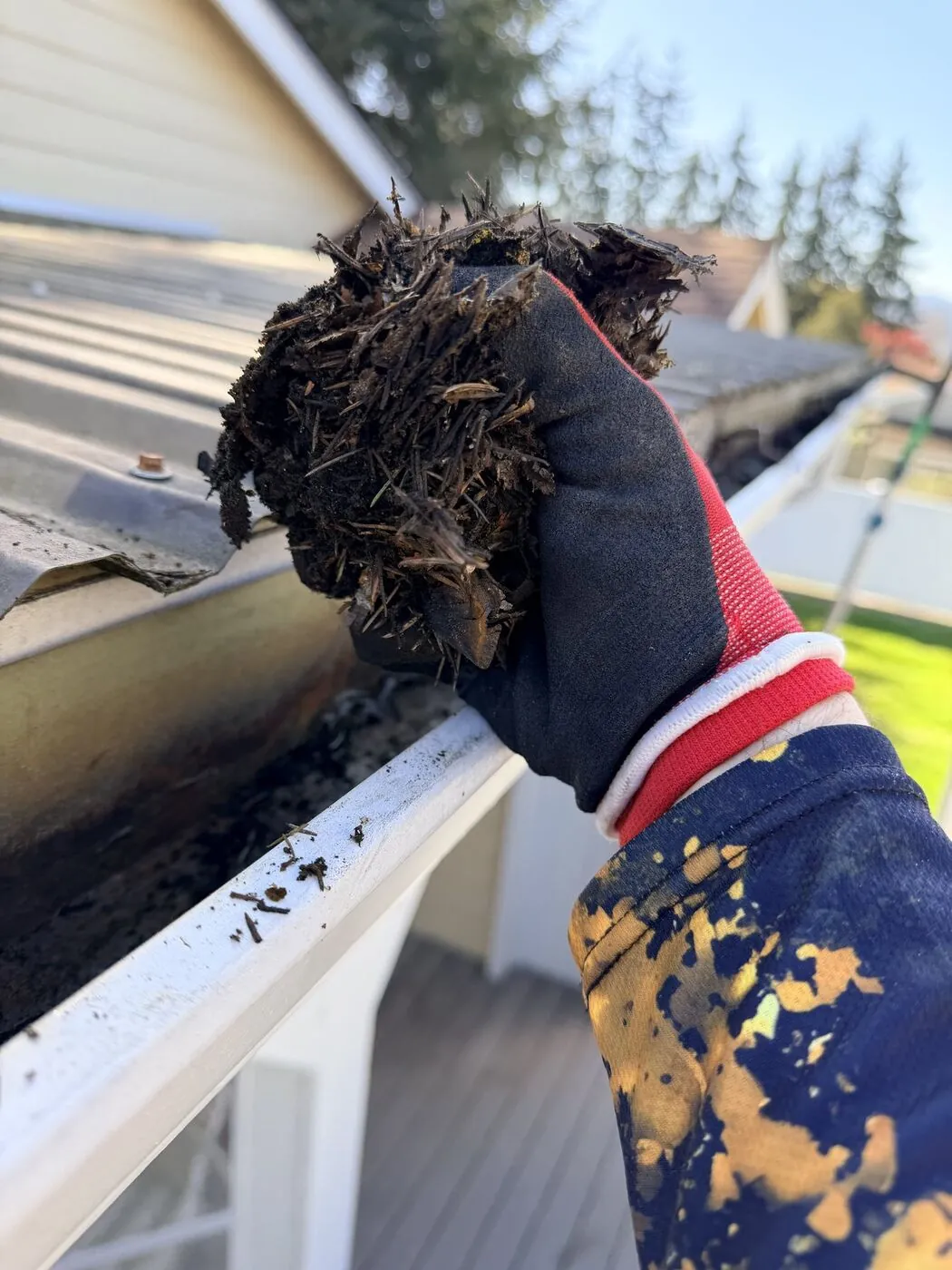
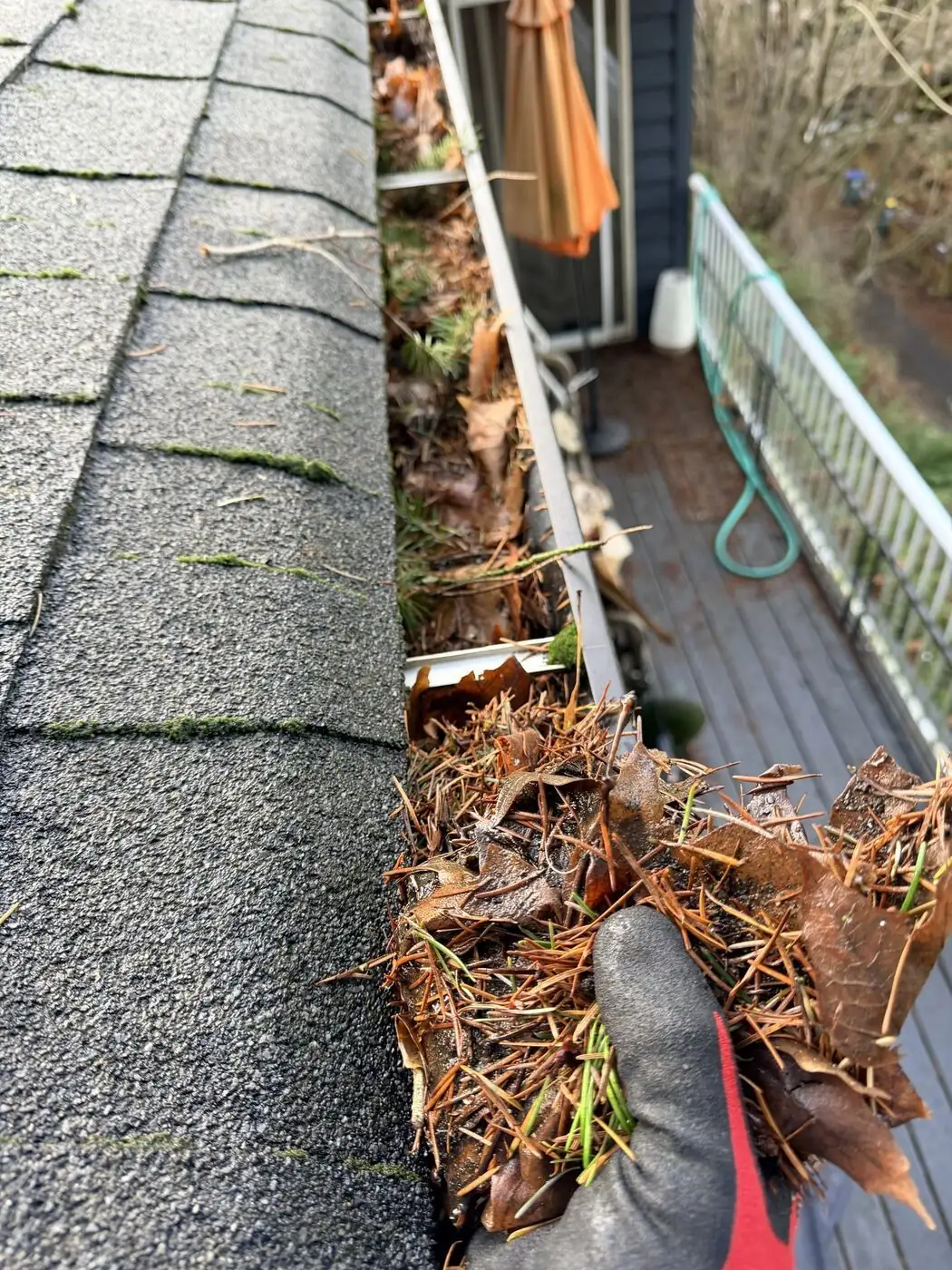
The tree cover. Bellingham is a wooded city and it shows in the work. Mature Douglas fir and western red cedar over residential lots means continuous needle drop into gutters, permanent shade on north elevations, and moss pressure that does not let up between October and May. A house on open ground in Cordata and a house under second growth in Sudden Valley are different maintenance schedules even with identical construction.
The housing stock, by neighborhood. The wooded south end — Edgemoor, Fairhaven, South Hill, out along Chuckanut Drive — carries a high share of cedar roofing and cedar siding on mid-century and later homes, which is the most method-sensitive surface in the region. The north and east — Cordata, Barkley, Irongate — is newer construction, more vinyl and fiber cement, larger picture glass and more flush-mounted solar. Same city, two different toolkits.
Which Bellingham houses take the most care?
The oldest ones, and this city has more of them than most visitors expect. Bellingham holds eight historic districts on the National Register: Broadway Park, Cissna Cottages, Downtown, Eldridge, Fairhaven, Sehome Hill, South Hill and York. The Cissna Cottages went up between 1900 and 1904, and York was substantially built out by the time of the Great Depression, so on those streets the paint, trim and glass have been taking the weather for the better part of a century.
That changes the pace of a job rather than the list of services. Old paint does not want pressure. Old sashes want hands rather than force. Trim that has been repainted a dozen times will lift if somebody aims a wand at it, and on a house like that the repair costs far more than the clean ever did.
At the other end of the scale is what is going up now. Roughly three-quarters of the permits issued in Bellingham over the past decade were for multi-family housing, so a growing share of the city lives in townhomes, condos and apartment blocks: more storeys, shared walls, and usually a manager or an association setting the schedule rather than one owner.
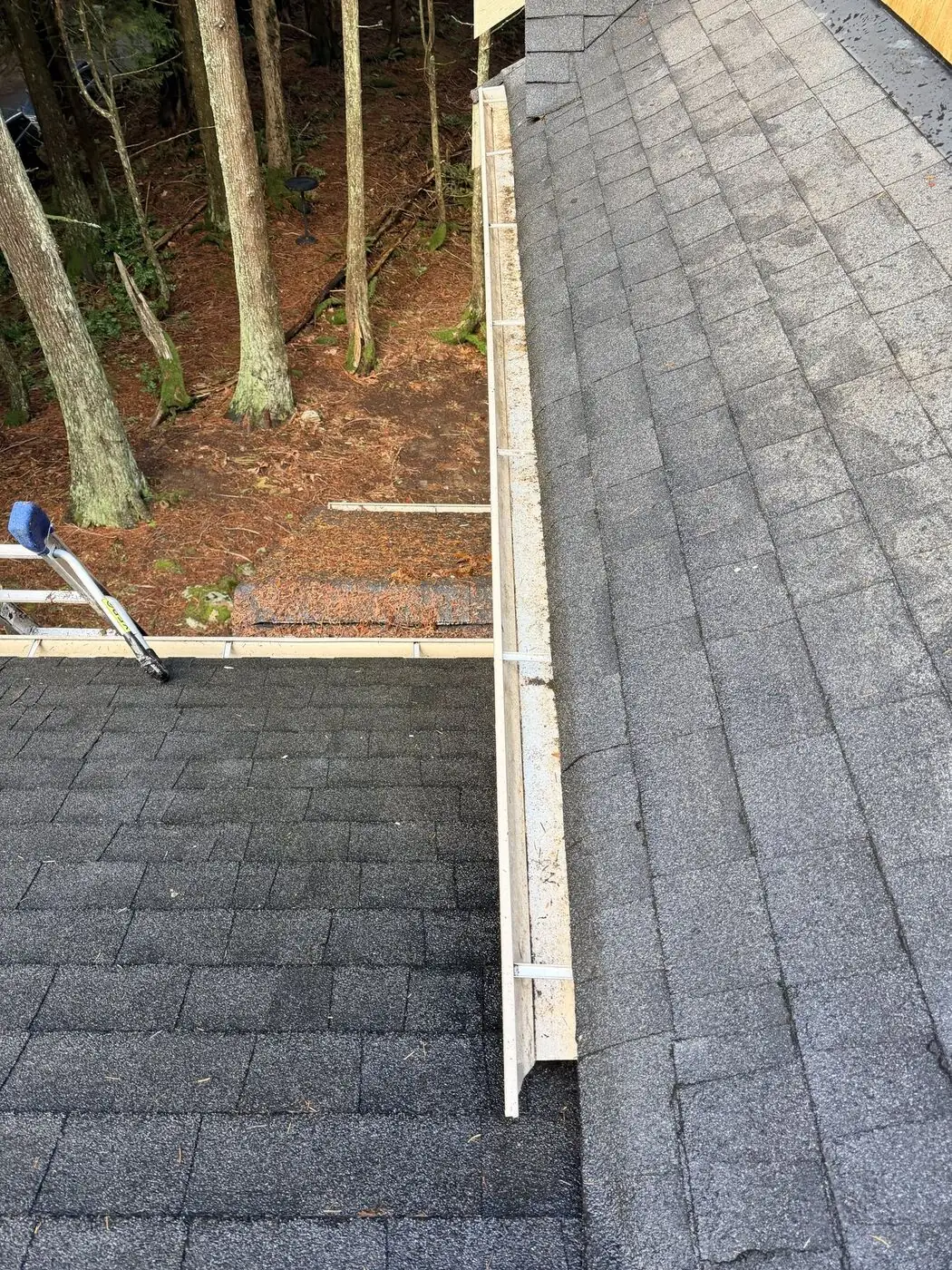
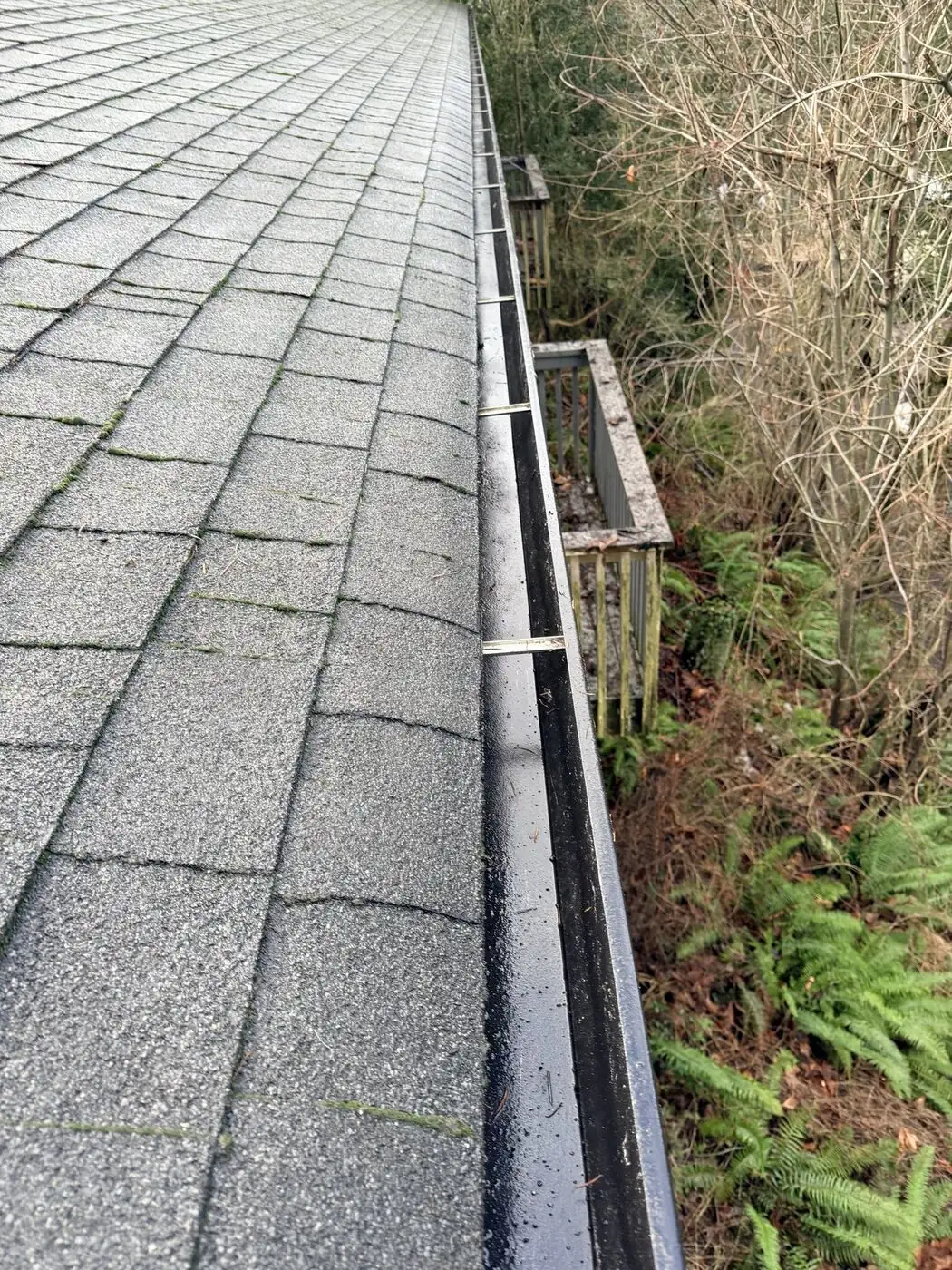
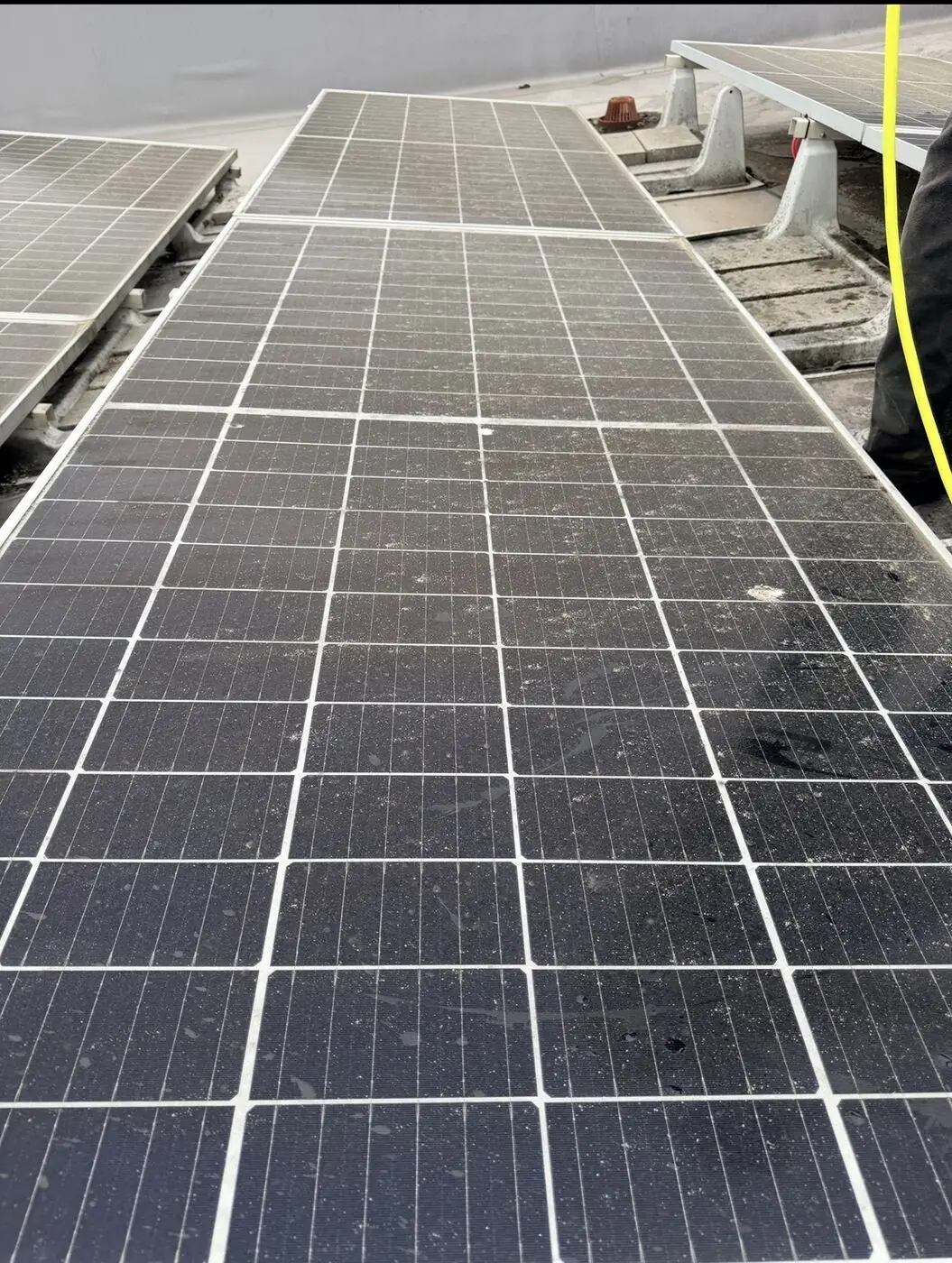 Before
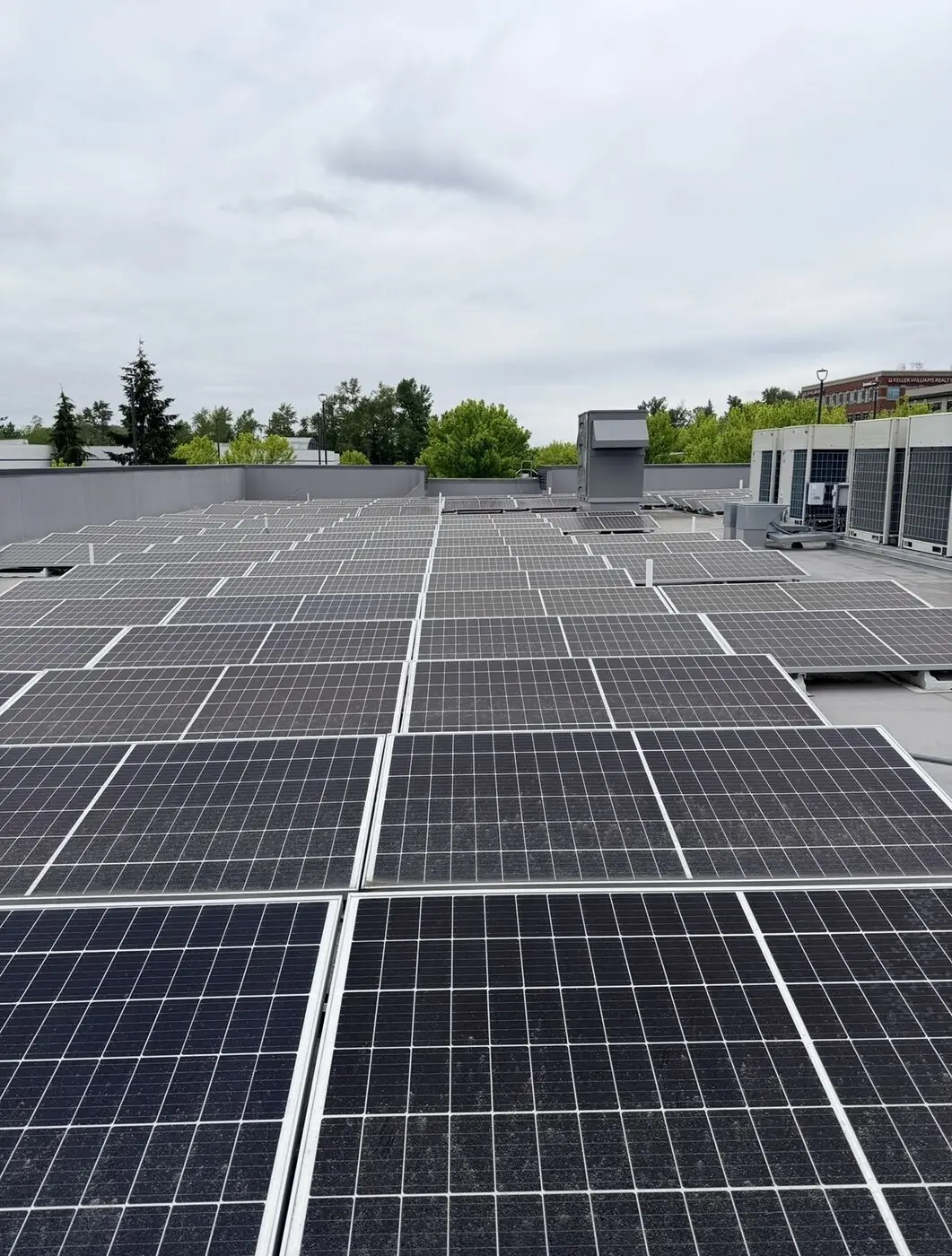 After
What do 36 inches of rain do to a house here?
They keep it wet for half the year. Bellingham averages about 36 inches of rain annually, and roughly 80% of that falls between October and March. The total is unremarkable by Pacific Northwest standards; the concentration is what does the damage. For six months a north wall, a shaded roof plane or a gutter under a fir hardly sees a dry day, and those are the months moss, algae and organic film do their growing.
The wind gives the rain a direction. Prevailing wind here is southerly in eleven months of the twelve, so weather arrives on the south side of a house and drives water into the siding, the window frames and the lower courses of the roof on that face. The north side stays damp and the south side takes the beating. Most houses in town show both, on opposite walls, and a sensible plan treats each elevation for what it actually has rather than washing the whole building the same way.
Which trees are behind most of the work?
Roughly 40% of Bellingham sits under tree canopy, 7,252 acres of it, and the City’s draft urban forest plan aims for 45% by 2050. For a homeowner that is a pleasant street and a maintenance calendar in the same breath.
The forest species are the ones you would guess from a walk up Sehome Hill: western redcedar, Douglas-fir, big-leaf maple, vine maple, red alder, black cottonwood and Sitka spruce. Along the streets it is mostly maples, cherries and oaks. Each drops something different, at a different point in the year:
- The conifers shed needles and fine litter in every month, so a roof under them never really gets an off-season
- Big-leaf maple, alder and cottonwood unload in autumn, in quantity, usually just as the rain sets in
- Street maples, cherries and oaks add blossom, leaf and seed to whichever houses happen to line that block
The practical upshot is that two identical houses on one street can need their gutters and roofs looked after on quite different cycles, depending on what is growing over the fence.
What we do here
Every service we sell, we sell in Bellingham, and most houses take several at once:
- Window cleaning — interior and exterior, screens and tracks, purified water on the pole for upper storeys
- Gutter cleaning — trough cleared, silt flushed, every downspout confirmed running
- Roof cleaning and moss removal — soft wash and hand-lift, never pressure
- House washing — low pressure, right solution, dwell and rinse
- Pressure washing — drives, paths, patios and steps, with a surface cleaner rather than a wand
- Solar panel cleaning — purified water, no abrasives, and never walking on the array
Booked together they are one setup and one visit, and the sequence matters: roof and gutters before glass, so nothing lands on windows that were just cleaned.
Working inside the watershed
Worth setting out plainly, because most quotes in this market do not mention it at all.
On a watershed property the plan is built around not discharging. Inlets in the work zone get covered or bermed before anything is applied. Rinse is directed to vegetation, where soil filters it, rather than to a drain, which does not. Planting below the work is pre-wetted first and rinsed afterwards. Where a job and a surface allow it, recovery rather than release.
None of that is slow and none of it is exotic. It is the difference between a crew that has thought about where the water goes and one that has not. The full detail, with the code sections cited and linked, is on wash water and storm drains.
Does a 1950s to 1970s building need a different wash?
Sometimes, and it is worth asking before any water goes on. The City of Bellingham notes that buildings constructed between 1950 and 1979 may contain PCBs, and that wash water coming off them may require licensed hazardous disposal rather than the vegetated-area or sanitary-sewer route that covers ordinary work. A lot of the city’s mid-century housing and commercial stock falls inside that window.
We are not a hazardous-materials contractor and we do not test for PCBs. What we do is ask the build year, flag the question on the quote when it lands in that range, and plan any wash around the answer instead of finding out halfway through. For most houses it never comes up. Where it does, it is far better raised at the kitchen table than at the storm drain.
Do you work on apartments and business premises?
Yes. With so much of Bellingham’s recent building being multi-family, we quote townhome rows, condo buildings and small apartment blocks as well as houses, usually through a property manager or an association and usually as a whole building rather than unit by unit. Taller elevations mean more pole work on the glass and more planning around parking, entrances and the people who live there.
For businesses, the City itself hands out free pressure wash water reclaim kits, which tells you how seriously it takes wash water reaching a drain. Commercial work gets planned to the same rule as residential: rinse goes to planting or to sanitary sewer, never to the inlet by the front door.
The Bellingham year
February into April is the biggest window of the year and rightly so. Winter leaves rain splash, organic film in the frame corners and interior condensation residue, and the growth on north elevations is at its most visible. Getting it off in early spring means spending the light half of the year looking through clean glass.
Late spring is the right moment for solar, once pollen has largely finished, and for house washing, because the wall needs to dry afterwards and a solution needs reasonable temperatures to work.
Late September into October, after the valley fieldwork dust has settled and before the leaves come down, is the second glass window and the sensible time to have gutters cleared ahead of the wet season rather than after the first overflow.
November through January is the honest off-season for most exterior work, and also the month to actually look at your roof — moss is green, swollen and obvious in the wet, and near-invisible and grey in August. Judging a roof in late summer is judging it at the moment it lies to you most convincingly.
What does a typical Bellingham visit look like?
Two recent ones, both posted to our Google profile in September 2026, give a fair picture. In the Edgemoor neighborhood, one home had its roof, gutters, solar panels, skylights and exterior windows cleaned in a single visit, and the greenhouse in the garden got cleaned while we were there. In Roosevelt, a single-family home had roof cleaning, gutter cleaning, a moss preventative treatment and exterior window cleaning done together.
Neither job was a one-surface call-out, and that is common here. Most houses under Bellingham’s trees have several things going on at once, and doing them in one sequenced visit means each step leaves the next one clean instead of undoing it.
Beyond the city limits
Bellingham is the centre of the route, not the edge of it. The same crews run Ferndale, Lynden, Blaine, Birch Bay, Everson and Sudden Valley on a regular rotation, and Skagit — Mount Vernon, Burlington, Anacortes — on a slightly longer one.
We also work a good deal of ground that does not have a page of its own, because we would rather say where we go than pad the site with pages about places we visit twice a year. Custer, Semiahmoo, Nooksack, Sumas, Deming, Acme, Maple Falls, Glacier, Marietta, Geneva, Lummi Island, Point Roberts and the Skagit flats all get served; they just get served from here. If you are not sure whether you are inside the area, call and ask — the honest answer is usually yes, and where it is not, we say so rather than quote a job we cannot service properly.
Booking it
Call (360) 303-6806 or ask for a quote online. We come out, walk the property with you, and tell you what actually needs doing this cycle and what can wait — in a city where half the houses are under trees, that second half of the sentence is usually worth more than the first.
What we do in Bellingham
Nearby
- Ferndale
- Sudden Valley
- Marietta (served, no page of its own)
- Geneva (served, no page of its own)
- Lummi Island (served, no page of its own)
Bellingham questions
- Which parts of Bellingham do you cover?
- All of it — the 25 City neighborhoods and the areas that sit just outside them, including Chuckanut and Squalicum. We run Bellingham on a regular rotation rather than driving in for one-off jobs, which is why a booking here usually lands within days rather than weeks.
- Does the Lake Whatcom watershed change how you work?
- Yes, and we treat it as its own category on the quote rather than as an ordinary Bellingham address. The lake is the city's drinking water source, the code adds reservoir-specific provisions on top of the general stormwater rules, and phosphorus is the specific target. Practically that means containment, directing rinse to vegetation rather than to a drain, and being straight about what we will not apply up there.
- How often do Bellingham homes need this done?
- Windows twice a year for most houses, three times on a shaded or heavily treed lot. Gutters once a year with nothing overhanging, up to four times under mature Douglas fir. Roof moss on a three-to-five year cycle set by shade and elevation, not by how it looks from the driveway.
- Do you work on cedar?
- Regularly, and it is the surface where method matters most. Cedar roofs and cedar siding concentrate in Edgemoor, Fairhaven, South Hill and along the Chuckanut Drive corridor, and they cannot take pressure or aggressive scraping. Gentle, chemical, and slow is the only approach that does not cost you roof.
- Can you do the whole house in one visit?
- Usually yes, and it is generally cheaper than booking the same work piecemeal — one setup, one visit, one trip up the ladder. Roof, gutters, house wash and windows in sequence is the common package, and the order matters: roof and gutters before glass, so nothing lands on windows that were just cleaned.
- Are you licensed and insured?
- King of Kings Window Cleaning LLC holds a Washington State business licence and carries Labor & Industries coverage, and is rated A by the Better Business Bureau. Ask for the details before work starts and you will get them.
- What is the quote process?
- On site, free, and in person. We walk the property with you, tell you which surfaces have growth, which have deposit and which have simply weathered, and give you a number for the work in front of us. A quote given over the phone without anyone looking at the house is a guess.
- My building went up in the 1960s. Does that change anything?
- It can. The City of Bellingham notes that buildings from 1950 to 1979 may contain PCBs, and wash water from them may need licensed hazardous disposal. We do not test for PCBs, but we ask the build year on every quote and raise the question before any washing is planned, not after.