Whatcom County
Pressure Washing in Bellingham, WA
The short answer
We pressure wash Bellingham driveways, walkways, patios, steps and decks using a surface cleaner and pressures set for each material. The wash water never goes down a storm drain, since BMC 15.42 requires it to reach sanitary sewer or a vegetated area, and buildings from 1950 to 1979 are checked against the City's PCB guidance first.

Randy Fee — Owner, King of Kings Window Cleaning
Washington business licence, UBI 605476674 · L&I insured · BBB rated A
Randy runs the company himself, so you are dealing with the owner, not a call centre — and every technician here is personally trained by him. Working Whatcom and Skagit County since 2024.
I run the Bellingham route personally.
Pressure washing is the one exterior service Bellingham’s rules name outright. The City does not leave wash water to general principle: pressure wash water is not to go into a storm drain, and that decides how a driveway gets cleaned here more than the machine does.
The other thing that decides it is the weather. A city that takes most of its rain between October and March grows a green film on every shaded slab, step and deck board, and by midwinter some of those surfaces are genuinely dangerous to walk on.
What does Bellingham require of pressure wash water?
That it stays out of the storm system. Bellingham Municipal Code chapter 15.42 prohibits pressure wash water from entering a storm drain; it has to go either to the sanitary sewer or onto a vegetated area. A street inlet at the foot of a driveway is the wrong destination, whether or not the water carries any detergent.
It helps to picture two separate networks of pipe. The sanitary sewer takes what leaves your sinks and toilets. The storm system exists to move rainwater off roofs and roads. Wash water from a driveway carries tyre residue, oil drips, organic sludge and whatever was used to loosen the moss, and the City’s rule is plain about which of the two networks it belongs in, and which it does not.
What does that look like on a Bellingham driveway?
Most of the effort goes in before the machine starts:
- We read the slope first. A drive that falls toward the street carries its rinse straight to the curb; one that falls toward a lawn does half the job for us.
- Any storm inlet in the path of the water is covered or bermed.
- Rinse is steered onto grass or planting beds, where soil takes it up, rather than off the end of the slab.
- Beds along the edges are soaked with clean water before any solution goes down, and rinsed once more at the end.
- Where a site offers the water nowhere acceptable to go, the job is planned around recovering it, or the scope changes.
None of that adds much time. It is the difference between a clean driveway and a clean driveway that has left a problem in the gutter at the street. The code sections, cited in full, are on wash water and storm drains.
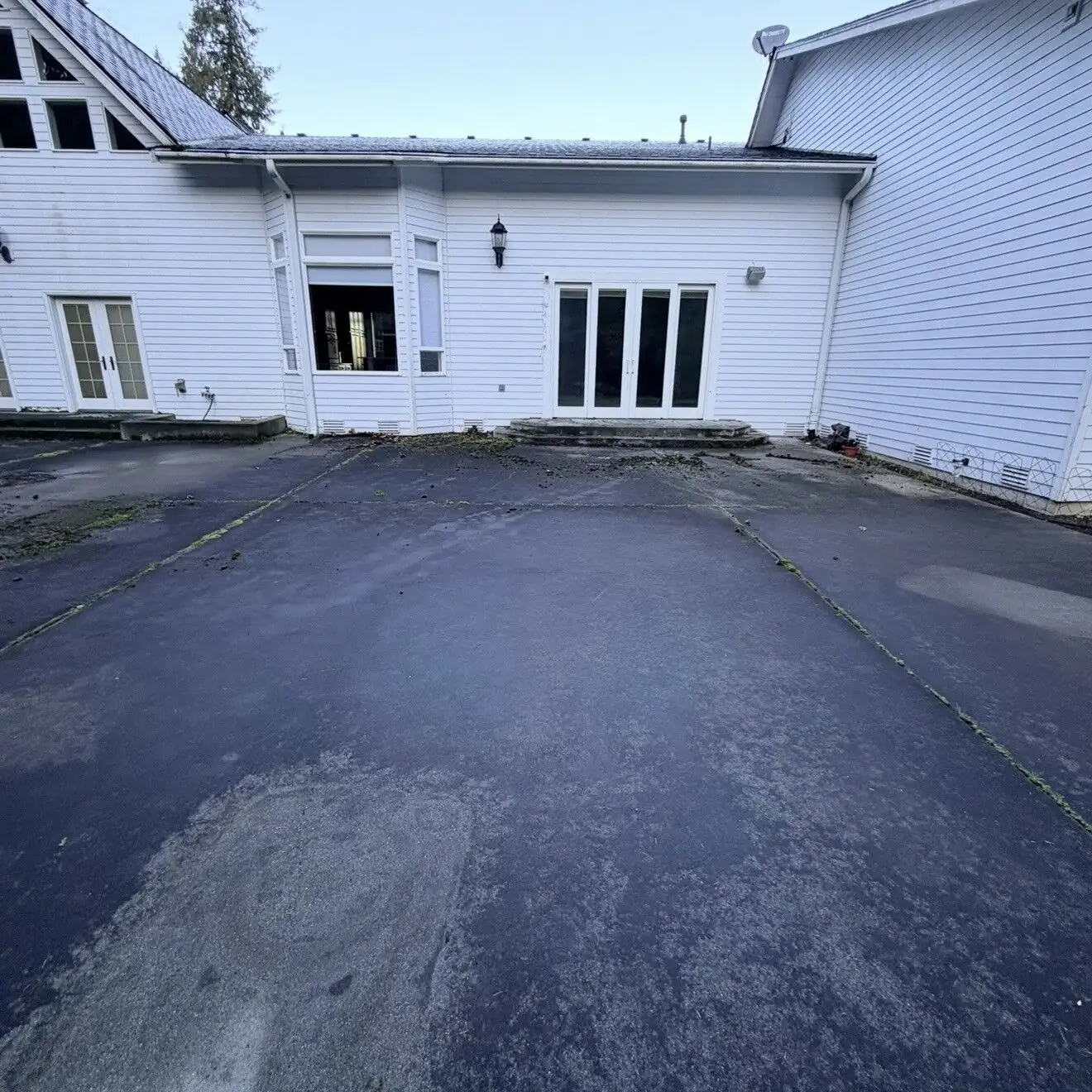 Before
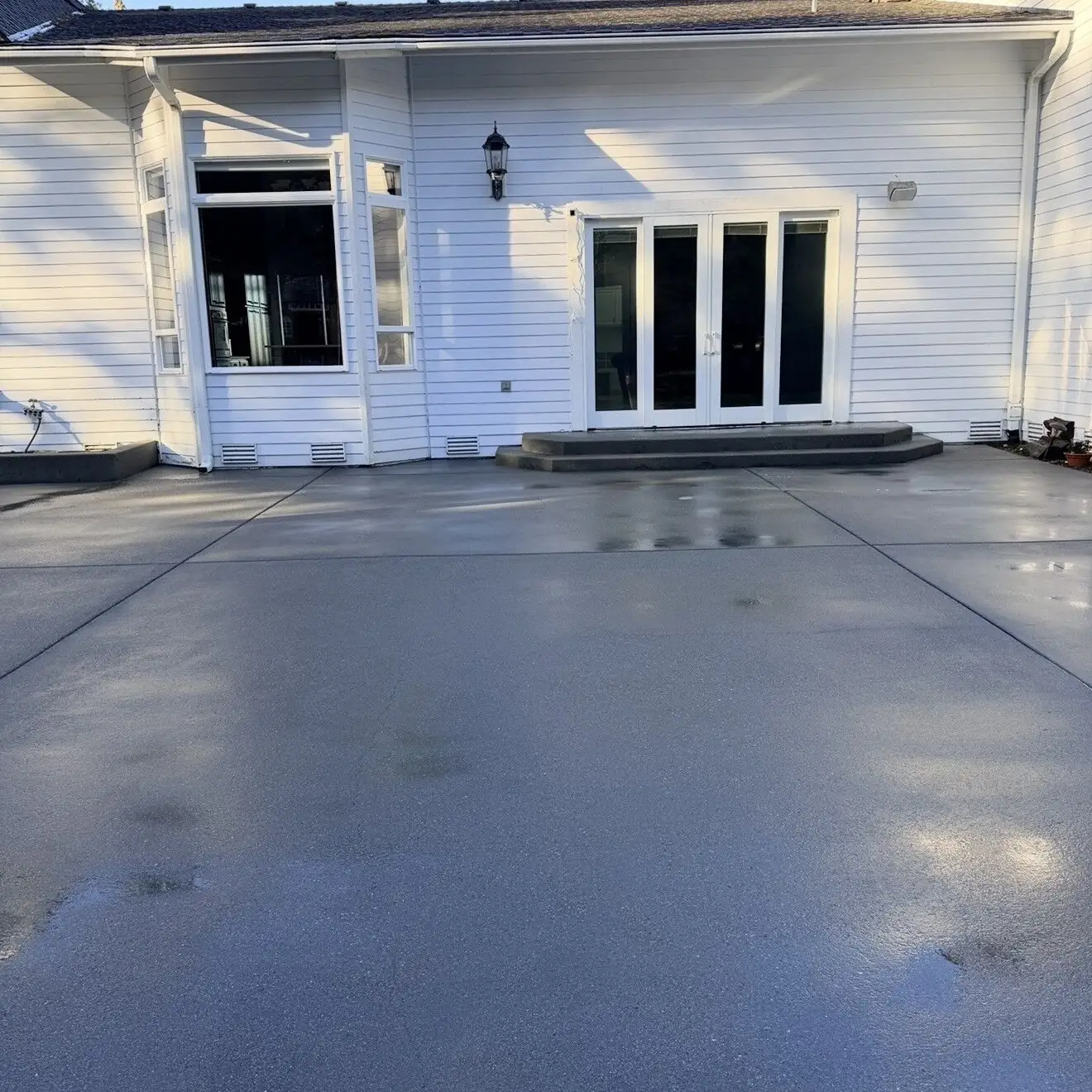 After
Why does the City hand out reclaim kits?
Because it would rather businesses comply than guess. Bellingham gives free pressure wash water reclaim kits to businesses, which is a fairly clear signal of how the rule is meant to be read. A commercial forecourt, a restaurant’s bin area or a shop entrance produces far dirtier water than a household drive, and it is often sitting a few feet from a street inlet.
For commercial clients, containment is therefore part of the scope from the first conversation rather than something bolted on at the end. If you manage a Bellingham property and have already had questions from the City about wash water, mention it at the quote and the plan will be built around it.
Why will we ask when a building went up?
Because City of Bellingham guidance flags buildings put up between 1950 and 1979 as possibly containing PCBs, and says their wash water may need licensed hazardous disposal. Most of our pressure washing is flat ground (concrete, pavers, decks) and we do not pressure wash building walls at all; siding is a soft-wash job, covered under house washing in Bellingham. Commercial work in particular, though, can involve masonry, entry steps and surfaces tied into a structure from that era.
We are not a testing lab or a hazardous-waste contractor, and we will not act like one. The useful thing we can do is ask before quoting and, if the answer places a building in that window, talk through what it means for the scope instead of discovering it halfway through.
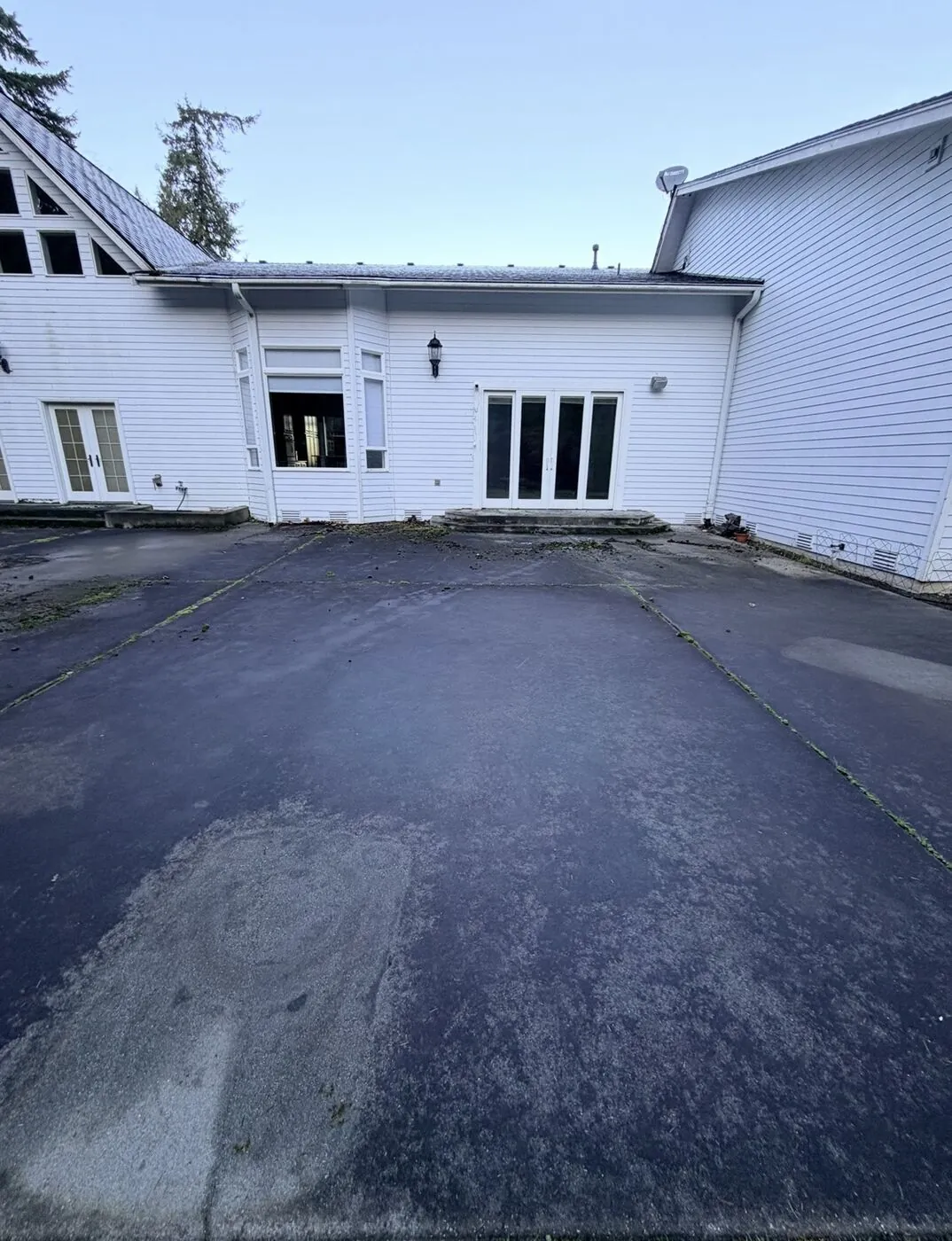
Which surfaces do we pressure wash?
Hard ground and decking, with the pressure set for each one:
- Concrete driveways, parking pads and garage aprons
- Walkways, front steps and side paths
- Patios in concrete, pavers or flagstone
- Decks, timber and composite alike, at low pressure
- Retaining walls, stair runs and other hardscape
- Bin areas, entrances and forecourts on commercial sites
Siding, roofs and anything else upright on the house are off the list. The reasoning behind that boundary, and how each material behaves under a jet, is set out on the main pressure washing page.
Why are Bellingham paths so slippery in winter?
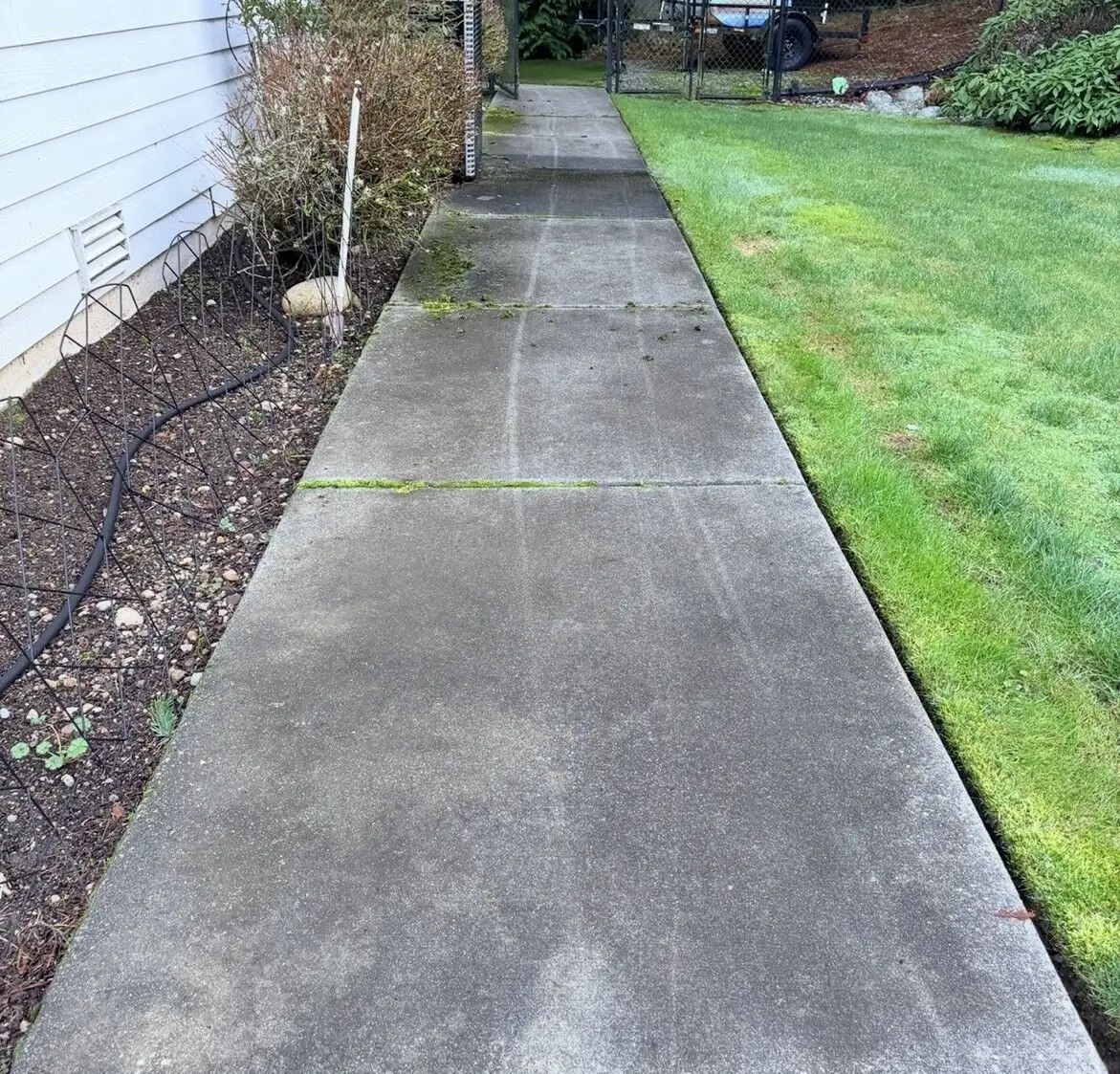
Because they stay wet for months at a stretch. With about 36 inches of rain a year and roughly 80% of it between October and March, a shaded concrete path here is damp for most of the winter and grows a thin coat of algae, with moss creeping into the joints and along the edges. Dry, it just looks discoloured. Wet, it is slick.
Trees add to it. Bellingham’s street trees are mostly maples, cherries and oaks, and their autumn leaf fall lies on sidewalks and drives in soggy mats that stain the concrete and feed the film beneath. Front steps under a maple are often the worst surface on the whole property.
When a budget has to be split, we suggest the steps and the path to the door ahead of the driveway, because that is where somebody actually falls. More on that at slippery driveways and walkways.
What did a Bellingham customer’s review describe?
A 2026 Google review from a Bellingham customer describes two pieces of work: exterior windows cleaned, and a Trex deck with significant algae, moss and lichen pressure washed. We are repeating the review’s own account of the job rather than adding to it.
Composite decks grow the same green layer as concrete in a damp Bellingham yard, especially boards under a tree or along the shaded side of a house. Composite is cleaned within its manufacturer’s limits, at low pressure with a solution doing most of the work, because too much force can haze or score the surface. Of the three growths, lichen is the slowest to let go. A deck clean can sit in the same visit as window cleaning, as it did for that customer.
How is the cleaning done?
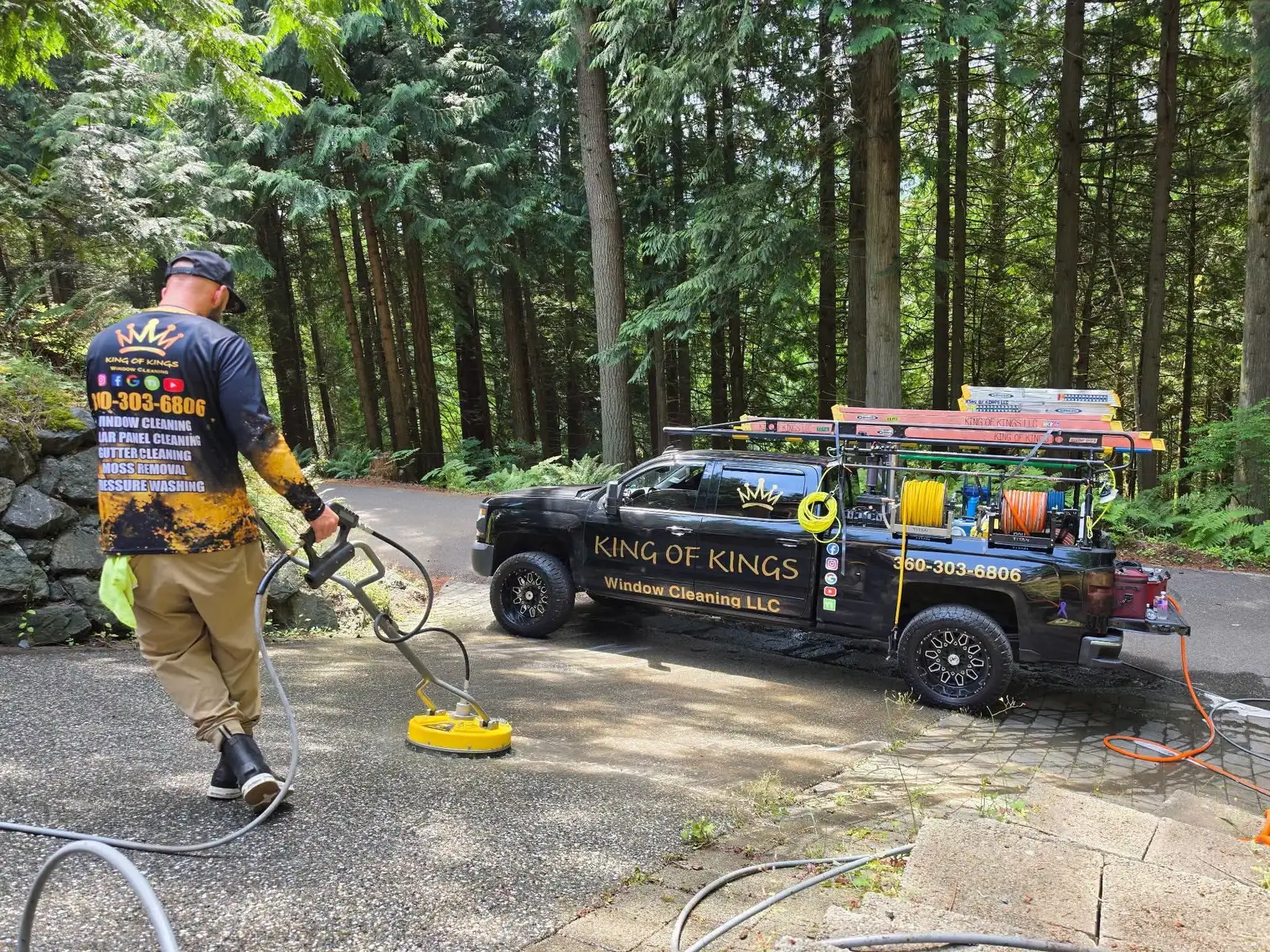
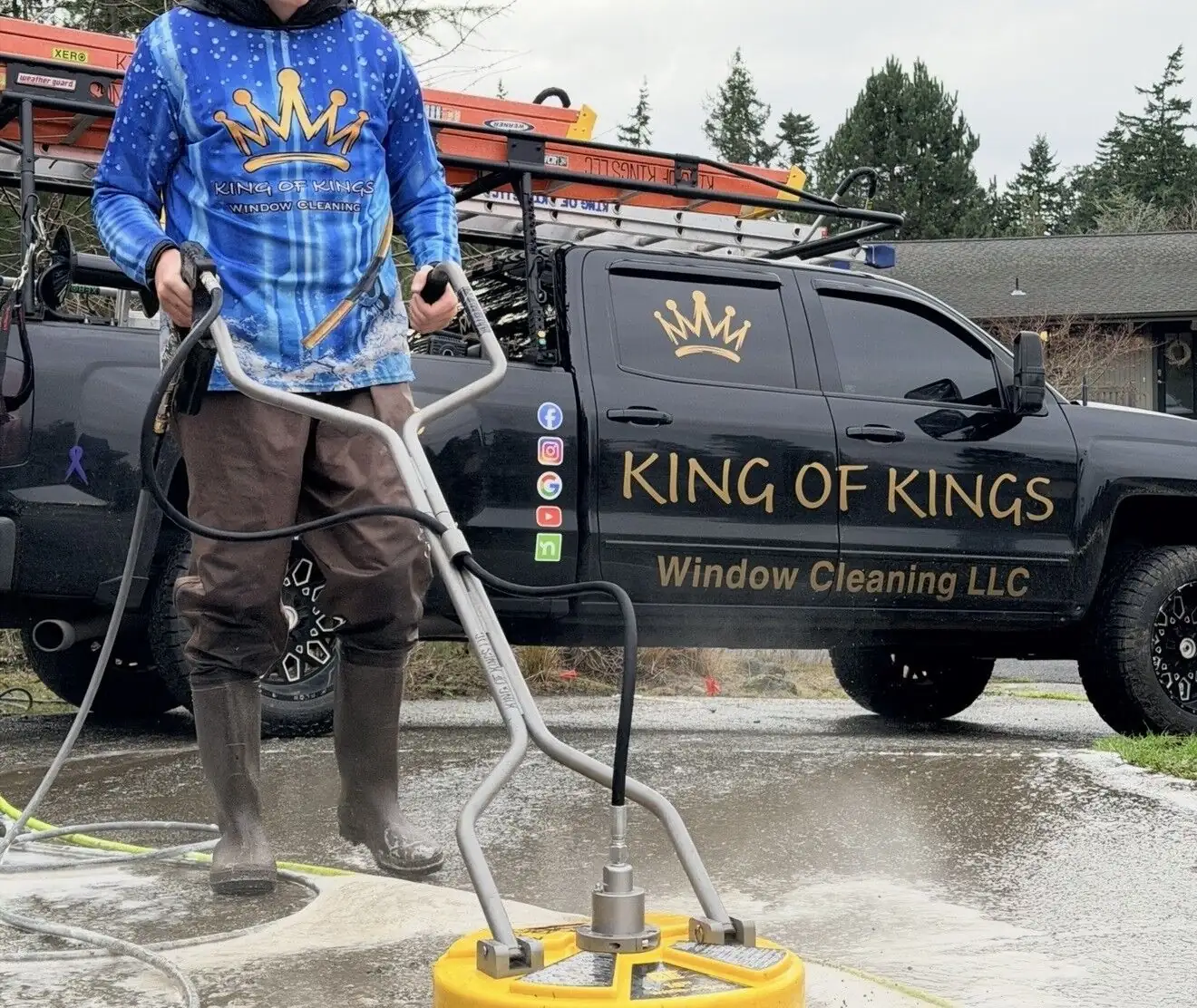
Flat slabs get a surface cleaner, a round shrouded head with jets spinning underneath. It holds a steady height and lays down an even finish without the stripes a hand wand leaves behind. The wand is kept for edges, steps and corners.
Growth is treated before it is blasted. A solution put down first and given time to work lets the machine run at moderate pressure, which is kinder to the cream layer on concrete and to the joints between pavers. Paver jobs finish with the joints checked, since washing out the jointing sand is the main risk on that surface.
Hot water is reserved for oil, grease and commercial bin areas, where heat shifts what pressure alone will not. A house driveway carrying nothing worse than moss and algae rarely calls for it.
What changes the price?
Pressure washing is priced from the site itself, on:
- The area of each surface, and how much of it sits in shade
- The material, since pavers, old brick and decking are done more gently than broom-finish concrete
- How heavy the growth or staining is, from a light film to years of moss
- Access for the equipment, and a water supply
- Drainage, meaning how much work it takes to keep the water out of the storm system
- Extras such as re-sanding paver joints
A drive that slopes to the street with an inlet at the bottom needs more setting up than one that drains onto a lawn, and that is a genuine line on a Bellingham quote.
When is the right time in Bellingham?
Autumn and spring. Clearing steps and paths in September or October means the wet season is spent walking on clean concrete, and the leaf fall can be dealt with at the same visit or just after it. Spring is the busier stretch, once the winter’s growth has shown itself and people want their patio back.
Freezing weather is off the calendar, because water spread on a slab below freezing makes the hazard worse rather than better. In Bellingham’s shade, cleaned hardscape usually greens over again within one to three years, sooner on the north side of a house and under trees.
Apartments, condos and shared walkways
A great deal of Bellingham’s newer property is shared. Around three-quarters of the building permits issued in the city over the past decade were for multi-family housing, and every one of those buildings has walkways, stairs and parking that residents use without choosing or checking them. A mossy communal step is a liability for whoever manages it.
A scheduled autumn clean of the routes people actually walk is the sensible approach, done in one visit across the whole site, with notice to residents about moving cars.
Shared sites also tend to have more paving running toward the street and more inlets in the car park, so the drainage plan matters more than it does on a single house. We walk the whole site with the manager before quoting, mark which inlets need covering and where the rinse can go, and schedule around bin collection and the busiest parking hours so the work does not end up competing with residents for the same few spaces.
Booking
Call (360) 303-6806 or begin at the Bellingham page. We will walk the surfaces with you, check where the water is going to run, and quote for the ground that actually needs it.
Pressure washing questions from Bellingham homeowners
- Can the wash water go down the drain at the end of my driveway?
- No. Bellingham Municipal Code 15.42 keeps pressure wash water out of storm drains and requires it to go to the sanitary sewer or a vegetated area. We cover inlets in the water's path and steer the rinse onto grass or planting beds instead.
- Do you clean composite decking?
- Yes, within the manufacturer's limits: low pressure, with a solution loosening the algae, moss and lichen so the machine does not have to. A 2026 review from a Bellingham customer describes a Trex deck of theirs that was heavily covered in all three being pressure washed.
- Will you leave stripes on my driveway?
- Not with a surface cleaner. Stripes come from sweeping a narrow wand unevenly across a slab. The shrouded rotating head holds a fixed distance and overlaps its own passes, so the finish comes out even from one side of the driveway to the other.
- Why do you ask what year the building went up?
- City of Bellingham guidance notes that buildings from 1950 to 1979 may contain PCBs and that wash water from them may need licensed hazardous disposal. We ask so the scope can be planned properly before any work begins, rather than after.
- Do you pressure wash siding or roofs?
- No. Those are soft-wash surfaces, because pressure pushes water behind siding and strips the surface off roofing. Walls get low pressure and a solution instead; the pressure washer is kept for hard ground and decks.
- How soon will the moss come back on my path?
- On a shaded Bellingham path, usually within one to three years. Surfaces in full sun and away from trees stay clean longer. Cutting back overhanging branches and keeping wet leaves off the concrete through autumn both help it last.
- Do you work for businesses and property managers?
- Yes: forecourts, entrances, bin areas and shared walkways. Commercial sites usually need containment planned from the outset, and the City's offer of free reclaim kits to businesses shows how seriously it takes the wash water rule.