Slippery Driveways in Whatcom County
The short answer
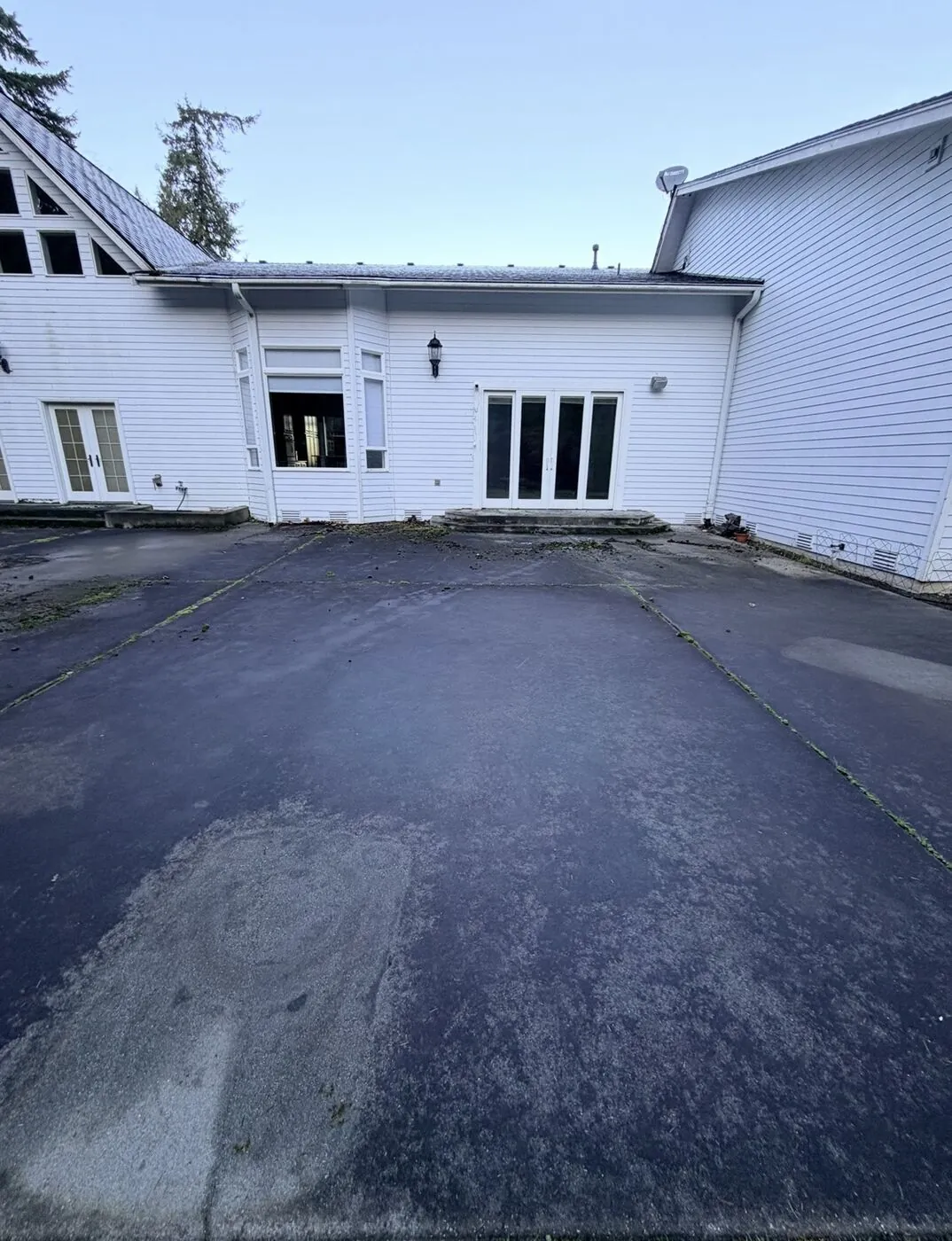
A path that is slippery in the wet is almost always carrying a biological film — algae, with moss in the joints and lichen on older surfaces. It is a traction problem before it is an appearance one, and in a region with a wet season this long it is the most common fall risk on a residential property.
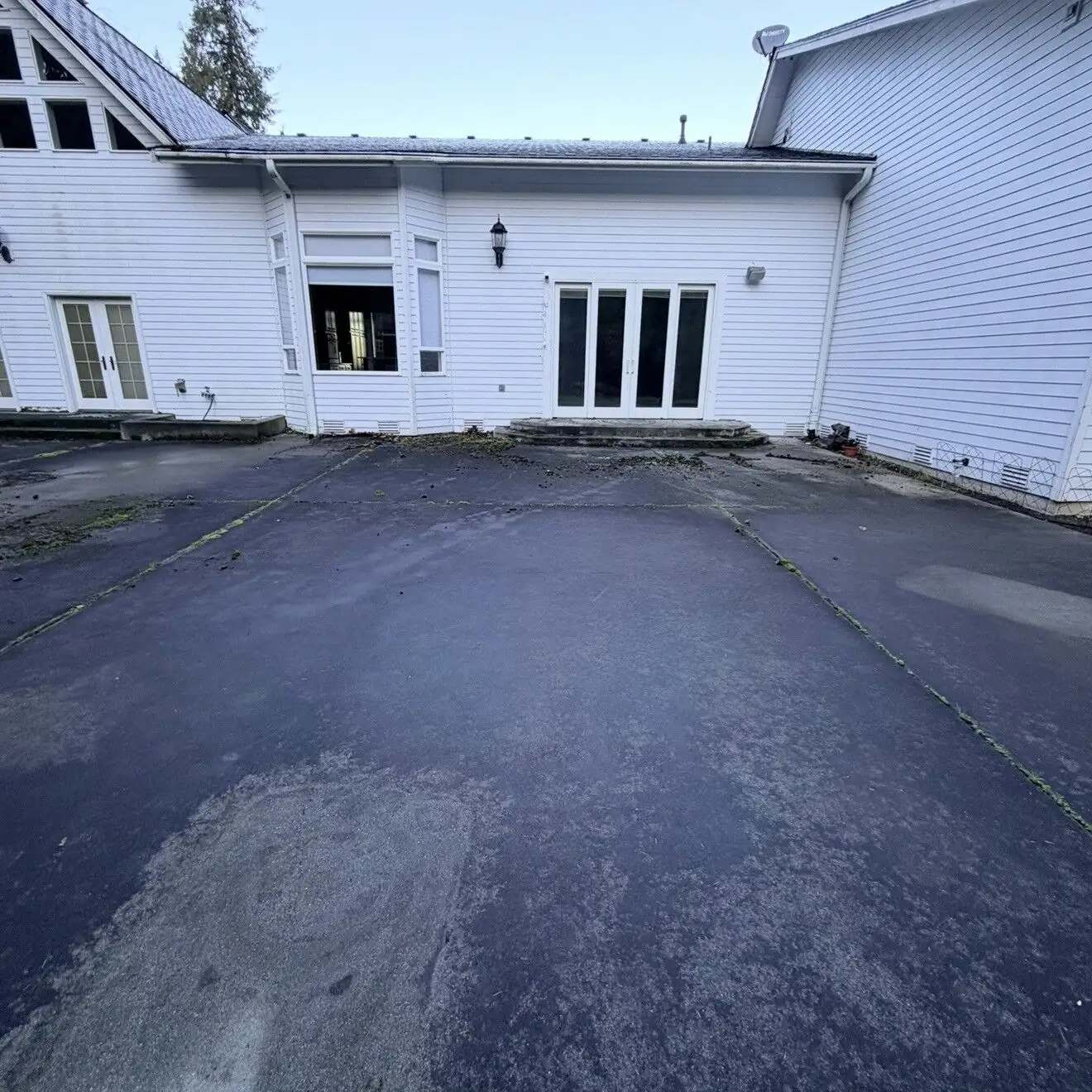
Most people book this job because the path looks tired. Most people should book it because the path is slippery, and the two are the same surface at different stages.
In a climate where the wet season runs October into May, a shaded walkway develops a biological film and then keeps it — and a film that holds water is a traction problem on a surface people use every day, including in the dark, in January, carrying something.
What is actually on the concrete
“Dirty” covers several different things, and they do not all come off the same way. Knowing which you have is the difference between a satisfying result and a disappointing one.
Biological film — the green, grey or black layer that makes a path look tired and makes it slippery. Algae, with moss in the joints and lichen on older surfaces. This is the bulk of what we remove and it responds well: a cleaning solution kills the growth and the pressure lifts it off. On a shaded path this is essentially the entire job.
Embedded dirt and grit. Ordinary soil worked into a porous surface over years. Comes out with pressure and a surface cleaner, and this is where the dramatic before-and-after line comes from.
Oil and vehicle fluids. A different problem entirely, because oil has soaked into the slab rather than sitting on it. Fresh oil often lifts substantially with a degreaser and heat. Old oil that has migrated deep into porous concrete may lighten rather than vanish, and no amount of pressure changes that — the staining is below the surface being cleaned.
Rust. From metal furniture, rebar, fertiliser, or well water used in irrigation. Rust is a chemical stain and it needs a rust-specific treatment; pressure alone does nothing to it and can drive it deeper.
Tannin staining. Brown or reddish discolouration under and around trees, particularly from conifer needles, bark mulch, and fallen leaves left in place over winter. Very common here. It responds to the right chemistry and stubbornly resists the wrong one.
Efflorescence. The chalky white bloom that appears on concrete, brick and pavers as mineral salts migrate to the surface and crystallise. It looks like someone spilled something. It is the material itself, and it needs a specific treatment rather than force.
Paint, sealer failure and tyre marks. Each its own approach, and each worth identifying before rather than during.
Why it is worse on some paths than others
Growth follows water and shade, and on a property the pattern is usually obvious once you look for it.
The north side of the house, the strip under the hedge, the section of driveway in the tree line, the steps beside the fence — these go first and go worst, because they are the parts that do not dry between rains. The open middle of a driveway in full sun can stay reasonably clear for years while the edges are green.
Three things reliably accelerate it: a downspout discharging onto the slab rather than away from it, a sprinkler head hitting the path daily, and organic debris left in place over winter, which holds moisture and feeds what is underneath.
All three are fixable, and fixing them is worth more over five years than the cleaning is.
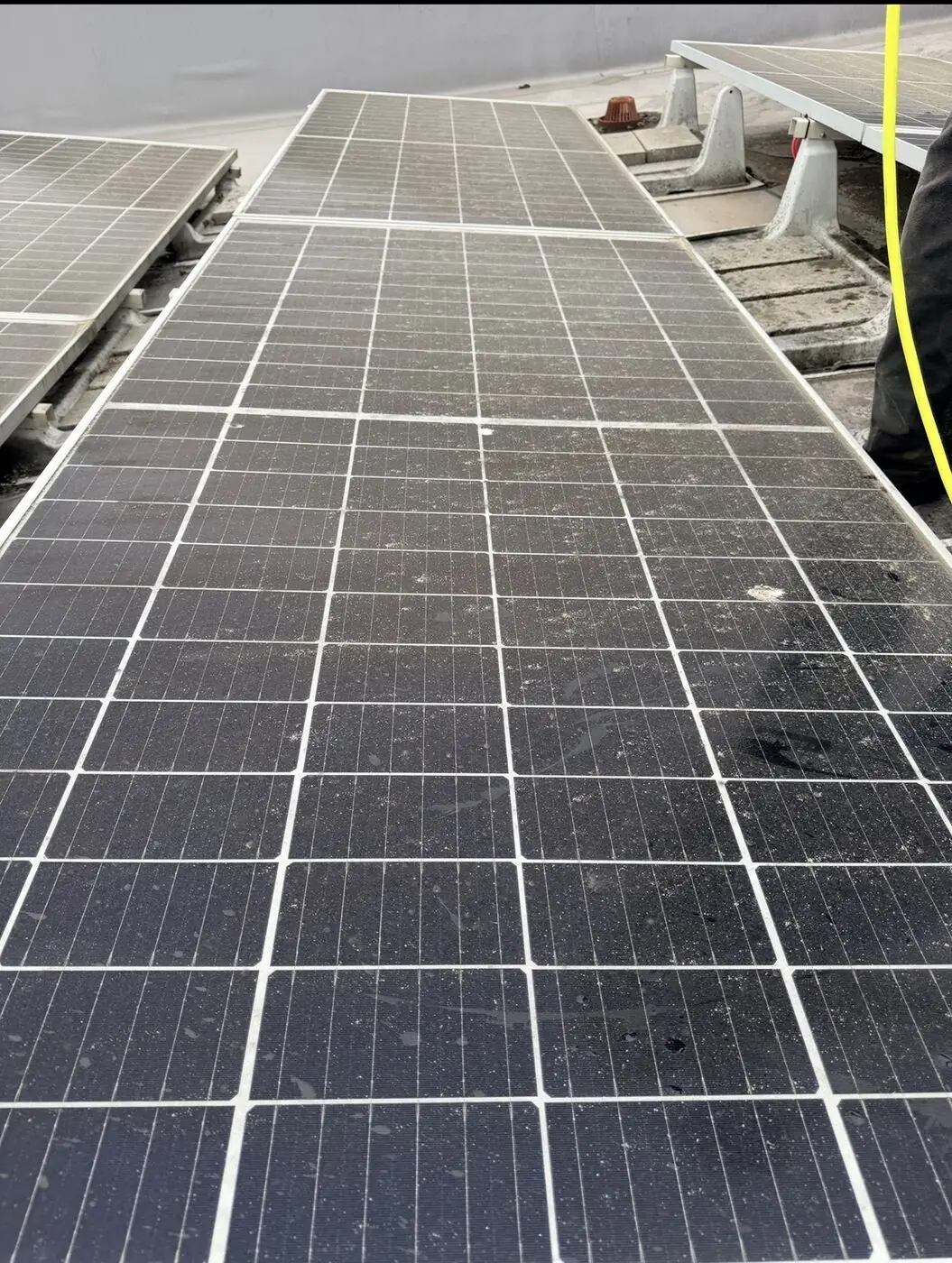 Before
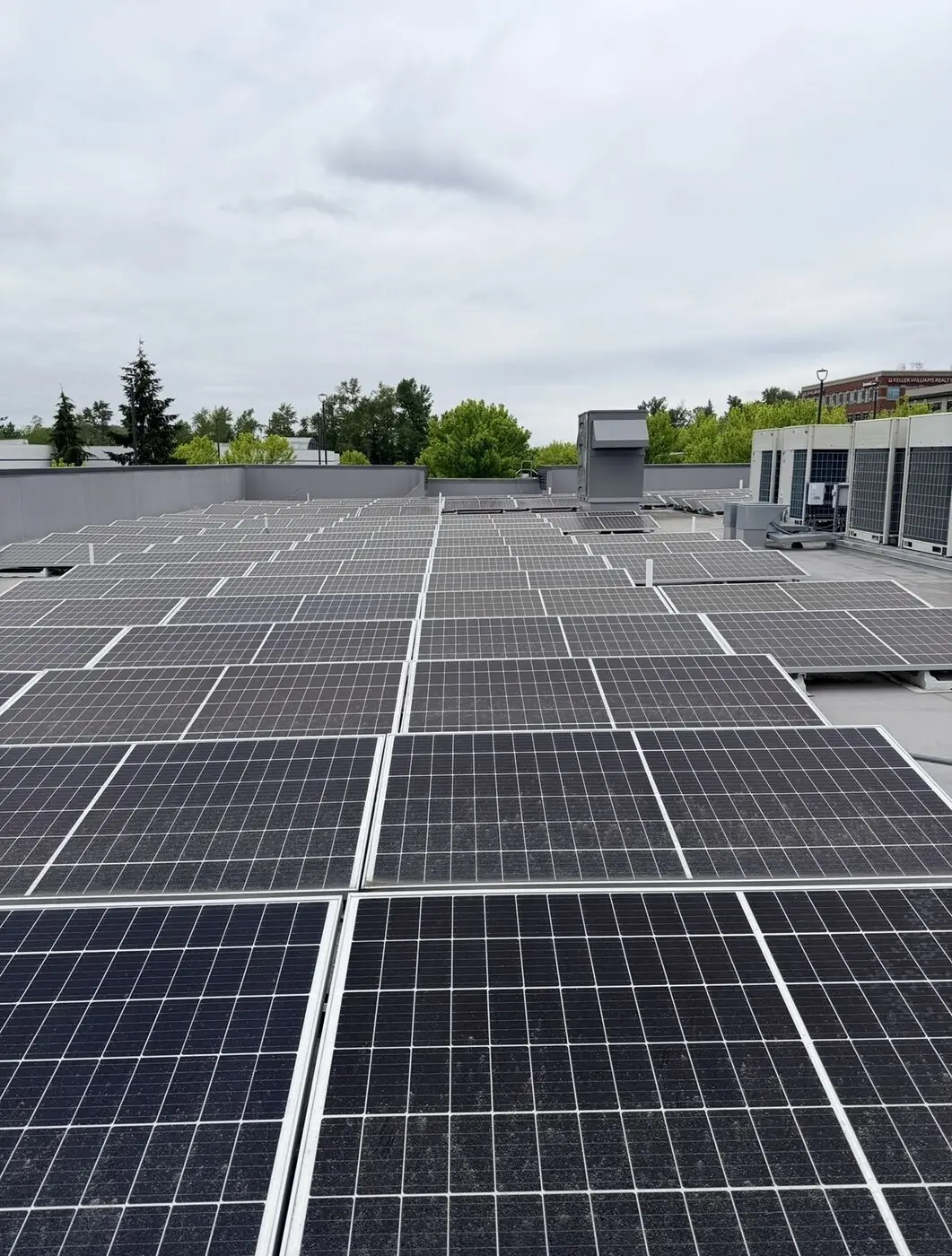 After
How flatwork is actually cleaned
A surface cleaner, not a wand. It is a rotating bar under a shroud that delivers even pressure across a wide path and leaves no striping, because nothing is being held close to one spot.
Where there is biological growth — which is most of the time here — a cleaning solution goes down first and is given time to work. That is what kills the growth at the root rather than blasting the visible layer off and leaving it to return in months. Pressure then removes what the solution has released. Doing it the other way round, pressure first and no chemistry, is why some cleaned paths go green again in a single season.
Surfaces get chosen for: exposed aggregate, stamped and coloured concrete, pavers with sand joints, brick, and older slabs already spalling all want less pressure than a plain broom-finish path, and some want a soft wash instead.
Runoff is managed. Wash water on a driveway goes somewhere, and where it goes matters here — Bellingham’s municipal code prohibits wash water reaching a storm drain, and the Lake Whatcom watershed carries its own restrictions. Planting below the work is pre-wetted and rinsed afterwards.
What to do now
- Test the surface wet, not dry. Dry algae grips; the same surface wet is genuinely slick, which is why a path feels fine in August and catches someone in November.
- Grit the step you are worried about this week. A stopgap, not a fix, and it does nothing about the growth underneath.
- Follow the shade. The strip under the hedge and the section in the tree line go first; the open middle can stay clear for years.
- Check the downspout and the sprinkler heads. A discharge onto the slab or a head hitting the path daily is upstream of the whole problem.
- Clear organic debris before winter, because leaves left in place over the wet months feed next year’s film.
- Book the clean, then fix the cause — the cause is worth more over five years than the cleaning is.
The honest limits
Cleaning removes what is on and in the surface. It does not resurface concrete.
A slab that is spalling, crazed, or has lost its cream layer will come out clean and still look worn, because what you are seeing is the condition of the material rather than dirt on it. Cleaning will make it markedly better and will not make it new, and anyone promising otherwise is selling a resurfacing job under a washing name.
Sealing is a separate decision and a separate visit. It is worth considering on pavers and on coloured concrete; it is often not worth it on a plain utility driveway, and it should never be applied to a surface that has not fully dried.
Full method, surfaces and scheduling is on the pressure washing page. If the moss is on the roof as well as the path, that is a different treatment entirely — see moss removal.

Randy Fee — Owner, King of Kings Window Cleaning
Washington business licence, UBI 605476674 · L&I insured · BBB rated A
Randy runs the company himself, so you are dealing with the owner, not a call centre — and every technician here is personally trained by him. Working Whatcom and Skagit County since 2024.
Questions about this
- Is the green film really what makes it slippery?
- Yes, and it is worse than it looks. Dry algae has reasonable grip. The same surface wet is genuinely slick, because the film holds a layer of water between your shoe and the concrete. That is why a path feels fine in August and catches someone in November on the identical surface.
- Can I just put sand or grit down?
- It helps in the moment and it is a sensible thing to do on a step you are worried about this week. It is not a fix — the grit sits on top of the film rather than removing it, it washes away, and it does nothing about the growth continuing to spread underneath.
- Will pressure washing damage the concrete?
- Not if it is done with a surface cleaner at appropriate pressure, which is how flatwork should be done. Damage comes from a narrow high-pressure jet held close, which etches lines into the surface and leaves striping that never goes away. Exposed aggregate, stamped and coloured concrete each want a lighter touch, and old or already-spalling slabs want a conversation first.
- How long before it comes back?
- On a shaded path, two to three years is typical here. On a path in sun, longer. Cutting back whatever is casting the shade extends it more than any sealer or product does, because what actually prevents regrowth is the surface drying between rains.
- Will the oil stain come out?
- Sometimes, and we will tell you which before we start. Fresh oil often lifts substantially with a degreaser and heat. Old oil has migrated into the pore structure of the slab, and the stain you are looking at is below the surface being cleaned — pressure cannot reach it and more pressure does not help.
- What about the white chalky patches?
- That is efflorescence — mineral salts migrating out of the concrete itself and crystallising on the surface. It is the material, not a deposit on it, and it wants a specific treatment rather than force. It also tends to return, because the salts keep migrating as long as moisture moves through the slab.
- Do you need to do the whole driveway?
- Often not. Growth follows shade, so the strip under the hedge is green and the middle is fine. Cleaning the shaded sections only is a legitimate approach, and we will quote it that way — though be aware that a partially cleaned slab shows the line clearly, which some people dislike more than the algae.
Last updated