
Whatcom County
Solar Panel Cleaning in Bellingham, WA
The short answer
Bellingham gets most of its rain between October and March, when panels produce least, so spring pollen, needles and frame-edge grime often sit on the glass through the productive months. We clean with purified water and soft brushes, never walk on the array, and tell you when cleaning is not worth it yet.

Randy Fee — Owner, King of Kings Window Cleaning
Washington business licence, UBI 605476674 · L&I insured · BBB rated A
Randy runs the company himself, so you are dealing with the owner, not a call centre — and every technician here is personally trained by him. Working Whatcom and Skagit County since 2024.
I run the Bellingham route personally.
Solar panels in Bellingham are fighting two things at once: a short sunny season and a lot of trees. The panels only earn their keep for part of the year, and that part happens to be when the rain has mostly stopped and the canopy is shedding pollen, seed and sap onto the glass.
What follows is how that plays out on local roofs, what a clean involves, and when we would tell you to leave the array alone.
Why doesn’t the rain do the job?
Because it falls at the wrong time. The City’s own figures put annual rainfall at about 36 inches, with roughly 80% of it arriving between October and March. Those are the months with the lowest sun and the least production, so the heavy rinsing happens when it matters least.
From April onward the showers thin out, and the glass is left to collect whatever the season brings. By midsummer an array under trees can be carrying months of residue at exactly the point it should be producing the most.
Even when rain does fall on dirty panels, it tends to rearrange grime more than it removes it. Water runs down each panel, stalls against the raised lower frame and leaves its load there as it dries. That grey stripe along the bottom edge is a familiar sight on arrays in a damp climate, and because cells are wired in series, a narrow band can drag down far more output than its size suggests. The solar output dropped page works through that effect in more detail.
What lands on panels under Bellingham trees?
The canopy covers about 40% of the city, and the species mix determines what ends up on the glass:
- Douglas-fir and western redcedar drop needles that lodge between panels and under the frames, and in spring they release a yellow-green pollen film that rain smears rather than lifts
- Big-leaf maple sheds large leaves that mat on low-tilt arrays and hold water against the glass for days
- Black cottonwood and red alder grow quickly and can reach over a roof within a few years of a system going in
- Street trees, which the City lists as mostly maples, cherries and oaks, add leaves, blossom and sap wherever a house sits along a planted street
Birds are the other regular. A dropping over a single cell behaves like a patch of shade, and it does not rinse off in a shower.
Bellingham’s wind is southerly for eleven months of the year. It is worth glancing at what stands on the south side of your lot, because most of what the wind carries off those trees is heading toward your roof.
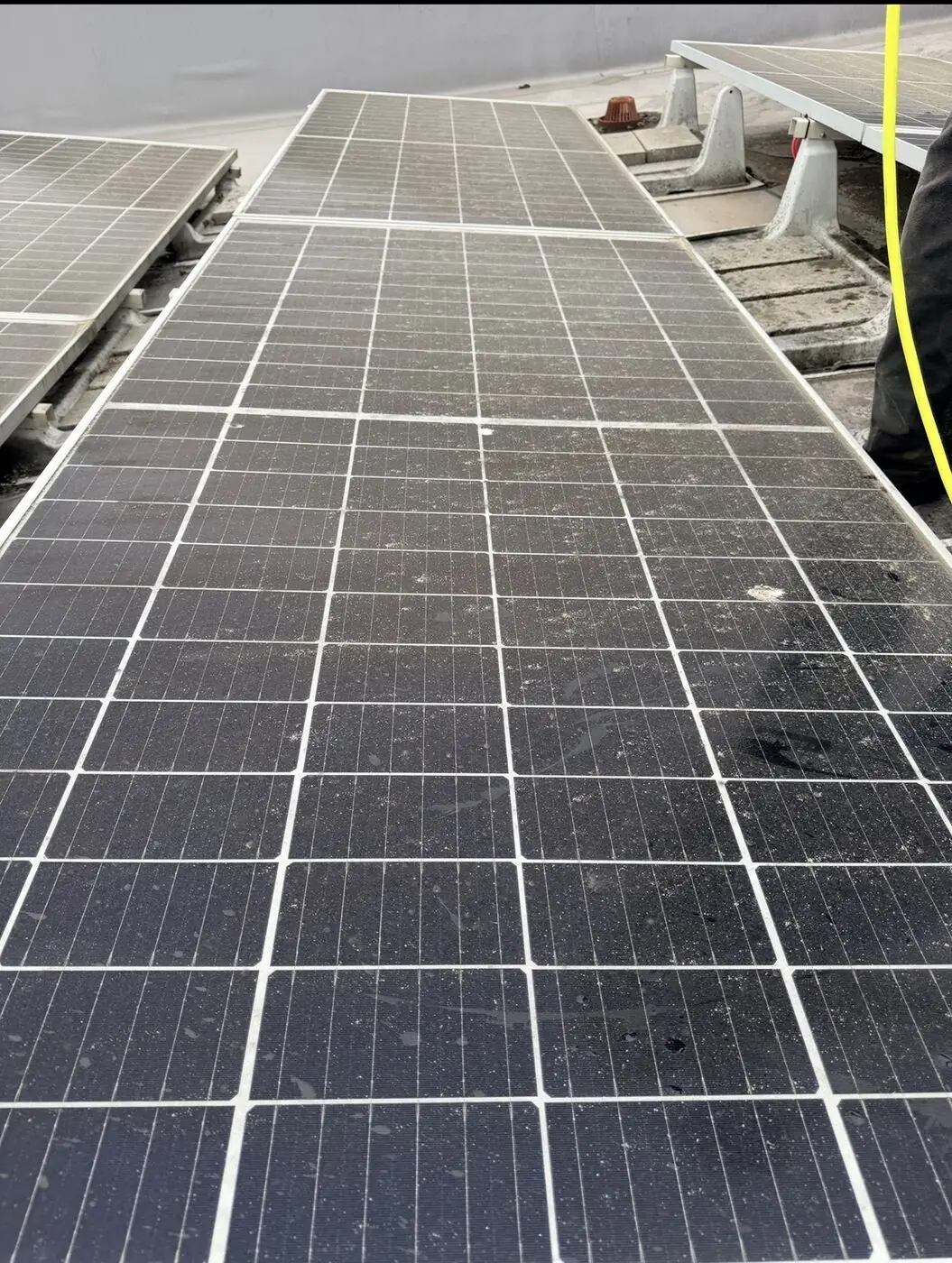 Before
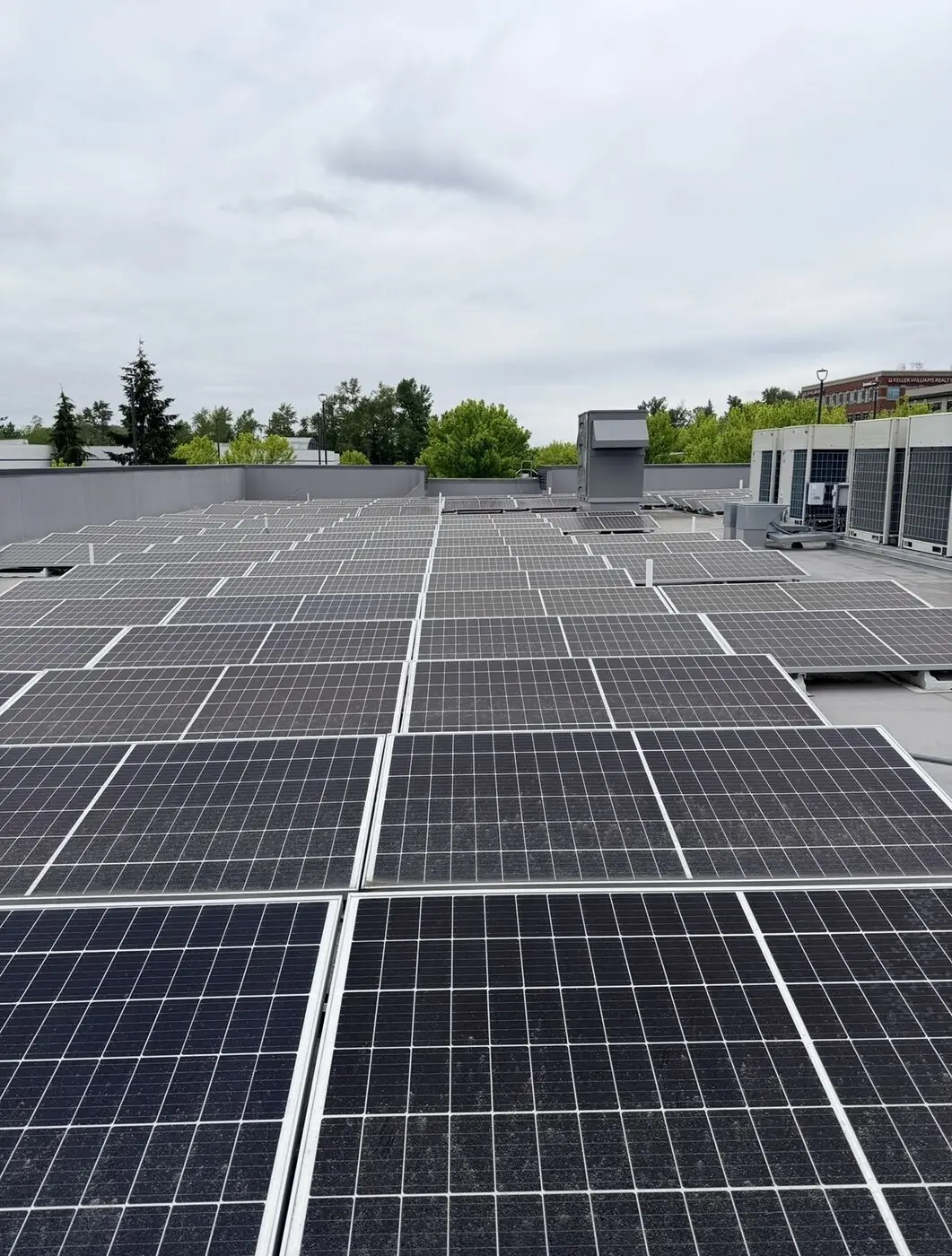 After
Which Bellingham homes see the most soiling?
It follows the trees more than the neighborhood, but there are patterns.
The newer construction in the north and east of the city, around Cordata, Barkley and Irongate, carries a good share of flush-mounted solar. Flush mounting means the panels sit at whatever pitch the roof has, and on a shallow roof that means slow runoff and a heavier edge band.
The wooded south end, from Edgemoor through Fairhaven and South Hill toward Chuckanut, puts more arrays under mature conifer and cedar. There the issue is needles in the gaps and moss starting at the frames, where shade and damp never really let up.
Arrays on open ground with steep, south-facing roofs are the ones that most often do fine for years with nothing but rain, and we will say so if that is yours.
What does a solar clean include?
A standard visit covers:
- Looking at the array, the mounting, the pitch and the access before anything gets wet, and noting any trees overhanging it
- Checking your monitoring with you where it is available, so there is a before-and-after reference
- Clearing needles and leaves from the gaps between panels and along the frames
- Washing every panel with purified water and a soft brush on a pole
- Working the bottom frame edge of each panel specifically, since that is where most of the loss sits
- Removing moss and growth at the frames and around the array where it can be reached safely
- Photographing anything that looks wrong, such as cracked glass, browning cells or loose cabling, for you to pass to your installer
If the roof under the array is mossy, that is usually worth addressing at the same time; our Bellingham roof cleaning page covers that side.
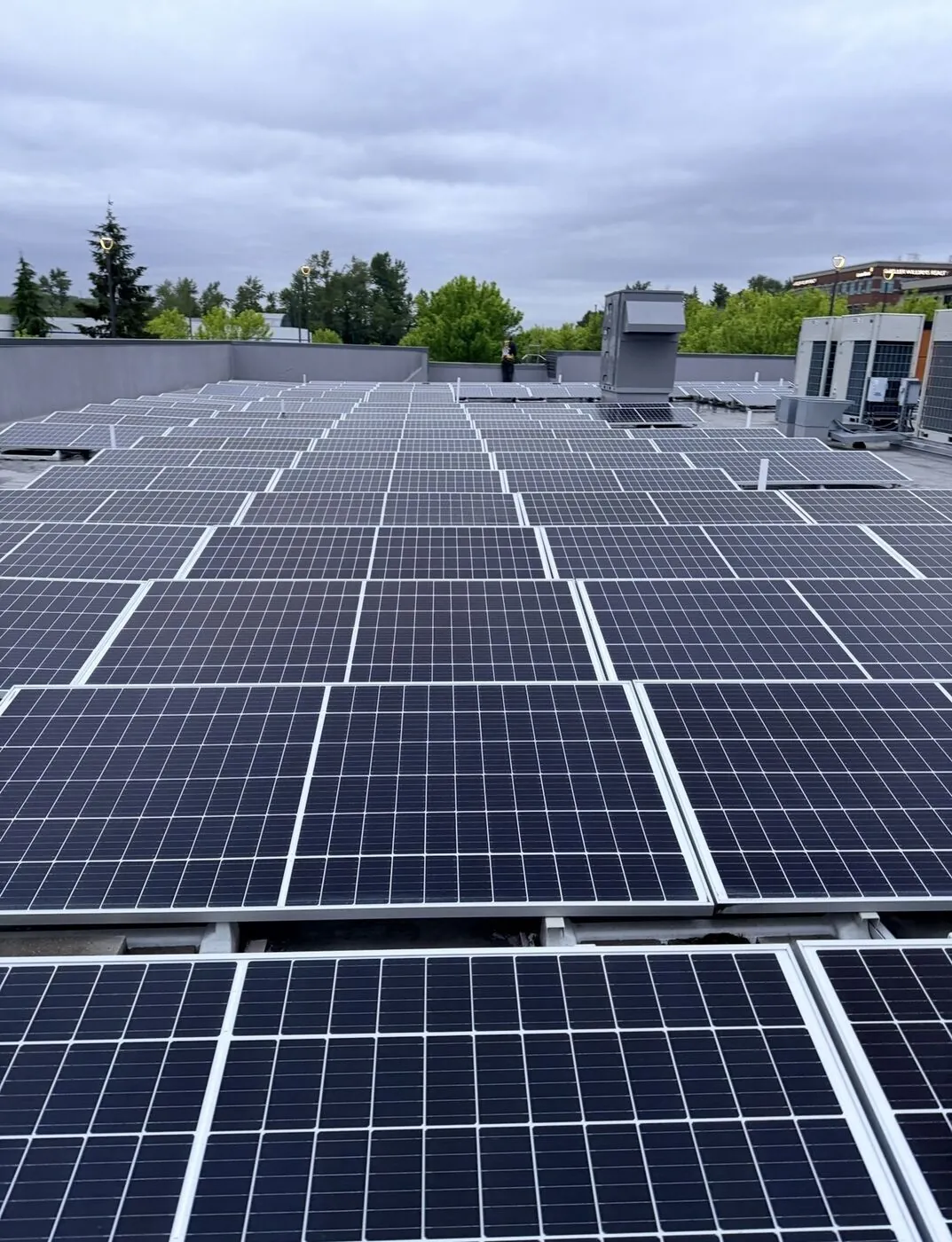
How is the glass cleaned without damaging it?
Purified water, soft bristles, low pressure, and nobody standing on the array.
The glass on a modern panel carries an anti-reflective coating that lets more light through to the cells. It is thin, and it is easily hurt. Scouring pads and stiff brushes leave fine scratches that scatter light for the rest of the panel’s life. Household detergents leave a slightly sticky film that grabs the next round of dust. Tap water dries into mineral spots. Purified water avoids all three: it lifts the grime, rinses clean and dries without leaving anything behind.
Pressure stays low because the edge seals matter. Force water past a seal and it can reach the laminate, which is how panels fail early.
And we never walk on the panels. Weight on the glass can crack the silicon cells underneath without any visible sign, and the damage shows up years later as output that falls faster than it should. Most local arrays can be reached from the ground or from ladders with extension poles. Where roof access is needed, the crew stays on the roof beside the array, not on it.
What drives the cost of cleaning an array here?
We quote after seeing the system. The factors that move the figure are:
- Panel count, which sets the base
- How the array is reached: from the ground, by ladder, or from the roof
- Roof pitch and where the array sits on it
- Condition, since a first clean with moss established at the frames takes far longer than a yearly maintenance wash
- Debris and growth under or around the array that needs clearing
- Other work on the same visit, which usually brings the per-item cost down because setup is shared
There is no price printed here; we would rather see the array than guess at it.
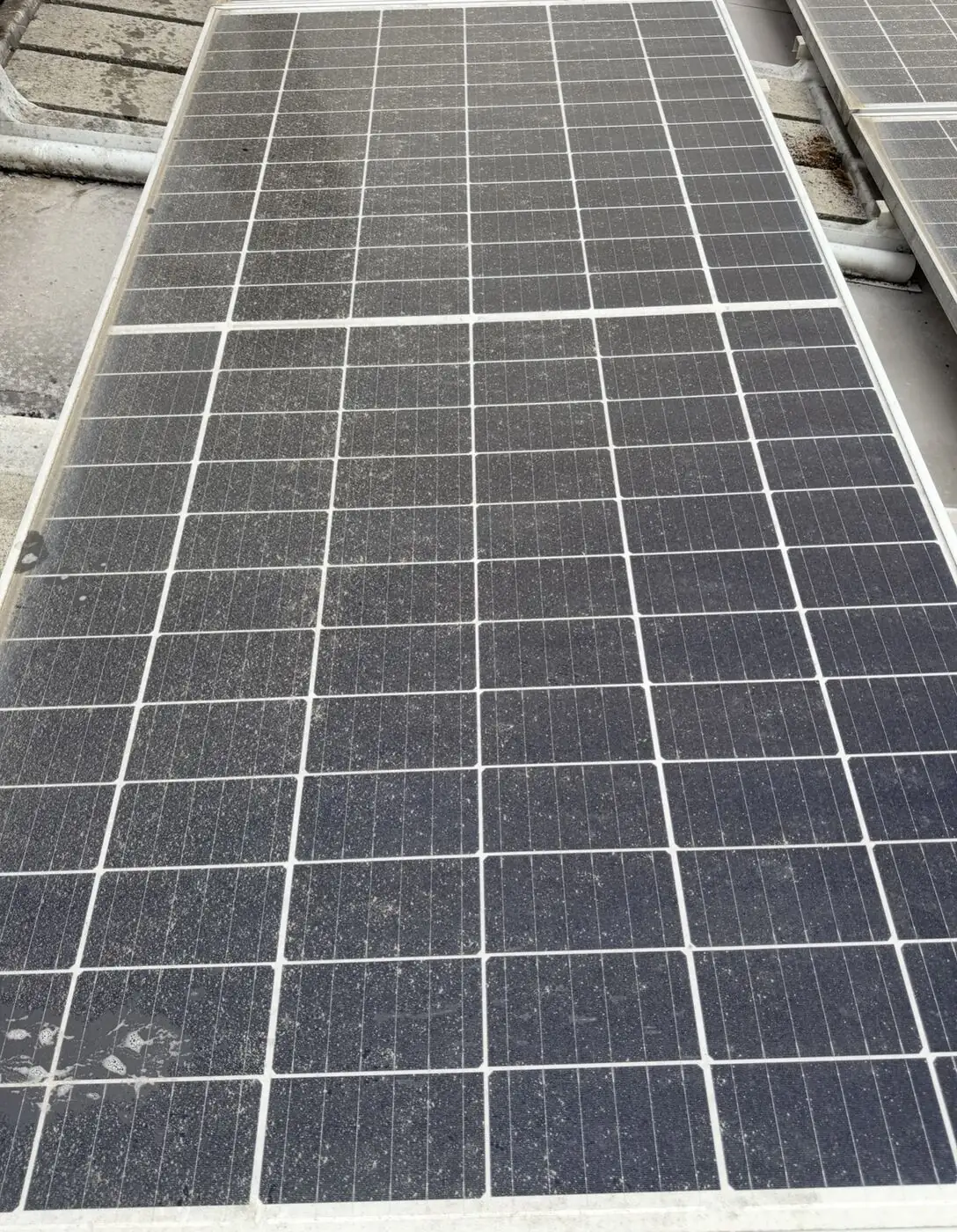
When should a Bellingham array be cleaned?
Late spring earns its keep most. Once the conifer pollen stops falling, a clean sets the glass up for the long days of June and July, when every clear hour counts. Clean before the pollen is finished and you will be cleaning again.
Early autumn is the second option, particularly for arrays under maples and street trees, before leaf fall and before the rain returns.
Cool conditions matter on the day. Cold water on sun-heated glass is a thermal shock risk, so we work mornings, evenings or overcast days, which in Bellingham is seldom hard to arrange.
Not every year for everyone. If your monitoring shows steady output against the same month last year, the array is probably fine. A sharp, sudden drop is more likely a fault than dirt, and that is a call for your installer.
Where does the water go afterwards?
Onto the lawn or the planting, not down a drain. Bellingham Municipal Code 15.42 bars pressure wash water from entering the storm system and requires it to go to sanitary sewer or a vegetated area instead. Because solar work uses purified water and no cleaning chemicals, the runoff is about as benign as wash water gets, but we still direct it away from inlets as a matter of habit.
On the east side, the Lake Whatcom watershed feeds the city’s drinking water, and Basin One carries its own rules on top of the citywide ones. A soap-free, chemical-free panel clean suits that setting well. The wider picture is on our wash water and storm drains page.
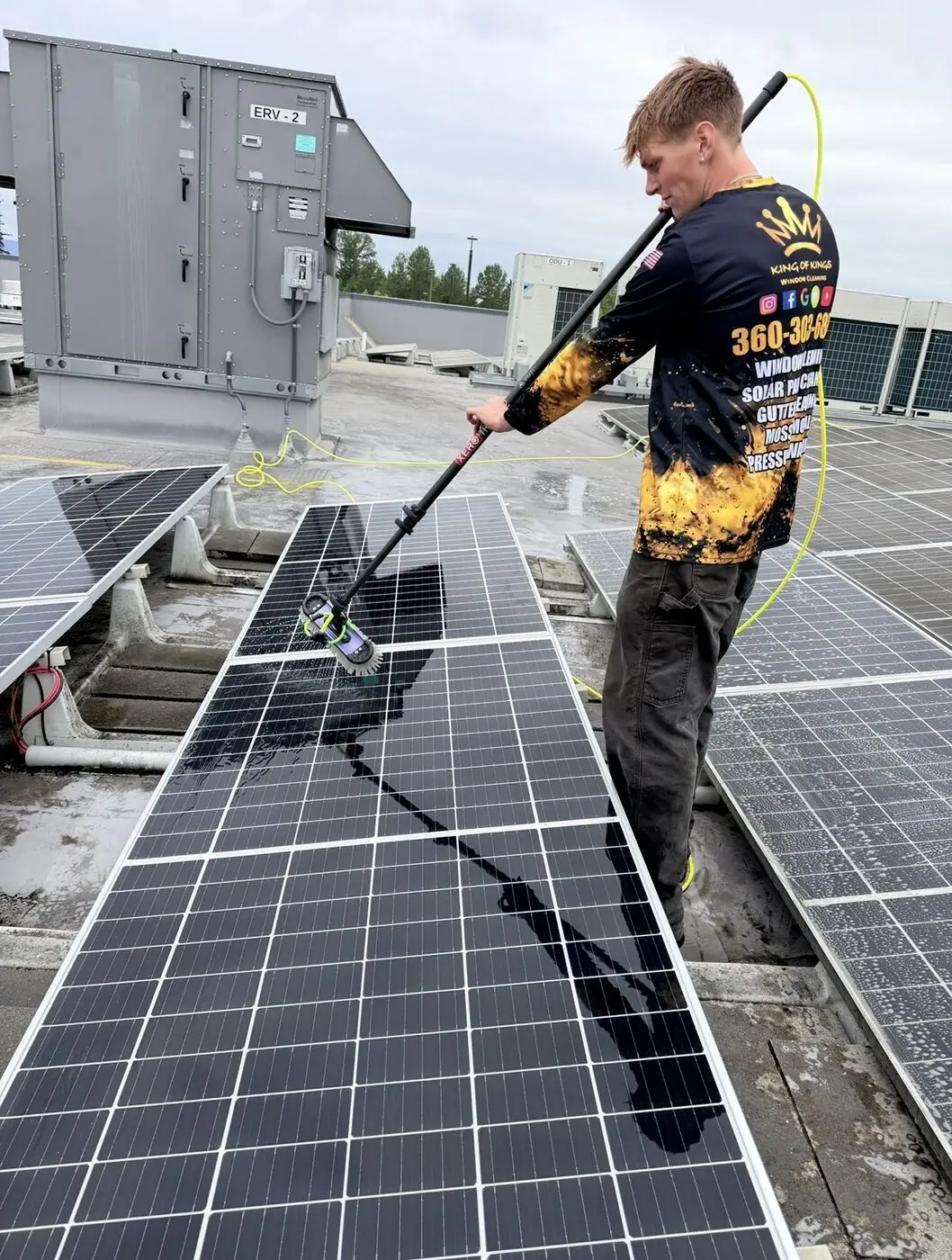
What recent solar work have we done in Bellingham?
In September 2026 we cleaned the solar panels on a home in Edgemoor as part of a single visit that also covered the roof, the gutters, the skylights, the exterior windows and a greenhouse. It went up on our Google Business Profile at the time.
That kind of combined visit makes sense for arrays in particular. The roof and gutters come first so nothing they shed ends up on clean glass, and the house windows come last for the same reason. Our Bellingham window cleaning page covers that final step.
What problems tend to travel with a dirty array?
A few, and most start with the roof around it.
Moss under and beside the panels. The gap between an array and the roof is shaded and damp all year, which suits moss. Growth that starts on the shingles can creep to the frames. Our Bellingham moss removal page covers the roof side of that.
Needle build-up in the gaps. It holds water, feeds growth and can block the drainage paths that let the panels shed rain.
Nesting. Birds and rodents like the sheltered space beneath an array. We report what we see; screening the perimeter is a job for your installer.
Output loss that is not dirt. If the glass comes up clean and the numbers do not recover, the problem is electrical, and we will say so plainly.
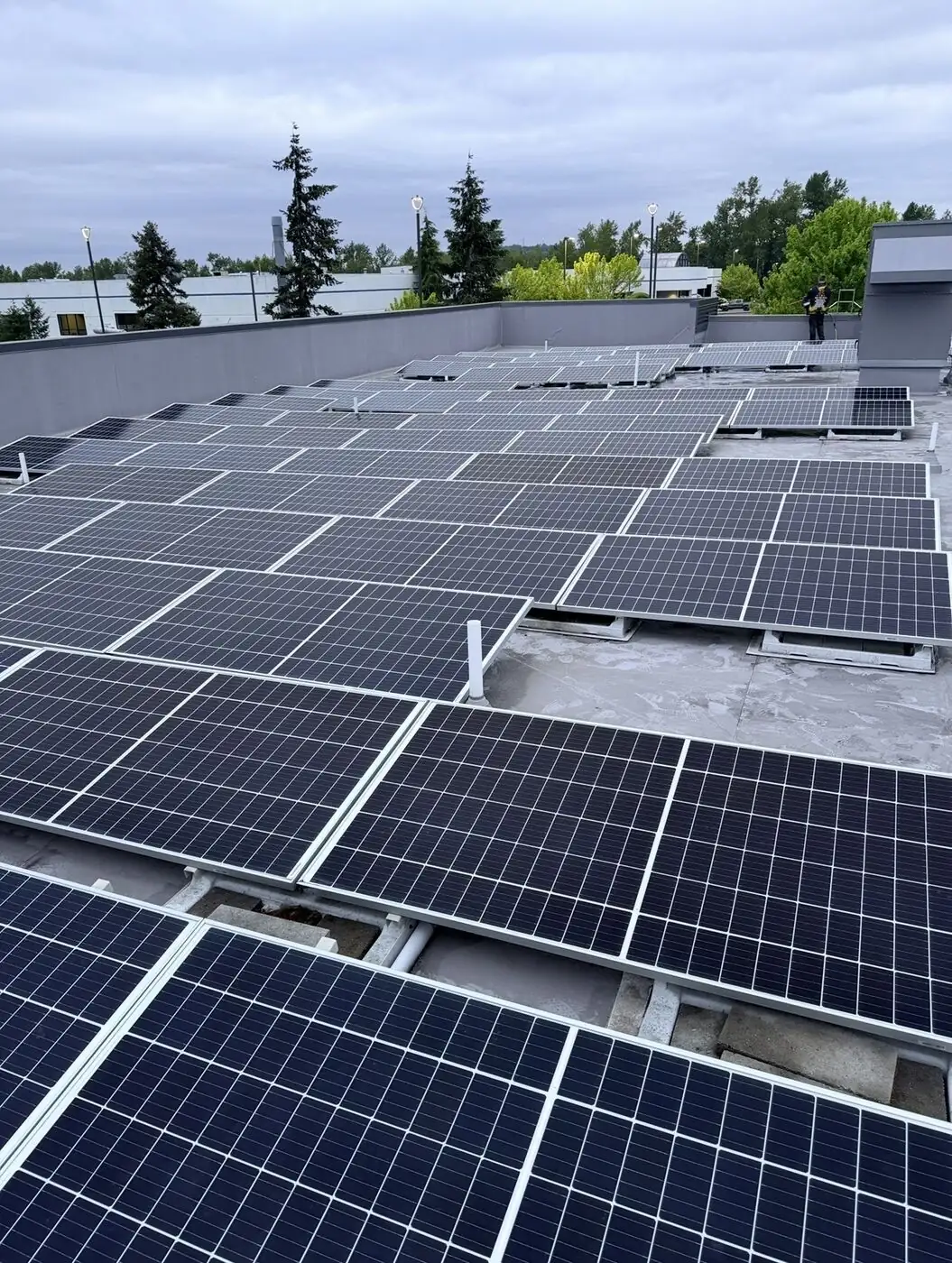
How do you arrange a solar clean in Bellingham?
Call (360) 303-6806 or ask for a quote online. A photo of the array and a screenshot of a year-on-year production comparison from your monitoring app help us give you a straight answer before anyone drives out, including “not this year” when that is the right call. Everything else we do in town is summarised on the Bellingham page, and the general method is on the solar panel cleaning service page.
Solar panels questions from Bellingham homeowners
- Doesn't the Bellingham rain keep panels clean?
- Partly. Rain rinses loose dust, but most of it falls from October to March, when production is low anyway. Spring pollen, bird droppings, sap and the grime band along the bottom frame tend to survive it, and those are what hold output down through the long days.
- What do you clean the panels with?
- Purified water and a soft brush on a pole. There is no detergent, because soap residue attracts the next layer of dust, and no abrasive pad, because the anti-reflective coating on the glass scratches permanently. Pressure stays low so water is never forced past the edge seals.
- Will anyone stand on my panels?
- No. Weight on the glass can crack the cells inside without leaving a visible mark. We work from the ground with extension poles where the array allows it, and where roof access is needed we stay on the roof surface beside the panels.
- How often do Bellingham arrays need cleaning?
- It depends on what overhangs them. An array under Douglas-fir or next to a big-leaf maple may want a clean every year; one on an open roof with good tilt may go two or three years. Your monitoring app settles the question more reliably than a look from the driveway, and we are happy to look at it with you.
- Which time of year should I book for?
- Late spring, after the conifer pollen has finished falling, so the glass stays clean through the months with the longest days. Cleaning before the pollen is over usually means paying for a second visit.
- Can you fix a panel or check the wiring?
- No. We clean glass and clear debris and growth; we do not touch wiring, connectors, inverters or mounting. Anything that looks damaged gets photographed and passed to you so your installer or an electrician can deal with it.
- Can the panels be done with the roof and windows?
- Yes, and it is often the sensible order. Roof and gutter work goes first, then the array, then the glass on the house, so nothing coming off a higher surface lands on one that was just cleaned.