
Solar Output Dropped in Whatcom County
The short answer
An array losing output with no fault showing is usually soiled rather than broken. In this region the loss concentrates in a dark band along the bottom frame of each panel, because most residential arrays are flush-mounted at roof pitch and shed far less than the tilted arrays the self-cleaning assumption was built on.
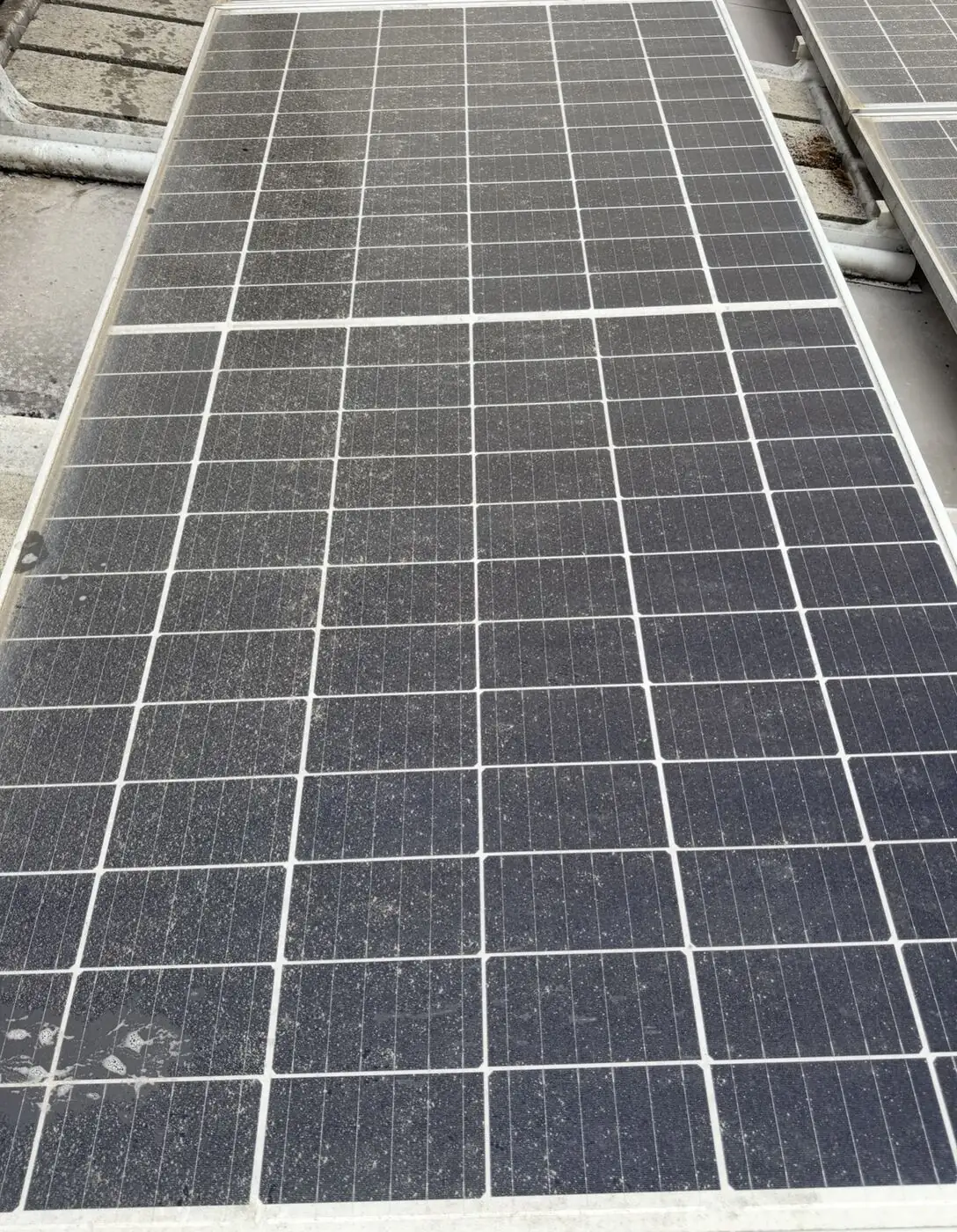
The usual version of this call: production is down measurably year over year, the inverter reports no fault, nothing is shading the array that was not shading it last year, and from the ground the panels look clean.
They usually are clean, across most of their area. The problem is not spread evenly, which is exactly why it is hard to see and easy to underestimate.
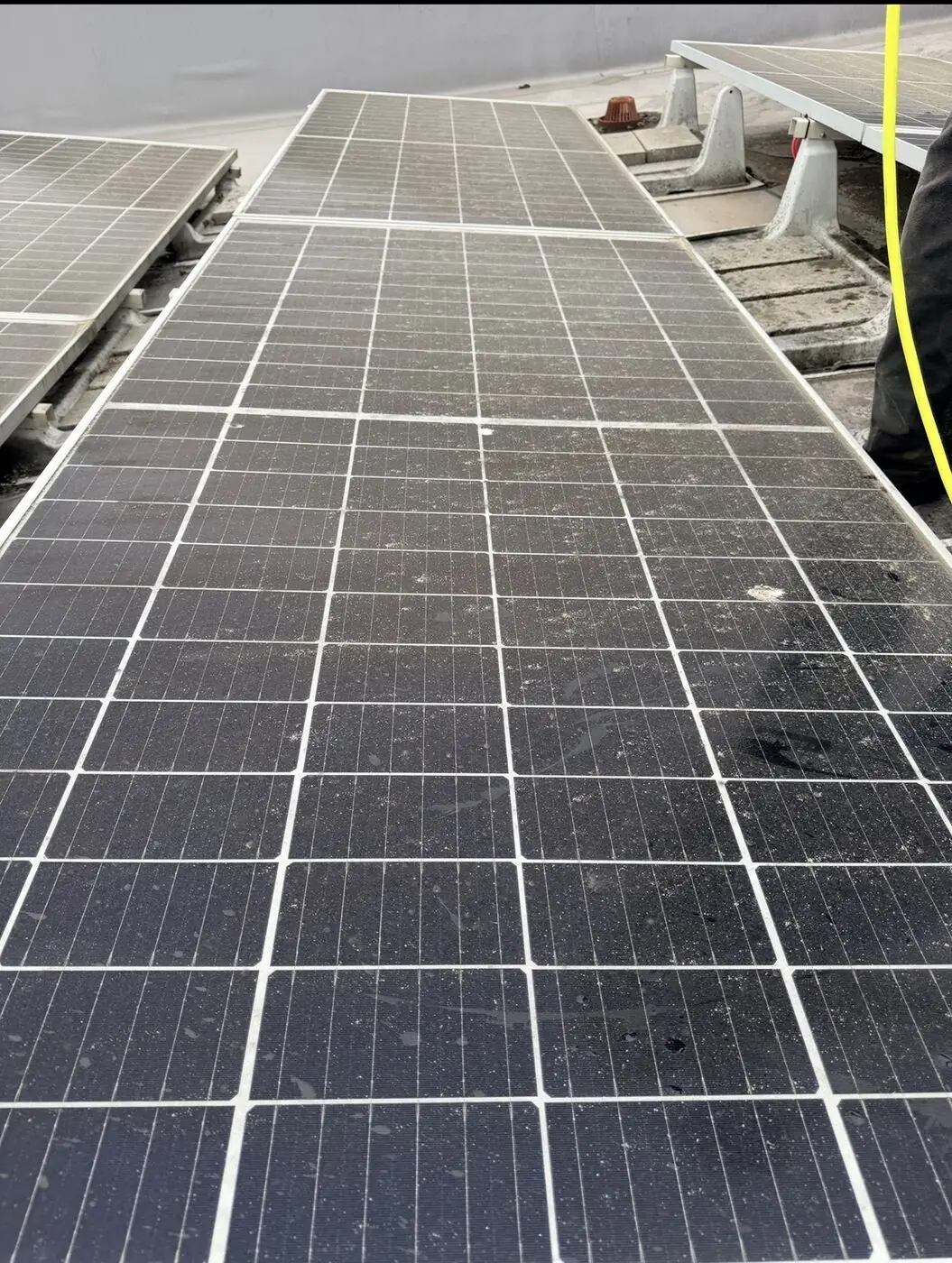
The edge band, and why it costs more than it looks like
The aluminium frame of a standard panel sits slightly proud of the glass. On the lower edge that makes a shallow lip a few millimetres high, running the full width of the panel.
Water running down the glass reaches that lip and stops. It pools there briefly, then evaporates, and everything it was carrying — dust, pollen, roof grit, the fine particulate that settles out of the air over a winter — stays behind. Each rain adds to it. Over a season it becomes a dark, hard band along the bottom of every panel in the array.
What makes that band expensive rather than merely untidy is how panels are wired. Cells in a string carry the same current, so the least productive cell in the string constrains the ones in series with it. A band of soiling along the bottom edge is not a small fraction of the glass being dirty. It is a constraint sitting across an entire string, on every panel, simultaneously.
Moss establishing at that same frame junction is the more serious version of the same thing, and it holds moisture against a seal.
Why this latitude makes it worse
Two things work against the self-cleaning assumption here specifically.
The first is mounting. A great many residential arrays in this region are flush-mounted to the roof plane, taking whatever pitch the roof happens to be, rather than being angled on tilt frames. On a shallow roof that is a shallow panel, and a shallow panel sheds far less readily under gravity.
The second is timing. The wet season here is also the low-light season. Between November and February the sun barely gets above the ridgeline in much of the county and the array is producing very little regardless. The rain falling in those months does rinse the glass — but the material it carries has all winter to settle against the bottom frame, and there is no strong summer sun drying and shrinking the deposit off. By the time production genuinely matters again in March and April, the band is established, and it is immediately followed by pollen season.
The practical consequence is that the single most useful clean of the year is the one in late spring, and its value is concentrated in the months right after it.
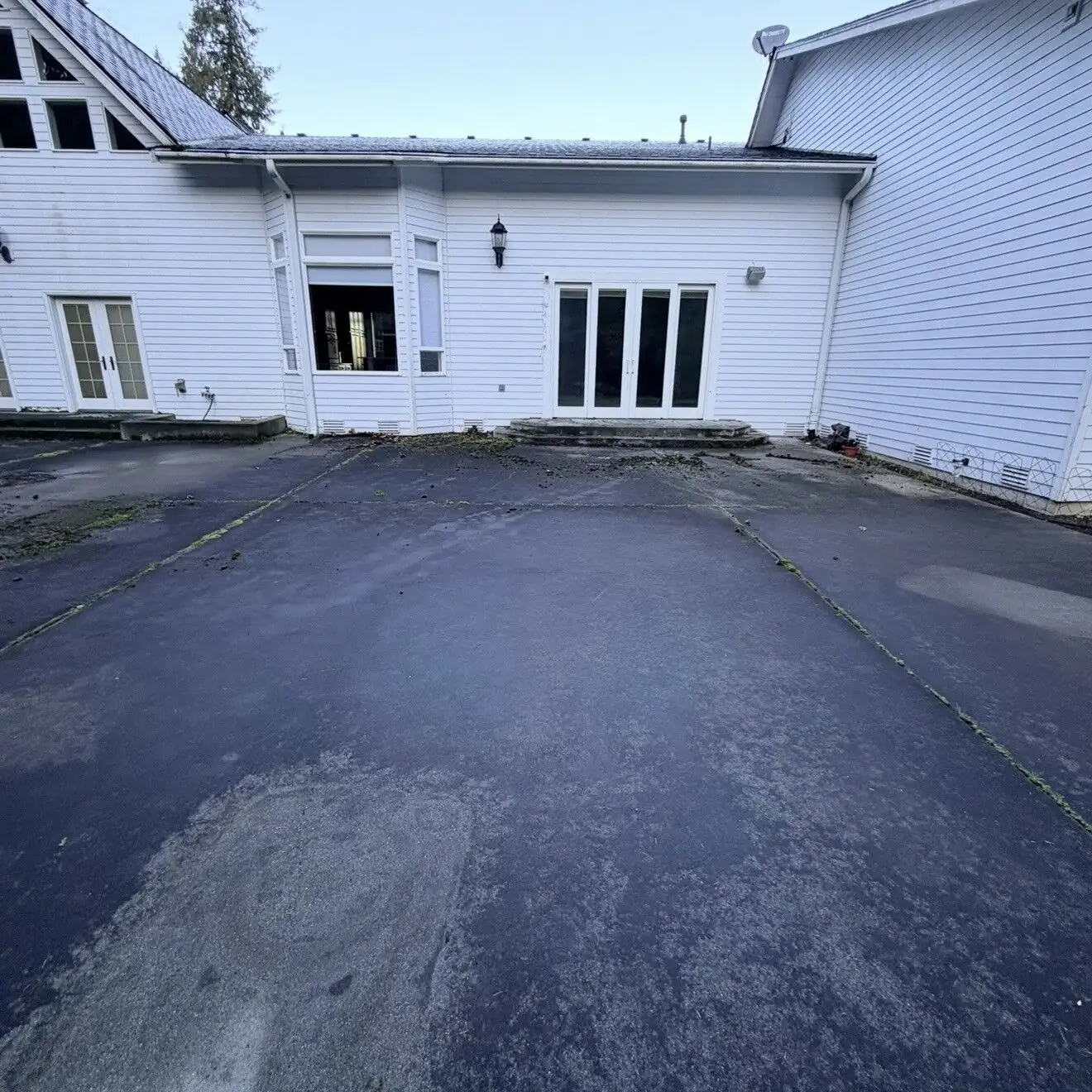 Before
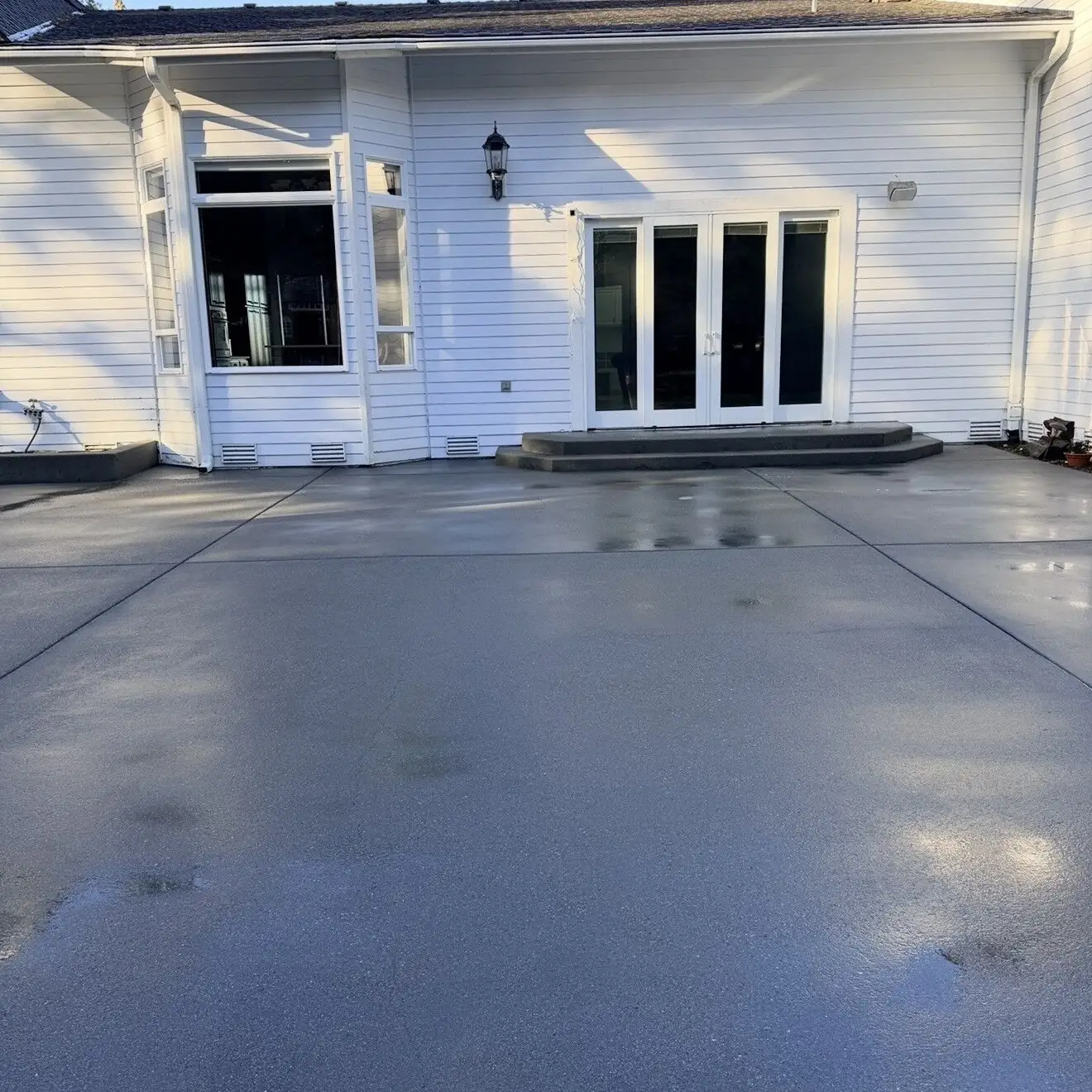 After
What else lands on an array here
Pollen, heavily, through spring — a fine even film that dulls the whole surface rather than concentrating at the edge.
Conifer debris. Needles, pitch and fine organic matter from anything overhanging. Pitch is the difficult one, because it does not rinse and it attracts everything else.
Agricultural dust through the late-summer fieldwork season in the valley, which behaves like the film on windows and settles overnight onto damp glass.
Industrial particulate on the west side of the county, fine and persistent.
Bird droppings, which are the one genuinely opaque soiling type — a single dropping over a cell is a hard shadow rather than a dimming.
Panels are not all the same glass
Not a detail most homeowners need, but it shapes how the work is done.
Monocrystalline and polycrystalline framed panels are the overwhelming majority of residential installs here: tempered front glass, aluminium frame, the raised perimeter lip described above, an anti-reflective coating. Standard method.
Frameless and dual-glass panels, more common on newer commercial installs, have no perimeter lip — so no edge band, and considerably less to clean. They are also more sensitive to point loads, which reinforces the never-walk-on-them rule.
Textured or patterned front glass, used to reduce glare and improve capture at shallow angles, holds soiling in the texture more than smooth glass does and takes longer to clean properly.
Thin-film panels turn up occasionally on older or specialist installs. Same principles, gentler still.
Solar hot-water collectors are not photovoltaic panels and are a different thing entirely — glazed collectors clean much like glass, evacuated tube arrays have their own fragility.
What to do now
- Pull the inverter history rather than the headline number. A gradual decline across a year reads as soiling; a step change on a date reads as a fault or new shade.
- Compare strings if the system reports them separately. One string down and the rest fine is rarely dirt — dirt does not respect wiring.
- Check what has grown. A tree clear of the array three seasons ago may not be now, and partial shade has the same string-level effect permanently.
- Look along the bottom frame from the ground, at a shallow angle. The dark band is the expensive part.
- Do not walk on the array, and do not rinse it with hard water on a hot day. Both cost more than the clean.
- Book for late spring, once pollen has finished, so the clean sits ahead of the months that actually produce.
What is worth checking before booking a clean
Soiling is the common cause but it is not the only one, and it is worth ruling the others out rather than cleaning and being disappointed.
Check whether anything has grown. A tree that was clear of the array three seasons ago may not be now, and partial shading has the same string-level consequence as an edge band, permanently.
Check the inverter history rather than the headline number. A gradual decline across a whole year reads as soiling; a step change on a date reads as a fault or a new shade source.
Compare strings if the system reports them separately. One string down and the rest fine is rarely dirt, because dirt does not respect wiring.
Full method, access and scheduling is on the solar panel cleaning page.

Randy Fee — Owner, King of Kings Window Cleaning
Washington business licence, UBI 605476674 · L&I insured · BBB rated A
Randy runs the company himself, so you are dealing with the owner, not a call centre — and every technician here is personally trained by him. Working Whatcom and Skagit County since 2024.
Questions about this
- Do not the panels clean themselves in the rain?
- Partly, and that assumption was built around arrays on tilt frames at a steep angle. Most residential arrays here are flush-mounted to the roof plane, so they take whatever pitch the roof has. A shallow panel sheds far less readily, and what rain does not carry off settles along the bottom frame instead.
- What is the dark line along the bottom of each panel?
- The frame of a standard panel sits slightly proud of the glass, so the lower edge is a shallow lip. Water running down the glass reaches that lip, pools briefly and evaporates, leaving what it was carrying behind. Over a winter that builds into a visible band, and it sits exactly where it shades the bottom row of cells.
- Does a small shaded band really matter that much?
- More than its area suggests, because of how panels are wired. Cells in a string carry the same current, so the least productive cell constrains the ones in series with it. A band along the bottom edge is not a small percentage of the glass being dirty — it is a constraint on a whole string.
- When is the best time to have it done?
- Late spring, once pollen season has largely passed. That puts the clean immediately ahead of the months when the array actually produces, which is where its value is concentrated. Cleaning in November buys very little, because there is not much sun to catch either way.
- Can I do it myself with a hose and a brush?
- From the ground, on a low array, with clean water and a soft brush — cautiously, yes. Two things to avoid: walking on panels, ever, because the point load cracks cells invisibly under the laminate; and using hard tap water on a hot array, which dries into mineral spotting that is harder to remove than what you started with.
- Will you damage the anti-reflective coating?
- Not with the method used here — purified water, soft contact, no abrasives and no solvents. Coatings are damaged by abrasive pads, harsh chemicals and scrubbing at dry grit. The last of those is why the glass is wetted and given time before anything touches it.
- Can you do the skylights at the same time?
- Usually yes, and it is worth asking. The access and the pole system are already set up, so the marginal cost of adding skylights or sunroom glazing while we are there is small. Skylights also collect debris in the well around the frame and are one of the more neglected surfaces on a house.
Last updated