North-Facing Wall Mildew in Whatcom County
The short answer
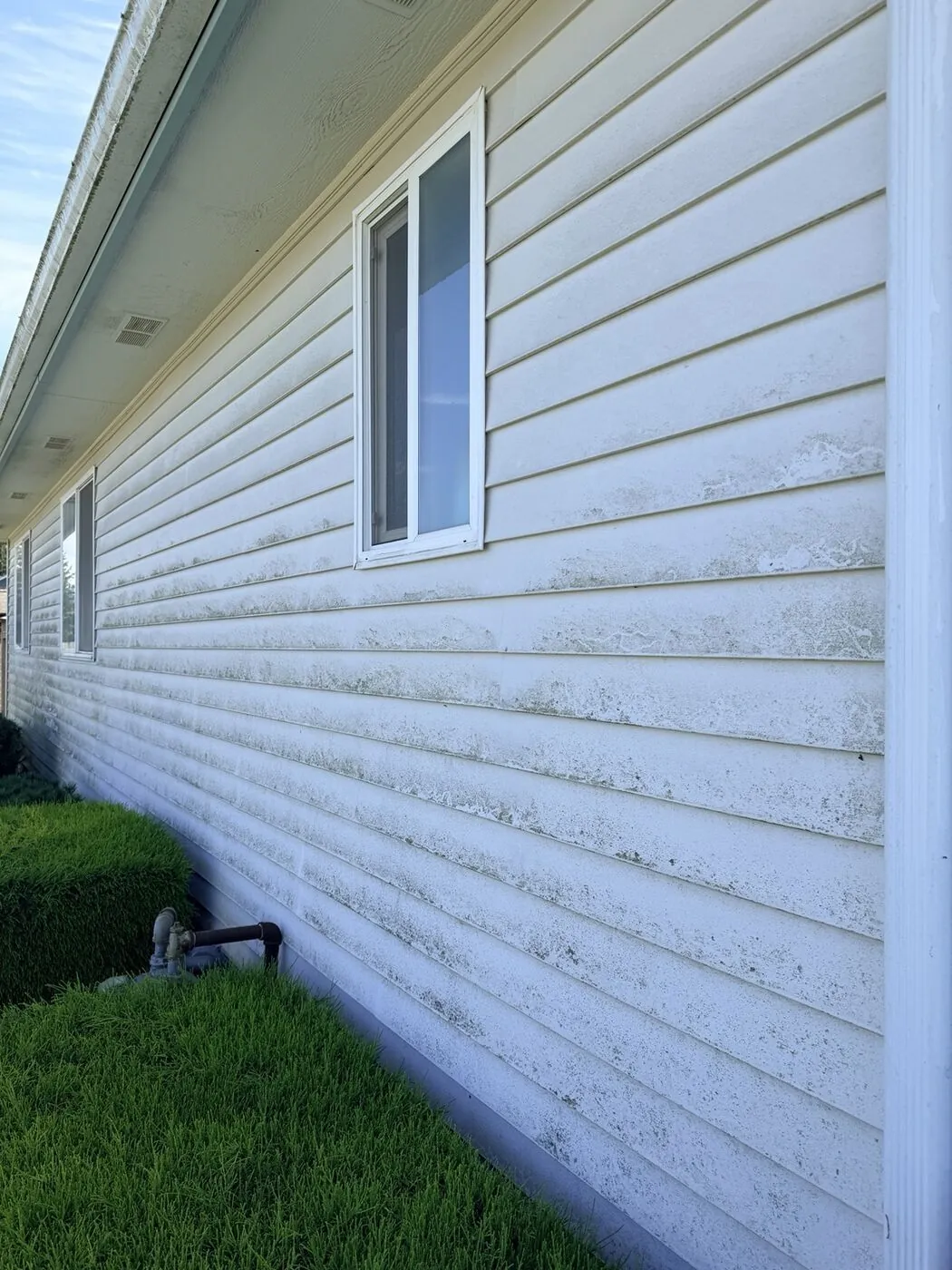
The north wall of a house in Whatcom or Skagit County gets no direct sun for months and is the last surface to dry after rain. Permanently damp plus shade grows algae and mildew. It is a sign of aspect, not neglect, and it soft washes off cleanly.
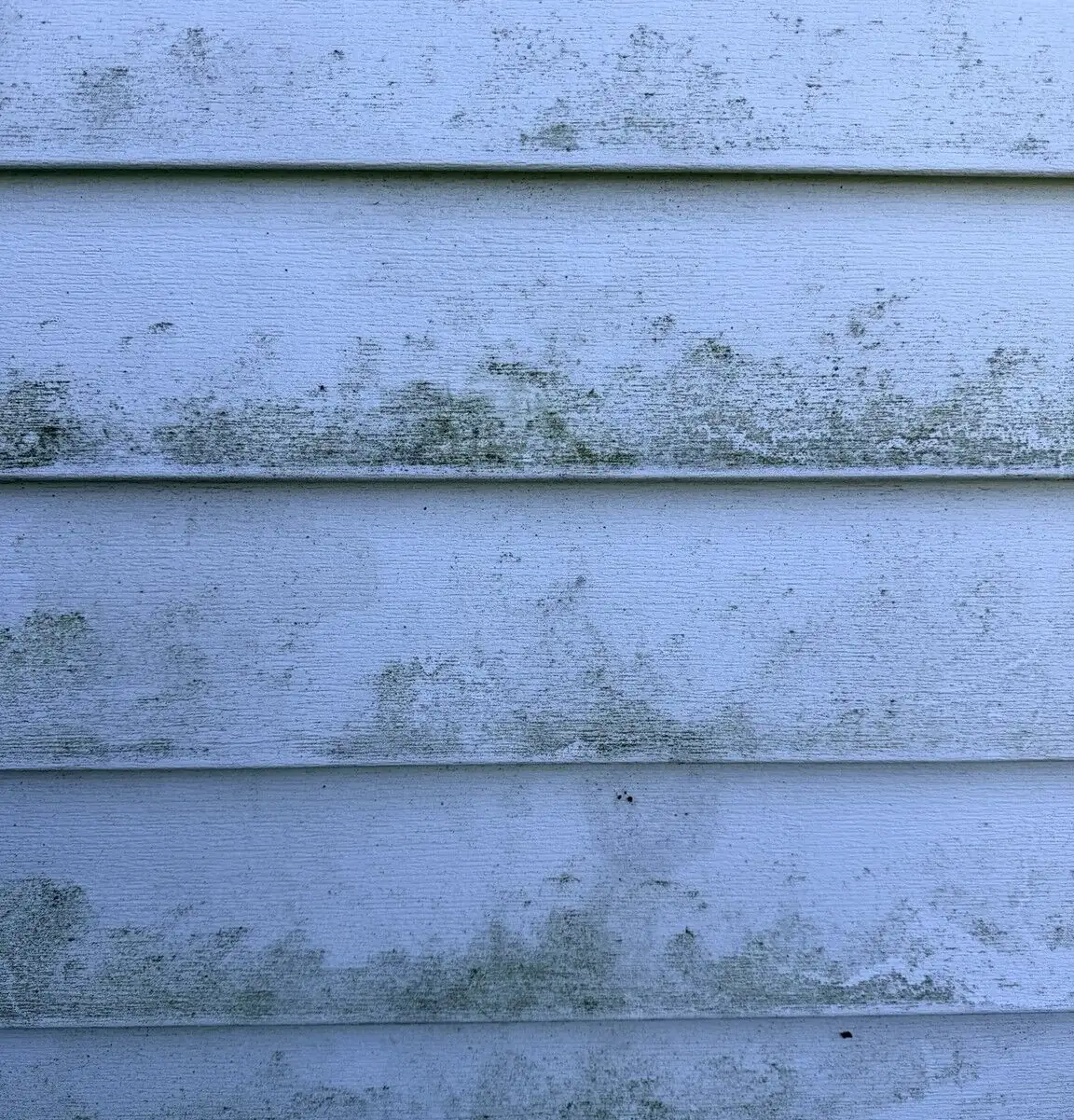
Almost every house-washing call in Whatcom and Skagit County is really a call about one elevation. The north wall has gone green, the rest of the house looks fine, and the homeowner assumes they have let something slip.
They have not. It is aspect, not neglect, and it is worth understanding why before deciding what to do about it.
Why the north wall specifically
At this latitude the sun tracks low across the southern sky. A north-facing wall receives effectively no direct sunlight for months at a time — not reduced sun, none. It is the last surface on the property to dry after rain and the first to be damp again when the next front comes through.
Bellingham gets around 36 inches of rain a year, and roughly 80% of it falls between October and March. For that half of the year a north wall is functionally never dry.
Algae needs three things: moisture, a surface, and light. Not much light — far less than a plant needs. A permanently damp north wall supplies all three, which is why the growth appears there first and worst, and why it appears on well-maintained houses.
What makes it worse
Several things stack on top of the basic aspect problem, and most of them are fixable.
Planting against the wall. The single most common aggravating factor we see. Shrubs pressed up against siding block airflow, hold humidity against the surface, and splash soil onto the lower courses in heavy rain. A foot of clearance makes a measurable difference; two is better. Airflow is what dries a wall, and a shrub against it prevents that permanently.
Overhanging trees and tall hedging extend the shaded, non-drying zone around the building, which is why growth often wraps onto the east and west elevations under the canopy line rather than stopping neatly at the corner.
Gutter and downspout discharge landing on or splashing back onto a wall keeps one patch permanently wet, and that patch will be visibly worse than the wall around it. If you see a concentrated green band under a gutter joint, the gutter is the cause and the wall is the symptom.
Sprinkler overspray hitting siding does the same thing daily, and on hard water it adds mineral spotting to the biological growth.
Prevailing weather. Wind-driven rain here comes predominantly from the south and west, so those elevations get wetter — but they also get sun, so they dry. The north wall gets less rain and holds what it gets.
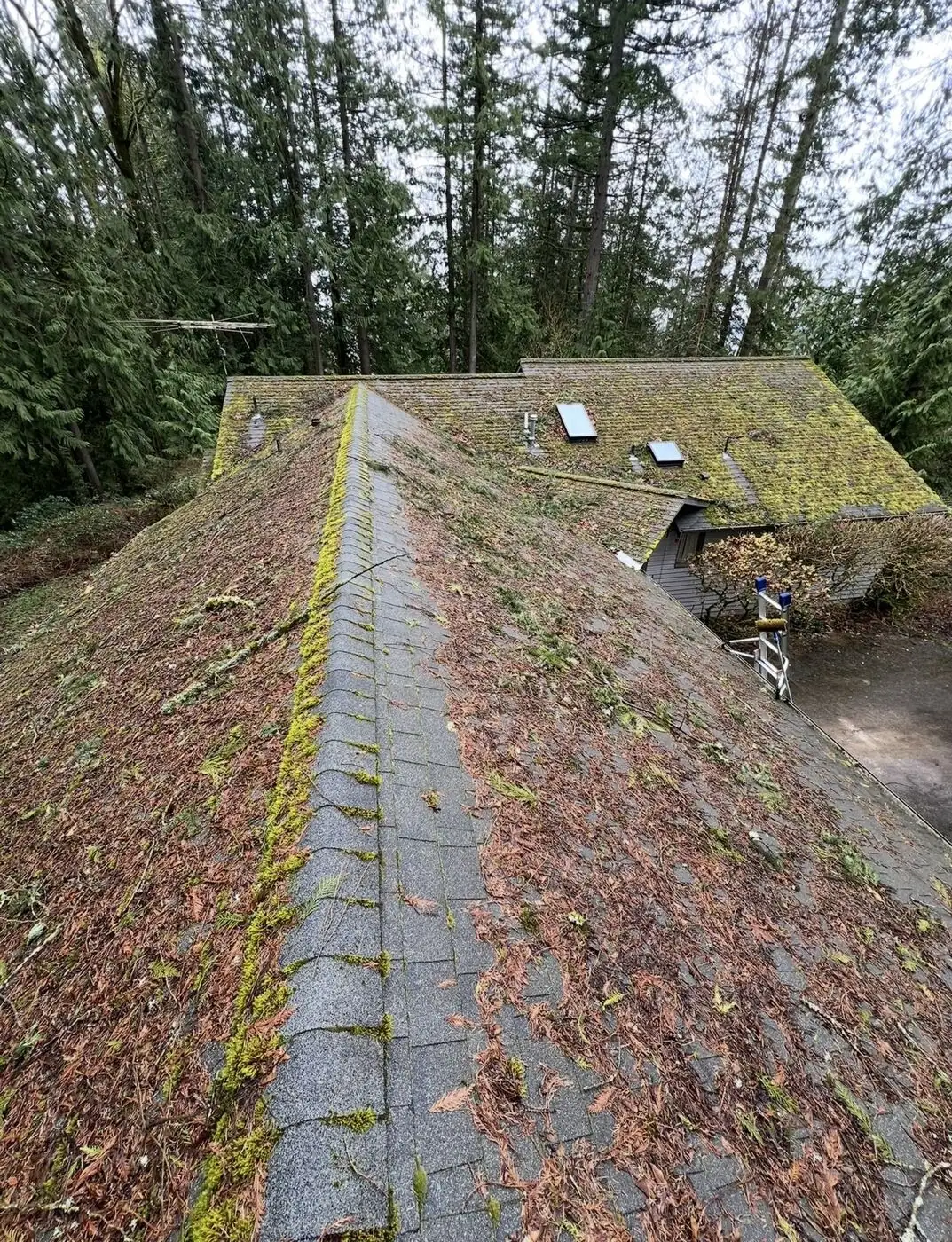 Before
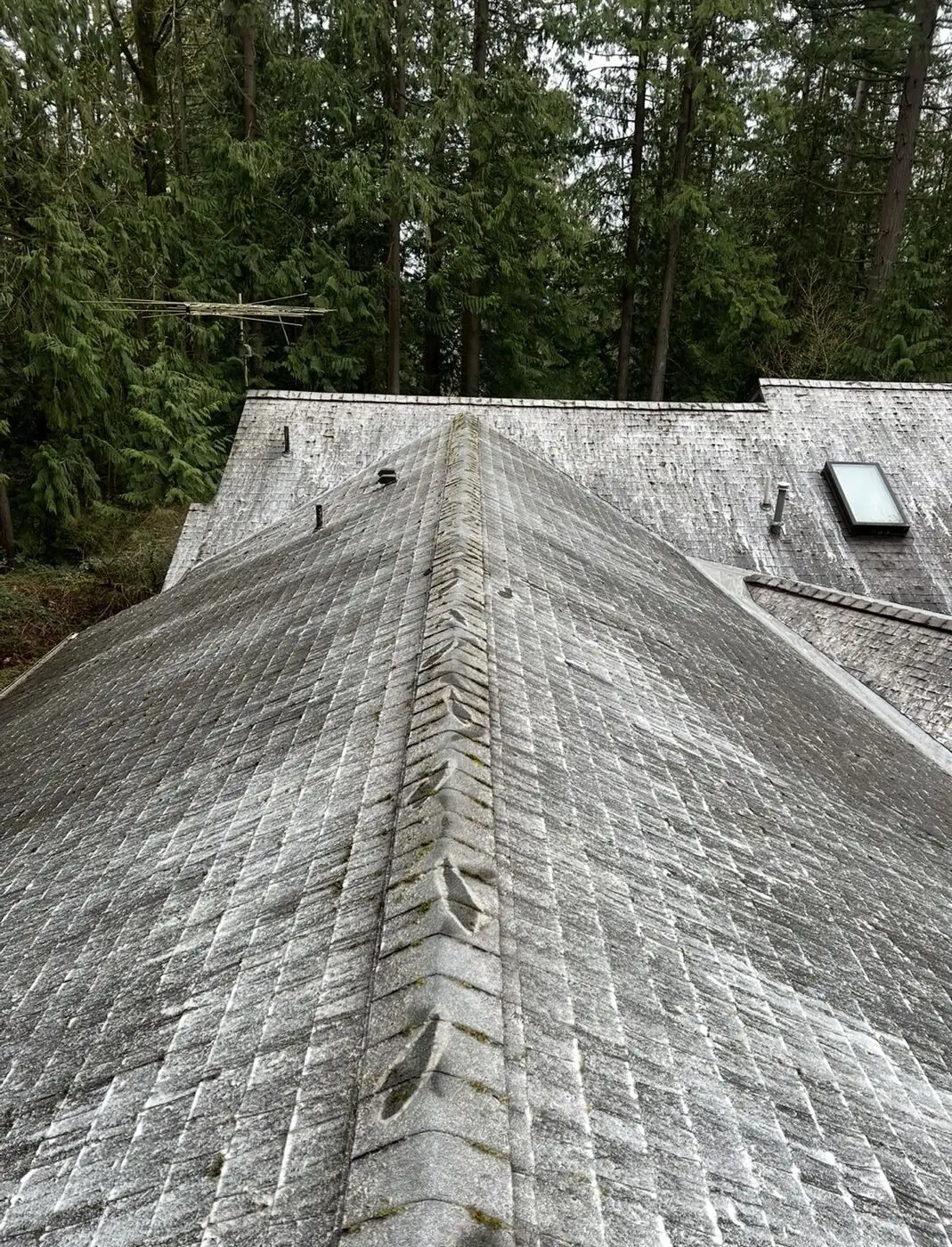 After
Telling growth from damage
Three different things get called “the north side looks bad,” and only two of them wash off.
Algae is the even green or grey-green film. Surface-level, comes off cleanly, the most common by a wide margin.
Mildew and mould are the black speckling and blotching. Concentrated in the dampest, most sheltered areas — behind shrubs, under eaves, in corners. Also surface-level.
Oxidation and chalking is not growth at all. UV degrades the surface of vinyl and painted siding over years, leaving a chalky layer that rubs off on your hand. Washing removes the loose chalk and usually improves appearance considerably, but it does not restore the finish. A wall that has faded is not dirty.
The useful test at the quote is simple: run a wet finger down the wall. If it comes away green or grey, it is coming off. If the wall looks the same colour wet as dry, that is the material, and washing will not alter it.
How it comes off
Soft wash. Low pressure — roughly garden-hose level — with a cleaning solution chosen for the growth and the substrate, given time to dwell, then rinsed thoroughly.
Not a pressure washer. Siding is built on the same principle as a shingle roof: overlapping courses that shed water downward. Force drives water upward and sideways behind the laps, into the wall assembly, past flashings detailed for gravity-driven water. In a climate this wet, water in a wall cavity does not dry out quickly, and the failures show up years later as soft sheathing and rot at the sill.
Planting below the work area is pre-wetted before anything is applied, sensitive planting is covered, and everything is rinsed at the end. Pre-wetting matters more than people expect — a plant already saturated with clean water absorbs far less of whatever lands on it afterwards.
Full detail on method and materials is on the house washing page.
What to do about the cause
Removing the growth is the easy half. Slowing its return is the useful half, and none of it is a product:
- Cut the planting back from the wall. Highest return of anything on this list.
- Trim what overhangs. Less shade, less drip, less organic debris landing on the elevation below.
- Fix the sprinkler heads that hit the house.
- Keep the gutters clear, so overflow staining stops recurring every wet season.
Expect two to four years between washes on a typical elevation here, and less on a heavily shaded one. That interval is a fact about the climate rather than a failure of the last clean.

Randy Fee — Owner, King of Kings Window Cleaning
Washington business licence, UBI 605476674 · L&I insured · BBB rated A
Randy runs the company himself, so you are dealing with the owner, not a call centre — and every technician here is personally trained by him. Working Whatcom and Skagit County since 2024.
Questions about this
- Why is it only the north side?
- At this latitude the sun tracks low across the southern sky, so a north-facing wall gets effectively no direct sun for months. It is the last surface to dry after rain and the first to be damp again. In a climate where the wet season runs October into May, that wall is functionally never dry, and algae needs far less light than a plant does.
- Is it mould, mildew or algae?
- Usually algae, which reads as an even green film. Mildew and mould show as black speckling and blotching, often behind shrubs planted too close to the wall. Lichen turns up on the lower courses and on north-facing cedar. All three sit on the surface rather than in the material, and all three come off with the same soft wash.
- Will it damage the siding?
- Not quickly, and not the way moss damages a roof. What it does is hold moisture against the surface, which over years is hard on paint, on caulking and on any place water can get behind. On cedar it accelerates the decay that was already happening. It is worth removing, but it is not an emergency.
- Can I just pressure wash it off?
- No. Siding laps shed water downward, and a pressure washer drives it upward behind the laps and into the wall. It also etches vinyl and strips paint. This is a soft wash — low pressure and the right solution, doing the work chemically.
- How long before it comes back?
- Two to four years on most walls here, less on a heavily shaded elevation under trees. Cutting the planting back from the wall extends that more than any product does, because airflow is what dries siding.
- Do I need the whole house done?
- Often not. Growth is rarely even — the north side is green and the south side is fine. Washing the shaded elevations only is a legitimate approach and we will quote it that way and tell you honestly whether the sunny sides need doing this cycle.
Last updated