Whatcom County
House Washing (Soft Wash) in Sudden Valley, WA
The short answer
Siding in Sudden Valley goes green on the shaded sides, and Whatcom County expects the wash water that takes it off to be collected and kept out of storm drains leading to Lake Whatcom. We soft wash at low pressure, protect the planting, and steer every gallon of rinse onto soil instead of the street.

Randy Fee — Owner, King of Kings Window Cleaning
Washington business licence, UBI 605476674 · L&I insured · BBB rated A
Randy runs the company himself, so you are dealing with the owner, not a call centre — and every technician here is personally trained by him. Working Whatcom and Skagit County since 2024.
I run the Sudden Valley route personally.
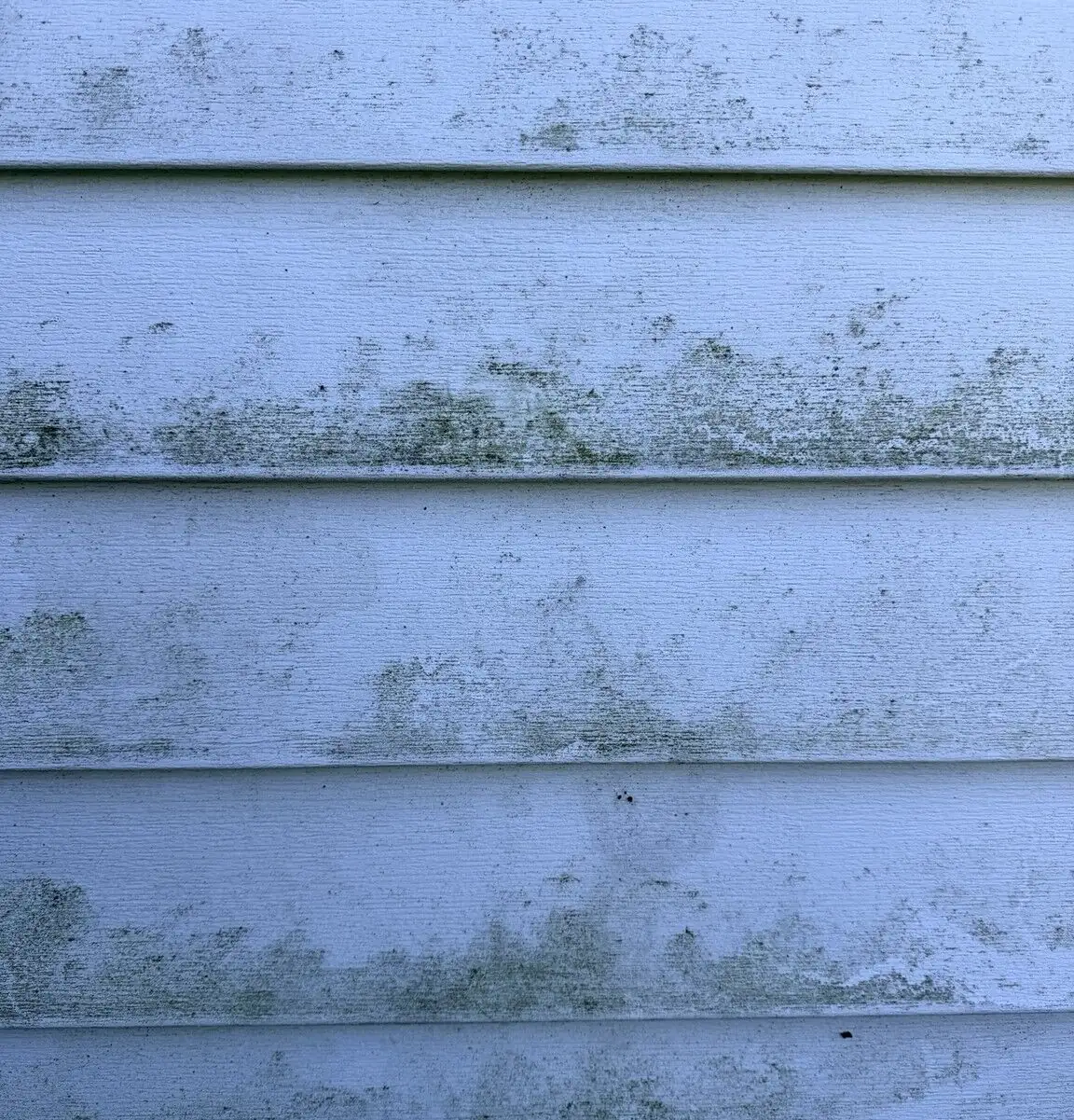
On a Sudden Valley house the dirt is mostly alive. The green film on the shaded wall, the black specks under the eaves and the moss creeping along the lowest course of siding are all growth, and they come off easily with the right chemistry and very little force.
The harder question is where the water goes once they are off. In Sudden Valley the answer has to be somewhere other than a storm drain, because the drains lead toward Lake Whatcom and the lake is where the community’s taps draw from.
What builds up on Sudden Valley siding?
Mostly biology, sorted by how much sun each wall gets. The walls that stay damp longest after rain collect the most.
- Green algae film, heaviest on the shaded elevations and on walls under or near trees.
- Mildew, showing as black or grey speckling under the eaves, around windows and behind shrubs planted close to the house.
- Moss and lichen on the lowest courses, where splash keeps the siding wet.
- Overflow streaks running down from a gutter that has been spilling over.
- Cobwebs, wasp nests and general grime in the soffits and around the entry.
- Chalking on older painted or vinyl siding, which is sun damage rather than dirt.
The pattern of which wall goes green first is predictable once you know what to look for, and it is explained on the page about north-facing wall mildew. In Sudden Valley the shaded wall is often not the north one at all, but whichever side the trees or the slope keep out of the sun.
Why is wash water the central question in Sudden Valley?
Because the county says so, and because of what the drains lead to. Whatcom County’s guidance on pressure washing, which cites WCC 16.36.050, tells residents to collect all wash water and keep it out of storm drains and waterways. Sudden Valley is unincorporated, so this is the rule that governs, and the community is also one of the named areas inside the county’s NPDES Phase II municipal stormwater permit area.
The reason it matters so much here is the lake. The Lake Whatcom Water and Sewer District draws Sudden Valley’s supply from Basin 3 of Lake Whatcom. Rinse water off a house wash carries dead algae, grime and traces of cleaning solution, and if it runs down a driveway to a grate, the next stop is the lake the neighbours drink from.
A house wash produces more water than any other job we do on a home. That makes it the job where containment planning does the most good.
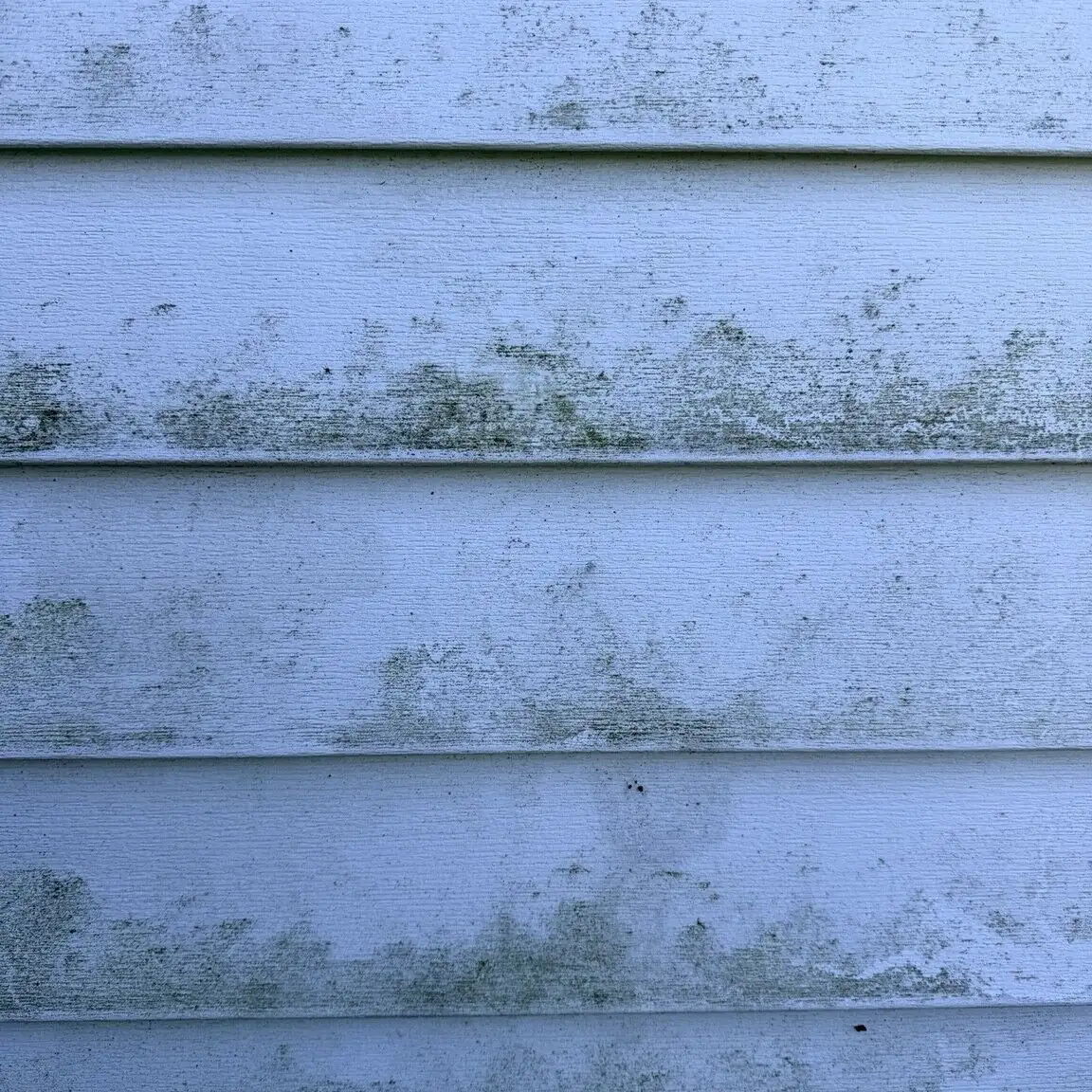 Before
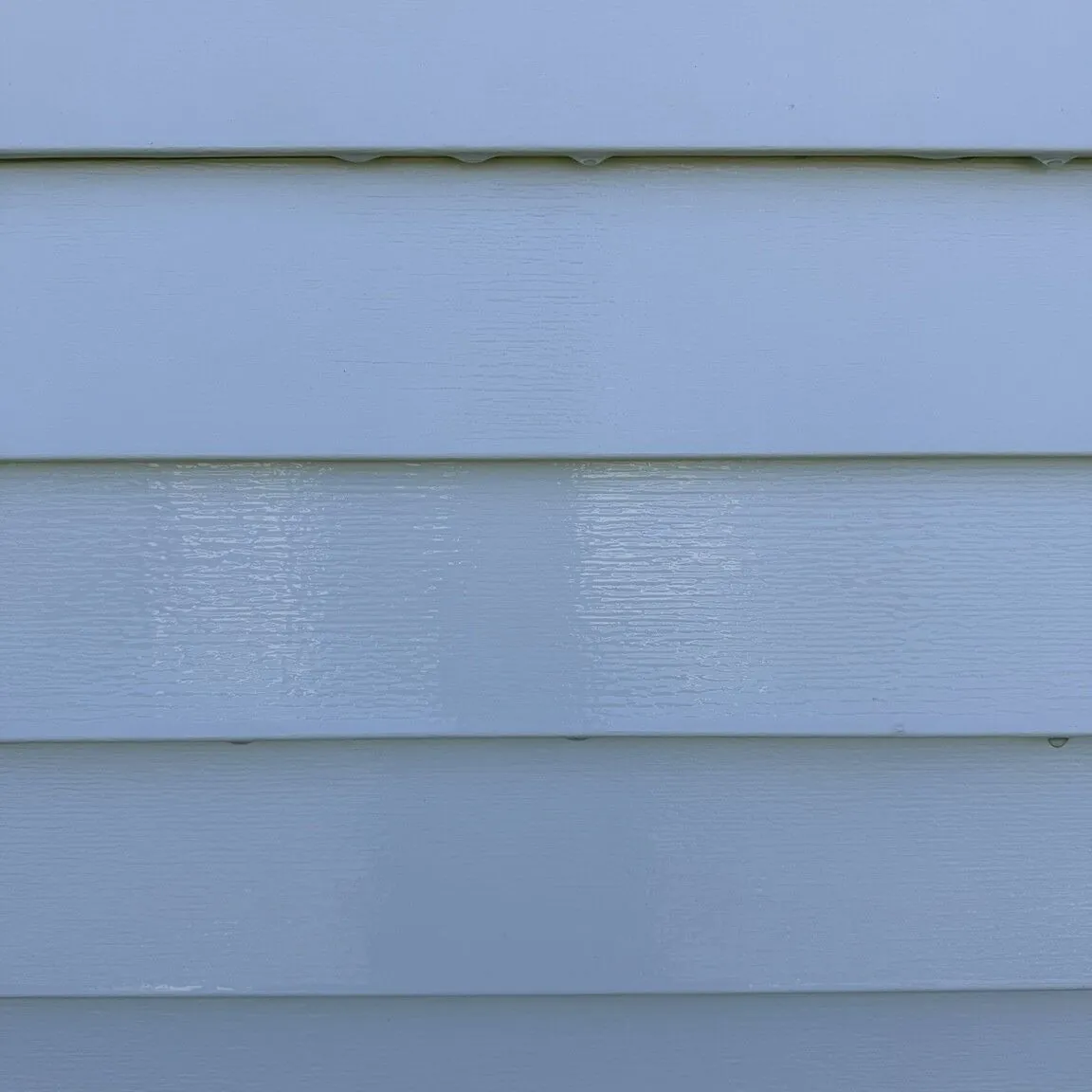 After
Why soft wash rather than pressure wash?
Because siding is built to shed water running down it, not water fired at it. Every common cladding, whether vinyl, fibre cement, painted wood lap or cedar shingle, relies on overlapping courses that keep gravity-fed water on the outside. A pressure washer drives water sideways and upward into those overlaps and around window flashings, into a wall that may then stay damp for weeks.
It also damages the surface directly. Brittle old vinyl cracks; the vinyl siding profile explains why age makes the difference. Paint lifts off wood. Cedar furs and splinters.
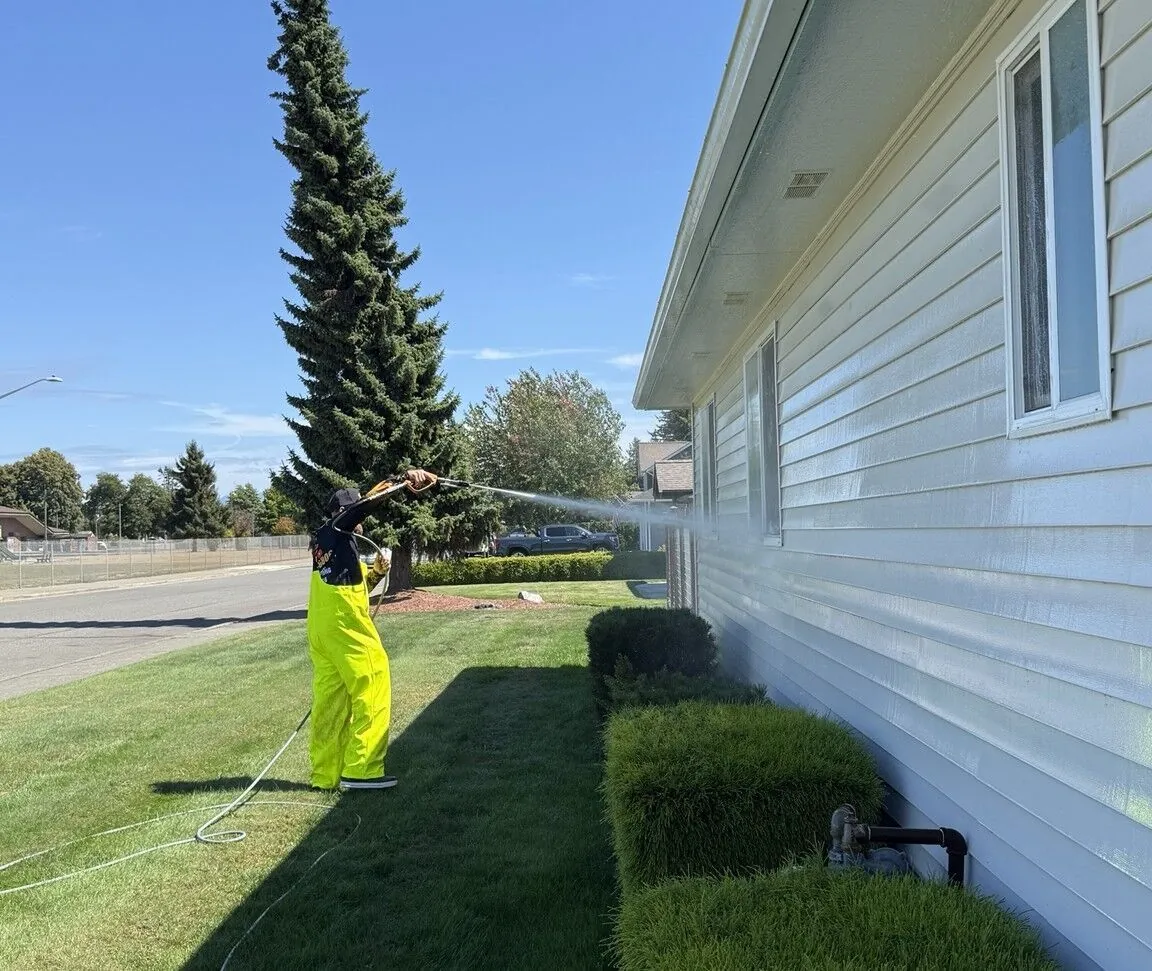
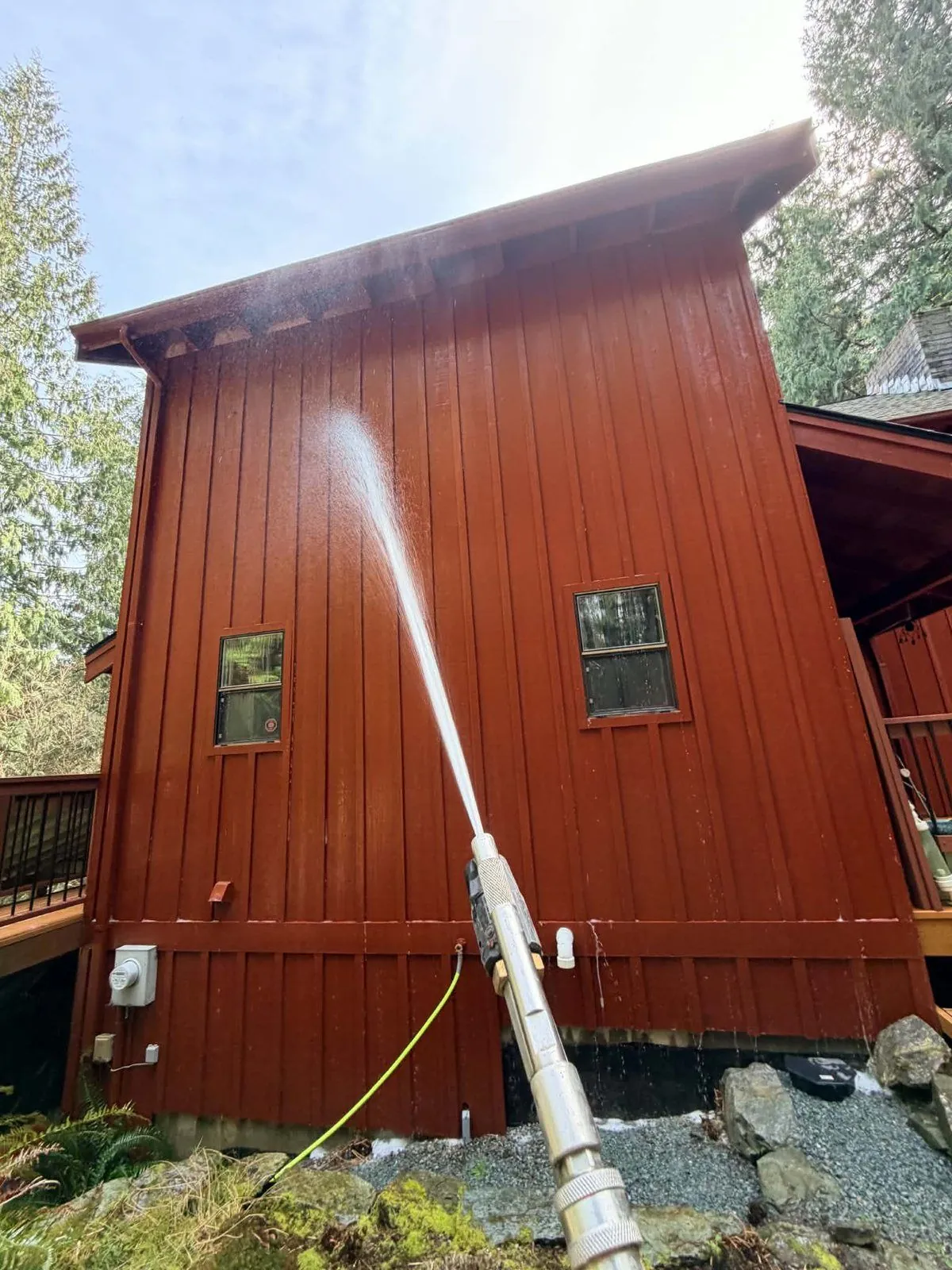
Soft washing does the same job gently. A solution chosen for the growth and the siding goes on at roughly garden-hose pressure, sits long enough to kill what is living there, and is rinsed off with the same low pressure. The growth comes away with the rinse instead of being blasted into the wall.
What kind of siding will we find on a Sudden Valley house?
Anything, which is why we look before we mix a thing. The community was built in two big waves: 993 of its homes date from the 1970s and 844 from 2000 to 2009, with only 105 built since 2010. A fifty-year-old house may still carry its original cladding under several coats of paint, or may have been re-sided along the way. A twenty-year-old house is usually on its first siding, and the question is keeping it clean rather than rescuing it.
The difference changes the solution strength, the dwell time and how gently the rinse needs to be. Painted surfaces with failing paint, in particular, need a light touch, and we will point out anything flaking before we start rather than after.
What does a house wash include?
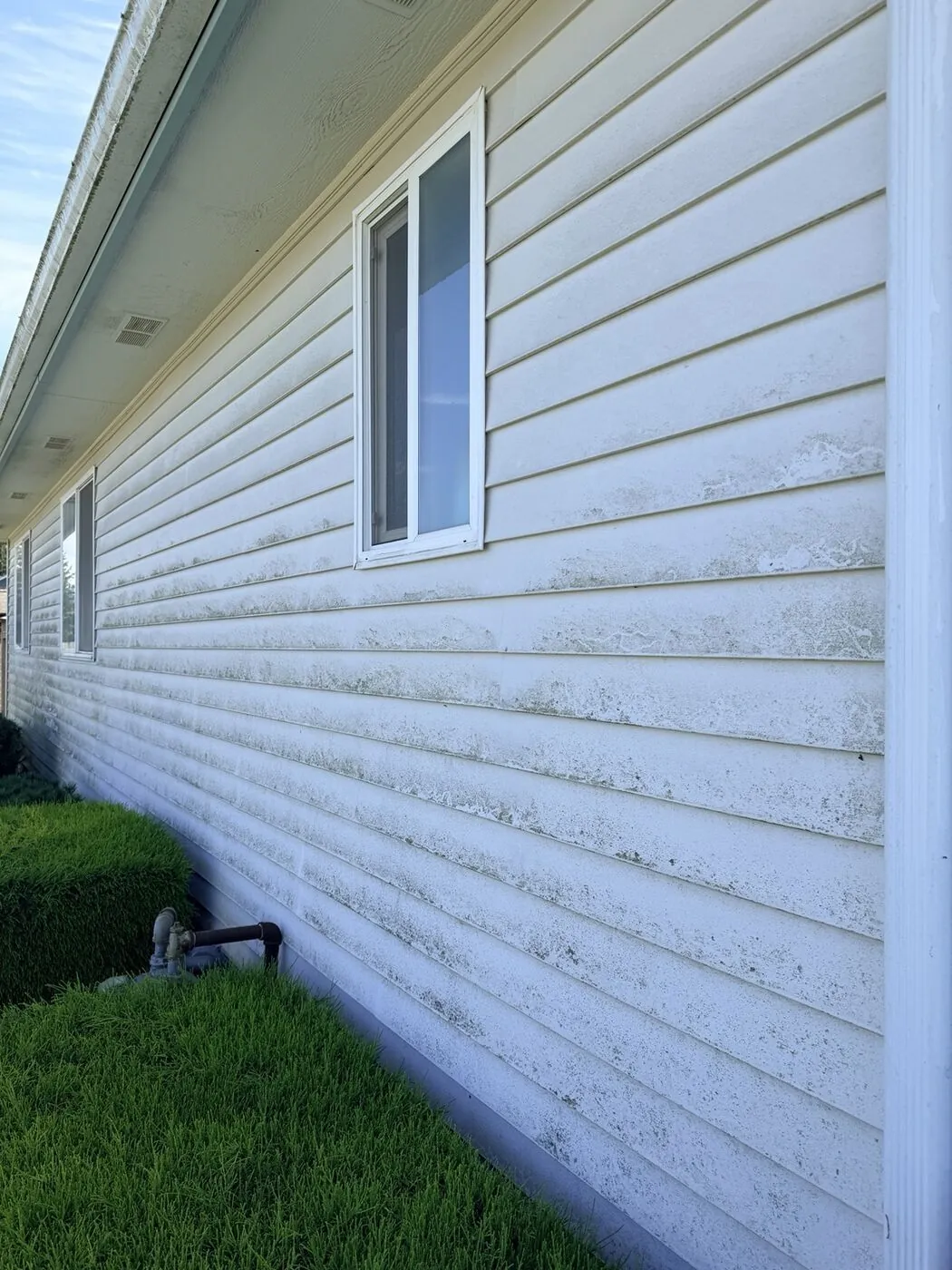
The standard wash covers the whole exterior skin of the house:
- All siding on every elevation, from the foundation line up to the eaves.
- Soffits and the underside of the eaves, including cobwebs and nests.
- Fascia boards and the outside faces of the gutters, where they can be reached safely.
- Exterior trim around doors and windows.
- Entry doors and garage doors, washed gently.
- Pre-soaking and post-rinsing of planting next to the house.
- A walk-round with you at the end.
Decks, driveways and paths are separate jobs with separate equipment. Algae on concrete is a slip hazard as much as a cosmetic one, which is covered under slippery driveways and walkways.
Where does the rinse water actually go?
Somewhere we have chosen in advance. On a Sudden Valley property the plan runs like this:
- Read the lot to see which way the ground falls and where the nearest drain inlets are.
- Cover any inlets within reach of the work area before a drop of solution is mixed.
- Soak the planting along the foundation with clean water so it takes up very little of what follows.
- Wash in sections, applying only what each wall needs rather than flooding the whole house.
- Steer the rinse onto lawn, beds and soil, and away from driveways and paths that run to the road.
- Rinse the planting again once each section is finished.
The same thinking, set out with the codes behind it, is on our wash water and storm drains page.
Is a house wash only about appearance?
No, though the appearance is what most people notice first. Growth on siding holds moisture against the surface, and a wall that never fully dries is a wall whose paint fails sooner, whose caulking breaks down faster and whose wood trim starts to soften at the joints. Taking the growth off lets the surface dry between showers again, which is the condition every exterior material was designed for.
There is a practical side too. A washed wall shows its problems. Peeling paint, cracked panels, gaps around a window frame and soft trim all hide under a layer of green, and they are much easier to spot, and cheaper to fix, once the wall is clean. We point out anything we notice; the repair itself is a job for a painter or a carpenter.
How long does a washed house stay clean in Sudden Valley?
It depends almost entirely on shade. A sunny, open wall can stay clean for a couple of years. A wall under trees, facing a bank or tucked behind tall shrubs will start to show a green tint again sooner, sometimes within a season or two. Trimming shrubs back from the foundation and keeping the gutters above clear both help the wash last, and neither needs a permit.
What affects the price of a house wash here?
Every quote comes from a visit, and these are the factors that shift it:
- Size of the house, measured in wall area more than floor area.
- Height. A two-storey wall above a slope takes more setup than a single-storey one over lawn.
- Siding type and condition, because fragile or painted surfaces are slower.
- How much growth is there. A light film washes quickly; years of moss on the lower courses do not.
- Containment work, such as drains to cover and planting to protect.
- Add-ons like gutter faces, decks or the garage.
When should a Sudden Valley house be washed?
Any mild, dry stretch outside a hard frost. The solution needs to stay wet on the wall long enough to work, which is harder in hot, direct sun and pointless in a heavy downpour. Late spring and early autumn usually give the most workable days.
Many owners also book a wash before selling or before a repaint. A painter needs clean, dry siding to work on, and a wash a week or two ahead of the painter saves them doing a rushed job of it themselves.
Should I check with the association first?
We have not been able to read the Sudden Valley Community Association’s rules, and we make no claim about what they cover. If you want certainty about any part of the work, the association is the place to ask, and we are glad to schedule around its answer.
What usually follows a house wash?
Clean glass. Washing the walls inevitably puts some splash on the windows, so the sensible order is walls first, then glass on the same day; the Sudden Valley window cleaning page covers that half of the job. If the overflow streaks on the siding came from a blocked gutter, the gutter needs clearing too, or the streaks will be back by spring.
How do I book a house wash in Sudden Valley?
Call (360) 303-6806 and mention the house is in Sudden Valley. We walk round with you, show you which walls are carrying what, and quote the wash with the containment plan built in. Every technician is trained by the owner before working on a customer’s house, and the business is covered by a Washington State business licence and Labor & Industries coverage. For more on the service itself, see the main house washing page.
House washing questions from Sudden Valley homeowners
- Is a house wash the same as pressure washing the siding?
- No. A house wash here is a soft wash: garden-hose pressure with a cleaning solution that kills the growth, then a gentle rinse. A pressure washer aimed at siding drives water behind the laps and can crack vinyl, strip paint and fur wood.
- Where does the wash water go?
- Onto soil and planting, not onto paving that runs to the road. Drain inlets nearby are covered first, and planting is soaked with clean water before and after. Whatcom County's guidance asks for wash water to be kept out of storm drains, and in Sudden Valley those drains lead toward the lake.
- Why is only one side of my house green?
- Shade. The wall that sees the least sun stays damp longest after rain, and algae and mildew need exactly that. Walls under trees, behind shrubs or facing a slope usually go first.
- Will washing make faded siding look new?
- It will remove the growth and loose chalk, which usually helps a lot. It will not restore a finish that the sun has already worn away. We tell you on the quote if your siding is oxidised, so the result matches what you expect.
- How often does a Sudden Valley house need washing?
- Every year or two for most homes, depending on shade. A heavily treed lot may want an annual wash on the worst wall and a full wash less often. We suggest an interval once we have seen the house.
- Should I check with the community association before a house wash?
- We have not been able to read the association's current rules and cannot say what they require. If you want to be sure, ask the association before you book.
- Can you wash the house and the windows on the same visit?
- Yes, and the order helps: the walls are washed first, so any splash lands on glass that has not yet been cleaned. The windows are then done last on the same day.