
Whatcom County
House Washing (Soft Wash) in Everson, WA
The short answer
Most Everson siding goes green on the shaded side before it gets dirty anywhere else, because the Nooksack valley stays damp from autumn into spring. We soft wash walls, soffits, trim and gutter faces at low pressure, matching the mix to vinyl, painted wood or fibre cement, and we steer rinse water onto lawn or planting.

Randy Fee — Owner, King of Kings Window Cleaning
Washington business licence, UBI 605476674 · L&I insured · BBB rated A
Randy runs the company himself, so you are dealing with the owner, not a call centre — and every technician here is personally trained by him. Working Whatcom and Skagit County since 2024.
I run the Everson route personally.
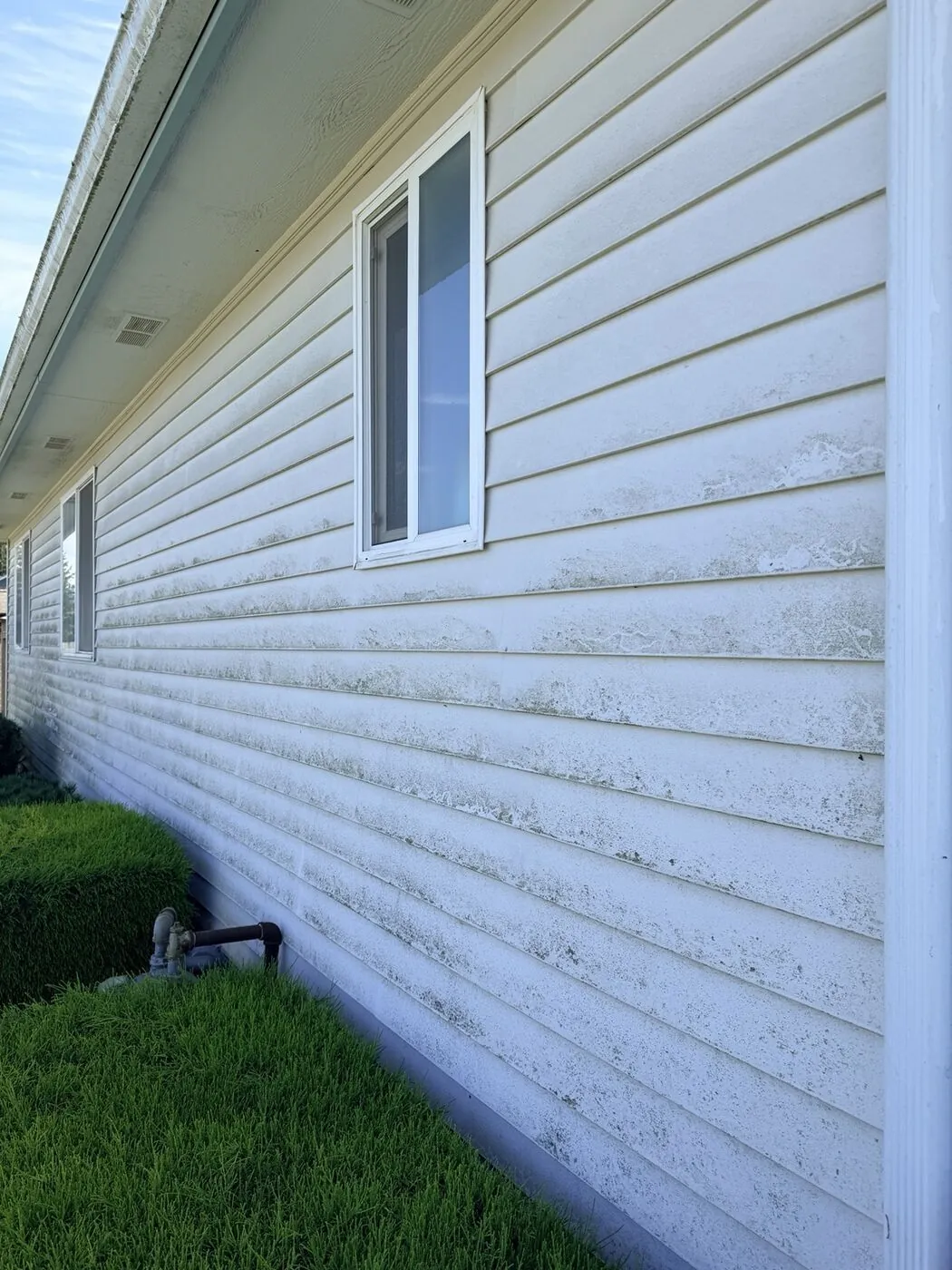
The shaded wall of an Everson house tells you most of what you need to know about the valley. It goes green first, it stays wet longest, and by the end of a wet winter it can look years older than the sunny side of the same building.
What follows is how we wash houses in town: what is actually growing on the siding, why low pressure is the only sensible choice, how the mix changes with the age of the house, and what we do about rinse water.
What grows on Everson siding, and why?
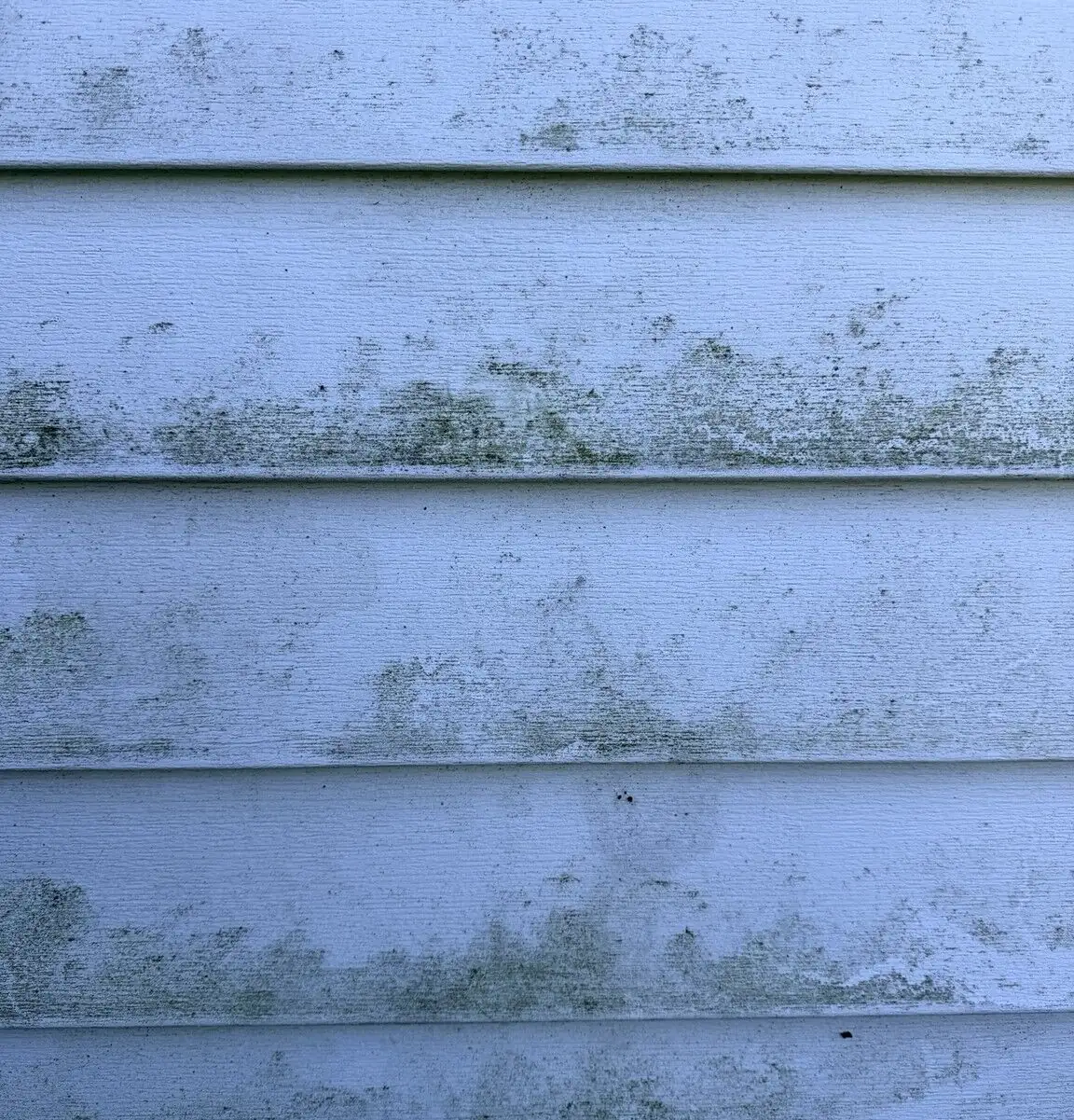
Mostly algae, then mildew, then moss where things stay wettest. None of it is dirt in the usual sense. It is living growth, and it needs two things: moisture and time. The Nooksack valley supplies plenty of both.
For a sense of the moisture, the WRCC’s regional Clearbrook cooperative station, which is not in Everson, records an average of 46.71 inches of precipitation a year. On a house, the effect is a wall that is damp from the first autumn storms until spring, with only short dry spells between.
Farming adds a second layer. The land around Everson and Nooksack grows berries, carrots, potatoes and specialty produce, and carries dairy herds. Field work in the dry months puts fine soil into the air, and on a wall that settles as a dull film. When the rain comes back, that film holds moisture against the siding and gives algae an easier start.
Which parts of the house get it worst?
The pattern is predictable enough that we can usually guess it from the driveway:
- North-facing walls, which get little or no direct sun in winter
- Walls behind shrubs or hedges, where air barely moves
- The lower courses, which catch splash-back from soil and gravel
- Under a leaking or overflowing gutter, where water runs down the face
- Soffits and eave corners, which collect spider webs and stay shaded
- Sides facing a neighbour’s house a few metres away
If the north side of your house is the problem, our page on north-facing wall mildew goes into why it keeps coming back and what slows it down.
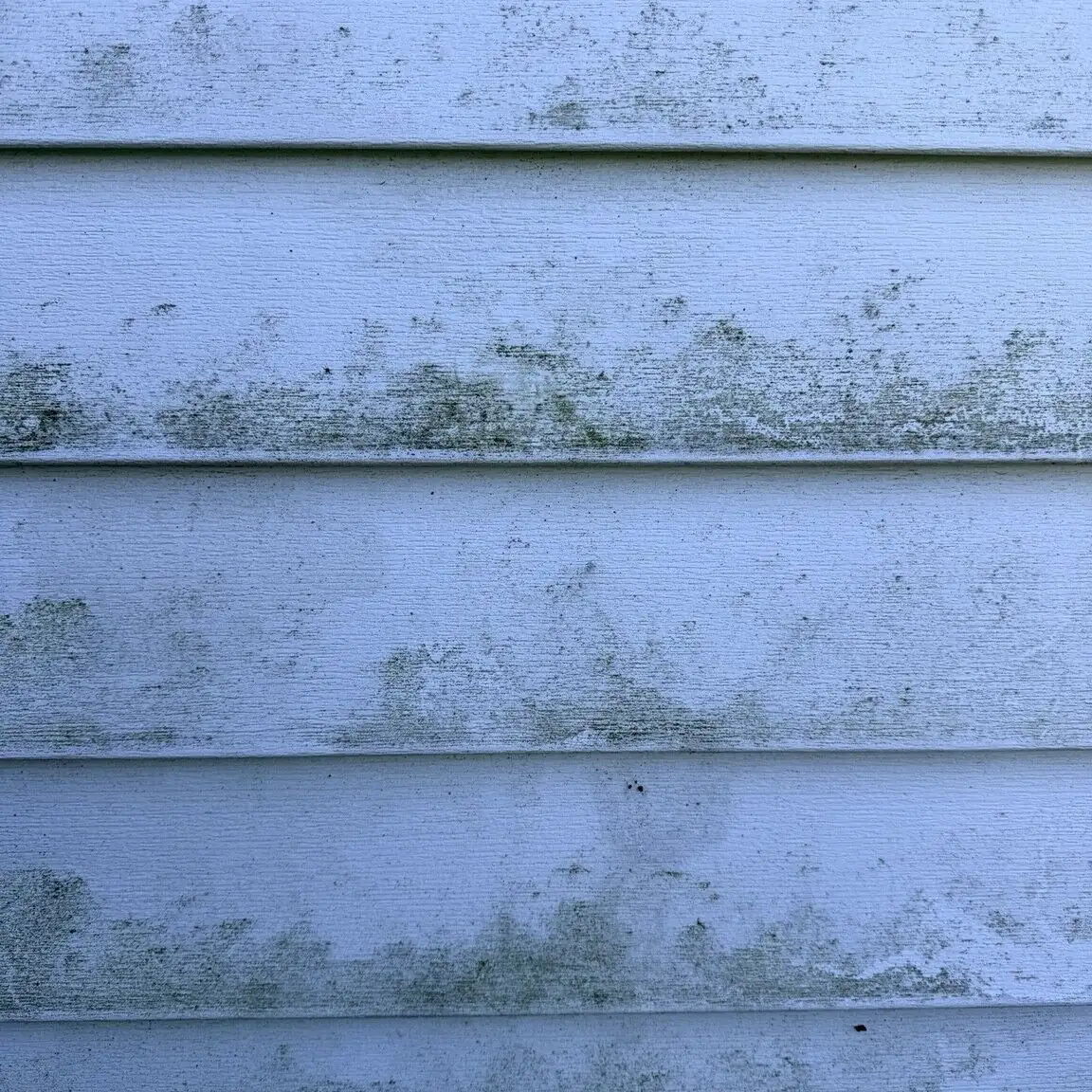 Before
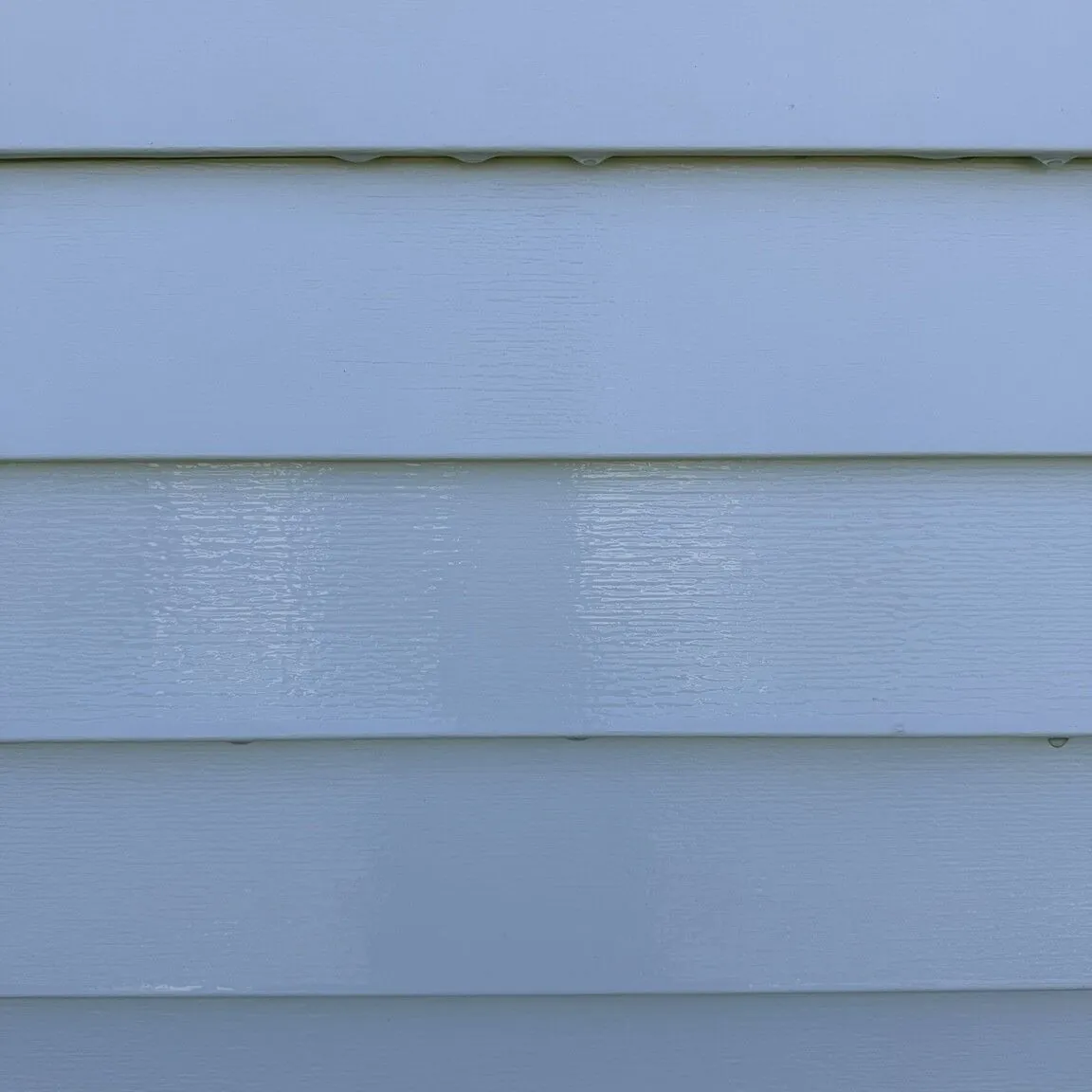 After
What is a soft wash, and why not a pressure washer?
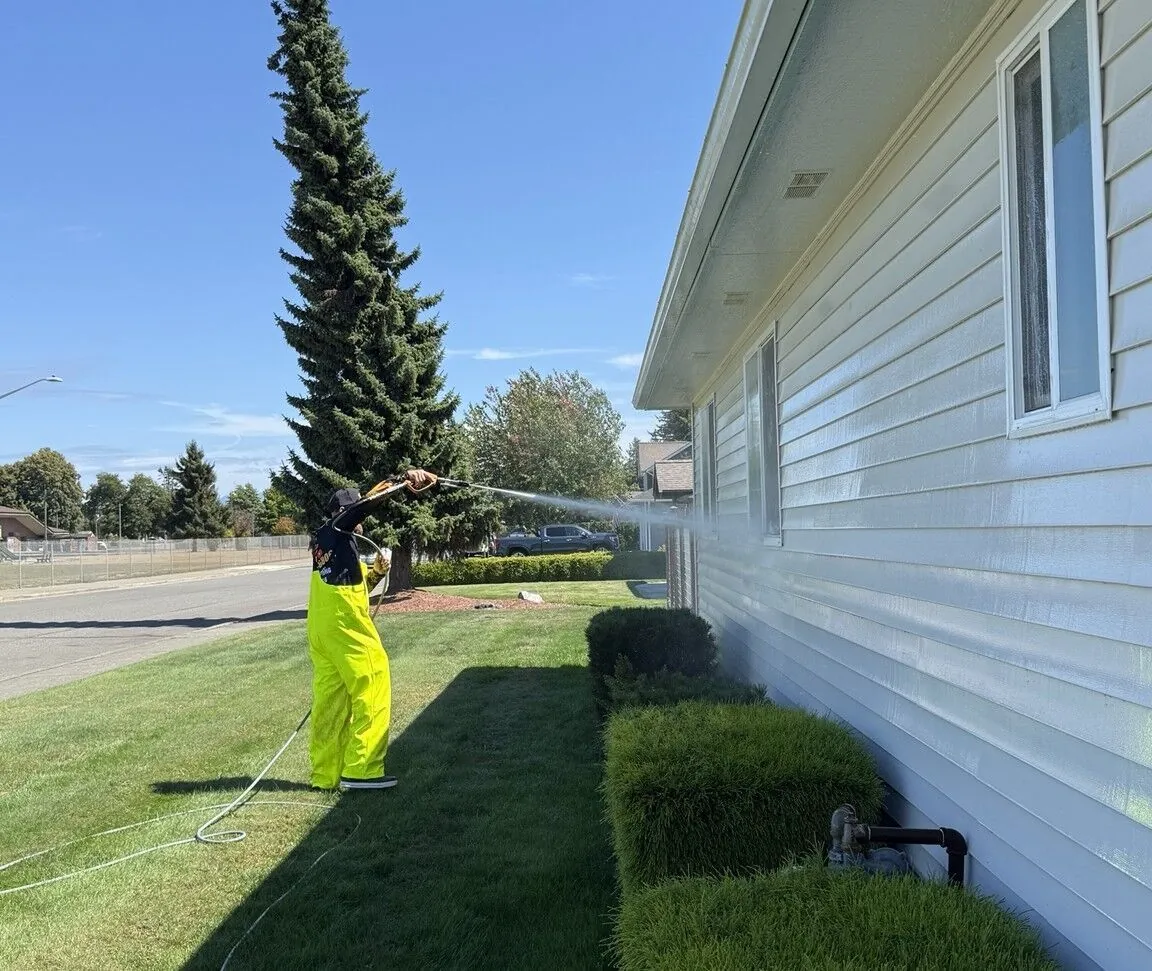
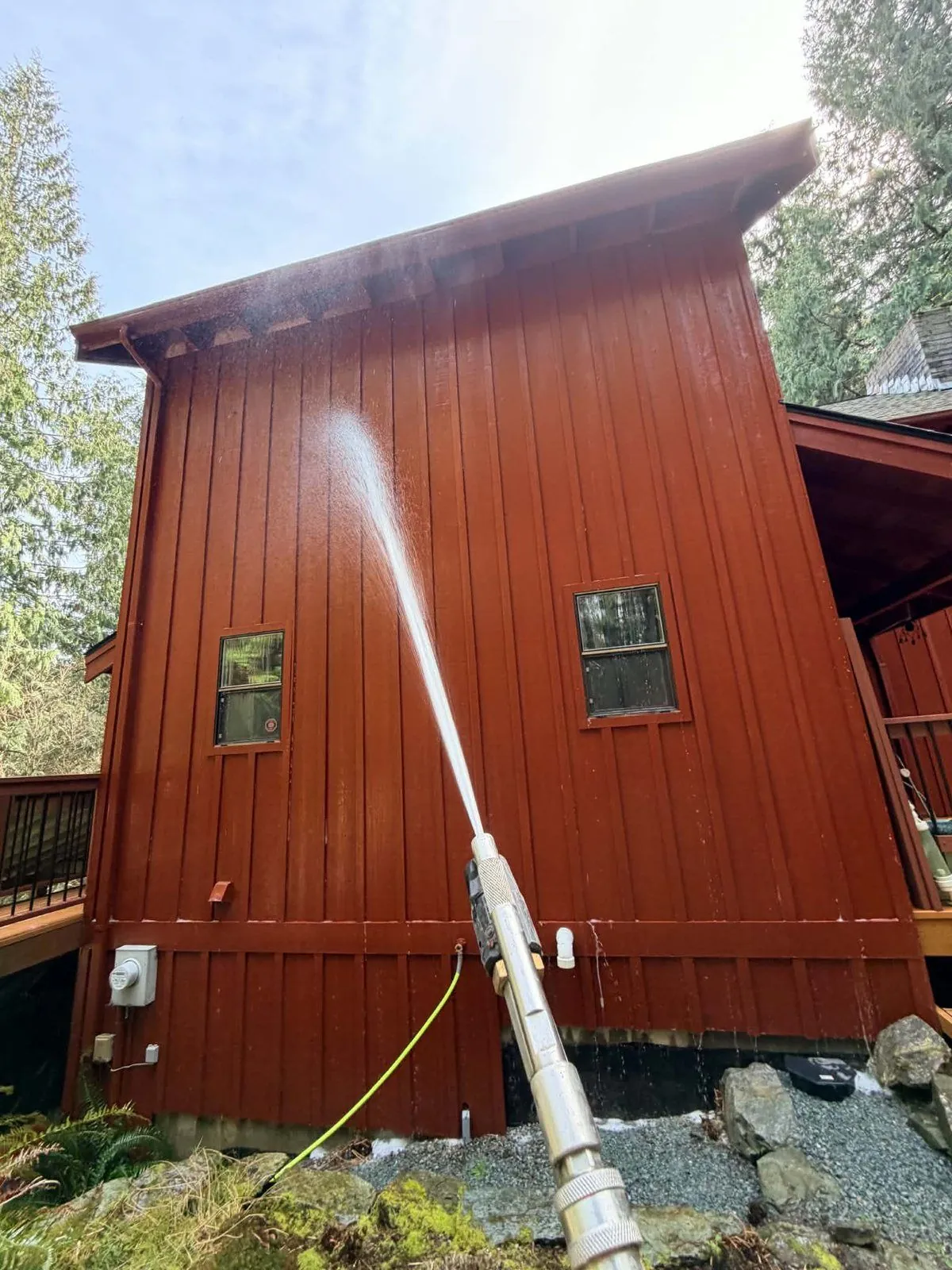
Soft washing means low pressure, roughly what a garden hose delivers, with a cleaning mix that kills the growth and a thorough rinse afterwards. The mix does the work. The water just carries it on and takes it away.
A pressure washer does the opposite. It relies on force, and siding is not built for force. Lap siding sheds water running down it; a jet aimed at it drives water up and behind the laps, around window trim and into the wall. On older vinyl it can crack panels, on painted wood it strips paint, and on fibre cement it can wear the surface. The growth usually comes back faster too, because blasting removes the visible part and leaves the roots.
Our house washing page goes deeper into the method and the chemistry. The short version for an Everson homeowner is that a proper wash looks gentle, takes a bit longer, and lasts.
What does an Everson house wash include?
A standard wash covers the whole exterior shell above the foundation:
- Pre-wetting beds and shrubs near the walls
- Soft washing every elevation of siding, working bottom to top
- Soffits, eaves and fascia, including webs and wasp nests
- Gutter faces, the visible outside of the run
- Trim, doors and window frames, with glass rinsed so no mix dries on it
- Final rinse of the house and the planting before we leave
Decks, patios, fences and outbuildings are quoted separately, since the surfaces and the methods vary. Glass cleaning with screens and tracks is a separate job as well; plenty of people book the Everson window clean straight after the wash so both are done on the same day.
How does the age of the house change the method?
A great deal, and Everson’s housing covers a wide spread of ages. The town has 105 homes built in 1939 or earlier and 77 built since 2020, with the big 1970s and 1980s building decades in between. That range shows up on the walls.
Pre-war and older painted wood
Old painted boards have usually been recoated several times, and the paint can be chalking, cracking or lifting at the edges. We use the lowest effective strength of mix, rinse generously, and treat any loose or flaking paint as something to point out, not something to wash off. Washing old paint hard is how you end up needing a painter.
1970s and 1980s homes
These two decades are the largest group in town, and houses of that era can carry almost anything: original or replacement vinyl, hardboard, painted panel siding or cedar. Vinyl from this era can be brittle after decades of sun, which is one more reason to keep pressure low. For vinyl specifics, the vinyl siding profile covers what it tolerates and what it does not.
Newer construction
Fibre cement and newer vinyl clean easily, but a new house often has construction dust, mortar splash or overspray on it that nobody has dealt with. We handle that gently on the first visit and keep an eye out for anything that looks like a warranty issue, which we would rather flag than touch.
Manufactured homes
Everson has 75 mobile homes, and they get the same low-pressure approach with a few extra checks: skirting, underfloor vents and thinner trim panels all need care so water goes down and away, not in and under.
What about the silt line after high water?
Where a property has taken floodwater, it usually leaves a visible tide mark of silt on siding, foundations and fences. The Nooksack is closely monitored here, and the National Weather Service’s flood-impact statement for its Everson overflow gauge says the water reaches low-lying areas around the City of Nooksack as well as crossing SR 544.
We do not assume any particular house floods, and we will not guess about yours. If you have a silt line, we can usually lift it with the same soft wash approach once the ground is firm enough to work on. The sooner it is dealt with after the water drops, the easier it comes off.
Can you wash a rental or a small multi-unit building?
Yes, and a fair share of Everson’s homes fall into that category. Of 988 occupied homes in town, 369 are rented, and 110 housing units sit in buildings of three or four units. Landlords and property managers tend to want the same things from us: a clean exterior between tenancies, a job that does not disturb the people living there, and a clear note of anything that needs a repair.
For a multi-unit building we agree the access in advance, so tenants know which day to move cars, close windows and bring in anything left against the walls. We work one elevation at a time so nobody is shut out of an entrance for long, and we report back on what we saw: failed caulking, a cracked vent cover, a gutter spilling onto a walkway. None of that is part of the wash, but a property owner who lives elsewhere usually wants to hear about it.
Rented single-family houses are straightforward. We only need the owner’s go-ahead, a heads-up to the tenant and a working outdoor tap.
What drives the cost of washing an Everson house?
Prices are set on site, but these are the things that move the number:
- Size and number of storeys, since taller walls need more setup
- Siding type, with older painted wood taking more care and time
- How much growth is on it, and how long it has been there
- Access, including slopes, fences, hedges and outbuildings close to the walls
- Extras such as decks, fences, a detached garage or window cleaning
Returning customers generally pay less per visit than first-timers, because a house kept on a regular cycle never builds up the same load of growth.
When should an Everson house be washed?
Late spring through early autumn, on a dry day. The siding needs to be dry enough for the mix to work and warm enough that it does not freeze on the wall.
Many people in the valley like to wash in late spring, once winter growth has had its season, then follow with gutters in autumn before the heavy rain returns. Others wait until the end of the dry months so any field dust from summer comes off at the same time. Either works. What we avoid is washing in a cold snap, or on a day when rain is forecast before the rinse can finish.
Where does the wash water go?
Onto lawn and planting, where it can soak in, and away from any storm drain. We keep detergent strength to what the surface actually requires and rinse thoroughly, which dilutes what little is left.
We could not read Everson’s municipal code while writing this, so we make no statement about its specific rules on wash water. Rules do differ between jurisdictions around the county. Our wash water and storm drains page explains the approach we take everywhere and the codes we have checked elsewhere. Everson’s own backup wells tap a shallow sand-and-gravel aquifer, which is one more reason we treat what goes on the ground with respect.
How do I book a house wash in Everson?
Phone (360) 303-6806 or request a quote online. We will look at every side of the house with you, show you where the growth is heaviest and why, and give you a price that covers exactly what we discussed.
For the other work we do in town, see the Everson page. We would rather wash your house once properly than twice in a hurry.
House washing questions from Everson homeowners
- Will soft washing hurt my plants?
- Not when it is done carefully. We wet down beds and shrubs before we start, keep the mix off foliage as much as possible, and rinse planting again afterwards. Delicate specimens right against the wall can be covered for the duration.
- How long does the house stay clean?
- On a sunny elevation, often a couple of years before the green returns. On a north wall under trees, closer to a year. Keeping gutters clear and trimming shrubs back from the siding both stretch the interval noticeably.
- Can you wash a manufactured home?
- Yes, and the soft wash approach suits them well. Manufactured-home siding and trim are often thinner than on a site-built house, so low pressure and a gentle mix matter even more. We check skirting and vents so water is not driven underneath.
- Do you wash the windows at the same time?
- We rinse the glass as part of the wash so it is not left with mix on it, but a full window clean with screens and tracks is a separate service. Booking both on one visit is common, with the siding done first.
- My siding is chalky. Will washing fix it?
- Washing removes the loose chalk and usually improves the look a good deal, but it cannot restore a finish that UV has broken down. If the siding has gone flat and faded, we will tell you on the quote rather than let you expect a factory shine.
- Do I need to be home, and do you need my water?
- You do not need to be home as long as we can get to all sides of the house. We generally use an outdoor tap for the rinse, so please make sure one is turned on and working.
- Can you remove the silt line left after high water?
- Usually, from siding, foundations and fences, once the ground has dried enough to work on. Silt that has been allowed to bake on for months takes more effort, so it is better dealt with in the season it arrives.