
Whatcom County
Window Cleaning in Everson, WA
The short answer
Everson glass collects field dust in the dry months and a grey winter film through the wet ones. We clean inside and out, including screens, tracks and sills, and reach upper panes with a water-fed pole running purified water we bring ourselves, so nothing from a tap is left to dry on the glass.

Randy Fee — Owner, King of Kings Window Cleaning
Washington business licence, UBI 605476674 · L&I insured · BBB rated A
Randy runs the company himself, so you are dealing with the owner, not a call centre — and every technician here is personally trained by him. Working Whatcom and Skagit County since 2024.
I run the Everson route personally.
Everson windows get dirty on a farm calendar. Through the dry months, working ground around the town puts fine dust into the air and it settles on every pane facing the fields. Then the rain comes back, mixes with whatever is already sitting on the glass, and leaves a grey film that lasts until spring.
That cycle is why a quick rinse rarely works here, and why we clean windows the way we do.
What makes Everson glass dirty?
Two seasons, each with its own kind of grime.
The dry months bring dust. The land around Everson and Nooksack grows berries, carrots, potatoes and specialty produce, and supports dairy herds. Farm work, trucks and tractors all lift fine soil into the air in dry weather. On glass it lands as a thin, even layer that is easy to miss until the sun is low and behind it.
The wet months bring film. Once autumn rain returns, it catches that dust, along with pollen, road spray and organic debris from trees and gutters, and dries it into a smeared, patchy layer. North-facing panes and glass under deep eaves are worst, because they stay damp longest.
Traffic is the third, quieter source. Everson and Nooksack sit on SR 544 and SR 9, and houses close to a busy road carry an oily road film on the glass that faces it. It does not come off with water alone.
Why do we bring our own water?
Because we do not know what is in yours, and neither does the published record. Everson’s drinking water comes from the Strandell Well Field, about three-quarters of a mile southwest of downtown. The main source, Deep Well #6, draws from an aquifer 156 feet down, and two shallower wells are held in reserve. The city’s water report lists plenty about the supply, but it gives no figure for hardness.
That leaves two options: assume the tap water is fine to dry on glass, or take the question off the table. We take it off the table. For water-fed pole work, where glass is rinsed and left to dry on its own, we use purified water we carry with us. Water with the dissolved minerals removed dries clear, so the pane has nothing left on it once the last drop is gone.
For squeegee work on reachable glass, the water is wiped off rather than left to dry, so the source matters much less.
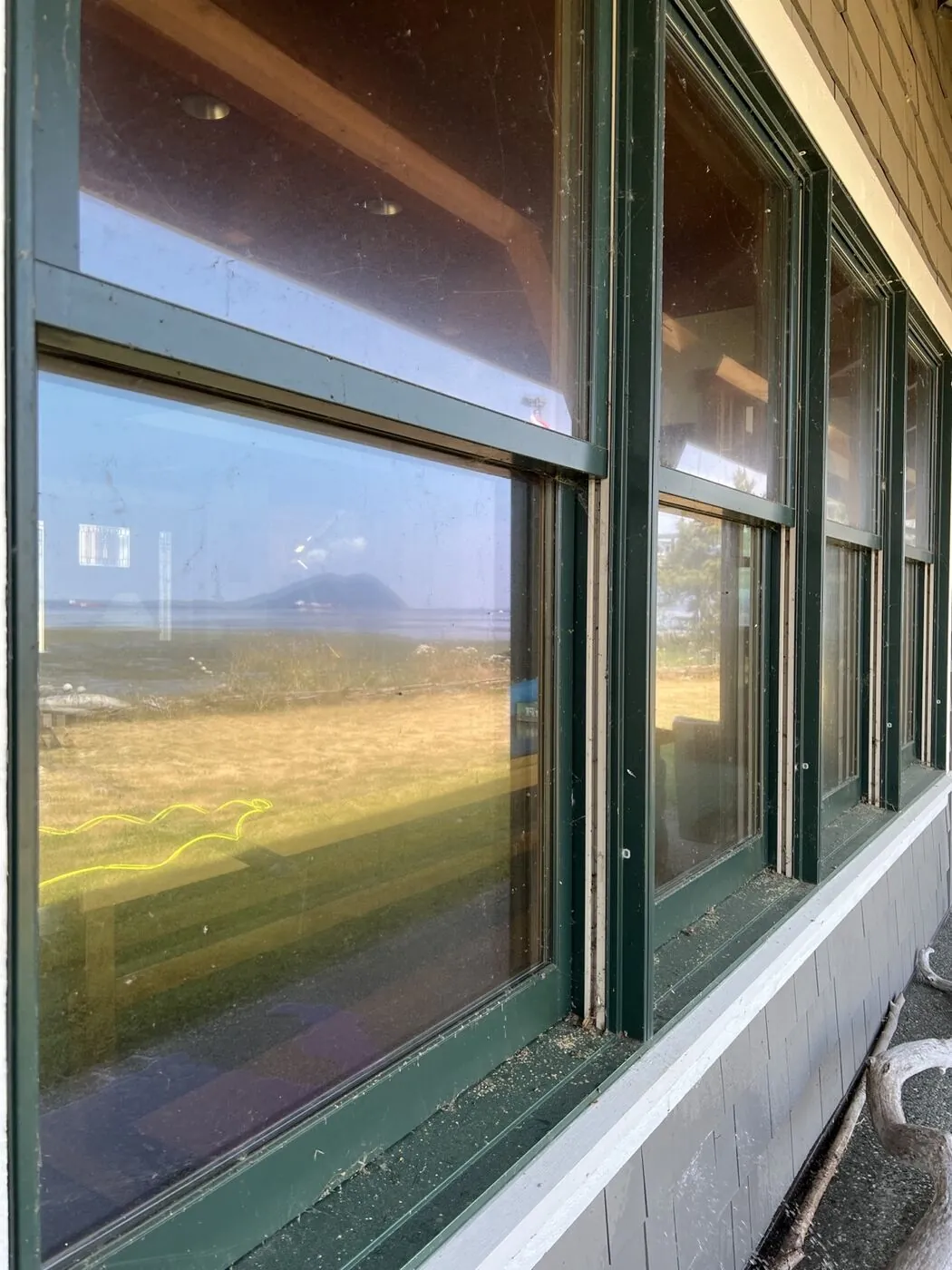
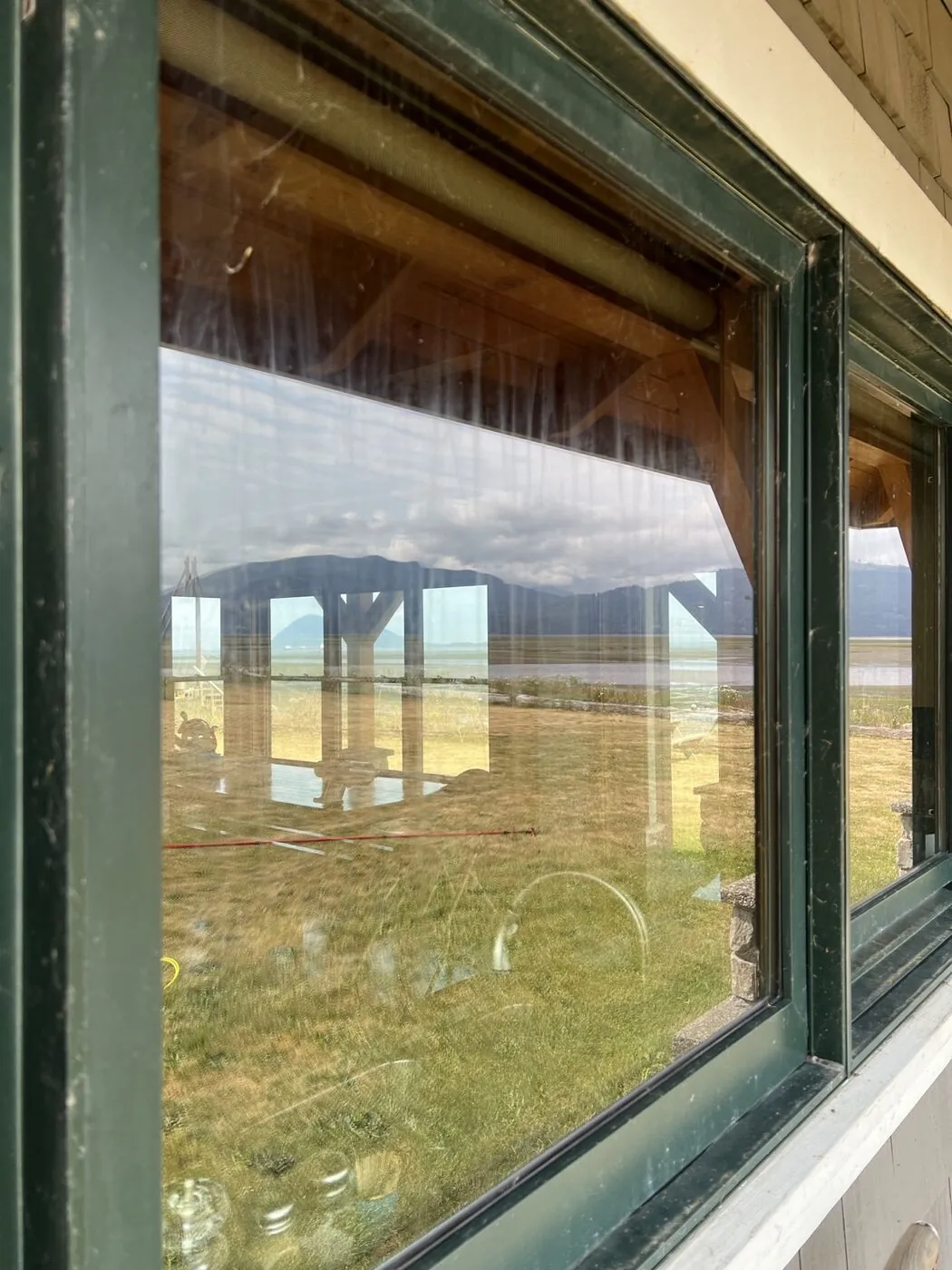 Before
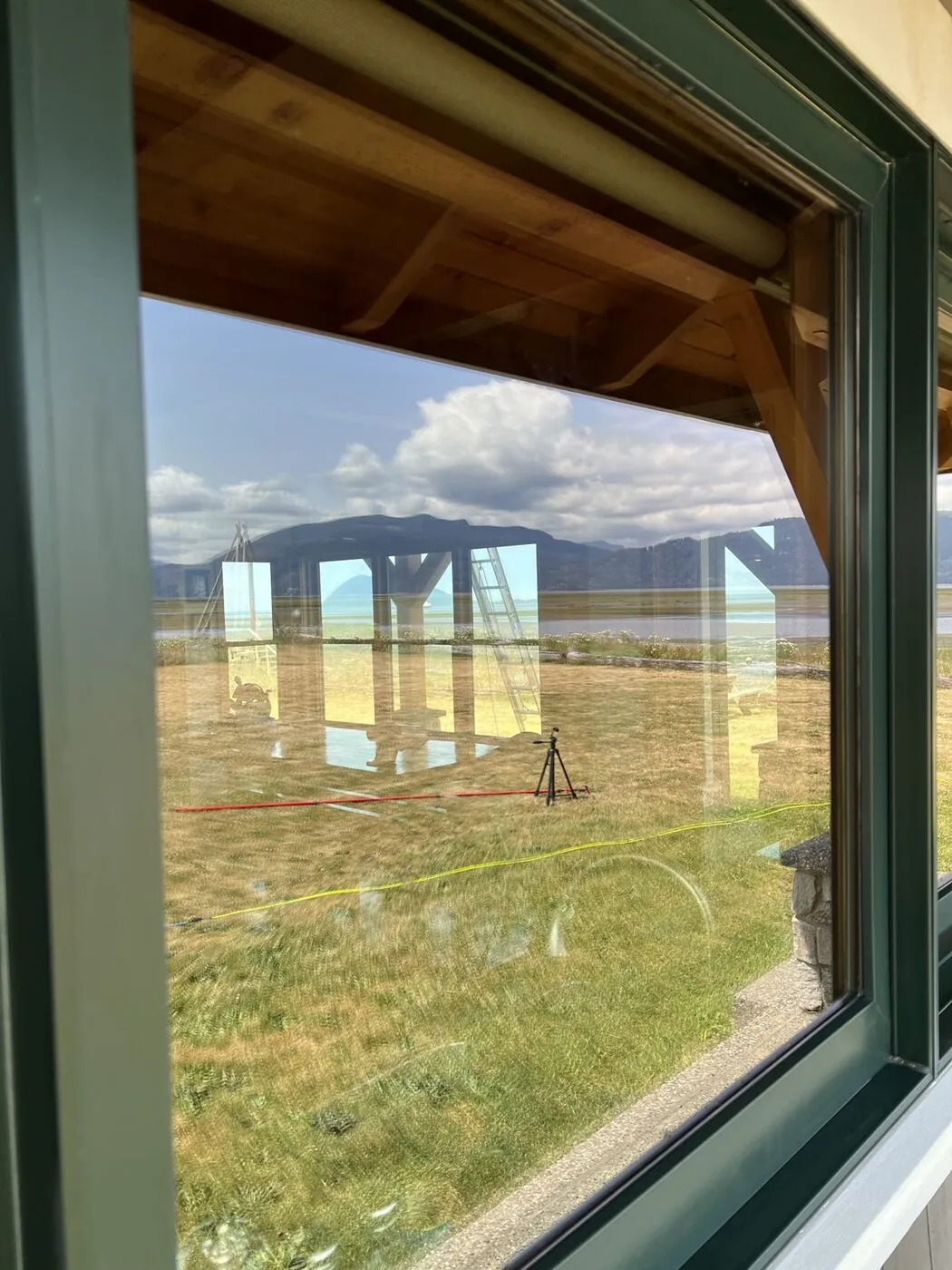 After
What is included in an Everson window clean?
A standard inside-and-outside visit covers:
- Every accessible pane, inside and outside
- Screens taken out, washed, dried and put back in the same openings
- Tracks vacuumed and wiped, so grit is not ground into the runners
- Sills and frames wiped down wherever they are washable
- Sliding and French doors as part of the glass count
- A final walk-round with you, checking panes in good light
Outside-only cleans are available if you prefer to handle the inside yourself. Skylights, conservatory roofs and very large feature glass are quoted separately, as access for those varies widely from house to house.
How is the work done?
It depends on the pane, not the house.
Reachable glass: scrub and squeegee
Ground-floor windows and anything within safe reach get the traditional method. A cleaning solution goes on with a scrubber that loosens the film, then a squeegee pulls it off in one clean stroke, and the edges are detailed by hand. Nothing beats this for removing bonded grime, and it is fast.
Upper and awkward glass: water-fed pole
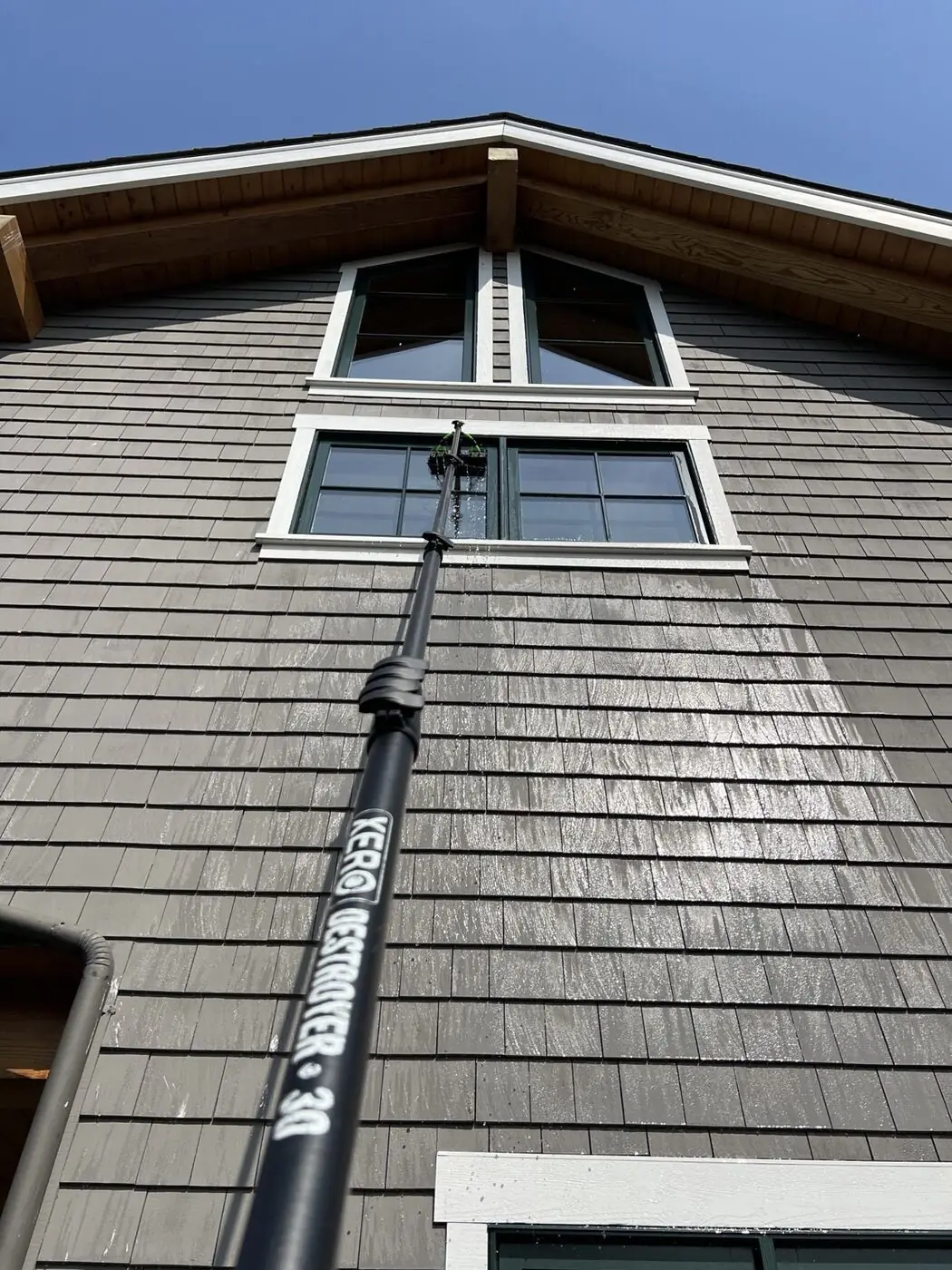
Higher windows, and glass over decks, planting or steep ground, are cleaned from the ground using a telescopic pole with a soft brush head fed with purified water. The brush agitates the dirt, the water rinses it away, and the glass dries without spots. There is no ladder leaning on the siding and no one standing in your flower beds.
When a window needs something more
Some marks do not come off with a normal clean: paint flecks, adhesive from labels, mortar splash on newer builds, and mineral staining that has sat on the glass for years. We tell you what we see on the quote, and we will not take a blade to glass where there is any risk of scratching it.
What about double glazing?
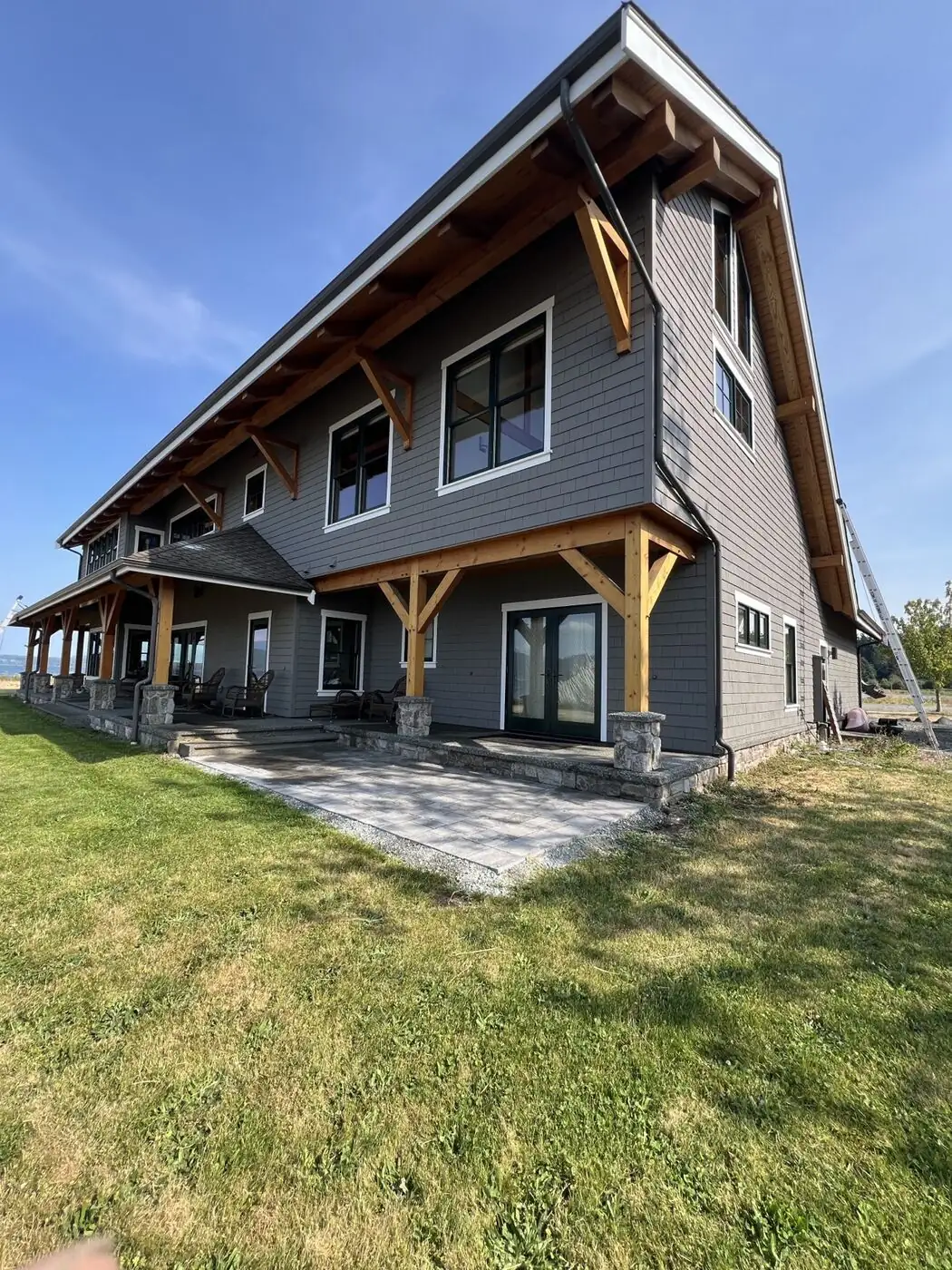
A large share of Everson’s housing dates from the 1970s onward, and many houses of that age now have double-glazed windows, either original or fitted later. A sealed unit has two panes with a gap between them. We clean both outer faces, but we cannot reach the inside of the gap.
If a window looks cloudy or misted and the haze does not move when you wipe either side, the seal has failed and moisture has got in. That is a glazing repair, not a cleaning problem. Our insulated glass units profile explains how that happens and what the options are.
Do older and newer houses need different care?
Yes, and Everson has both ends of the range. The census counts 105 homes built in 1939 or earlier and 77 built since 2020, and the glass in those two groups behaves very differently under a squeegee.
Older windows
A pre-war house may still have wooden sash windows, sometimes with single panes held in with glazing putty. Old putty can be dry and cracked, and old glass is thinner and less forgiving than modern units. We use lighter pressure on the blade, keep solution away from failing putty and bare wood, and tell you where a sash is sticking or a pane is loose rather than forcing it. Storm windows fitted over older sashes are cleaned on both faces where they come out, and on the outside only where they are fixed.
Newer windows
A new build brings the opposite problems. Glass fresh from construction often carries stickers, adhesive, paint overspray, stucco or mortar splash and a layer of fine dust from the site. Modern glass may also carry coatings that should not be scraped. We treat a first clean on a new home as its own job, work slowly around the frames and any coating, and quote it separately from a routine visit.
Everything in between
The 1970s and 1980s homes, the largest share of the town, often have aluminium or vinyl frames, and many have had replacement windows fitted since. The tracks on older sliders are the usual weak point: grit wears the rollers, and a clean track makes a stiff window noticeably easier to open.
What drives the cost here?
Pricing is done on site. The main factors are:
- Number of panes and their size, which is the starting point
- Storeys and access, since upper glass over obstacles takes longer
- Inside as well as outside, which roughly means two jobs in one visit
- Screens, tracks and doors, and how many of them there are
- Condition, especially if the glass has not been cleaned in years
- Specialist work such as post-construction cleaning or skylights
A home that is cleaned regularly costs less per visit than one that has gone several years between cleans, because we are maintaining rather than restoring. Details of the service as a whole are on our main window cleaning page.
When should Everson windows be booked?
Spring and early autumn are the two natural windows in Everson.
A spring clean, once the worst of the rain has passed, removes the winter film and lets you enjoy the long evenings through clear glass. An early-autumn clean, after the dry months and before the heavy rain, clears the dust that summer left behind. Booking before the dust has settled means booking again soon after.
Selling a house or changing tenants is another good moment. More than a third of Everson’s occupied homes are rented, 369 of 988, and clean glass is one of the cheapest ways to make an empty house look cared for when it goes back on the market.
We avoid cleaning in hard frost, as water freezing on the glass leaves a worse result and makes ladders unsafe.
Where does the water go?
Very little of it goes anywhere. Squeegee work uses a small amount of solution that is wiped off, and pole work uses purified water that runs down the siding and into the ground. Neither involves heavy detergent or a lot of runoff.
We could not verify Everson’s own code on wash water or storm drains, so we make no claim about what it allows. Rules vary between jurisdictions around the county, and our wash water and storm drains page covers how we handle runoff on bigger jobs and cites the codes we have read.
What goes well with a window clean?
A house wash, mostly. Soft washing the siding sends rinse water down over the windows, so washing the walls first and the glass last means you only pay for the glass once. The same is true of roofs and gutters: anything that sheds debris onto the windows should be done before them.
If you have property in both towns, we cover Lynden window cleaning on the same routes, so two addresses can often be booked for the same day.
How do I book?
Call (360) 303-6806 or request a quote online. We will visit, count the panes with you, look at the screens and tracks, and give you a price for the work you actually want done. The rest of what we do in town is on the Everson page.
Windows questions from Everson homeowners
- How often should I have my Everson windows cleaned?
- Twice a year covers most homes: once in spring to clear the winter film, and once after the dry months to lift the dust. Houses close to a busy road or a worked field sometimes add a third visit in high summer.
- Do you use my outdoor tap for the water-fed pole?
- No. The pole runs on purified water we carry, because the whole point of pole work is glass that dries clear without a squeegee. Traditional squeegee work on reachable glass can use ordinary water, since it is wiped off rather than left to dry.
- Can you clean the inside of the windows too?
- Yes, inside and outside is the usual booking. We put down protection at the sills, take care around blinds and furniture, and work room by room so the house is never all disrupted at once.
- Will you clean skylights and glass doors?
- Sliding doors, French doors and storm doors are part of a normal visit if you want them. Skylights depend on the roof access, so we quote those after we have seen them.
- There is fog between the panes of one window. Can you fix it?
- Not with cleaning. Haze between the two panes of a double-glazed unit means the seal has failed and moisture has got inside. We will point it out so you can talk to a glazier about replacing the unit.
- I rent my Everson house out. Can you work between tenants?
- Yes. A vacant house is often the easiest time to do inside and outside glass, tracks and screens in one go. We just need access arranged and a note of anything the next tenant has already flagged.
- What happens if it rains the day after?
- Clean glass handles rain far better than dirty glass, because there is less film for the drops to cling to and spot. Rain on a clean window mostly runs off; rain on a dusty one dries into the pattern you were trying to get rid of.