Whatcom County
House Washing (Soft Wash) in Ferndale, WA
The short answer
We soft wash Ferndale siding: a cleaning solution at low pressure, time to work and a rinse. It lifts the green on north walls, the grey film toward Cherry Point and splash along the bottom course. Because a solution is used, the runoff is contained rather than sent to a drain. Ferndale's allowance covers detergent-free rinsing only.

Randy Fee — Owner, King of Kings Window Cleaning
Washington business licence, UBI 605476674 · L&I insured · BBB rated A
Randy runs the company himself, so you are dealing with the owner, not a call centre — and every technician here is personally trained by him. Working Whatcom and Skagit County since 2024.
I run the Ferndale route personally.
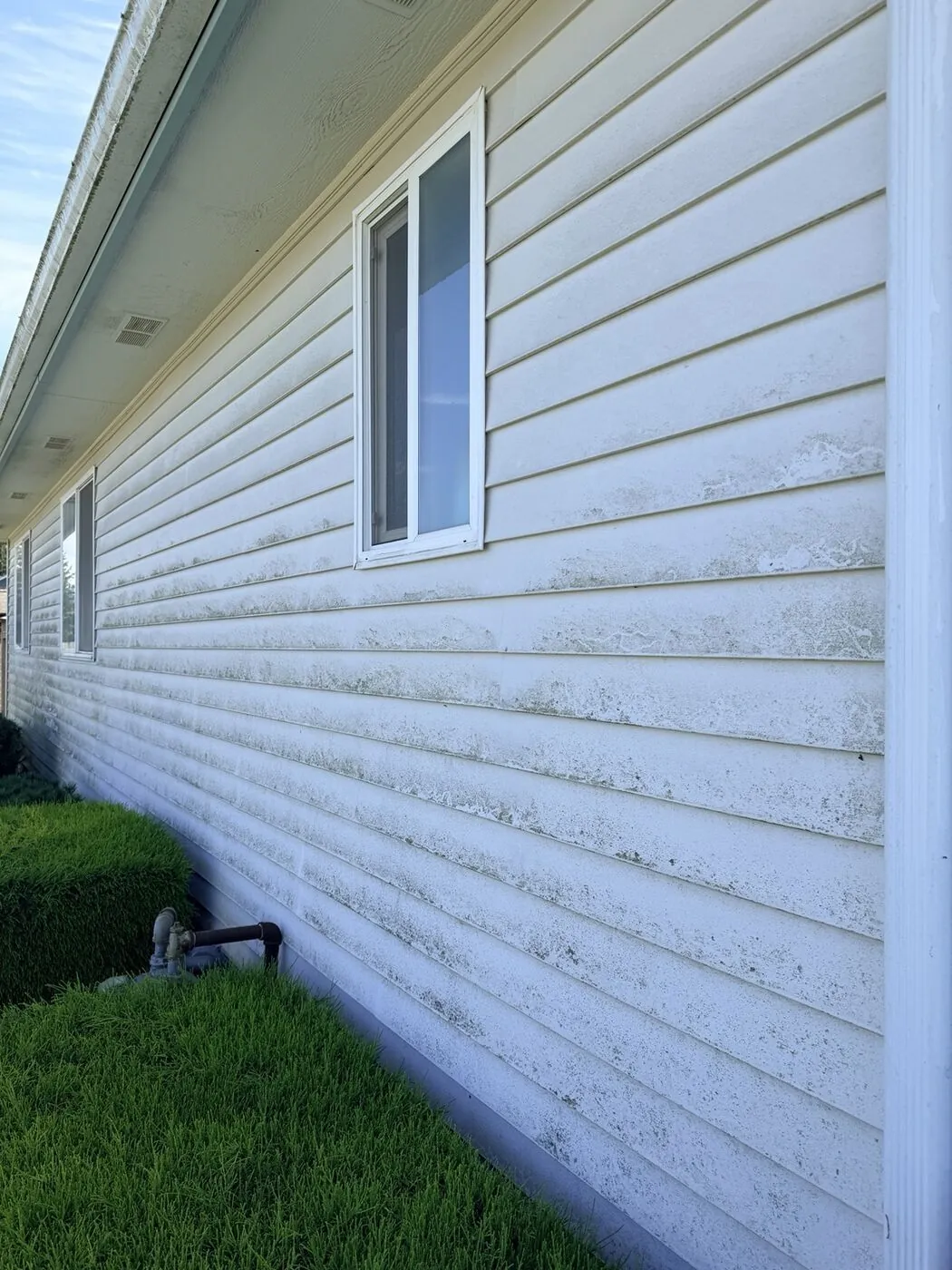
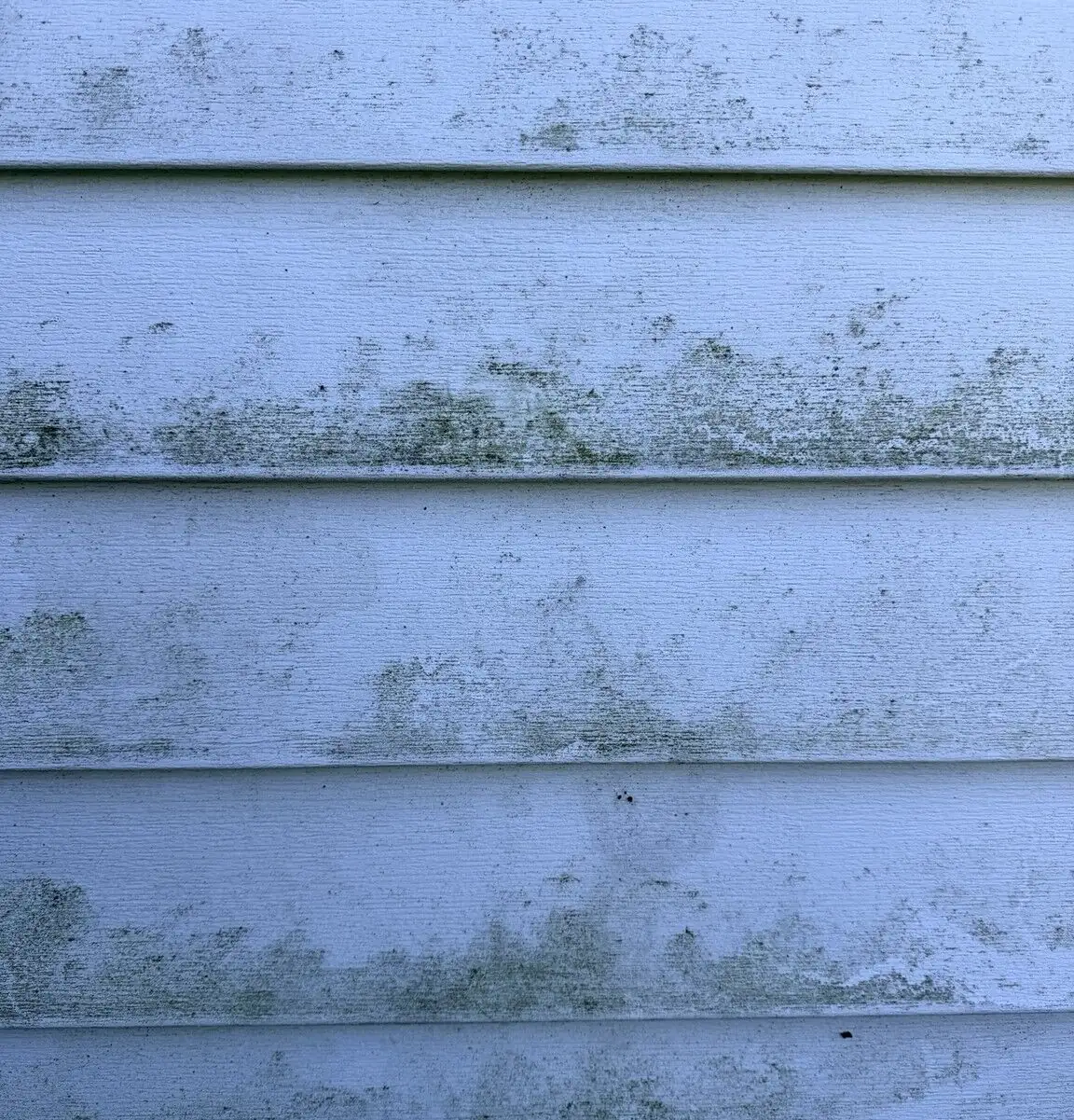
Most Ferndale siding is not dirty in the ordinary sense. It is growing something, or it is carrying a thin film that settled out of the air, or it is splashed along the bottom where rain bounces off bare ground. Each of those comes off with the same gentle method, and each tells you something different about the house.
This page is about washing the outside walls of Ferndale homes: what we find on them, how the wash is done, and what the city’s rules mean for the water.
What ends up on Ferndale siding, and where?
The pattern is consistent enough that you can usually predict it from the compass.
North walls go green. Algae, the smooth green film, is the most common thing we take off siding anywhere in Whatcom County. It thrives where the sun never reaches and the wall stays damp for weeks at a time, which in Ferndale is the north side of almost every house and any wall behind a hedge.
Walls toward Cherry Point go grey. On the west side of town, exposed walls and trim pick up a fine, even dulling that is not growth and not ordinary dirt. Cherry Point hosts two operating refineries, BP Cherry Point and Phillips 66 Ferndale, and the former Alcoa Intalco smelter between them, which stopped operating in 2020 and is being demolished. We do not know what the film contains and will not pretend to; the reasoning is set out on our Cherry Point industrial fallout profile.
The bottom course goes brown. Rain hitting bare soil or bark mulch throws mud a foot or so up the wall, and that splash line holds moisture and feeds the growth above it.
Under the eaves goes white. Cobwebs, egg sacs and old wasp nests collect in the soffits and corners, especially over entrances and near outside lights.
Why does the age of a Ferndale house matter?
Because it tells us what the siding is likely to be and how it has aged.
The census median year built for Ferndale’s housing is 1998, which means a large share of the town is likely still on its original cladding, often never washed. That is a good position to be in. Fresh vinyl or fiber cement with a few seasons of algae on it cleans up almost completely, because the growth has not had long enough to stain.
Older siding tells a different story. Vinyl that has faced the sun for twenty-plus years starts to chalk, which is the surface breaking down into a powdery layer. Washing removes the loose chalk and usually improves the look a good deal, but it cannot put the gloss back, and we will say so before starting rather than after. The vinyl siding profile covers how that material ages and what a wash can and cannot do for it.
Painted wood siding on older homes gets extra care around any paint that is already lifting, because even a gentle rinse will find a failing edge.
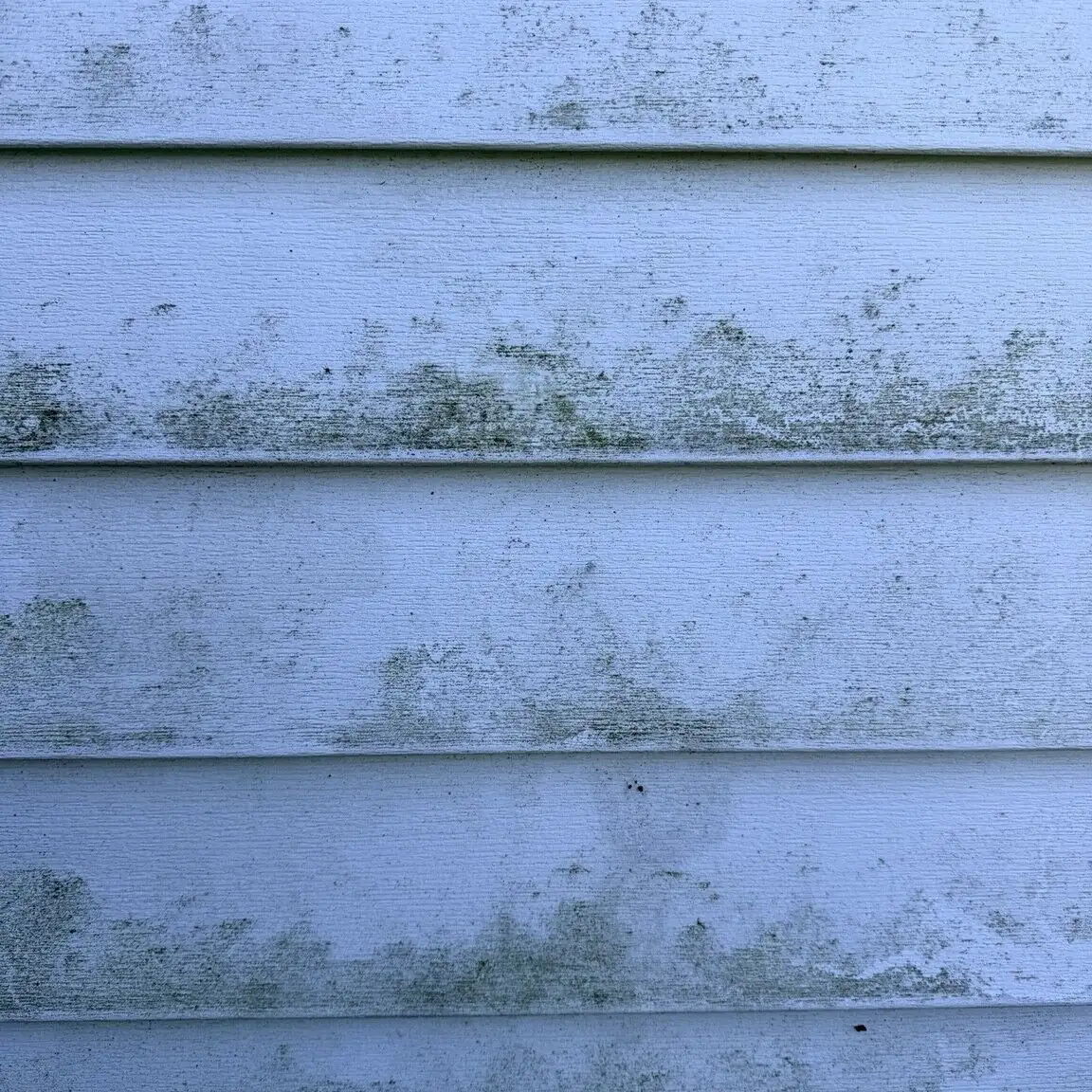 Before
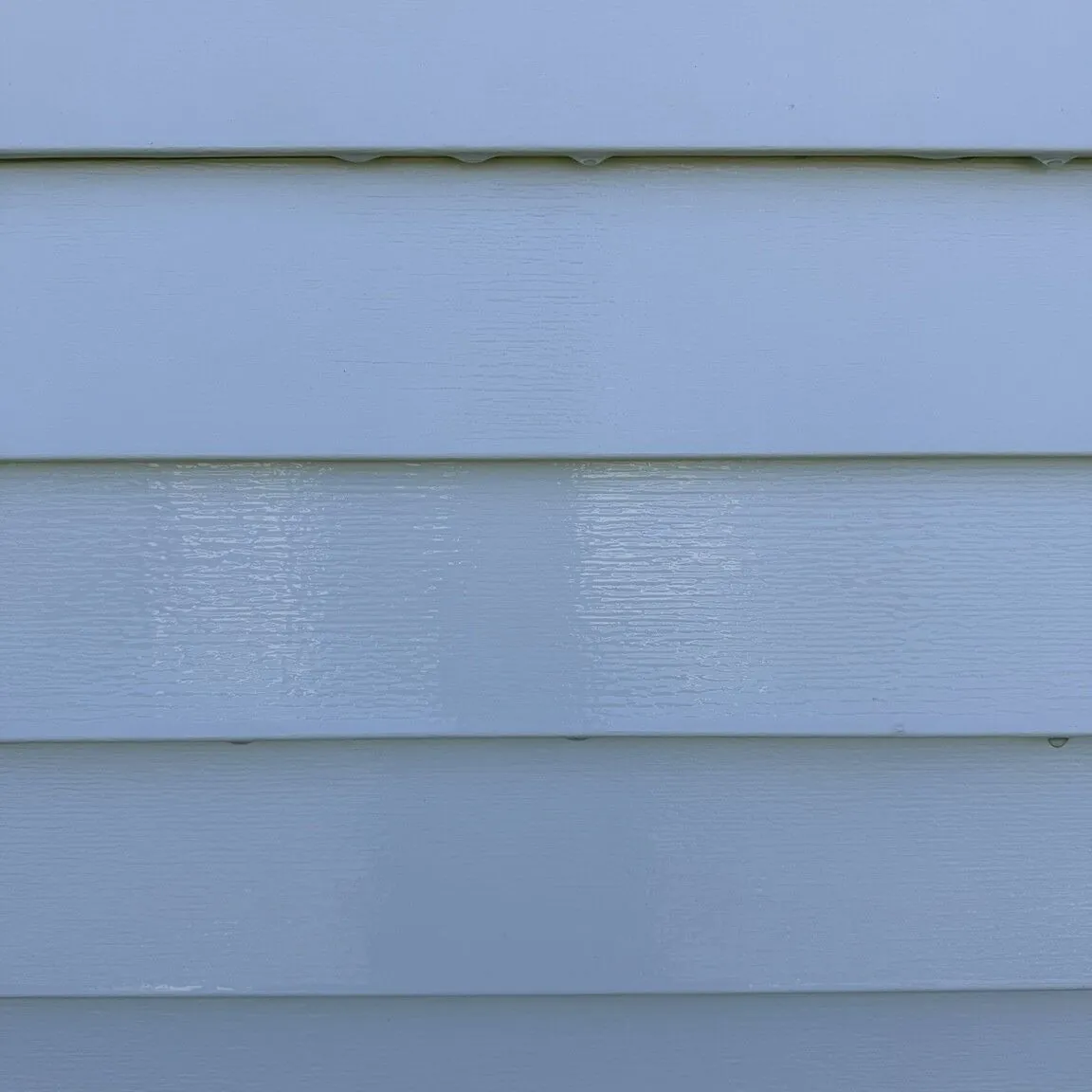 After
What does a Ferndale house wash include?
The standard visit covers the whole outside of the house from the eaves down:
- Every siding elevation, soft washed and rinsed
- Soffits and eaves, with cobwebs and old nests cleared
- Fascia and the outside face of the gutters, washed but not brightened
- Window frames, sills and trim, along with doors, shutters and the garage door
- Downspouts and exterior light fittings on the walls
- Planting protected by wetting it beforehand and rinsing it afterwards
- A final walk round with you before we leave
Window glass, heavy gutter oxidation and hard surfaces such as the driveway and paths are separate work, quoted alongside if you want them.
How is the soft wash actually done?
With chemistry and patience rather than force.
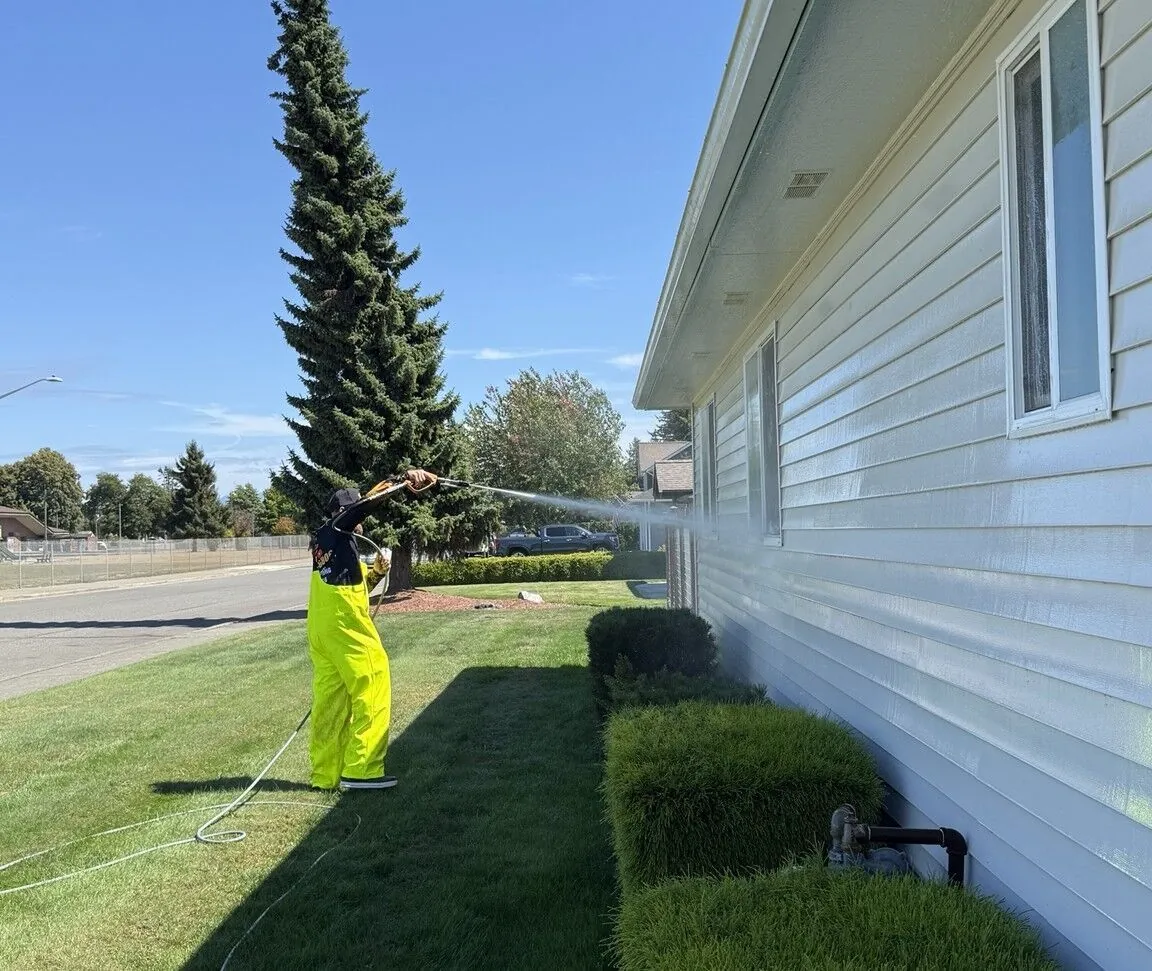
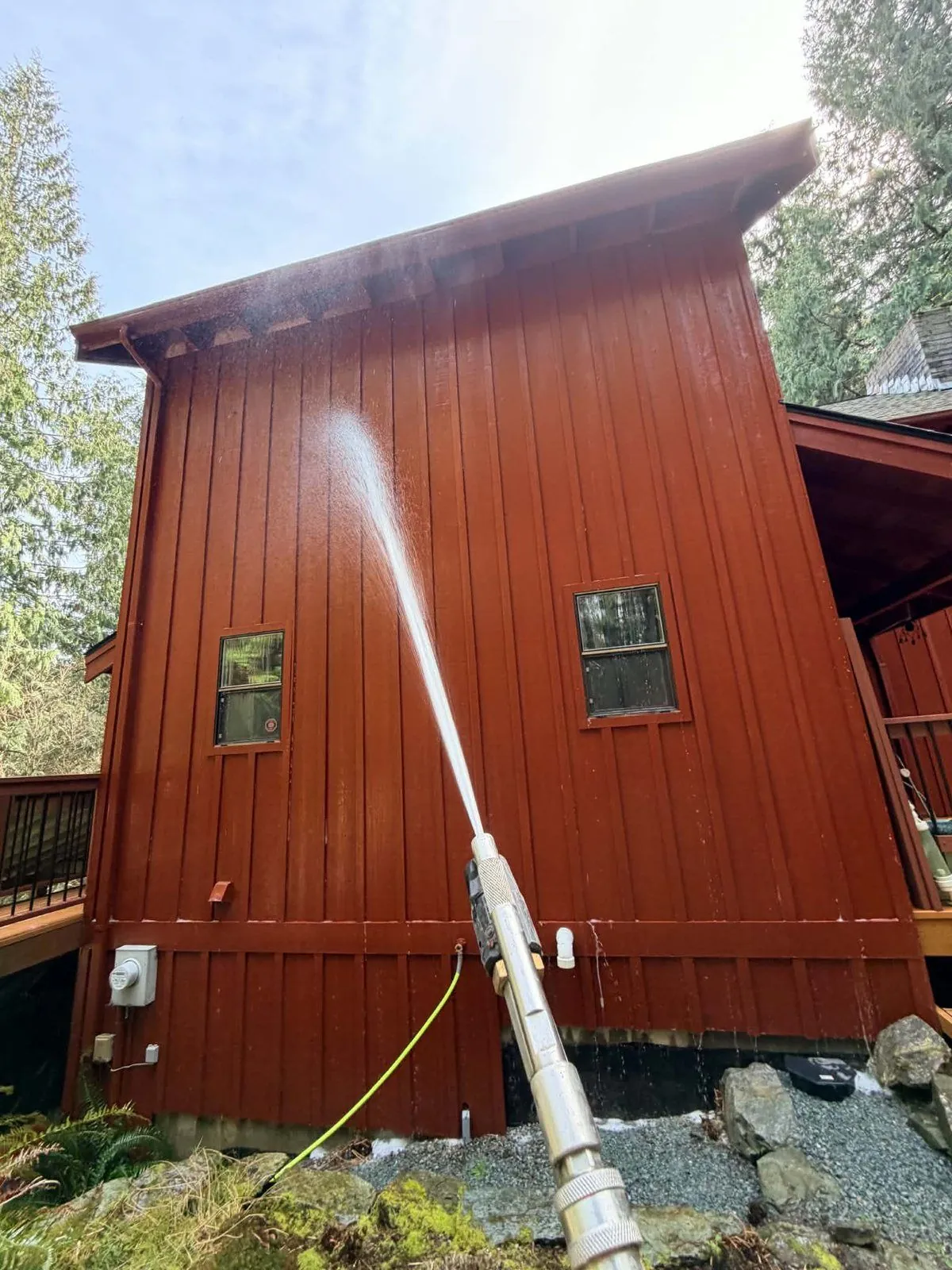
A cleaning solution matched to the siding and to what is growing on it is applied at low pressure, roughly what comes out of a garden hose. It is left to dwell long enough to kill the growth and loosen the film, and then the wall is rinsed from the top down with plenty of plain water.
We work one elevation at a time so the solution never dries on the wall, and we avoid washing in direct hot sun for the same reason. Before anything goes on, the beds below get a soaking so their leaves and soil are already full of plain water. Vents, outlets and light fittings are kept out of the direct spray.
What we never do is aim a pressure washer at siding. Lap siding is designed for water running down it, and a jet drives water up behind the courses and into the wall. The reasoning behind that rule, and the method in full, is on the house washing page.
How are manufactured homes washed?
Ferndale’s 411 mobile homes, by the census count, make up a meaningful share of the town’s housing. Their exteriors are washed the same way in principle, with more care in the detail.
Metal and vinyl skins on manufactured homes are thin, and the seams between panels are more exposed than on a stick-built wall. We keep the pressure at the low end throughout, keep the spray away from vents and the underfloor, and pay attention to where the rinse runs at the skirting. Older painted metal skins can chalk heavily, and just as with vinyl, a wash removes the chalk without restoring the finish.
Does Ferndale’s water change the rinse?
It helps. The city’s wells are treated at the city plant, where the water is softened and chlorinated, and according to the 2025 water quality report the plant has run full reverse osmosis since July 2025. The city added reverse osmosis in 2014 specifically to cut the hardness of its well water.
For house washing that matters in a quiet way. The final rinse runs over glass, dark trim and painted doors as well as siding, and whatever minerals that water carries are left behind where it dries. Softer supply means fewer marks. Where a property draws from somewhere else, we look at it before relying on the tap.
What drives the cost of a house wash in Ferndale?
Every quote comes from a walk round the house, and the number depends on a few things:
- Wall area and height. A single-storey house is quicker than a two-storey one of the same footprint, because the upper walls take more reach and more rinse.
- Condition. A first wash on ten-year-old siding takes longer than a repeat visit two years after the last one.
- Access. Hedges hard against the wall, decks, steep ground and narrow side yards all slow the work.
- Siding type. Chalky vinyl, lifting paint and manufactured-home skins take more care than sound fiber cement.
- Runoff control. Where the drains sit relative to the work changes how much covering and containment the job needs.
- What is bundled. Adding windows, gutters or a roof clean to the same visit shares a single setup.
When is the right time to wash a house in Ferndale?
From late spring into early autumn, on a dry day with mild temperatures. The solution needs warmth to work, and the wall needs a spell of dry weather afterwards to finish the job, because dead growth keeps loosening and rinsing away over the next few rains.
Winter washing is possible on a mild dry day, but it rarely makes sense. A wall that stays wet for a week after washing is a wall that starts growing again. There are good reasons to book outside the usual season, though: ahead of listing a house, before repainting, or when the growth on a north wall has become slippery on a path beside it.
What do Ferndale’s rules say about the wash water?
The answer depends on whether the house is inside city limits.
Inside the city, Ferndale Municipal Code 13.35.020(B)(4) lists “routine external building wash down that does not use detergents” as an allowable discharge. That is a narrow allowance. A soft wash uses a cleaning solution by definition, so its runoff does not fall inside it. On every Ferndale house wash we cover inlets near the work area, direct the rinse onto lawn and planting, and keep it away from street drains.
In the unincorporated Urban Growth Area, Whatcom County’s 2025 Stormwater Management Program brings the Ferndale UGA into the county’s NPDES permit area, so the illicit-discharge rules in WCC chapter 16.36 apply.
A Ferndale postal address does not tell you which side of that line a house sits on, so we confirm it at the quote. The codes are quoted and compared on the wash water and storm drains page.
Which other problems show up during a house wash?
A wash is a close look at every wall, so it tends to surface things:
- Mildew that keeps returning on one wall. Usually a north wall with poor air movement. Why it happens and how to slow it down is on the page about north-facing wall mildew.
- Vertical streaks under the gutters, which mean a gutter is overflowing and will restain the wall until it is cleared.
- Film on the glass. The same grey dulling that settles on the walls settles on the windows, and that is covered on Ferndale window cleaning.
- Loose trim, failed caulk and lifting paint, which we point out rather than wash over.
How do I book a house wash in Ferndale?
Call (360) 303-6806 or get in touch through the website. We will walk the walls with you, show you what is growing where, and give you a written price for the wash before any work starts. Our technicians are trained by Randy Fee, who owns the company, and we hold a Washington State business licence along with Labor & Industries coverage.
For everything else we do in town, see the Ferndale page.
House washing questions from Ferndale homeowners
- Will you use a pressure washer on my siding?
- No. Siding is built to shed water running down it, and a pressure jet drives water up behind the laps and into the wall. We soft wash instead: a cleaning solution at roughly garden-hose pressure does the work, and the rinse is gentle.
- How often does a Ferndale house need washing?
- Every two to three years suits most houses. A heavily shaded north wall, or a house exposed to the fine grey film on the Cherry Point side of town, may want it sooner. We would rather tell you it can wait than wash a wall that does not need it.
- Can you wash a manufactured home?
- Yes, and gently. Manufactured-home skins, seams and trim are thinner than stick-built cladding, so we keep the pressure low throughout, protect vents and underfloor openings, and watch how the rinse runs off the skirting.
- Will the wash harm my garden?
- We wet planting below the walls before any solution goes on, keep the solution to the wall, and rinse the beds again afterwards. Delicate plants right against the house can be covered for the duration.
- Is the grey film on my siding from the refineries?
- We can show you that it is there and take it off. We cannot tell you what is in it, because nobody cleaning houses has measured it. It is a surface film, so a normal soft wash lifts it; it simply tends to come back sooner on that side of town.
- Does the wash include the windows?
- The frames, sills and trim get washed along with the walls. The glass itself is a separate window-cleaning job, because siding solution left to dry on glass is not a finish anyone wants, so we either follow up with a proper window clean or leave the glass rinsed.
- Can wash water just go down the storm drain in Ferndale?
- Not from a soft wash. The city's allowance covers routine building wash down that uses no detergents, and a soft wash uses a cleaning solution. Inlets near the work get covered and the rinse is directed onto vegetation or contained.