Whatcom County
House Washing (Soft Wash) in Blaine, WA
The short answer
Blaine's cool, damp climate, with an average annual high under 58°F, gives green growth a long season on siding, especially low on the walls and on shaded sides. We soft wash with low pressure and a cleaning solution, treat rusty irrigation marks separately, protect planting, and send the rinse to ground rather than the storm drains.

Randy Fee — Owner, King of Kings Window Cleaning
Washington business licence, UBI 605476674 · L&I insured · BBB rated A
Randy runs the company himself, so you are dealing with the owner, not a call centre — and every technician here is personally trained by him. Working Whatcom and Skagit County since 2024.
I run the Blaine route personally.
Siding in Blaine does not get baked clean by summer heat, because there is not much summer heat to speak of. The town’s long weather record gives an average annual high of 57.7°F and an average low of 40.9°F, and between those two numbers is a climate where a north wall can stay damp from October until spring. Green growth, grey film and mildew take advantage of every week of it.
This page covers how we wash houses in Blaine, why we do it at low pressure, what we do about the rust-coloured streaks the local water can leave, and where the rinse goes.
What happens to siding in a climate like Blaine’s?
It collects a living film. Algae and mildew need moisture, mild temperatures and something to hold onto, and a Blaine wall offers all three for most of the year. The Blaine station averages 40.60 inches of precipitation a year, with November, December and January each close to six inches, and a wall that never gets warm has little chance to dry out between systems.
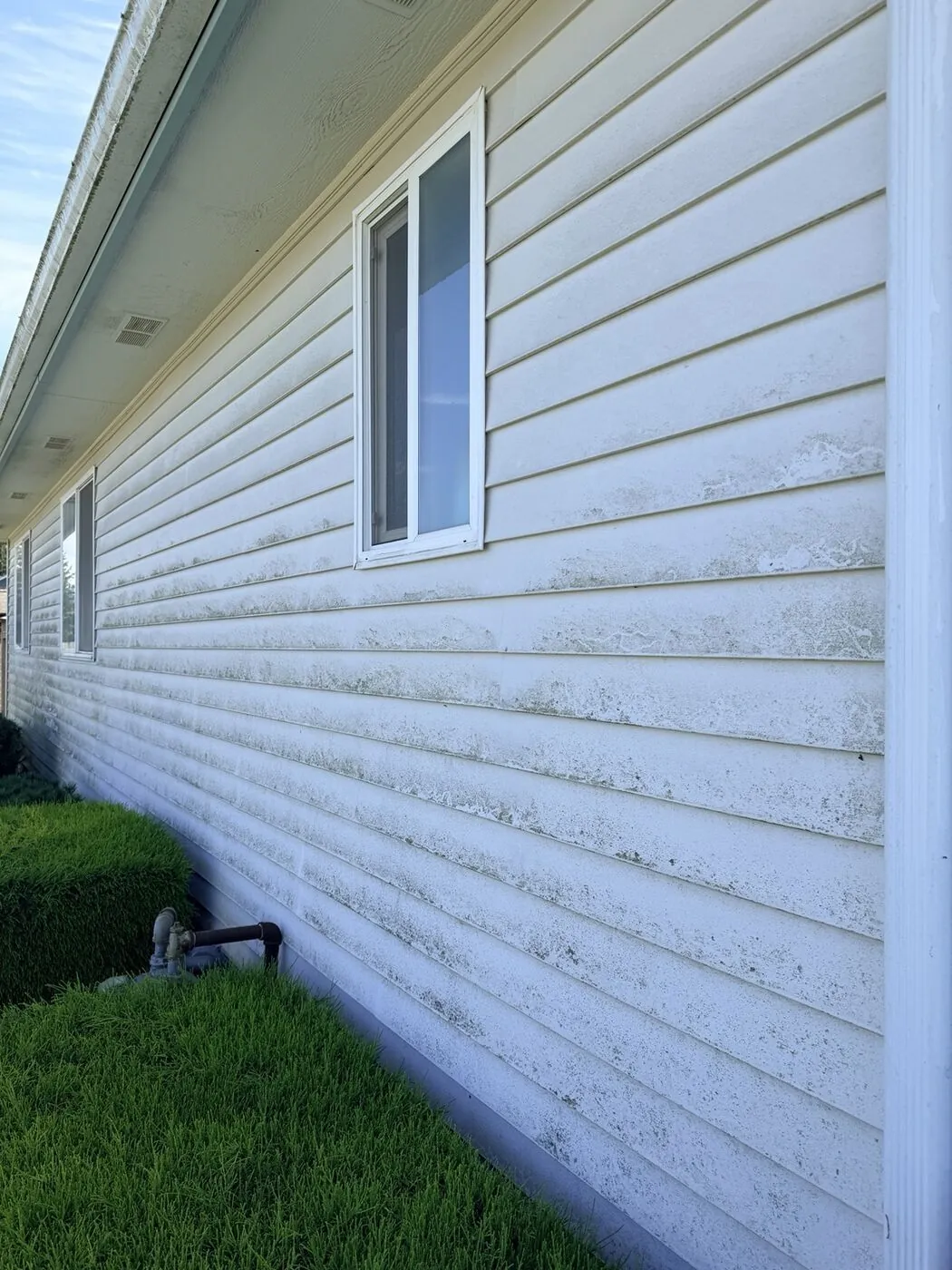
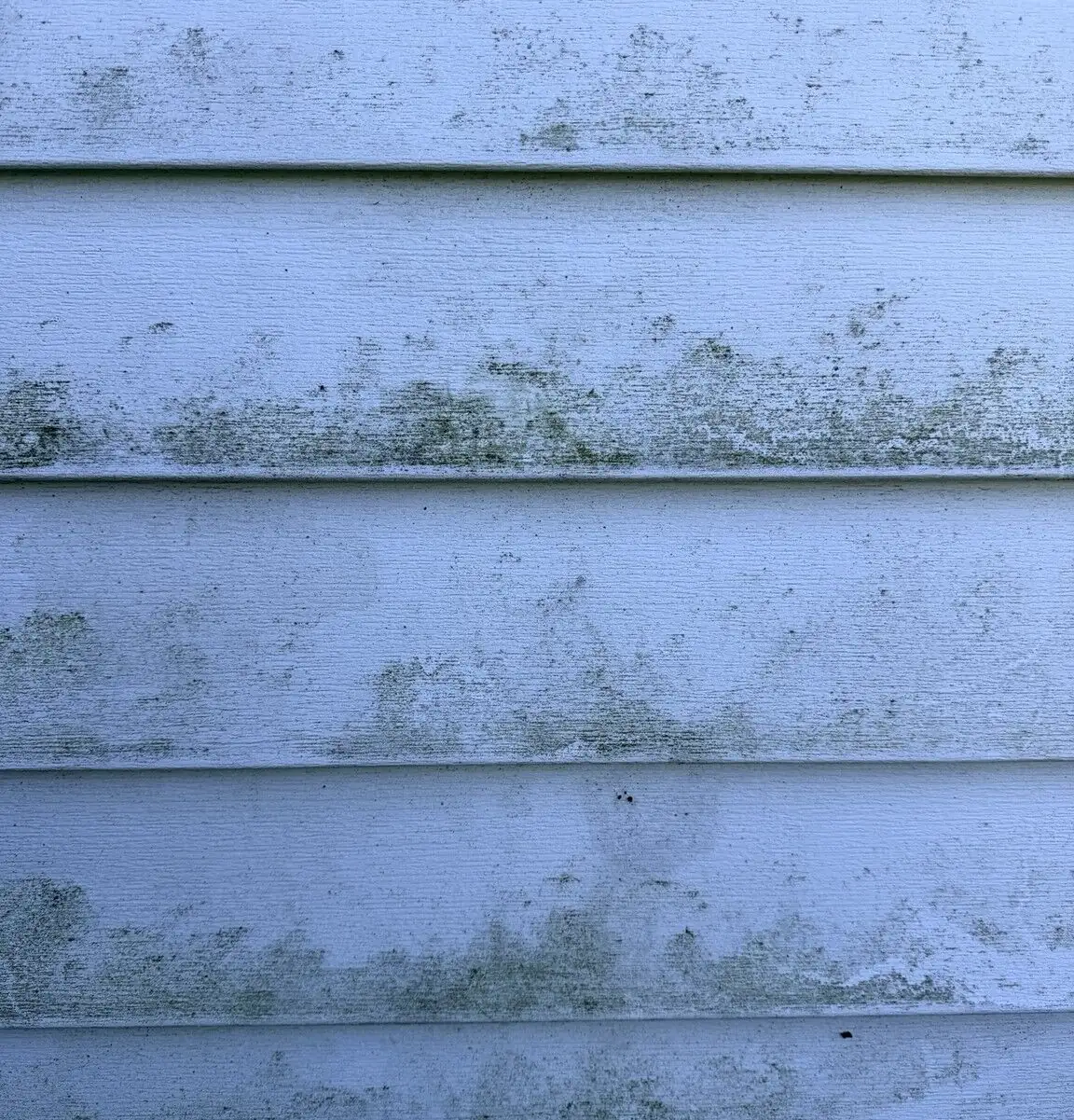
The growth shows in predictable places. The lowest courses of siding pick up splash from soil and lawn. Shaded walls, and the side facing a fence or a neighbour’s house, stay wet longest. Under the eaves, where rain never reaches to rinse anything off, dust and cobwebs build into a grey band. On some houses the whole north side turns faintly green while the south side looks nearly new.
None of this is structural. It is, though, slippery on paths, unpleasant on window frames, and on painted wood it holds moisture against a finish that would rather be dry.
Which Blaine houses need washing most?
Every kind, for different reasons. With a census median year built of 1994, a large share of Blaine is newer houses with manufactured siding, where the problem is almost entirely cosmetic growth sitting on a smooth surface. These are the easiest to clean and the quickest to look new again.
The town also has a real stock of older homes: 387 of its 2,793 housing units date from 1939 or earlier. Older houses are more likely to be clad in painted wood, to have deep trim and window surrounds that trap moisture, and to carry paint that has been layered many times. They respond well to washing, but they are also where a careless crew with a pressure washer does real damage, lifting paint, driving water behind boards and gouging soft timber.
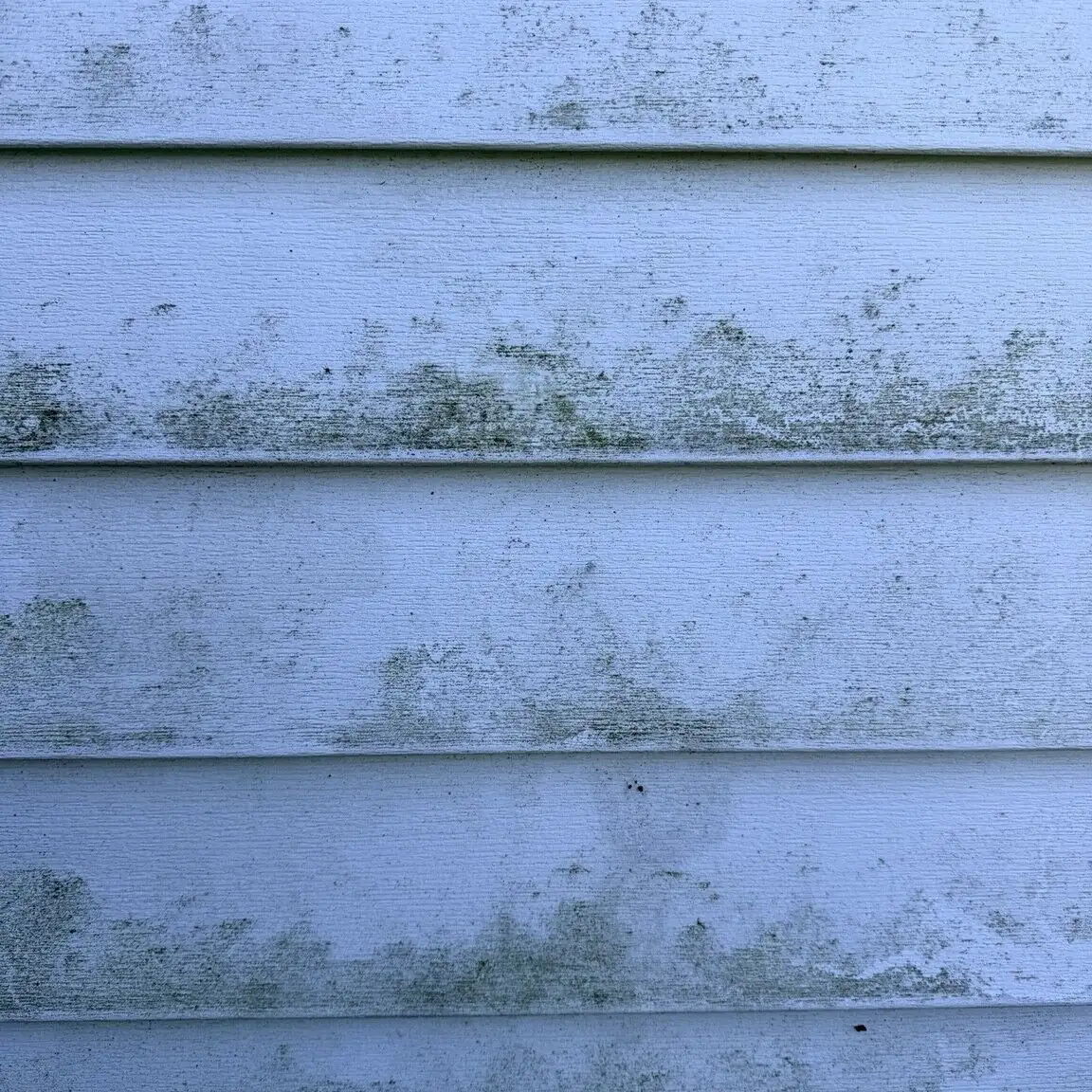 Before
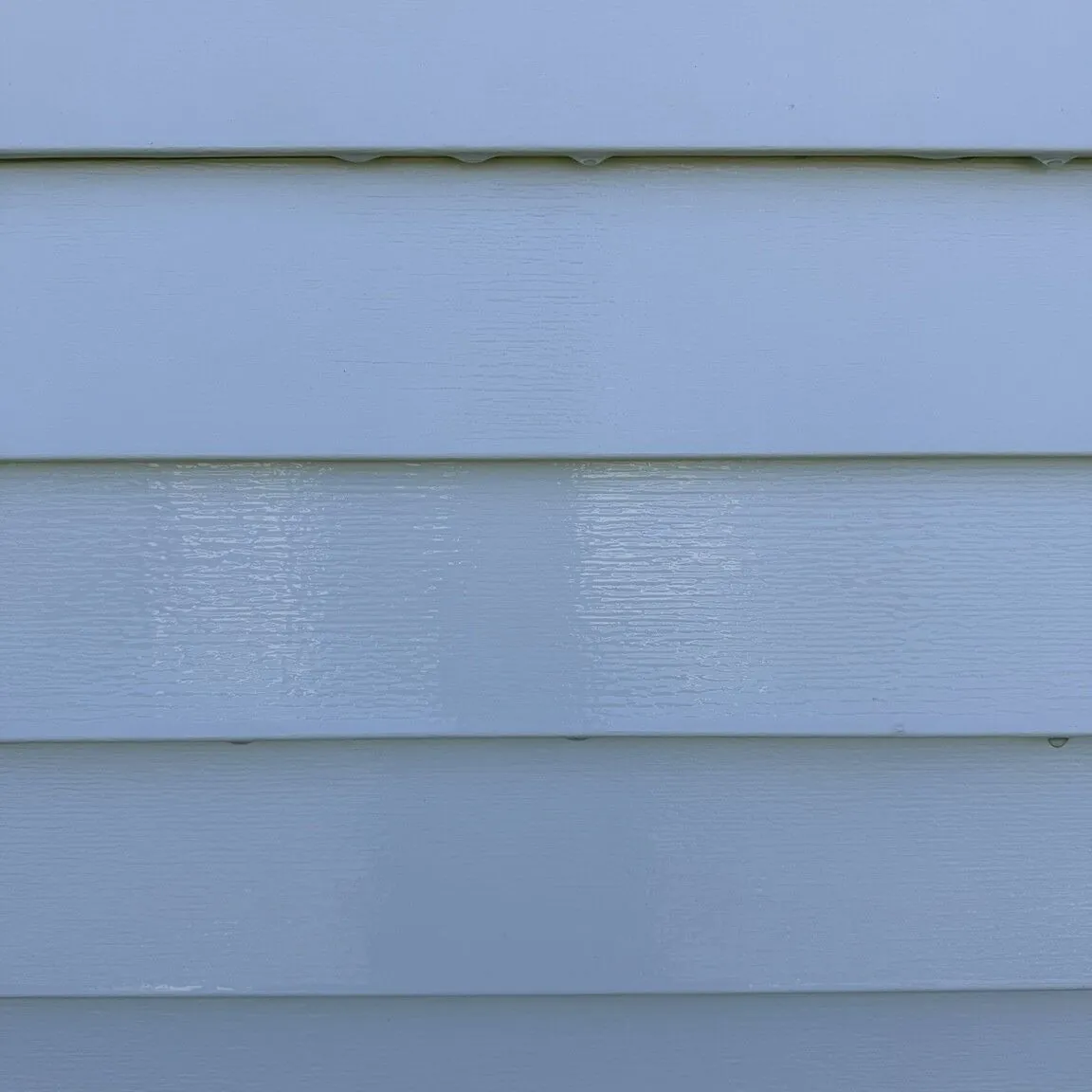 After
What does a Blaine house wash include?
A standard wash covers the whole exterior envelope of the house:
- All siding, from the foundation line to the eaves
- Soffits and fascia, including the grey band that builds under the roof edge
- Window frames and sills from the outside, so the glass is not the only clean part
- Exterior doors, trim and downspouts, washed along with the walls
- Spider webs and nests cleared from corners and light fittings
- Planting pre-wetted and rinsed, with delicate plants covered where needed
- A walk-round with you to look at the result before we pack up
Decks, fences, driveways and roofs are quoted separately. So is spot treatment for rust or heavy staining, which needs a different product from general growth.
Why soft washing instead of pressure washing?
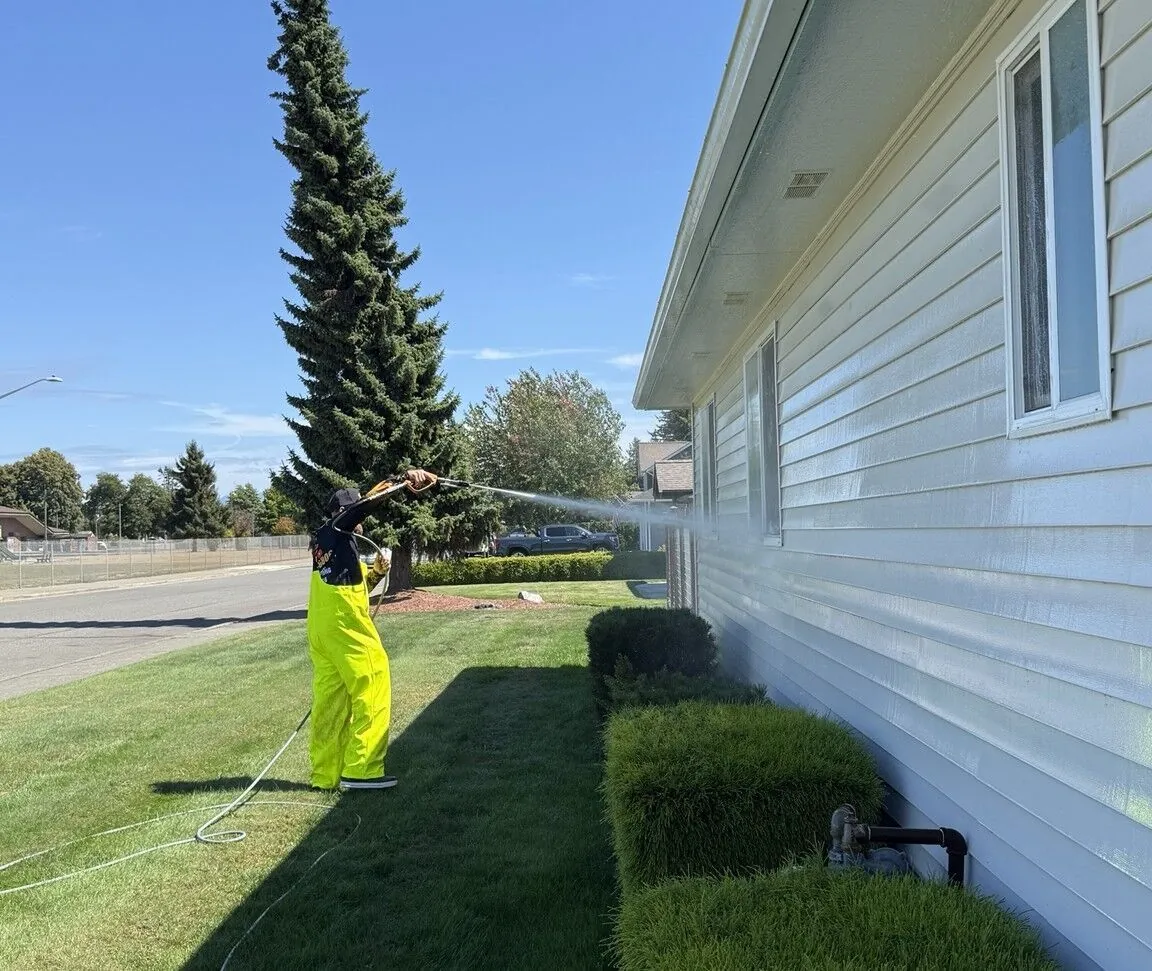
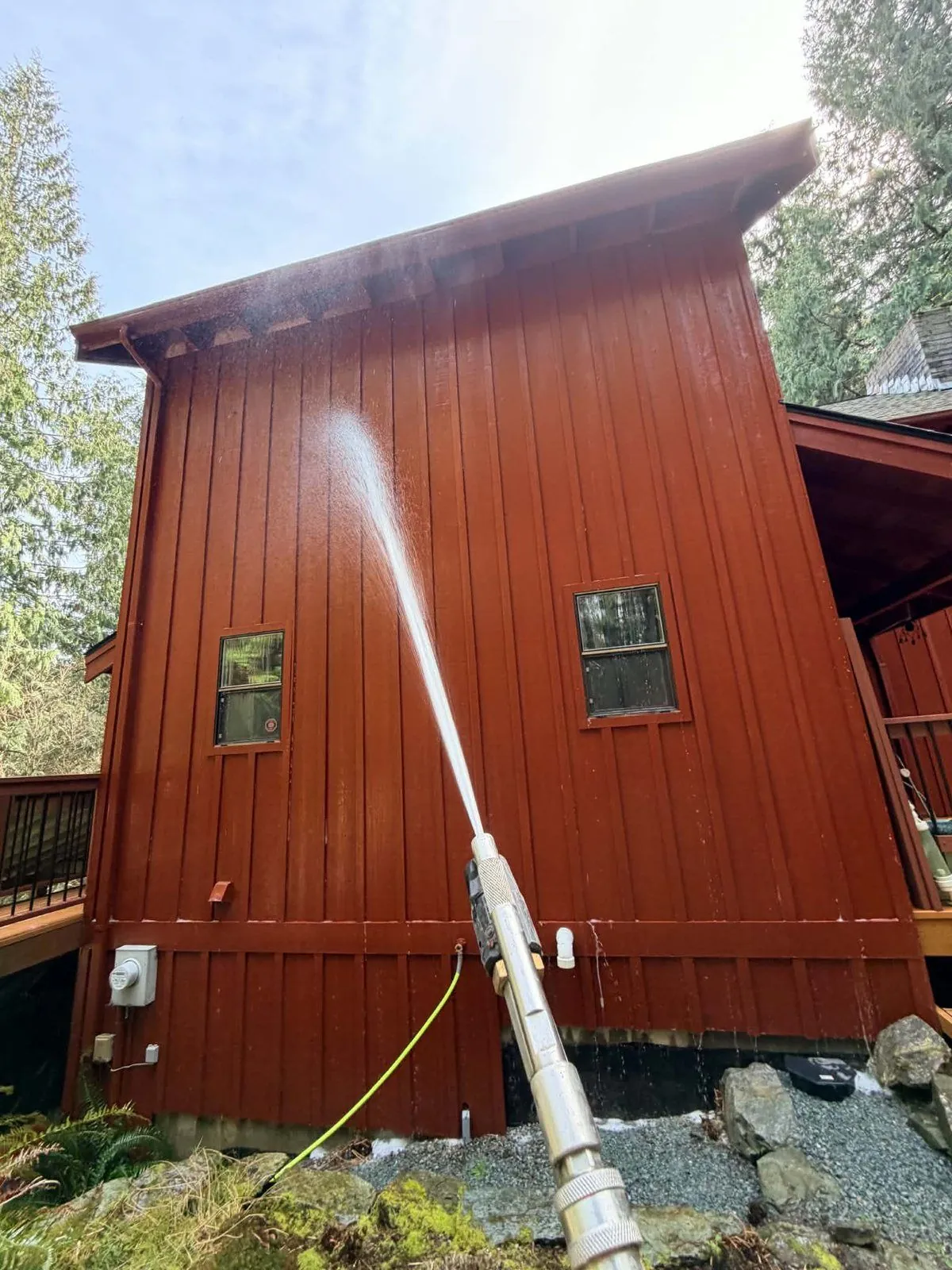
Because the goal is to loosen and lift the growth, not to strip the surface. Soft washing applies a cleaning solution at low pressure, gives it time to work, and then rinses it off gently. The growth comes away at the root, so it takes longer to return, and the siding is not subjected to a high-pressure jet.
On vinyl, high pressure can drive water up behind the lapped panels, where it sits against the sheathing with nowhere to go; our vinyl siding profile explains how those panels are built and why they object to it. On painted wood, it lifts paint. On older window glazing and trim, it can blow out putty and caulk that were doing a quiet job.
We save the pressure washer for concrete paths, patios and driveways, where the surface can take it. That work is described on the pressure washing page.
What about rusty streaks on the siding?
This is one of the more distinctive Blaine problems, and the town’s own water report points to the cause. The City’s 2020 water quality report notes that iron and manganese in the supply can show up as reddish, rusty deposits or surface film. Water pH averages about 8.0.
Most of the time you will never see it indoors. Outside, though, a sprinkler that hits the same stretch of wall every summer evening leaves behind a little of whatever was dissolved in the water, and over a few seasons that can build into orange or brown streaks and blotches at the level the spray reaches. They do not come off with the general wash, because they are mineral staining rather than growth.
We treat them separately, with a product made for rust and mineral deposits, and we will tell you on the quote whether we expect them to come off fully. The better long-term fix costs nothing: turn the sprinkler head a few degrees so it waters the lawn and not the house.
What decides the price of a Blaine house wash?
We quote in person, and the number depends on:
- The size of the house, measured by the wall area rather than the floor plan
- Height and access, including walkouts, steep ground and second storeys over decks
- The siding material, since painted wood and older trim take more care and more time than vinyl
- How much growth is present, from a light film to a wall that has gone thoroughly green
- Spot treatments, such as rust marks or heavy staining, which are priced as extras
- Other work booked at the same visit, where shared set-up usually saves you money
You will have the figure before any water goes on the wall.
When is the best time to wash a house in Blaine?
Late spring through early autumn. July is the driest month on the local record, averaging just 1.15 inches, and a house washed in dry, mild weather gets a full day for the solution to work and the walls to dry. Washing early in the season also gets the winter’s growth off before it has another cool, damp stretch to settle in.
We can wash in the shoulder seasons if the forecast gives us a dry window. We avoid freezing days, because rinse water on a cold wall does not behave well, and we avoid heavy rain, which dilutes the solution before it can do its job.
Where does the wash water go in Blaine?
Into the ground, away from storm drains. Blaine Municipal Code 13.01.040 prohibits discharges to the public drainage system that do not comply with city standards, and BMC 13.01.020 says the storm water chapter exists partly to keep local waters suitable for shellfish and fish habitat and for contact recreation.
That purpose has a concrete history here. Drayton Harbor was downgraded for shellfish harvest because of fecal bacteria pollution, and a Shellfish Protection District was set up in 1995. House-wash runoff is a different pollutant from the bacteria behind that downgrade, but the principle is the same: the code treats a street drain as a route to local waters, not as a place to tip anything. We direct rinse water to lawn and beds, keep the solution no stronger than the job needs, and do not let it run down the driveway to the street. The detail is on our wash water and storm drains page.
How should you get the house ready?
Very little is needed, but a few minutes the evening before makes the day go faster.
Close every window and exterior door, including small bathroom and basement windows that are easy to forget. Move cars, bikes and anything stored against the walls a few feet out, so we can reach the lowest courses of siding. Bring in doormats, cushions and anything on the patio you would rather not have rinsed. If there is an outdoor power socket near the ground, make sure its cover closes properly.
Let us know about pets that use the garden, a dog door, or plants you are especially fond of, and whether any part of the siding has been repainted recently. Fresh paint needs time to cure before it meets a cleaning solution, so a wall painted in the last few weeks may need to wait.
Finally, if you know of a loose board, a cracked window seal or a spot where water has come in before, point it out on the walk-round. We would much rather work around a weak spot we know about than find it with a hose.
Why does the north side keep turning green?
Because it never dries properly. A wall that faces north, or sits in the shadow of trees or a neighbouring house, gets little or no direct sun through the Blaine winter. It stays damp, stays cool, and grows algae faster than any other side of the house. It is also the side that turns green first again after a wash.
Our page on north-facing wall mildew goes into the reasons and the options, including washing that one wall more often than the rest.
How do I book a house wash in Blaine?
Call (360) 303-6806 or ask through the contact page. We will walk the house with you, point out growth, staining and anything fragile, and quote the wash on the spot. If the windows are due too, the Blaine window cleaning page covers how we fit them in after the wash, and the rest of our work in town is gathered under Blaine.
House washing questions from Blaine homeowners
- Is soft washing safe for vinyl siding?
- Yes, and it is the method vinyl is best suited to. Low pressure means no water forced up behind the panels, and the cleaning solution does the work that high pressure would otherwise do by force.
- What are the orange streaks on the lower part of my wall?
- Often they sit where a sprinkler hits the siding every summer. Blaine's own water report says iron and manganese in the supply can leave reddish, rusty deposits, so repeated wetting can build them up. We treat those marks with a separate product.
- Will the cleaning solution hurt my plants?
- We wet planting down before and after, keep the solution at the strength the surface needs, and cover anything delicate close to the wall. Tell us about prized plants on the walk-round and we will plan around them.
- How long does a Blaine house wash last?
- On a sunny, open wall it can be a couple of years before growth comes back. On a shaded wall that stays damp through the winter it returns sooner, which is why some people wash the worst side every year and the whole house less often.
- Do you wash older wooden houses?
- Yes, with extra care. Old paint and old trim can come away under pressure, so on pre-war houses we keep pressure low, test a small area first, and tell you about any loose or flaking paint before we start.
- Do I need to be home?
- Not necessarily, as long as windows are shut, we can reach an outside tap, and pets are inside. Many people are home for the walk-round and then carry on with their day.
- Can you wash the house and clean the windows on the same day?
- Yes, and the order matters. The house wash goes first and the windows last, so nothing from the walls ends up on fresh glass.