
Whatcom County
Window Cleaning in Blaine, WA
The short answer
Blaine's city water is moderately hard, 50 to 95 mg/L and up to 120 mg/L seasonally in the City's 2020 report, so we clean upper glass with purified water we carry ourselves and hand-finish what we can reach. A standard visit covers glass inside and out, screens, tracks and sills, and two visits a year suit most homes.

Randy Fee — Owner, King of Kings Window Cleaning
Washington business licence, UBI 605476674 · L&I insured · BBB rated A
Randy runs the company himself, so you are dealing with the owner, not a call centre — and every technician here is personally trained by him. Working Whatcom and Skagit County since 2024.
I run the Blaine route personally.
Glass in Blaine gets dirty the ordinary way, from rain, road grime and whatever the wind carries, and it gets spotted a less ordinary way, from the town’s own tap water. The City’s 2020 water quality report describes its supply as moderately hard, typically 50 to 95 mg/L and as high as 120 mg/L in some seasons. That is perfectly good water to drink and a poor thing to let dry on a window.
Most of how we clean windows here follows from that one fact, along with the town’s long, wet winter and its unusually wide spread of house ages.
What makes Blaine windows dirty?
Mostly the weather, and there is a lot of it. The Blaine weather station averages 40.60 inches of precipitation a year, and November, December and January each average between about 5.6 and 5.85 inches. Rain on its own does not ruin glass, but rain that bounces off a dirty sill, runs down a dusty frame, or splashes up from a flower bed leaves a trail on the pane every time it dries.
Then there is the organic side. In a climate as cool and damp as Blaine’s, with an average annual high of 57.7°F, a window frame that stays wet grows algae and mildew in its corners, and that growth spreads onto the glass edge. On older wooden sashes it also works into the putty.
And there is what the house itself adds. Sprinklers aimed near the house, a hose left running against a wall, even condensation dripping off an outside tap: all of it puts water on glass, and in Blaine that water carries minerals.
Why does the water we use matter so much here?
Because what you rinse with is what you leave behind. Blaine’s supply comes from several deep wells in the City of Blaine’s well field, lightly chlorinated. The 2020 report puts hardness at 50 to 95 mg/L, calls that moderately hard, and notes seasonal peaks as high as 120 mg/L. It also says iron and manganese in the water can appear as reddish, rusty deposits or surface film, and that the pH averages about 8.0.
On a window, all of those behave the same way. When the water evaporates, the dissolved minerals stay on the glass as spots and haze. A crew that fills its bucket from your outside tap and lets the upper panes dry in the sun is leaving a light layer of Blaine’s water chemistry on every window it touches.
We avoid that by carrying purified water on the truck. It has the minerals taken out, so when it dries it leaves nothing behind, and upper-storey glass can be cleaned and left to dry on its own without a squeegee ever touching it.
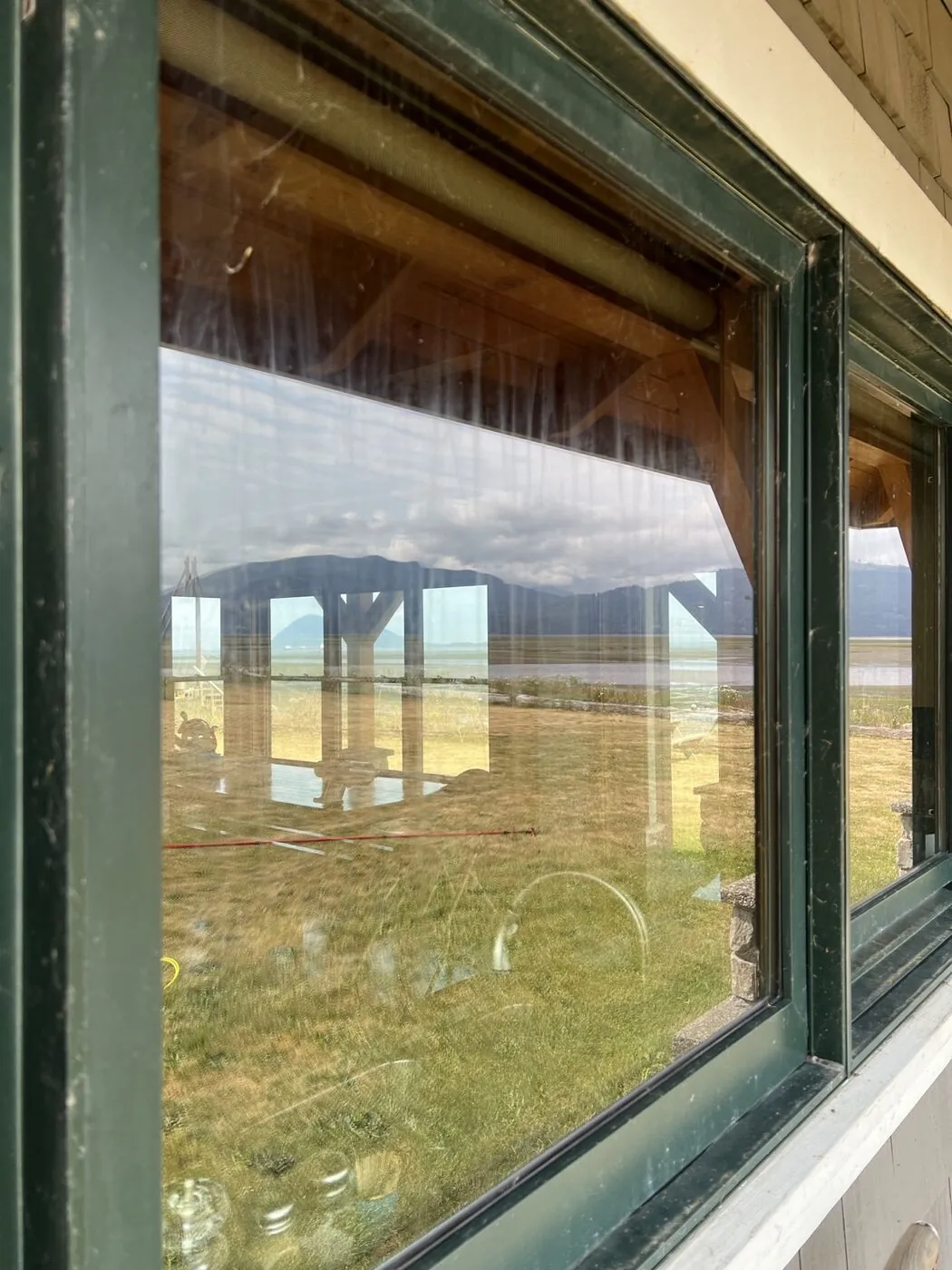 Before
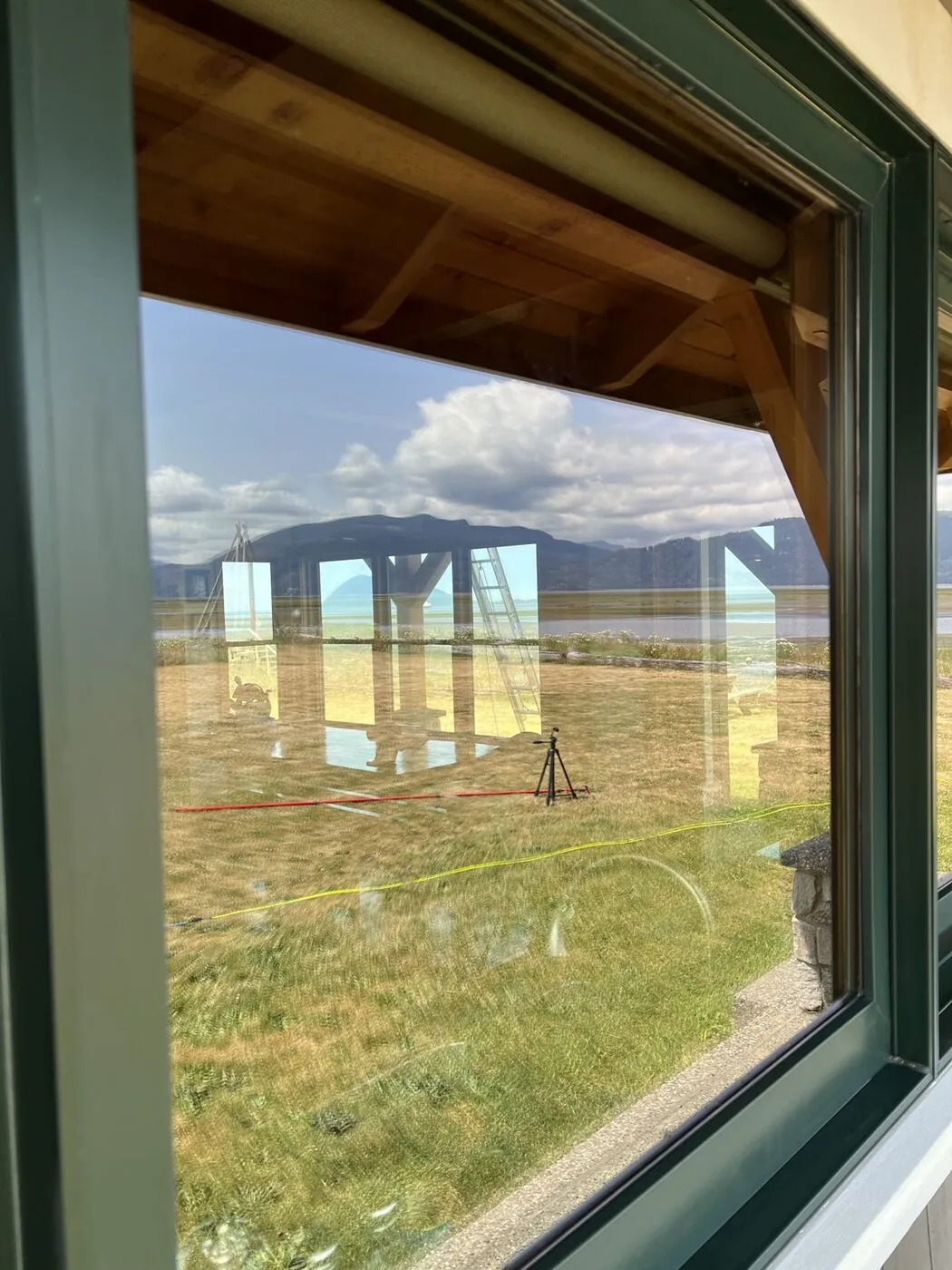 After
What is included in a Blaine window clean?
The standard residential job covers:
- Every accessible pane, inside and out
- Screens taken out, washed, dried and put back in their own openings
- Tracks vacuumed and wiped, including the drainage slots at the bottom of sliding windows
- Sills and frames wiped on the inside, and washed on the outside
- Cobwebs cleared from the corners of openings and the soffits immediately above
- A final look at the glass with you, in daylight, before we go
Skylights, glass railings, conservatory roofs and post-construction clean-ups are priced separately, because each has its own access or its own hazard. We will tell you on the quote which of your windows, if any, fall outside the standard job.
How do you clean glass on different parts of the house?
With two methods, chosen window by window.
Ground-floor glass and anything we can reach safely from a short ladder gets a hand clean: a washing solution applied with a scrubber to break the film, and a squeegee to take it off in one clean pull. Hands-on work is what shifts stuck-on grime, and on glass we can reach it is the fastest way to finish.
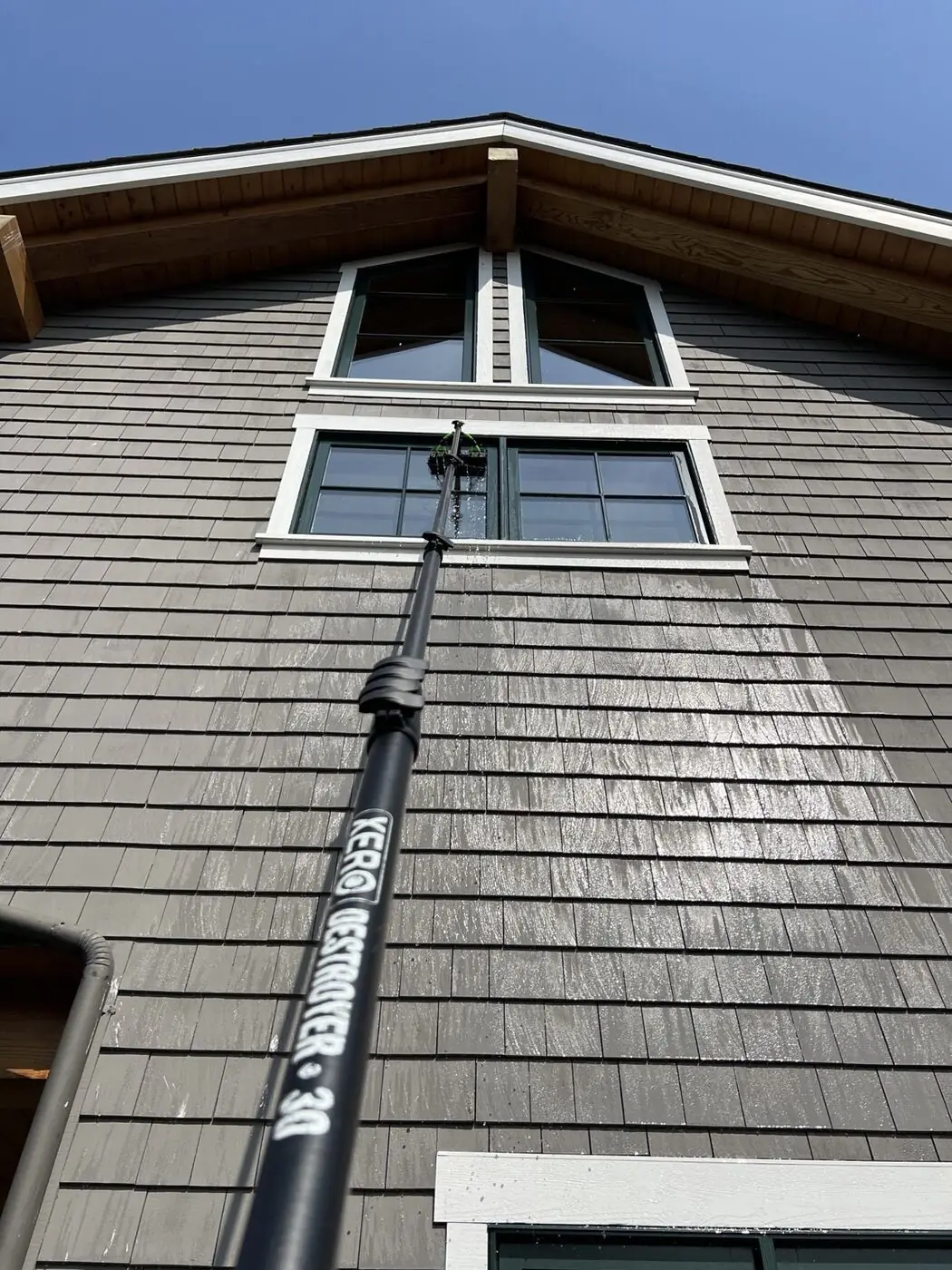
Upper glass, and anything above a deck, a conservatory or a flower bed, gets a water-fed pole. The pole carries purified water to a soft brush at the top, the brush scrubs the glass and frame, and the pane is rinsed and left to dry. No ladder on the decking, no boots in the beds, and no mineral spotting afterwards.
Are older Blaine windows any different to clean?
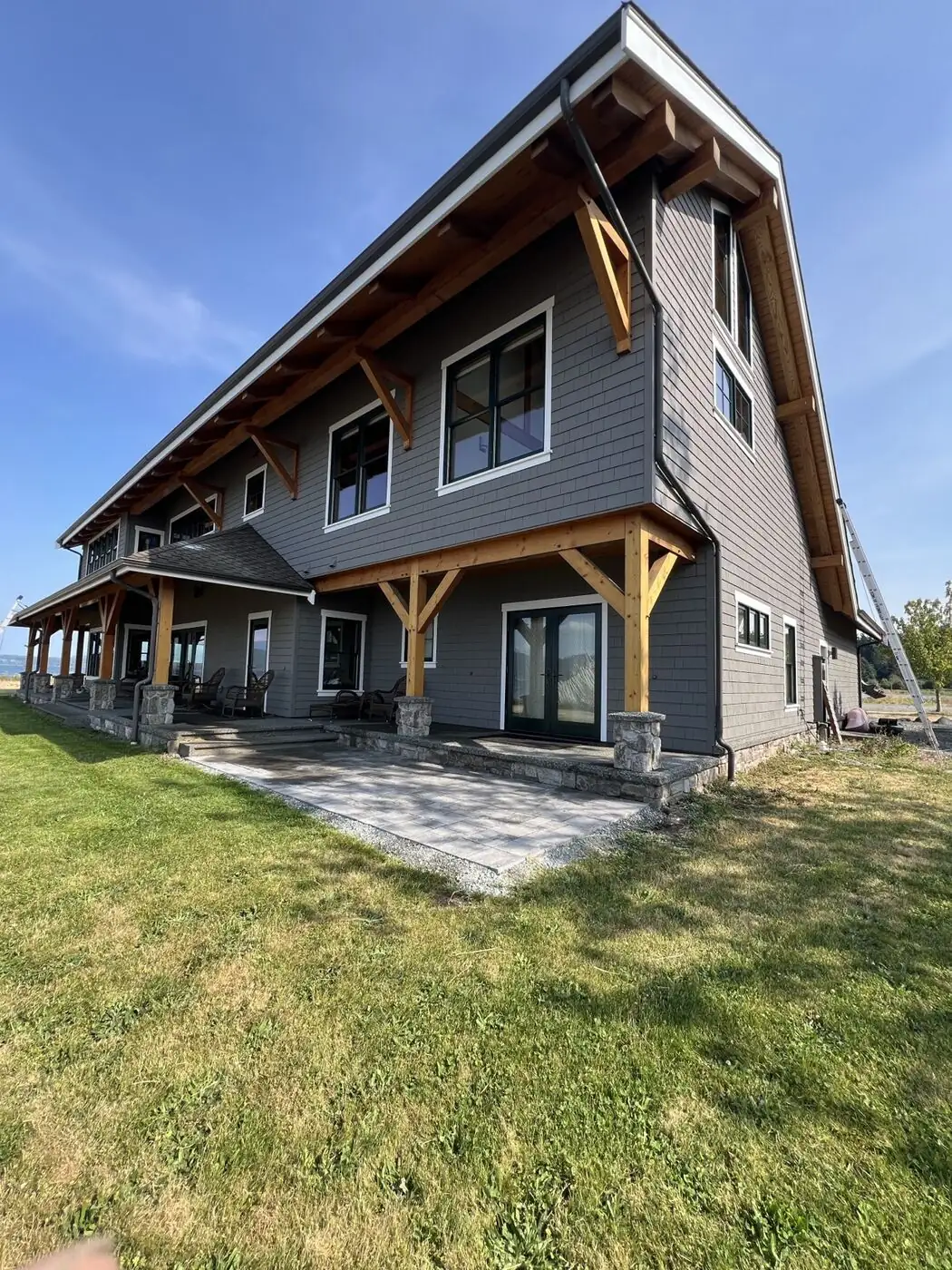
Yes, and there are more of them here than in many towns. The census counts 387 Blaine housing units built in 1939 or earlier, about one in seven of the total. Houses of that age that still have their original single-pane sashes need a lighter hand: glazing putty can be brittle, old glass can be thinner, and sash cords and pulleys do not appreciate being forced.
We clean that glass by hand wherever we can reach it, go carefully around the putty, and tell you about any loose or missing glazing before we start rather than after. If a window will not open or close cleanly, we leave it as it is. A sash that has been painted shut for decades is a job for a carpenter, and we would rather clean it from outside and tell you than crack a pane trying to free it.
Newer windows bring their own quirk. Double-glazed units can fog between the panes when their seal fails, and that is not something any cleaning can reach. Our insulated glass units profile explains why, and what the options are.
What decides the cost of cleaning windows in Blaine?
We quote on site, free, and the figure is built from:
- The number of openings, which sets the baseline
- The size of the panes, since one big picture window can take longer than several small ones
- Access, from ground-floor glass on open lawn to upper panes over a slope or a deck
- Condition, because glass that has gone years without a clean, or is carrying mineral spotting, takes a restoration visit the first time
- Screens, tracks and extras like skylights and glass railings
Staying on a regular cycle keeps each later visit quicker, and the price follows the time.
When should Blaine windows be cleaned?
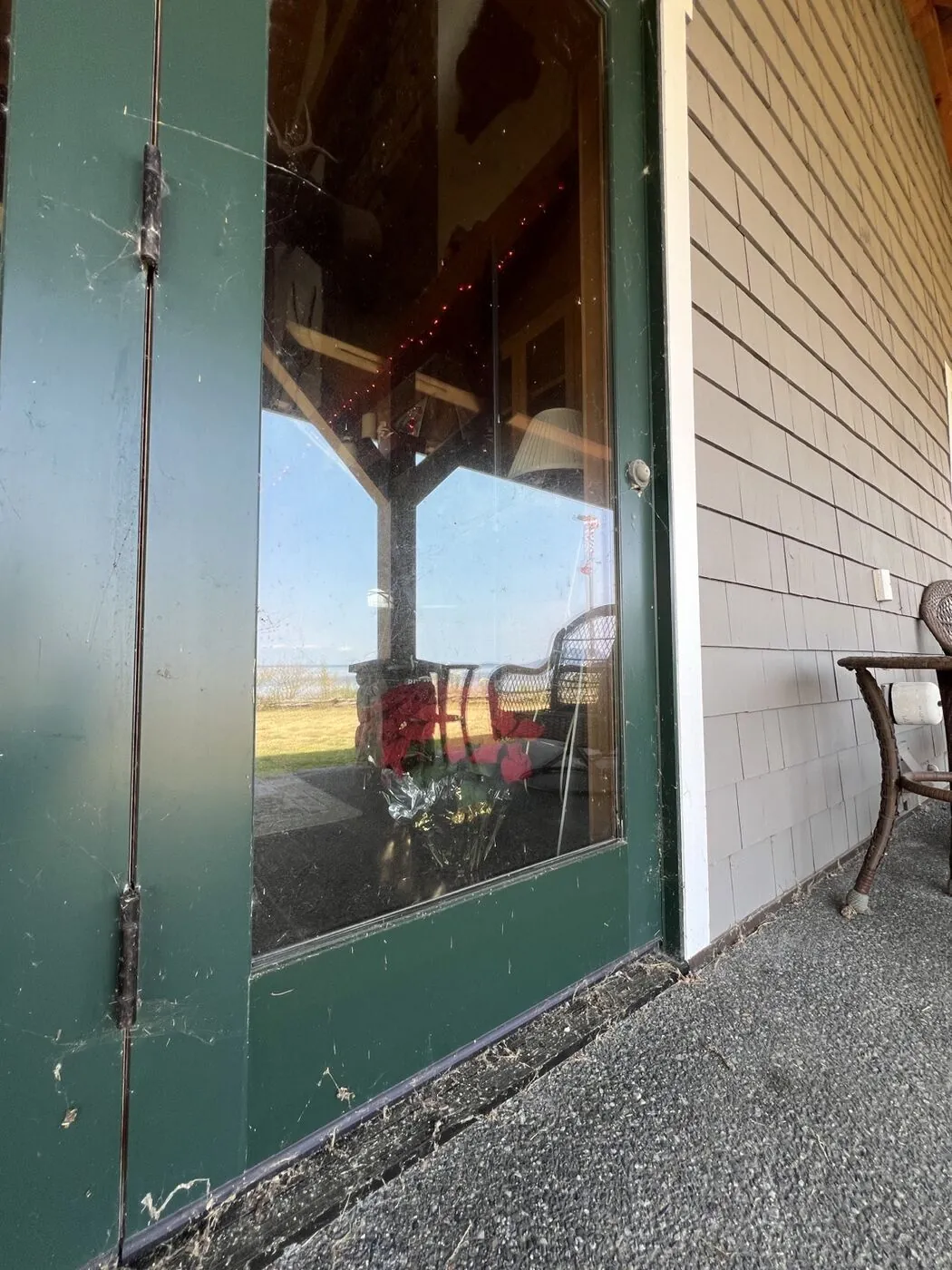
Spring and late summer, for most homes. A spring clean after the November-to-January rain takes off the winter’s film and lets you enjoy clear glass through the long evenings. A second visit in late summer or early autumn prepares the windows for the wet season, and clean glass sheds rain better than dirty glass, so it stays clearer through the winter.
If you are also having the house washed, book the windows for the same visit and let us do them last. The Blaine house washing page covers that side of the job. Roof and gutter work should also come before the windows, never after, so nothing drips onto freshly cleaned glass.
Why do screens and tracks matter in a wet town?
Because that is where the winter collects. Every storm drives a little water into the bottom track of a sliding window or door, and with it comes grit, dead insects, needles and whatever the wind has been carrying. In a town that gets close to six inches of precipitation in each of its three wettest months, that track rarely dries out between October and spring.
The result is a slow sludge. It blocks the small drainage slots that are meant to let water out of the frame, so the next storm backs up and, on a bad window, finds its way over the inside sill. It grinds against the rollers and weatherstripping every time the window slides. And it grows, because a damp channel full of organic debris is as good a home for mould as any north wall.
Screens have a similar problem on a smaller scale. A fine mesh holds dust and pollen, and when it gets wet it drips that dirt straight back onto the glass you just paid to have cleaned. That is why screens come out, get washed and dried, and go back only once the pane behind them is finished.
What about hard-water spots already on the glass?
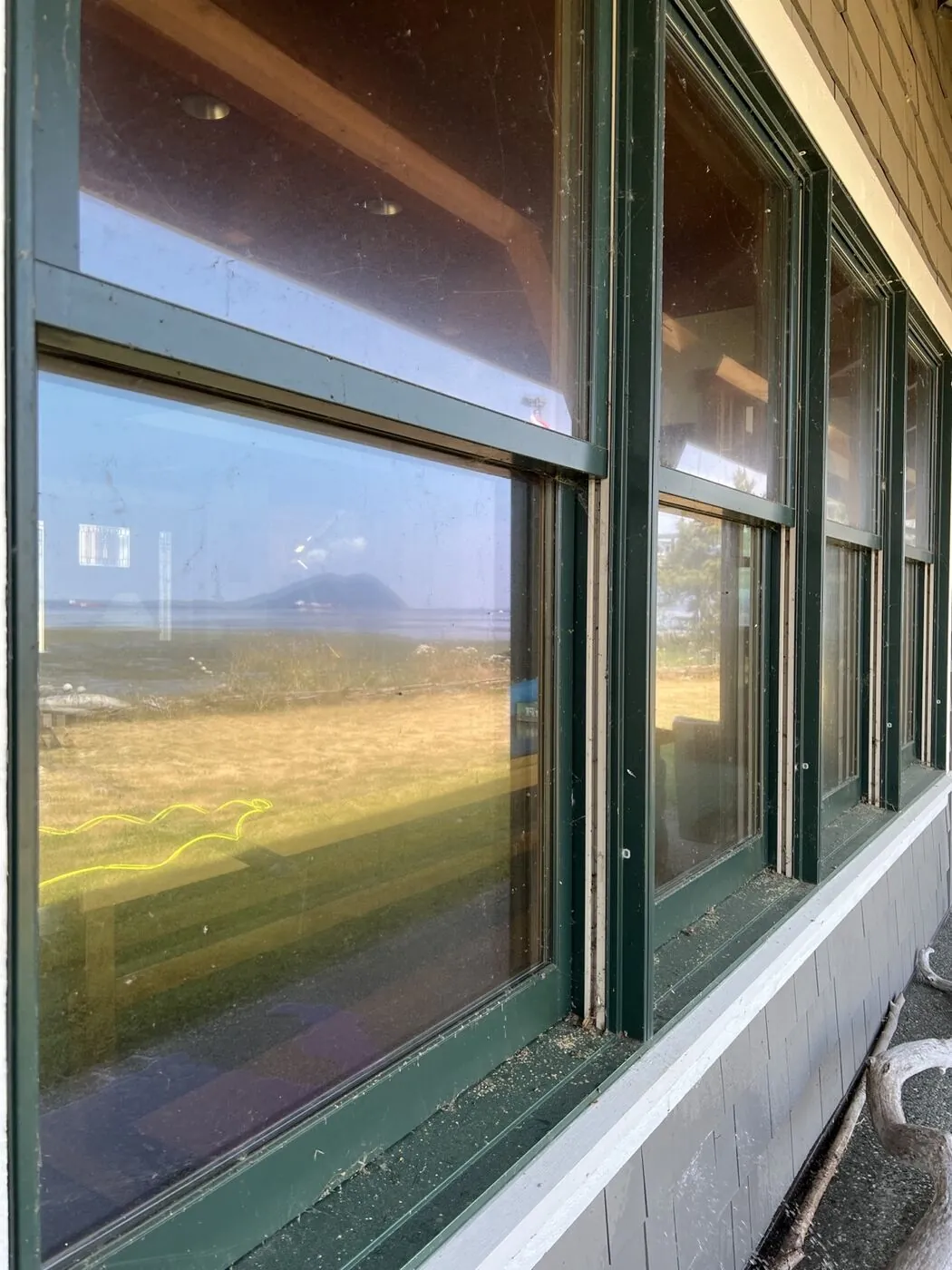
They are treatable more often than not, but not always. Spotting that has built up over a season or two is usually a deposit sitting on the glass, and a treatment made for mineral deposit, used before the general clean, will lift it. Mineral left for many years can eat into the glass itself, and once the surface is pitted the damage is there for good; that is a question for a glazier.
We check the worst-affected panes on the quote and tell you honestly which you have. The most common cause is a sprinkler reaching the house, and moving it a little is the cheapest fix there is.
Where does the rinse water go?
The volumes involved in window cleaning are small, but we still keep them off the street. Blaine Municipal Code 13.01.040 prohibits discharges to the public drainage system that are not in compliance with city standards, and our solution and rinse water go to lawn and beds rather than to the gutter at the kerb. The wider policy is set out on our wash water and storm drains page.
How do I book a window clean in Blaine?
Call (360) 303-6806 or send a request online. We will come to the house, count the openings with you, look at the older sashes and any spotted panes, and give you a figure on the spot. The service as we run it across the county is described on the main window cleaning page, and the rest of our Blaine work is gathered on the Blaine page.
Windows questions from Blaine homeowners
- Why don't you just use my garden hose?
- Because Blaine's tap water carries enough dissolved mineral to spot glass as it dries. Our pole system runs purified water with those minerals removed, so the pane can dry on its own without leaving marks.
- How often should Blaine windows be cleaned?
- Twice a year suits most houses: once in spring, after the wettest months are over, and once in late summer or early autumn. Homes with a lot of glass facing the water or the weather sometimes add a third visit.
- Do you clean inside as well as out?
- Yes, inside and outside is the standard job, including screens, tracks and sills. Exterior-only visits are available if you would rather do the inside yourself.
- Can you clean old single-pane windows?
- Yes. Older sashes and putty need a lighter hand, so we clean them by hand rather than with a pole where we can, and point out any loose glazing before we start.
- There is fog between the panes of one window. Can you fix it?
- No, and nobody can from the outside. Fog inside a double-glazed unit means the seal has failed and moisture has got in. The unit needs repair or replacement by a glazier.
- Will you get the hard water spots off?
- Fresh spotting usually comes off with a dedicated treatment. Spotting left for many years can etch the glass, and an etch is permanent. We check on the quote and tell you which you have.
- Do you need access to the house for the interior?
- Yes, for inside glass someone needs to let us in. For exterior-only work we can do the job while you are out, as long as gates are open and pets are inside.
- What happens if it rains on the day?
- Light rain does not spoil a clean window, because clean glass sheds rain far better than dirty glass. In heavy, blowing weather we will talk to you about moving the date.