
Skagit County
House Washing (Soft Wash) in Anacortes, WA
The short answer
A house wash here clears green film from shaded walls, grime from lower courses and cobwebs from eaves, using low pressure, a cleaning solution, dwell time and a rinse. Anacortes code conditionally allows building wash-down only when no detergent is used, and its storm drains empty to salt water, so our solution runoff is kept on your property.

Randy Fee — Owner, King of Kings Window Cleaning
Washington business licence, UBI 605476674 · L&I insured · BBB rated A
Randy runs the company himself, so you are dealing with the owner, not a call centre — and every technician here is personally trained by him. Working Whatcom and Skagit County since 2024.
I run the Anacortes route personally.
Most houses in Anacortes do not need a wash all over at the same rate. The shaded wall goes green, the lower courses pick up splash and grime, the side looking over the water dulls, and the rest of the house stays more or less presentable. A good wash starts by working out which walls are which.
Then comes the question every Anacortes wash has to answer: where does the water go?
What does a house wash take off an Anacortes home?
Usually four things, in different places on the same house:
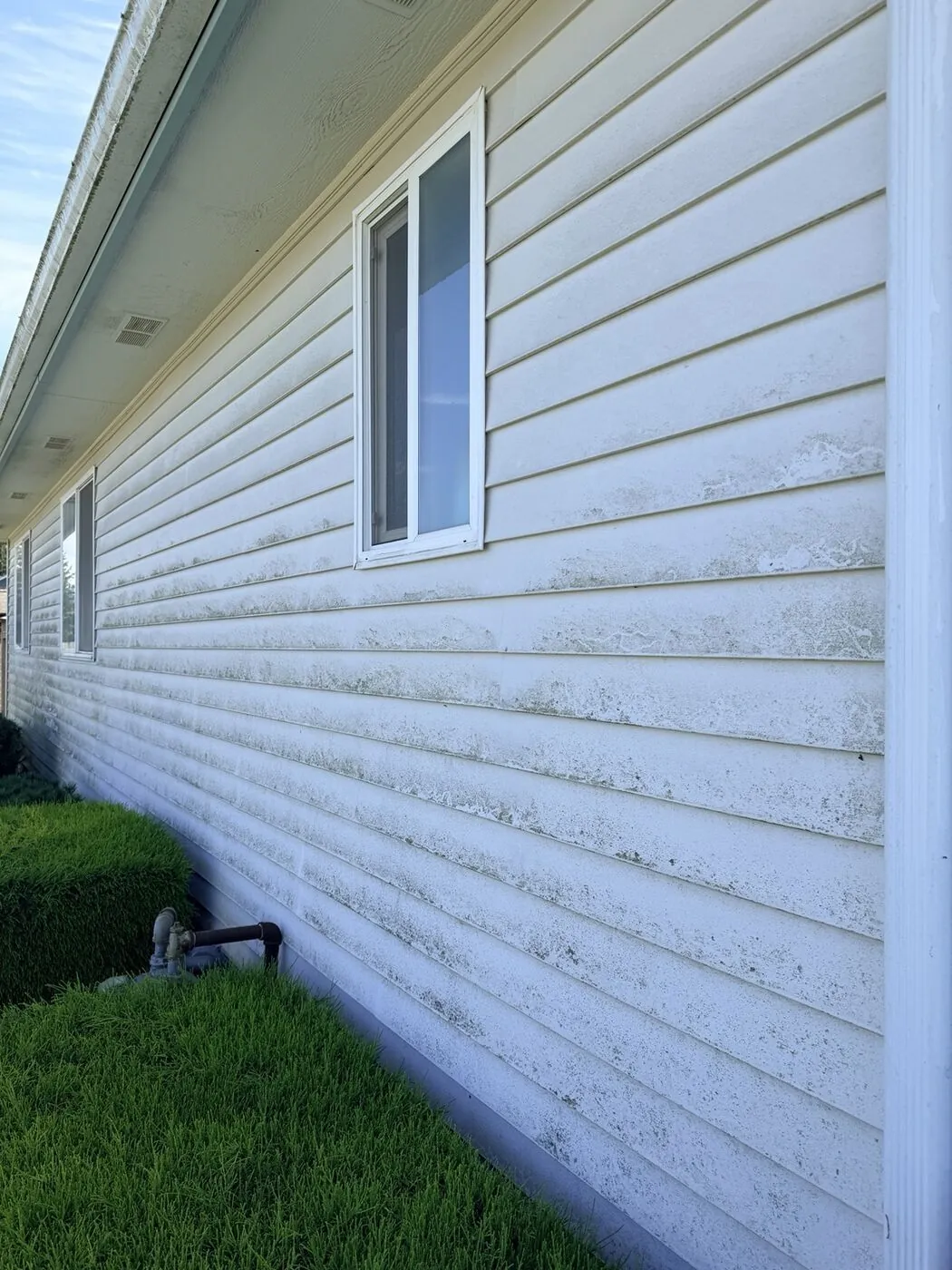
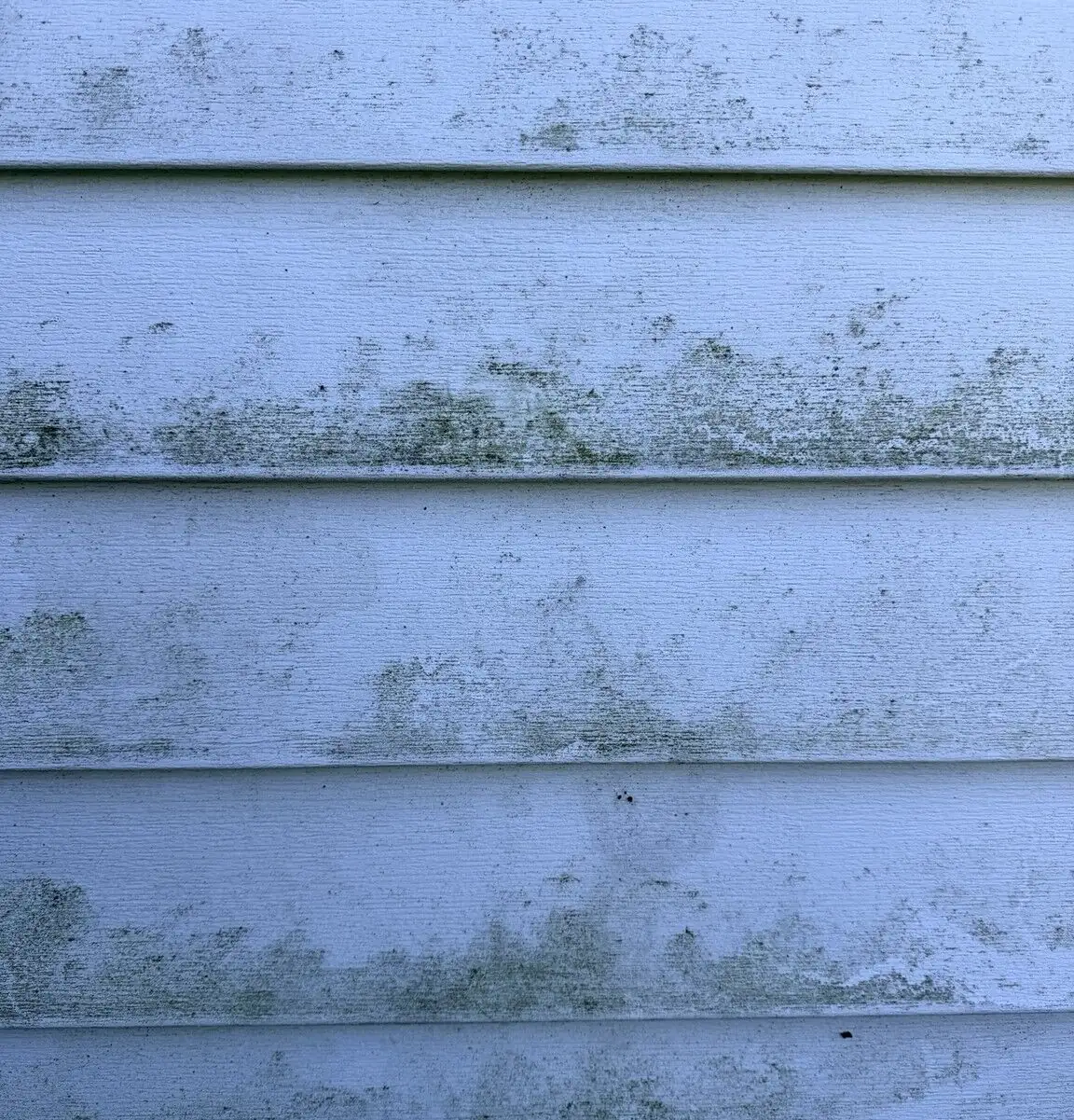
- Green and black organic growth on north walls and anywhere shaded by trees, fences or neighbouring buildings
- Grime and splash on the bottom few courses, from rain bouncing off soil, paths and decks
- A dull film on walls facing open water or the prevailing weather
- Cobwebs, insect nests and debris under eaves, soffits and porch ceilings
The city sits between Burrows Bay, Guemes Channel and Fidalgo Bay, with more than 27 miles of shoreline, so plenty of houses have at least one wall facing open water. We have not seen any measured salt or wind data for Anacortes and will not claim a figure. We simply look at each wall on the walk-round and price the wash for what is actually on it.
Does the water-facing side need a different approach?
Sometimes. The side of the house facing the water often carries a film that looks more like weathering than growth, and it does not respond to rinsing alone. It usually needs the solution to sit a little longer before the rinse.
Shaded walls are the opposite problem. The growth there is organic, often visible as green or black streaks, and it clears well with the right solution and dwell time. Treating both sides identically either underdoes the exposed wall or overdoes the shaded one. The page on north-facing wall mildew explains why shaded walls grow faster and what keeps them clean longer.
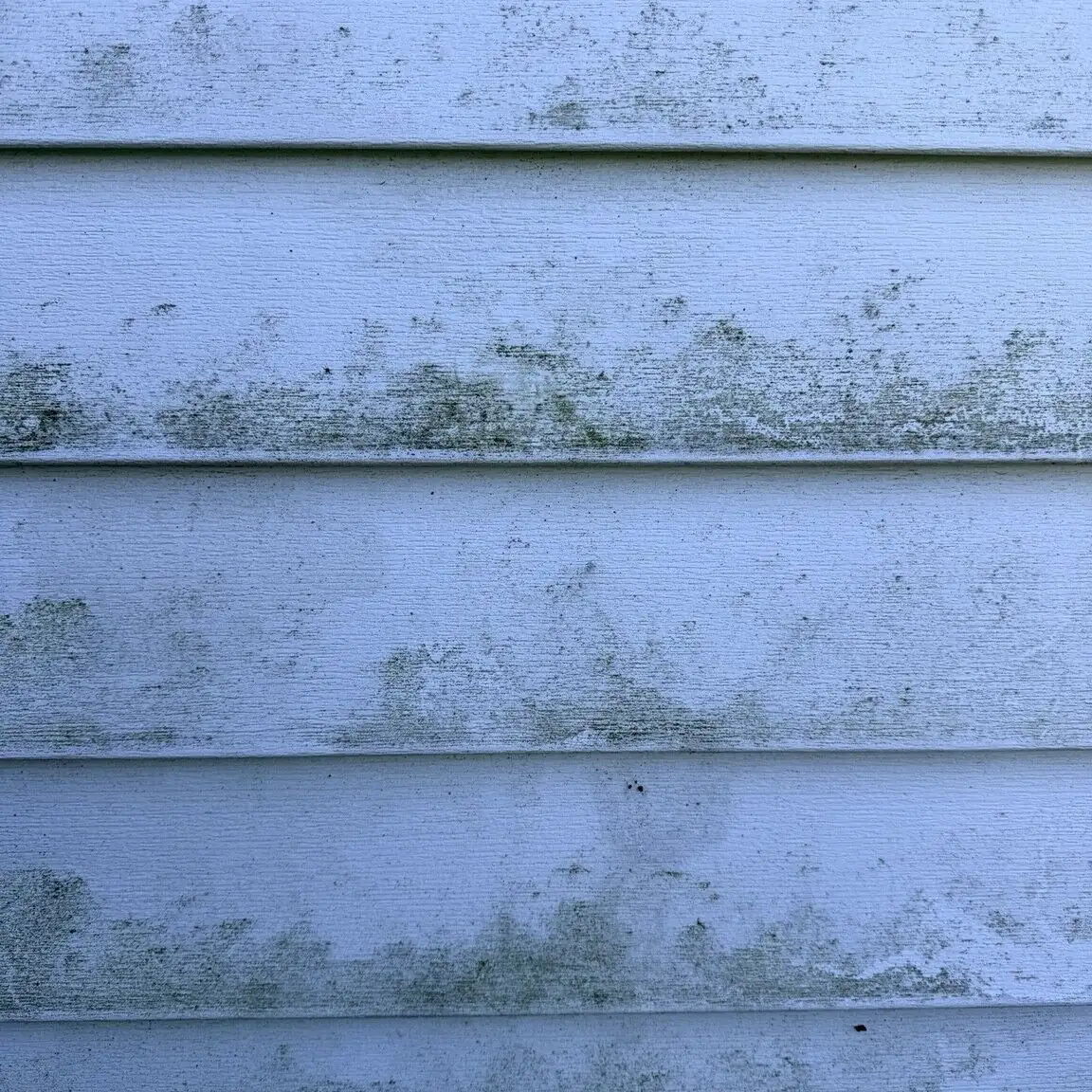 Before
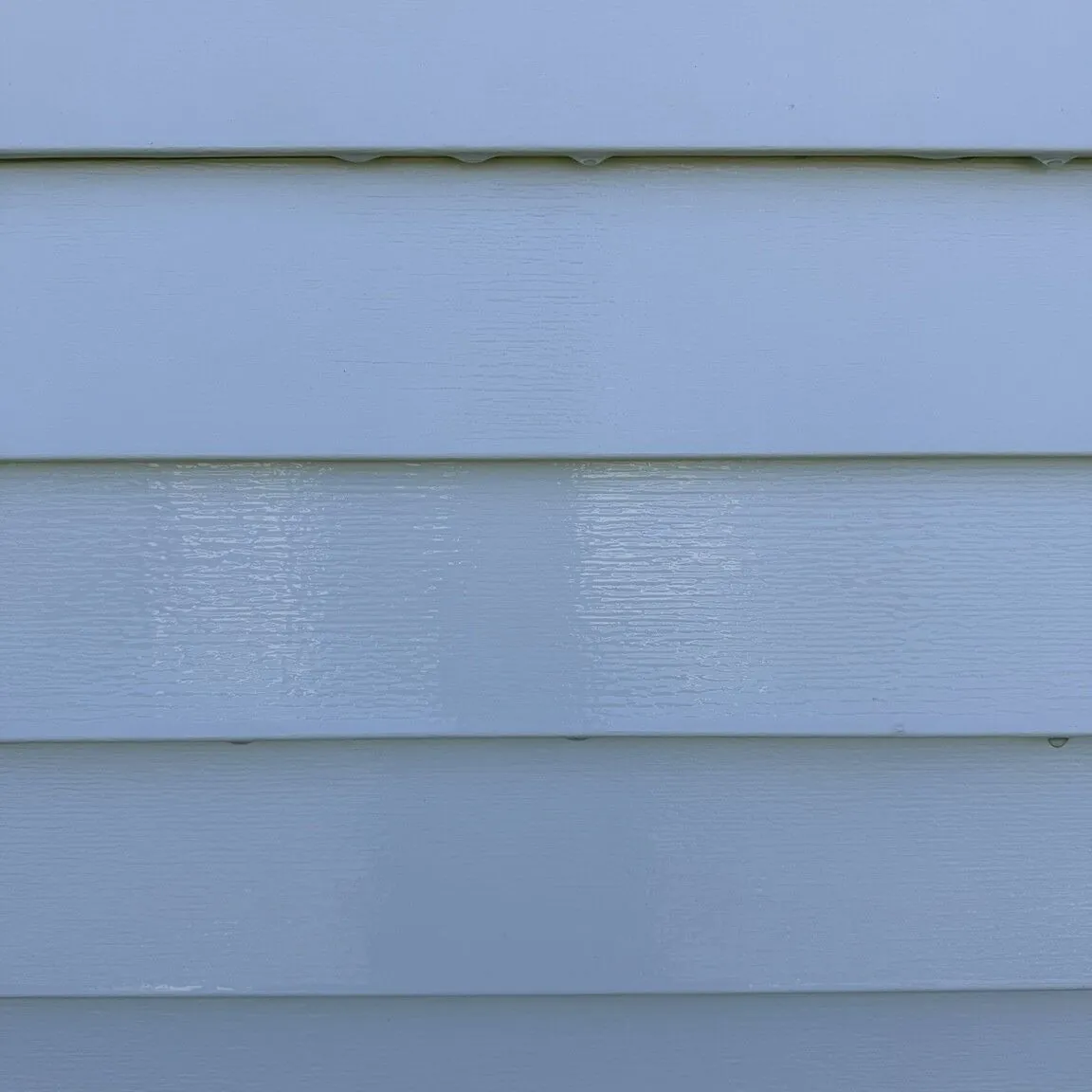 After
What is included in a house wash?
A standard wash covers:
- Walk-round first, agreeing which walls, trim and features are included
- Protection of planting, outdoor lights, electrical fittings and vents
- Siding from the foundation to the eaves on every side included
- Soffits and fascia rinsed along with the walls
- Trim, doors and garage doors washed along with the walls
- Runoff control set up before any solution goes on
- A final rinse of the walls, glass and planting
- A last walk-round with you to check the result
Decks, fences, driveways and paths are separate jobs, priced on their own. Our overall house washing page covers the service across the whole route.
How does soft washing actually work?
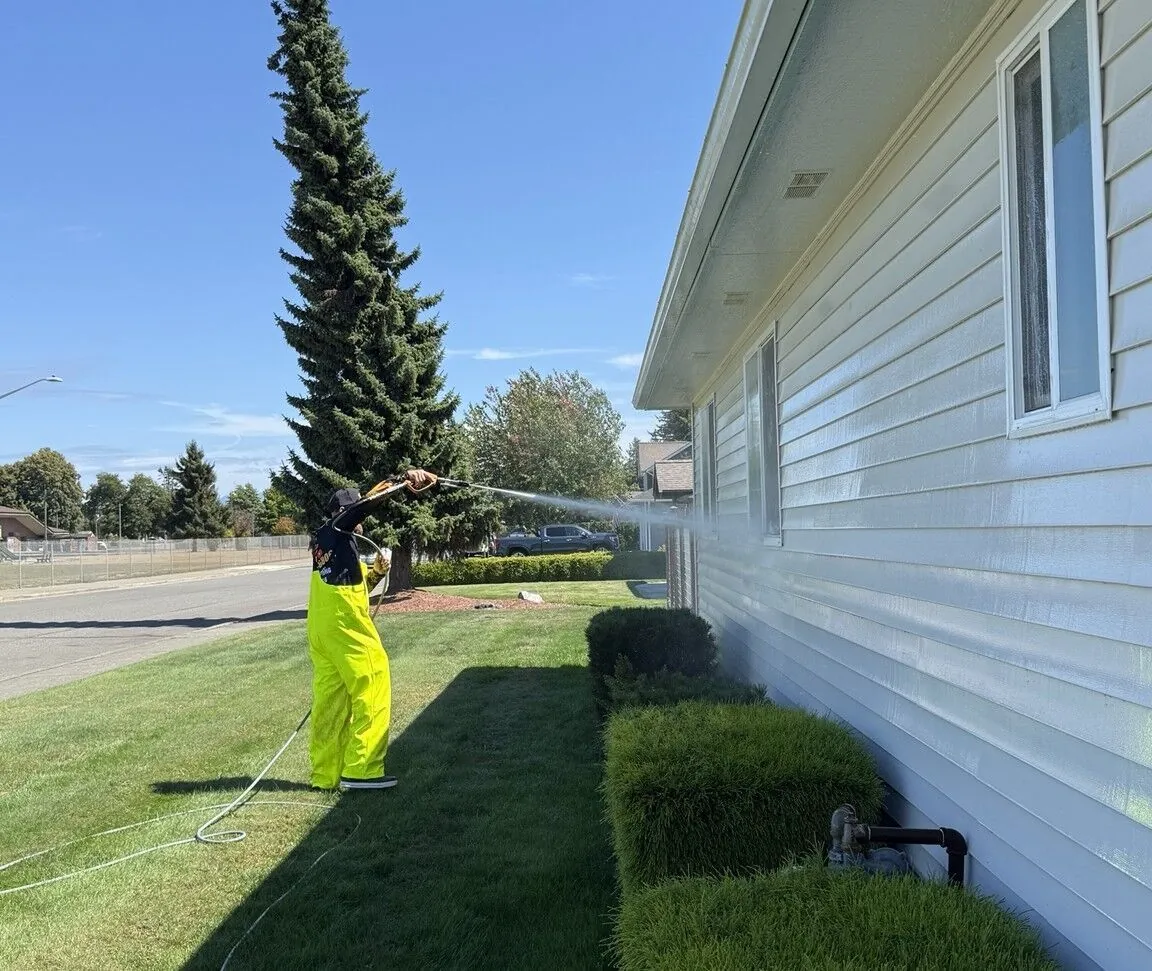
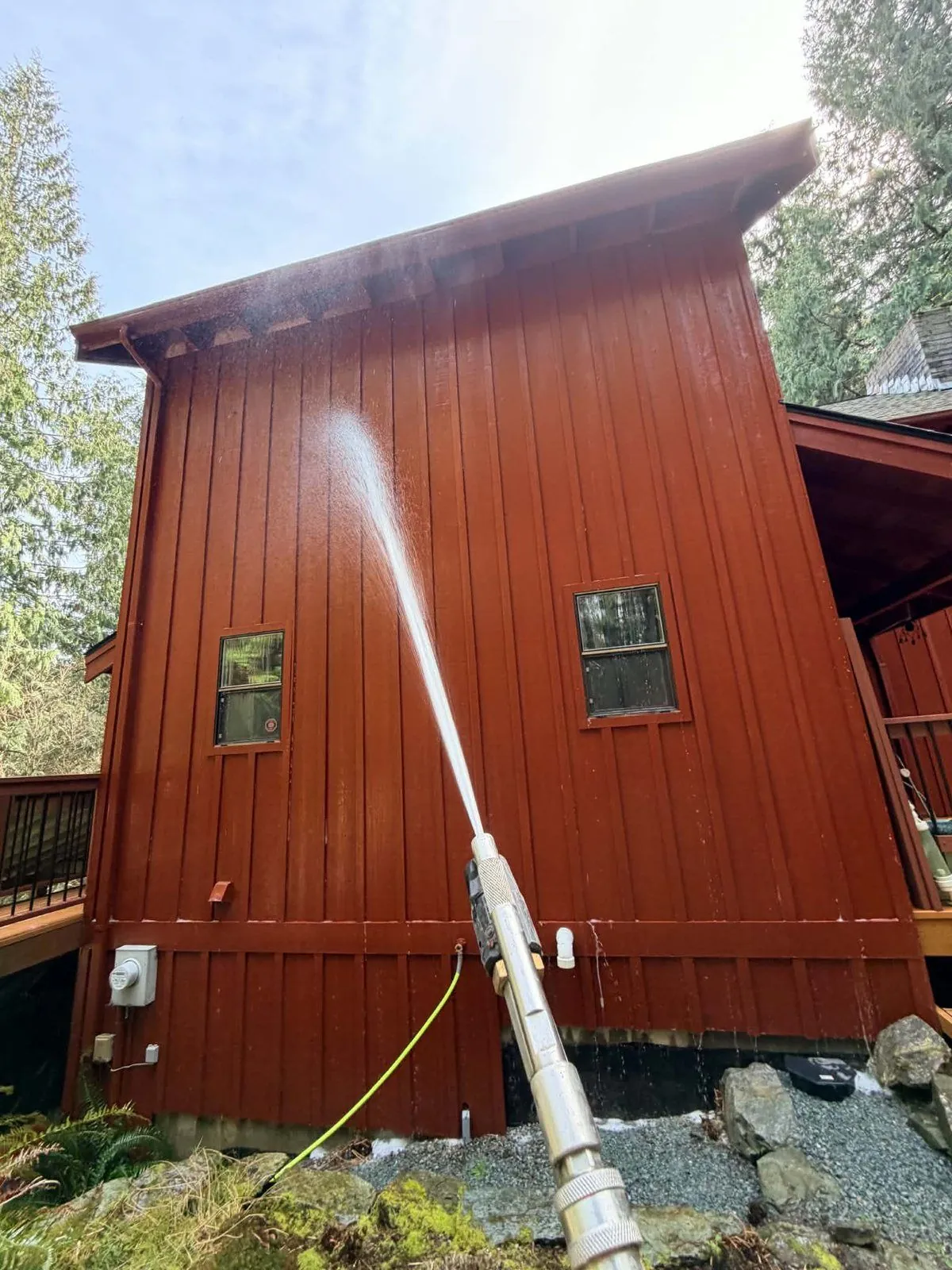
The cleaning is done by the solution rather than by force. We apply a cleaning solution at low pressure, starting from the bottom so it does not streak down dry siding. We give it time to work on the growth and grime, then rinse from the top down with gentle, even coverage.
High-pressure washing on siding causes more problems than it solves. It can force water behind the cladding, strip paint, gouge wood, crack older vinyl and blow out window seals. On vinyl in particular, what looks like dirt is often oxidation of the surface itself, which aggressive washing makes worse. The vinyl siding profile explains how that surface ages and what it can take.
Dry weather matters. The solution needs to stay on the wall long enough to work, and walls need to dry afterwards. We watch the forecast and move a wash rather than rush it into a wet week.
Do older Anacortes homes need anything different?
Often. About 1,155 housing units in Anacortes, roughly 13% of the stock, were built in 1939 or earlier, while the median year built is 1989. The city keeps its own Register of Historic Places, which lists houses such as the Wasserman-Lowman House on 8th Street and the Judd House on 9th Street.
Older wood-clad houses call for a lighter hand. Old paint can be chalky or loose, boards can be weathered, and original windows may not seal as tightly as modern ones. We use less water around frames and lower pressure throughout, and we point out failing paint before we start, since a wash will lift loose paint rather than disguise it. We do not advise on what a historic house may or may not do to its exterior; if yours is on the register, that question belongs to the city.
What does Anacortes code say about wash water?
Two things, both in Anacortes Municipal Code 18.30.050.
First, it bars anyone from discharging into the stormwater system anything other than stormwater. Its list of illicit discharges includes soap, detergent, household and commercial cleaning materials and steam-cleaning waste.
Second, it conditionally permits routine external building wash-down that does not use detergents, along with street and sidewalk wash water.
In 2022, Ordinance 4023 amended chapter 18.30 to set up a Source Control Program under the city’s Phase II municipal stormwater permit.
For a house wash, the upshot is plain. A rinse with water alone can fall inside the exemption. A soft wash uses a cleaning solution, and its runoff is not covered, so it has to stay out of the storm drains.
How do we keep solution out of the bay?
By planning where the water goes before any of it is used. Anacortes drainage flows to Guemes Channel, Burrows Bay, Fidalgo Bay, Padilla Bay and Similk Bay, and a street drain is the shortest route from your siding to any of them.
On the day:
- We find every drain inlet the runoff could reach, on the property and at the curb.
- Those inlets get covered or bermed before any solution goes on.
- Downspouts discharging toward a hard surface are redirected onto soil.
- Runoff is steered onto lawn, beds and soil, where the ground filters it.
- Where the site gives the water nowhere safe to go, we recover it rather than release it.
The general approach, with the reasoning behind it, is on wash water and storm drains.
What time of year suits a house wash in Anacortes?
Late spring through early autumn, in dry weather. On the Western Regional Climate Center’s long Anacortes record, which runs to 2013, November and December were the wettest months, and the annual mean was 26.70 inches, less than the mainland station near Mount Vernon. That gives a reasonable season for work that needs walls to dry, but we still plan around the week’s forecast rather than the average.
A wash in spring clears the winter’s growth before it spreads. A wash in late summer leaves the house clean going into the wet months.
What drives the cost of a house wash here?
The price is set on site. The main factors:
- Size of the house, in wall area rather than floor area.
- Height. A two- or three-storey wall on a sloping lot takes longer than a single-storey on level ground.
- Condition. Heavy growth or years of build-up takes more dwell time and more care.
- Cladding type, since older wood and painted surfaces need slower work.
- Runoff control needed, which depends on how close the house sits to drains and hard surfaces.
Should the roof be cleaned before the walls?
If the roof needs work, yes. A roof clean sends moss, grit and dirty rinse down over the gutters and onto the siding, so washing the walls first means washing some of them twice. The same applies to gutters: a trough that overflows in the first heavy rain after a wash will streak the wall you just paid to clean.
On a combined visit the order is roof, then gutters, then walls, then glass. That also means one round of garden protection and one runoff plan covering everything, rather than setting both up again on a second day. The roof side of that sequence, including why shingles are soft washed rather than pressure washed, is covered on the Anacortes roof cleaning page.
If the roof is in good shape and only the walls need attention, a wash on its own is fine. We will tell you on the walk-round which of the two you are looking at, and we will not add a roof clean to a quote simply because we are already there.
Can only some walls be washed?
Yes, and on many Anacortes houses it makes sense. The north wall and the side facing the water often need washing every year, while the sunny, sheltered sides can go two or three. Washing only the walls that need it keeps the cost down without letting the worst side get away from you.
We will suggest a split like that where it fits, and say so plainly where the whole house is due. The Anacortes overview sets out the wider conditions on the island that decide which walls those are.
What about the driveway and paths?
A house wash stops at the foundation. Green or black growth on concrete paths, steps and drives is a separate job, and a slippery one in winter. The page on slippery driveways and walkways covers it. If you are having the glass done too, book it after the wash; the Anacortes window page explains the order.
Booking a house wash
For a wash, phone (360) 303-6806 and we will book a time to come out. We walk round the house with you, look at each wall, check where the water will go, and give you a price. We work under a Washington State business licence with Labor & Industries coverage, and the crew doing your house has been trained by the owner.
House washing questions from Anacortes homeowners
- Is it legal to wash my house in Anacortes?
- Yes. AMC 18.30.050 conditionally allows routine external building wash-down that uses no detergent. What it does not allow is soap, detergent or cleaning materials reaching the stormwater system, so a wash that uses a cleaning solution has to keep its runoff out of the drains.
- Do you use a pressure washer on siding?
- Not at high pressure. Siding, trim and window seals do not tolerate it, and it can drive water behind the cladding. We use low pressure with a cleaning solution that does the work, then rinse gently.
- How often should an Anacortes house be washed?
- Every one to two years suits most homes. Shaded walls and the side facing open water tend to need it sooner, and a house under trees may show green on its north wall within a year. We can wash only the worst sides between full washes.
- Will the wash harm my plants?
- We wet planting before we start, cover delicate beds, and rinse everything again afterwards. Runoff is steered onto soil and lawn rather than to the street, which also keeps it out of the drains.
- Can you wash an older wooden house?
- Yes, with a lighter hand. Old paint, weathered boards and original windows need lower pressure and less water around the frames. If paint is already failing, we tell you before starting, because washing will lift loose paint rather than hide it.
- Is the wash done in one day?
- Most single-family homes are finished in a day or less, depending on size, height and how heavy the growth is. We need a dry spell so the solution can work and the walls can dry afterwards.
- Do you clean the windows as part of a house wash?
- The wash rinses the glass along with the walls, but it does not leave windows properly clean. For clear glass, book window cleaning after the wash, on the same visit if you like.