
Skagit County
Window Cleaning in Anacortes, WA
The short answer
Anacortes glass is usually two jobs in one: the side of the house facing the water, and everything else. We clean exterior and interior glass, screens, tracks and sills, use purified water on a pole for upper storeys, and price it on site. Local tap water is soft, typically around 30 mg/L, so hard-water etching is less common here.

Randy Fee — Owner, King of Kings Window Cleaning
Washington business licence, UBI 605476674 · L&I insured · BBB rated A
Randy runs the company himself, so you are dealing with the owner, not a call centre — and every technician here is personally trained by him. Working Whatcom and Skagit County since 2024.
I run the Anacortes route personally.
A window in Anacortes usually faces one of two ways: toward the water, or toward everything else. The first kind carries most of the grime, and the second tends to stay clearer for longer. Pricing and scheduling glass here starts with working out how much of the house falls into each group.
Soft tap water, a drier rain record than the mainland and a good number of older houses complete the picture.
What does the Anacortes setting do to window glass?
The city is surrounded by water on three sides, with Burrows Bay to the west, Guemes Channel to the north and Fidalgo Bay to the east, and it counts more than 27 miles of shoreline. Many homes are built to face that water, and it is usually the largest panes on the house that look out over it.
We have no measured salt-spray or wind data for Anacortes, so we will not tell you how much salt lands on your glass. What we see across shoreline property in general is that the elevation facing open water picks up a dull, even film that dries on rather than running off in the rain, while sheltered sides mostly collect ordinary dust, pollen and cobwebs. Treating those two surfaces as the same job wastes time on the clean side and short-changes the exposed one.
Tree cover adds its own layer. The Community Forest Lands cover more than 2,950 acres inside the city, and glass on a house backing onto woodland tends to collect sap specks, pollen and organic film in the frame corners.
Does soft Anacortes water mean fewer spots?
Yes, it helps a good deal. Anacortes draws its water from the Skagit River, treats it at a city plant near Mount Vernon and pipes it 14 miles to the Blue Heron Reservoir. The 2025 Water Quality Report puts hardness in the 0 to 60 mg/L range, typically around 30 mg/L, and calls it soft.
That matters because the worst glass we deal with in hard-water areas is glass where sprinkler overspray or a hose rinse has dried on, season after season, until the mineral bonds to the surface. With soft water that process is much slower. It is not absent: any rinse still carries dirt and dissolved material, and a pane that dries in the sun after a hose-down will show it. We do not rely on the tap either way. We bring our own water, filtered to remove what is dissolved in it, so the glass dries clear without anything left on it.
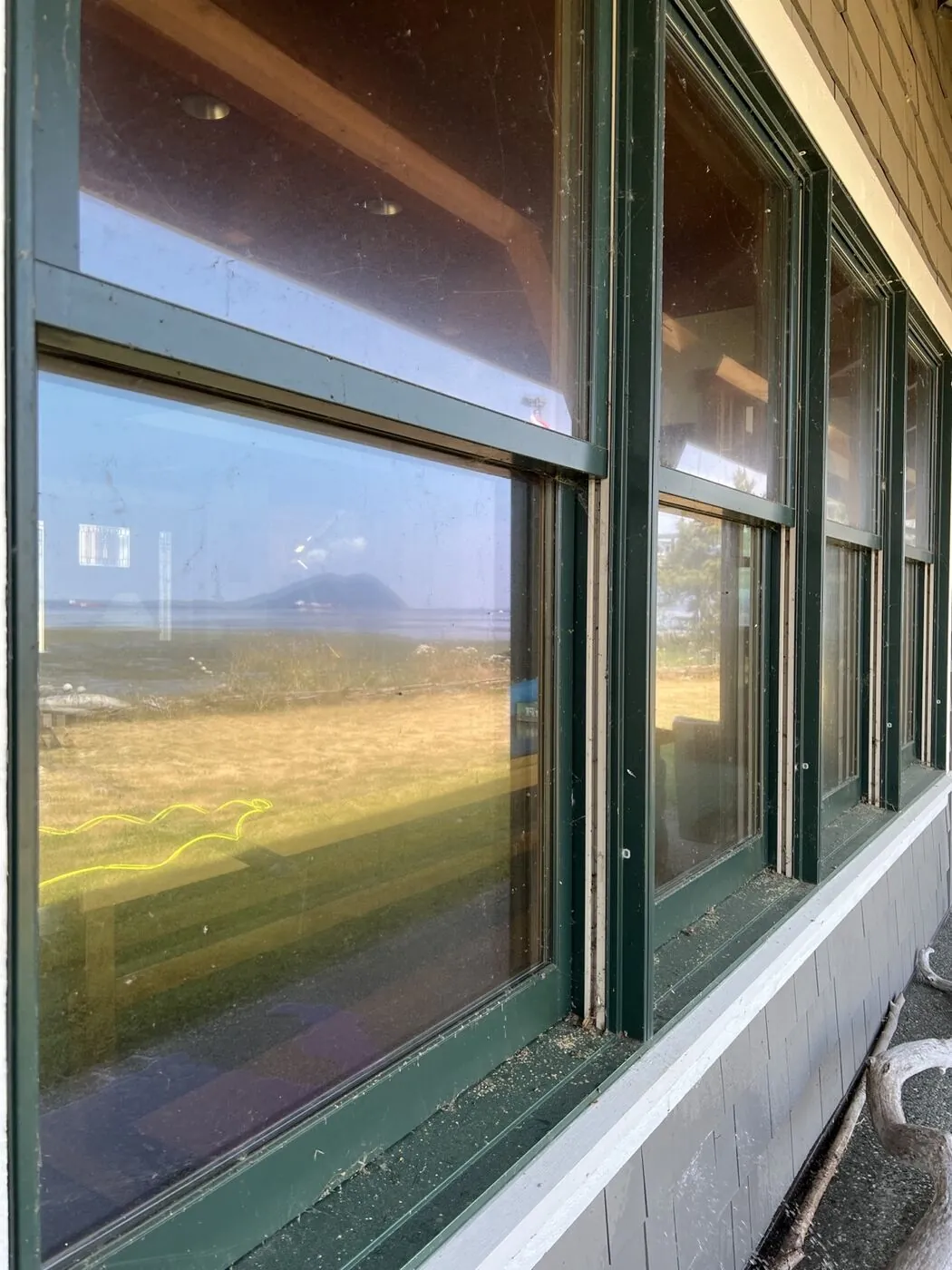
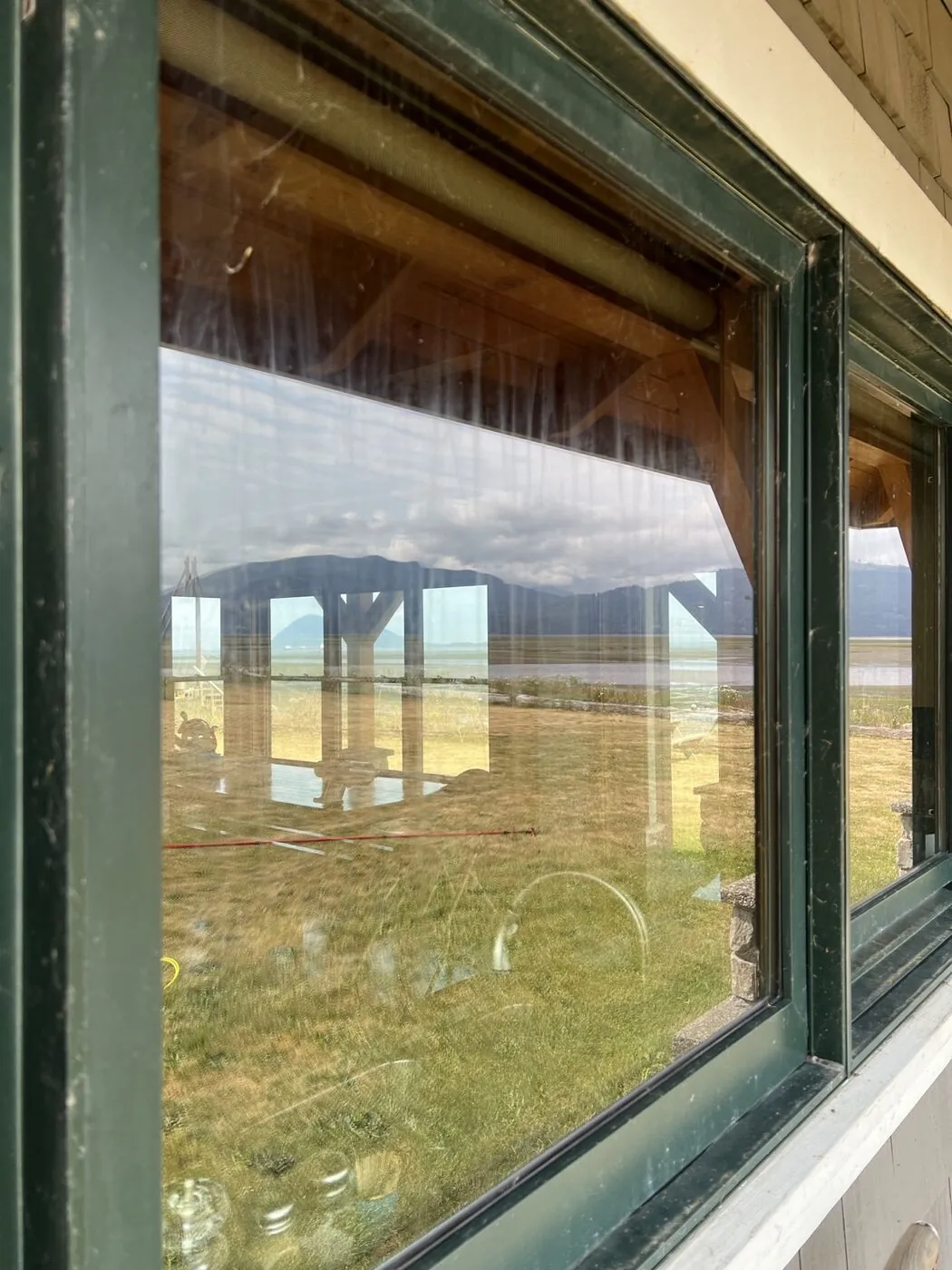 Before
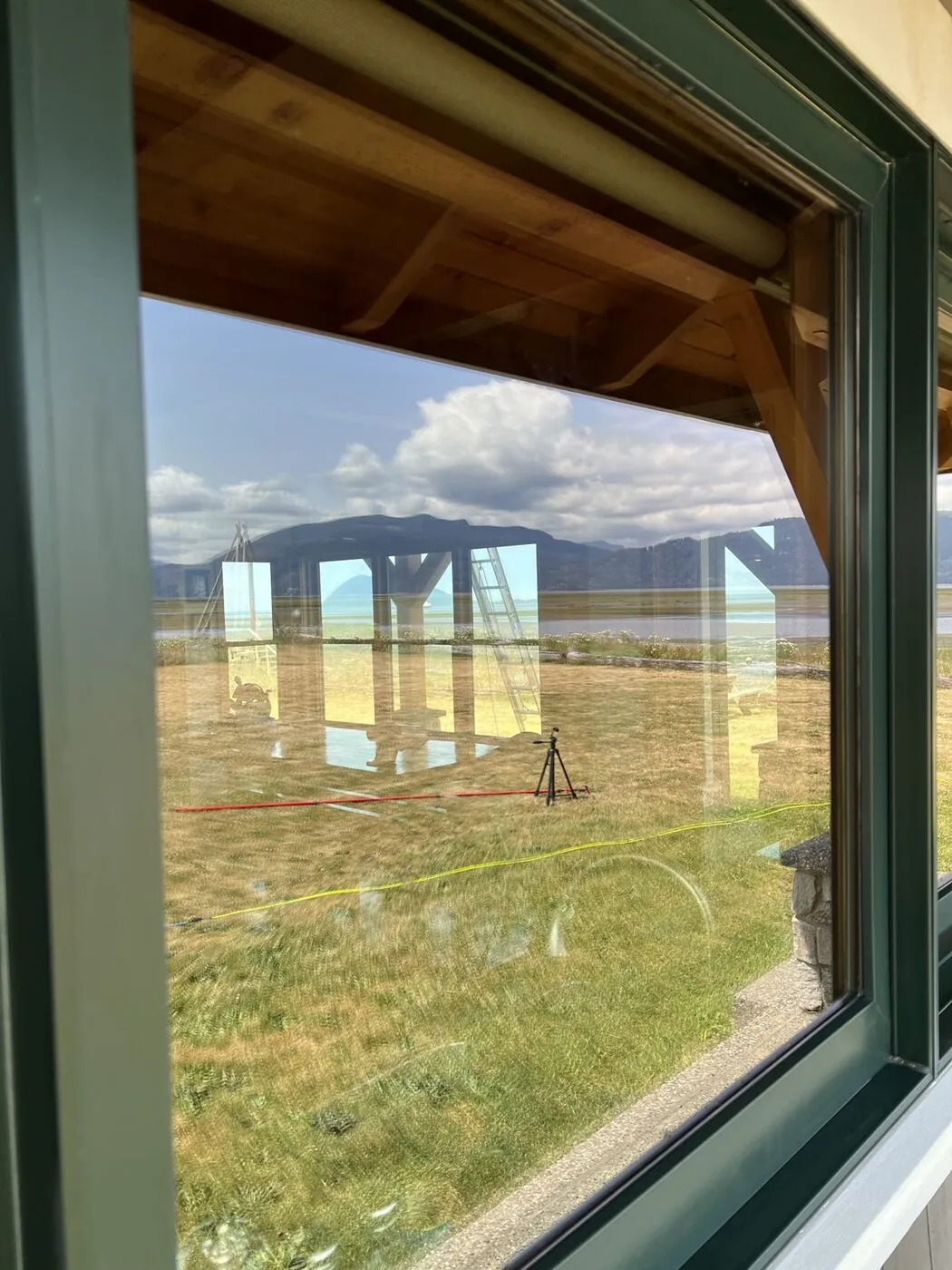 After
What is included in an Anacortes window visit?
The standard residential visit covers:
- Exterior and interior glass on every opening we can reach safely
- Screens taken out, washed, dried and put back in the same frame
- Tracks and sills vacuumed and wiped, since grit in a track wears the seals each time the sash slides
- Frames wiped where the finish allows it
- Cobwebs cleared from around the openings and the soffit just above
- A final look round with you, in daylight, before we load up
Skylights, glass deck rails, storm windows and sunroom roofs are quoted on their own because access varies so much between houses. The full service hub is at window cleaning.
How is the glass actually cleaned?
By hand where a person can reach, and by pole where they cannot.
Ground-floor glass gets a cleaning solution, a scrubber to break up the film, and a squeegee drawn across in one pass. On the water-facing elevation that physical contact is what shifts the bonded film; rinsing alone leaves a haze.
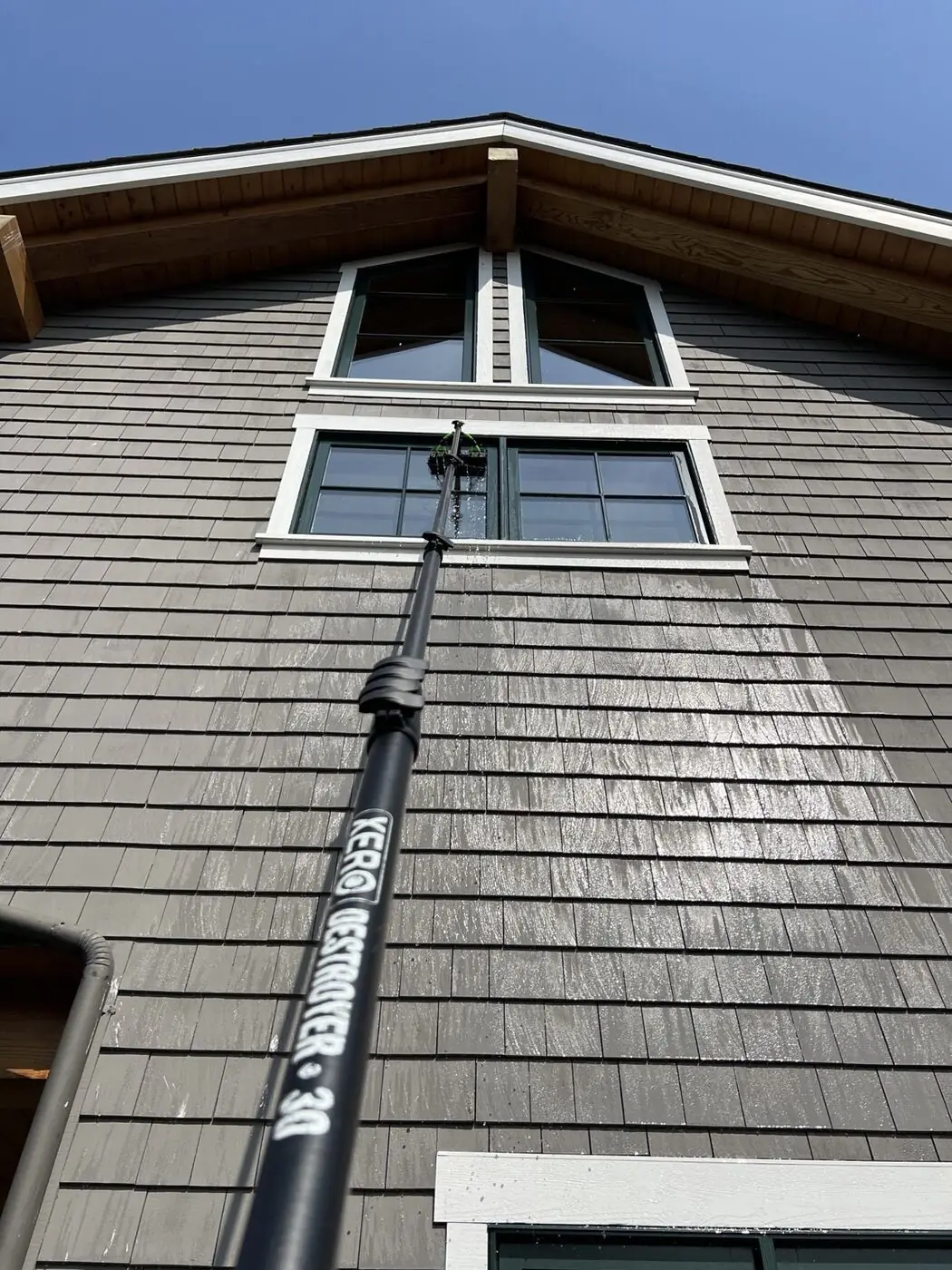
Upper storeys, and panes over a deck, a roof or a planted bed, get a water-fed pole carrying purified water. Water with its dissolved content filtered out dries without leaving residue, so the glass can simply be left to dry. That means no ladder on your decking and no squeegee pulled at arm’s length on a pane twenty feet up. Where a reach is honestly not safe, we say so on the quote instead of improvising on the day.
Do older Anacortes homes need different handling?
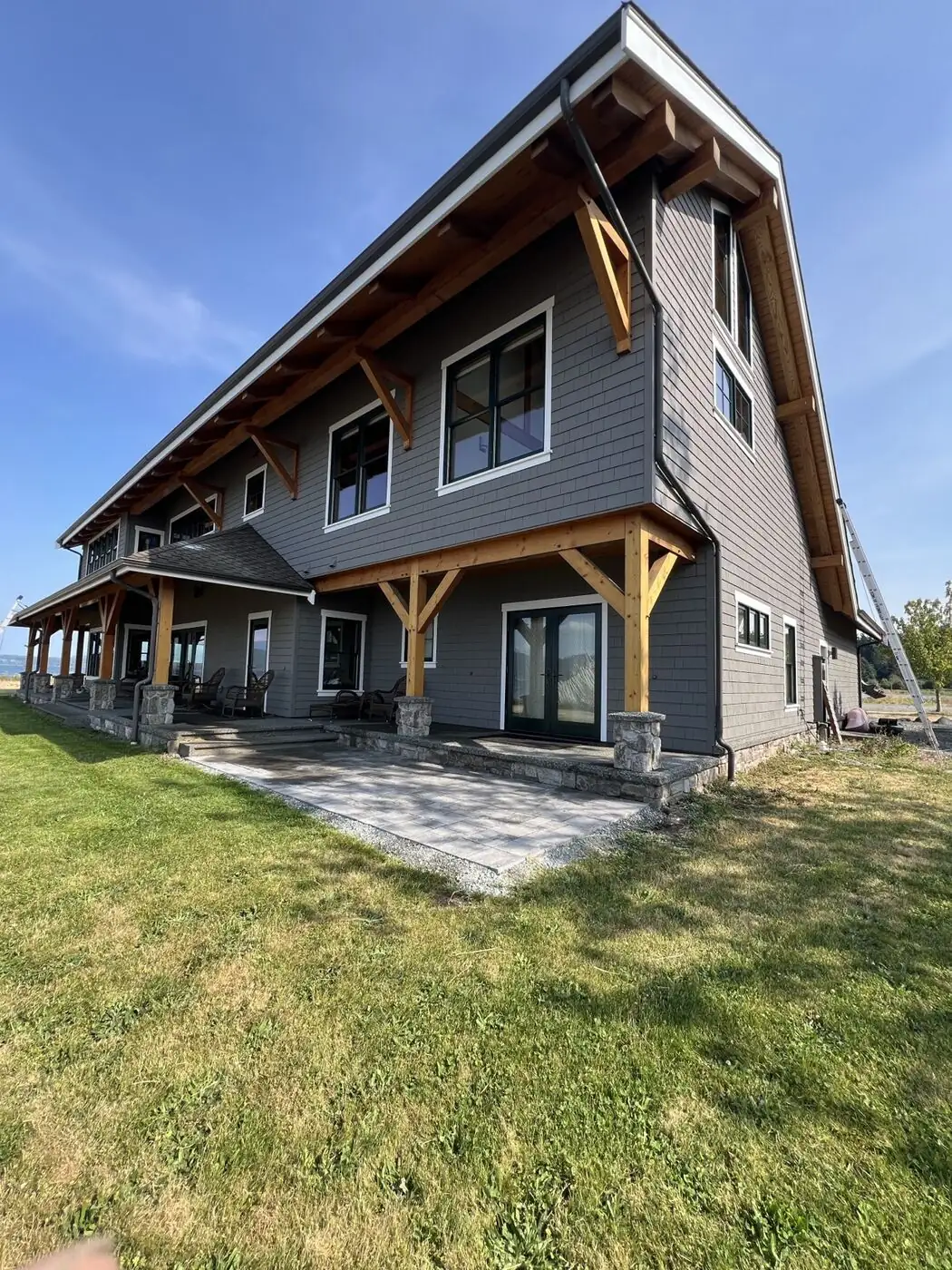
Often, yes. About 1,155 housing units in Anacortes, roughly 13% of the stock, were built in 1939 or earlier, even though the median year built across the city is 1989. The city keeps a Register of Historic Places that includes houses such as the Wasserman-Lowman House on 8th Street and the Judd House on 9th Street.
Older windows ask for more care than modern sealed units. Glazing putty can be brittle, old glass can be thinner, and painted sashes do not like being soaked. We work those windows by hand, keep blades away from old glass, and use less water around the frames. If we spot a cracked pane, a loose light or a failed seal on a newer unit, it goes on the walk-round list; failed seals are covered on the insulated glass units page. Pointing it out is as far as we go, since window repair is a different trade.
What drives the price of window cleaning here?
Every quote is given on site. Five things decide it:
- Number of openings, the starting point for any quote.
- Pane size. A house with a wall of view glass facing the water can take longer than a smaller house with twice as many little panes.
- Height and access. Ground-floor glass on a level lot is quick. Glass on a slope, over a deck, or three storeys up on a hillside takes longer.
- How long since the last clean. A first visit to exposed glass that has gone several years is slower than a routine one, and later visits cost less.
- Additions such as skylights, glass rails, storm windows and sunrooms.
A number given over the phone for a house nobody has seen tends to be wrong in one direction or the other, which is why we would rather come and look.
When should Anacortes windows be cleaned?
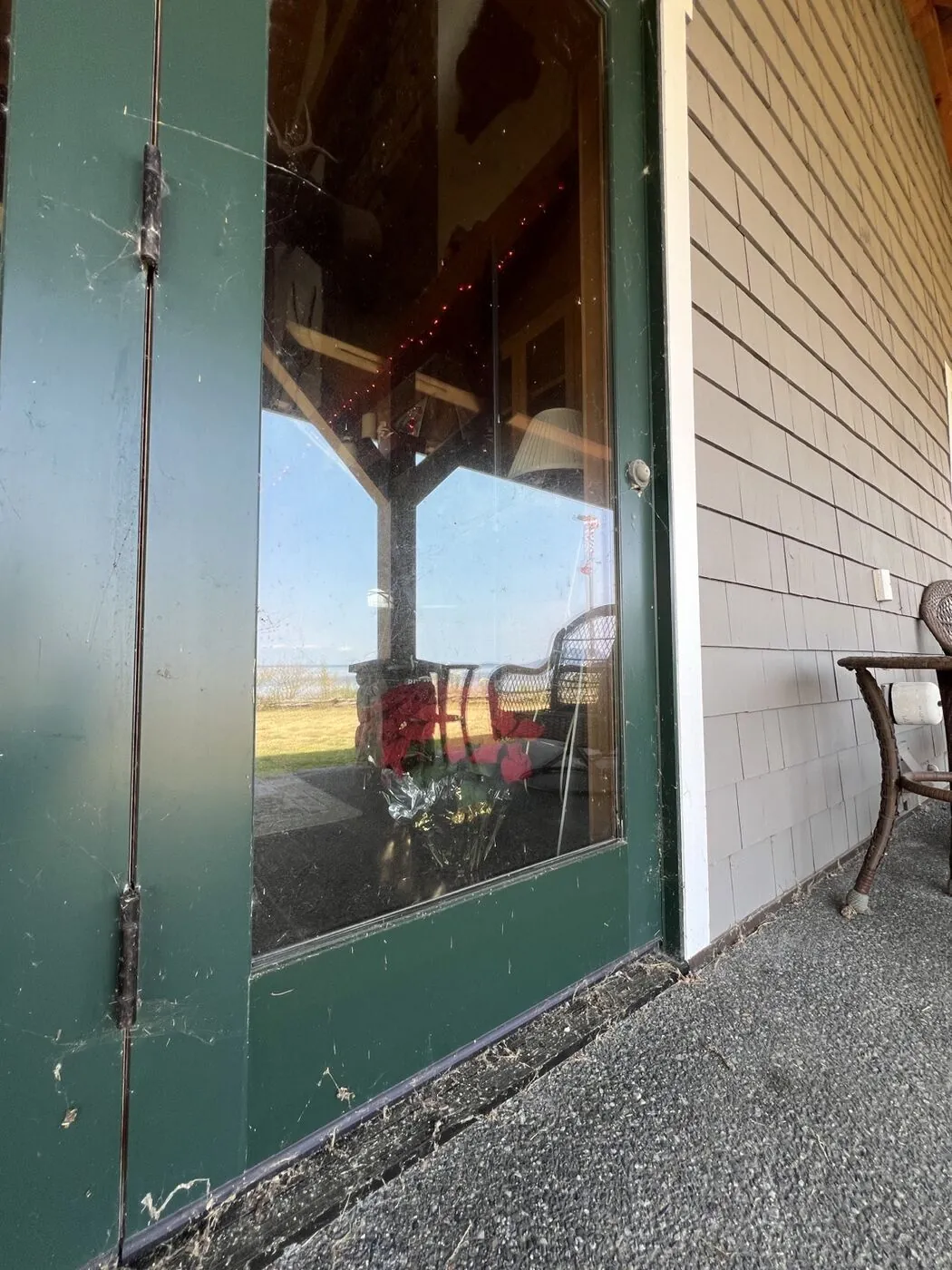
Spring is the main slot. The wettest months on the long Anacortes weather record were November, at 3.84 inches, and December, at 3.80, and glass coming out of that stretch carries rain spatter, organic film and the residue of interior condensation. A clean in March or April means looking through clear glass for the brighter half of the year.
Late summer or early autumn is the second slot, ahead of the wet months, so the glass goes into the winter clean rather than already dulled.
If you are also having the roof or gutters done, book glass last. Roof and gutter work sends debris and dirty water down the walls, and a crew that cleans the windows first ends up doing them twice. The Anacortes roof cleaning page and the Anacortes gutter page cover that sequence.
Where does the rinse water go?
Anacortes Municipal Code 18.30.050 allows only stormwater into the stormwater system and names detergent among the illicit discharges. It also conditionally permits routine external building wash-down that uses no detergent.
Window work fits that code comfortably when it is done properly. Pole work runs plain purified water with nothing added. Ground-floor glass cleaned with a solution is handled by hand, and the small amount that runs off is kept away from street inlets and onto soil or lawn. The city’s storm drains empty into Fidalgo Bay, Guemes Channel and Burrows Bay, so we treat every inlet near the house as a direct line to salt water. The wider approach is laid out under wash water and storm drains.
Can the water side be done on its own between full cleans?
Yes, and on a lot of Anacortes houses it is the most sensible way to spend the money. If the view glass is where the film builds and the street side stays presentable, there is little point paying for every opening three times a year.
A typical arrangement looks like this. A full visit in spring covers every window inside and out, screens and tracks included. A shorter visit in late summer covers only the exposed elevation, usually exterior only, with the pole doing most of the work. Then a second full visit in autumn, if the house needs it, or the following spring if it does not.
We will suggest that split on the walk-round when we think it fits, and we will also say when it does not. A house tucked into trees, with no open outlook over the water, may have no exposed side worth separating out at all. For more on how the town’s setting shapes the rest of the exterior, see the Anacortes overview.
What window problems can cleaning not fix?
A few things look like dirt but are not, and it is better to hear it before paying for a clean:
- Fog inside double glazing means a failed seal, and the haze is sealed in with it.
- Etched glass from years of dried-on deposit or chemical splash is damage to the surface itself and does not polish out with cleaning.
- Scratches from a previous blade or abrasive pad are permanent.
- Paint and silicone on glass need a separate careful job and are not part of a standard visit.
We mention any of these on the walk-round so the decision is yours.
How to book
Ring (360) 303-6806 or use the contact form. We will arrange a time on the next Anacortes day, walk the house with you, and give you a price for the glass as it stands, split between the exposed side and the rest if that suits you better. The crew carries Washington State business licensing and Labor & Industries coverage, and each technician is trained by the owner before working on anyone’s windows.
Windows questions from Anacortes homeowners
- How often do Anacortes windows need cleaning?
- Twice a year covers most homes: once in spring to clear the winter, once in late summer or early autumn. A house with a big water-facing wall of glass, or one under trees, often benefits from a third visit on that side only, which costs less than a full clean.
- Can you clean just the side facing the water?
- Yes. On a lot of Anacortes houses the water-facing elevation carries most of the film while the other sides stay reasonably clear. We can quote that elevation on its own between full visits, inside and out or exterior only.
- My tap water is soft. Can I just hose the windows myself?
- You can, and soft water will leave fewer spots than hard water would. It will not lift the bonded film that builds on exposed glass, though, and anything dissolved in the hose water still dries onto the pane. Hosing is a stopgap between cleans rather than a replacement for one.
- Do you clean inside too?
- Interior and exterior is the normal visit, with screens, tracks and sills included. Exterior-only is available and cheaper. Most people with a view of the water book both, since the inside face is the half they look through every day.
- What about older windows on a pre-war house?
- We handle them by hand, without a blade near old glass or putty, and we tell you on the walk-round about any cracked panes, loose glazing or sash cords we notice. We do not repair windows; we point things out so you can decide who should.
- Where does your rinse water go?
- On pole work it is plain purified water, which is the kind of detergent-free wash-down AMC 18.30.050 conditionally allows. Ground-floor glass cleaned with a solution is worked by hand with little runoff, and we keep any of it away from street inlets because Anacortes storm drains empty to salt water.
- There is fog between the panes. Can you remove it?
- No. Haze inside a double-glazed unit means the seal has failed and moisture has got into the sealed space, which no outside cleaning can reach. We note failed units on the walk-round so you have a list to take to a glazier or to the window maker.