
Moss Under Shingles in Whatcom County
The short answer
Moss on a composition roof does not sit on top of the shingles for long. It establishes at the lower edge of a course, grows into the lap, and lifts the shingle above it. That lifting is the damage — it breaks the roof's overlap and lets wind-driven rain past the part that was doing the waterproofing.
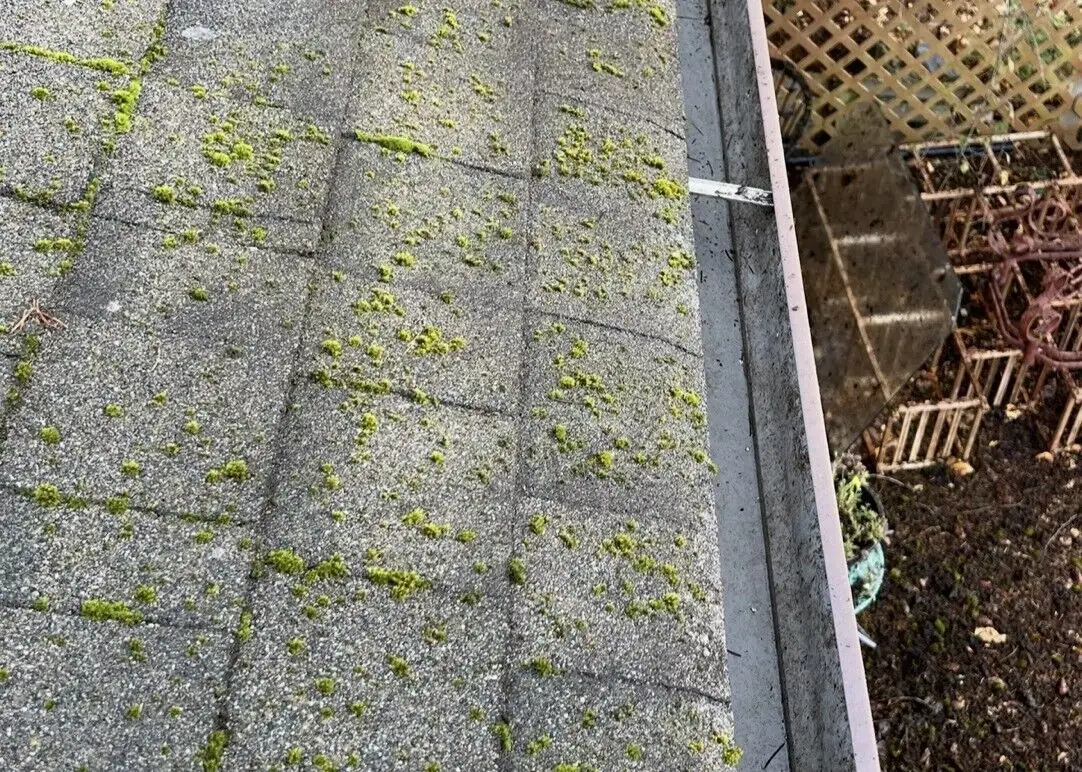
The thing worth understanding about roof moss is that the visible cushion on top of the shingle is not where the damage happens. It is the part you can see, and it is the part everyone photographs, but the mechanism is underneath it.
What moss actually does to a composition roof
A composition shingle roof works by overlap. Each course sits over the one below it, and water arriving from above runs down the surface and off the edge without ever getting to the joint. Nothing is sealed. The waterproofing is geometry.
Moss establishes at the lower edge of a course, where debris collects and moisture lingers longest. As it thickens, it grows into the lap — the gap between the shingle above and the shingle below — and it grows with enough force to lift.
Once a course is lifted, the geometry is broken. Wind-driven rain, which arrives at an angle rather than straight down, gets under the lifted edge and onto the layer that was never meant to be the waterproof one. In a region where storms come off the water and the wet season runs October into May, that is not a theoretical exposure.
It also holds water against the shingle permanently, which accelerates the ageing of the mat itself, and it collects debris that keeps the whole area damp.
Why the removal method matters more than the removal
Three approaches exist. Two of them cost you roof.
Pressure washing is fast, dramatic and the most common cheap quote in this market. A composition shingle is a mat coated in adhered granules, and those granules are the UV protection for everything underneath. Pressure strips them. It also drives water up under the courses in exactly the direction the roof was built not to handle. The result looks excellent for one season and has removed years of service life.
Aggressive scraping and stiff-brushing does the same damage more slowly. On courses moss has already loosened, dragging a brush across is finishing what the moss started — and the moss most worth removing is at the eaves and in the valleys, which is where a person on a roof has the worst footing.
Lifting the bulk off by hand and treating the remainder is the approach that does not cost anything. Heavy growth comes away gently by hand — moss is not rooted into the shingle the way a plant is rooted into soil, and once it is thick it lifts in mats. What remains is treated, dies, dries, loses its grip and weathers off over the following weeks. The roof gets steadily cleaner without anything mechanical being dragged across it.
That last part takes patience and it is the reason a good moss job does not look finished on the day it is done. It looks finished two months later.
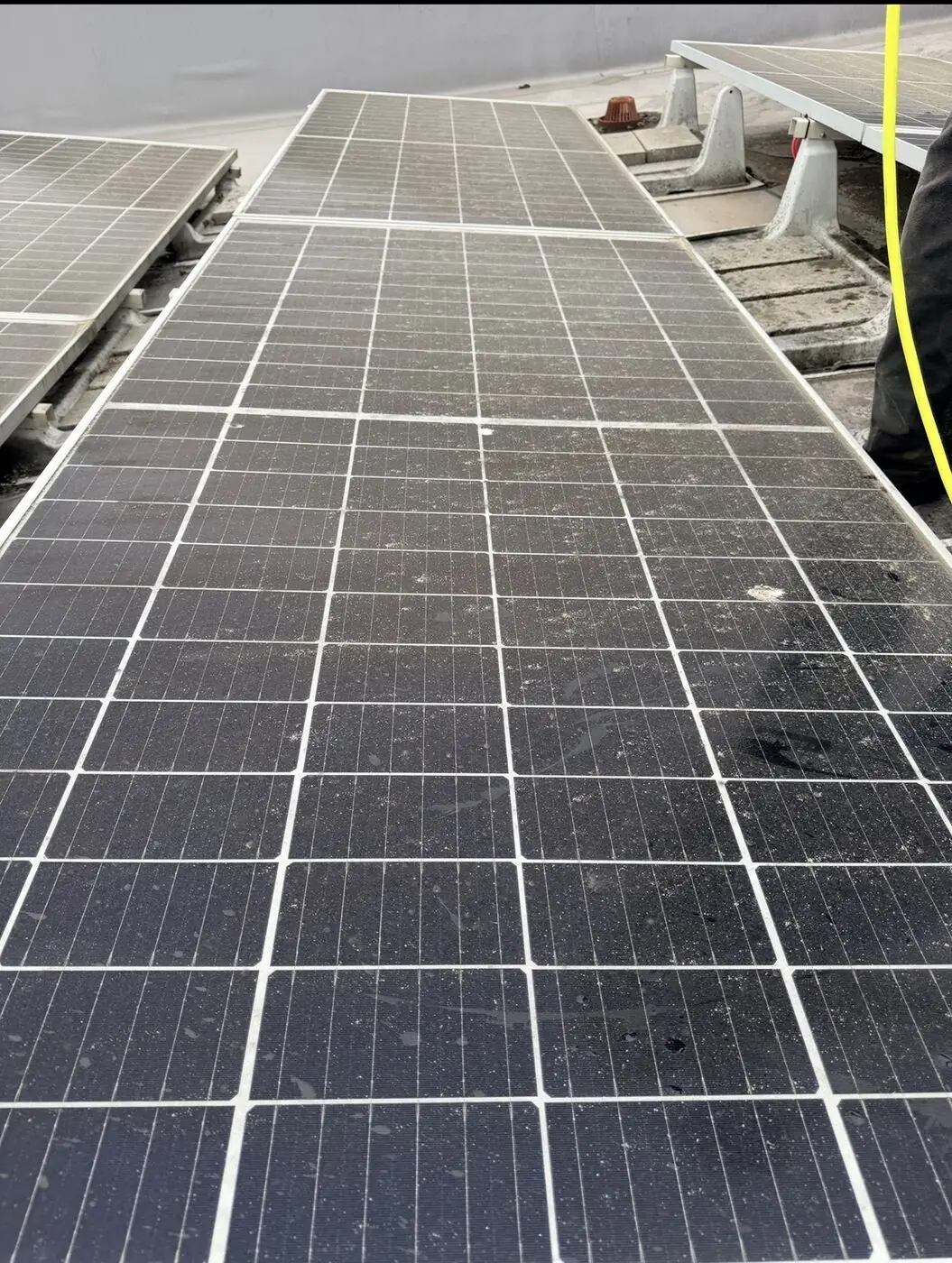 Before
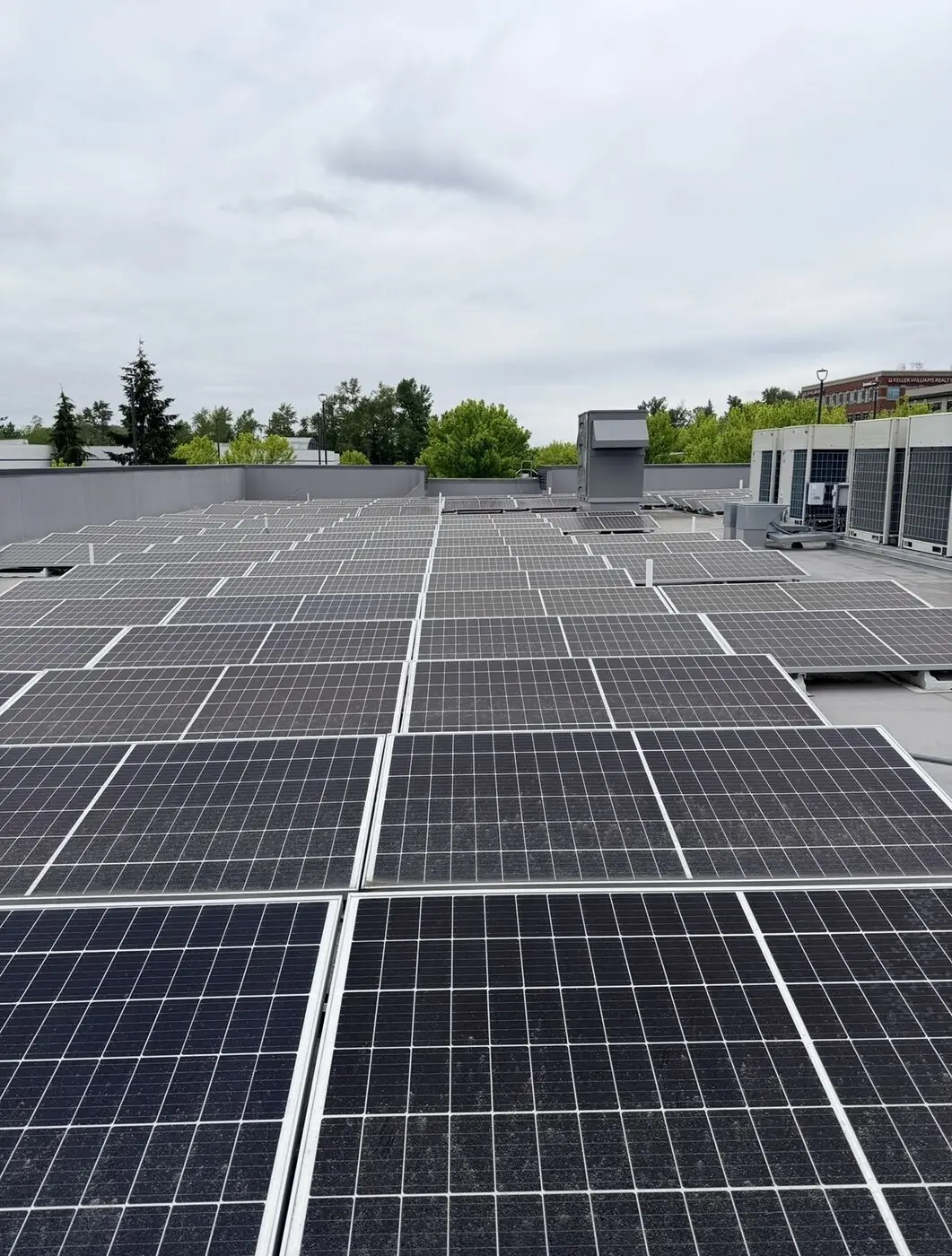 After
Not every roof behaves the same way
The lifting mechanism above is specific to overlapping courses, so it plays out differently depending on what the roof is made of.
Cedar shake and shingle. The worst case, and common on older housing around the lake, Chuckanut and Edgemoor. Wood is absorbent, so moss is growing in a material that holds moisture itself, and it establishes deep in the checking and splits of weathered shakes as well as between the courses. Cedar cannot take aggressive treatment or aggressive removal — shakes split, and the material is already the thing decaying.
Metal. Standing seam and corrugated panels offer moss no foothold, but the seams, the fixings and the low-slope transitions collect debris and moss establishes in that. The concern there is the factory coating, which is what makes the roof last.
Concrete and clay tile. Tile is porous and moss establishes readily in the surface and the laps. The tile is not really threatened, but the weight of a heavily mossed tile roof and the moisture held against battens and underlayment are. The bigger risk on tile is foot traffic during the work — it breaks underfoot far more readily than asphalt.
Torch-down and low-slope membrane. Growth is usually algae and standing debris rather than moss proper, the vulnerable points are the seams, and the useful part of the visit is often clearing the drains.
What to do now
- Look at the north slope in November, not August. Moss is grey, shrunken and near-invisible in dry weather and obvious in the wet.
- Check the gutters as a proxy. A gutter filling faster than it used to is often reporting moss debris before the moss itself is conspicuous.
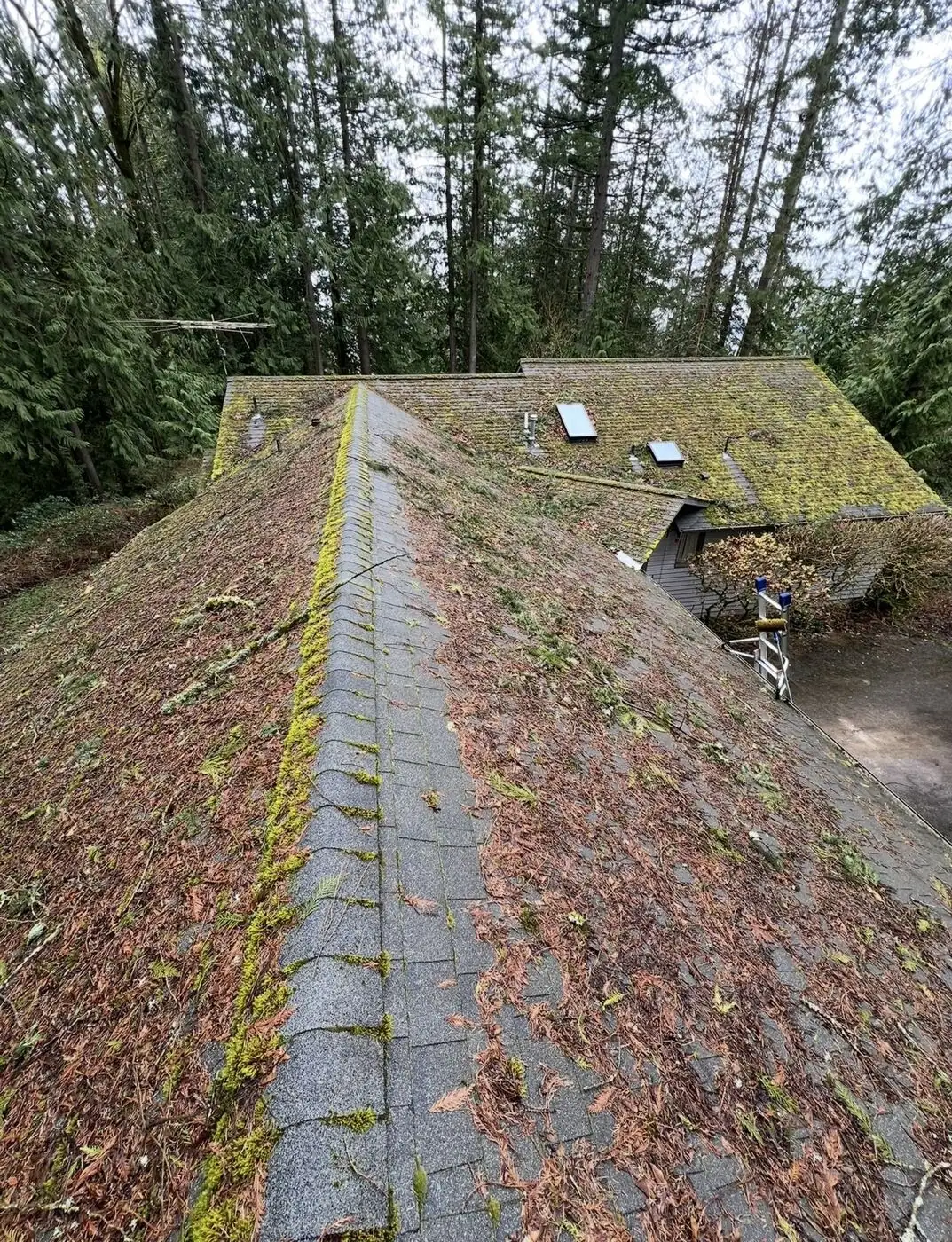
- Look into the valleys. They collect first and worst, and a valley concentrates the water from two roof planes.
- Put the stiff brush down. Scrubbing a course moss has already loosened finishes what the moss started.
- Get a quote that names the method, not just the price — hand-lift plus treatment, or a pressure wash that costs you years of roof.
- Book the gutters for two months after, because everything killed up there comes down over that window.
What to do between treatments
A few habits genuinely extend the interval.
Look at the north slope in November, not August. Moss is dormant, shrunken and grey in dry weather and near-invisible from the ground. It is green, swollen and obvious in the wet months. Judging your roof in late summer is judging it at the moment it lies to you most convincingly.
Watch the gutters as a proxy. A gutter filling faster than it used to is usually telling you the roof above it is shedding more organic material than it used to, and that is often moss debris before the moss itself is conspicuous.
Keep an eye on the valleys. They collect first and worst, and they are where lifted courses do the most damage, because a valley concentrates the water from two roof planes.
Book the follow-up on a cycle rather than on appearance. Three to five years, set by shade and elevation rather than by how it looks from the driveway.
Full method, chemistry and scheduling is on the moss removal page. If what you are looking at is dark streaking rather than raised green growth, that is algae and a different job — see roof cleaning.

Randy Fee — Owner, King of Kings Window Cleaning
Washington business licence, UBI 605476674 · L&I insured · BBB rated A
Randy runs the company himself, so you are dealing with the owner, not a call centre — and every technician here is personally trained by him. Working Whatcom and Skagit County since 2024.
Questions about this
- Is moss on the roof actually damaging anything?
- Yes, but not by the mechanism most people assume. It is not eating the shingle. It is growing into the lap between courses and physically lifting the course above, which breaks the overlap the roof relies on. A lifted shingle lets wind-driven rain get underneath, and that is a water-intrusion problem rather than a cosmetic one.
- Can I just knock it off with a brush?
- Bulk moss does get lifted off by hand, and that is the right first stage. What causes damage is scrubbing hard at what is left, especially wet, on a course that moss has already loosened. Aggressive brushing strips granules and finishes the job the moss started.
- Why can you not pressure wash it?
- Because a composition shingle is a mat coated in adhered granules, and the granules are the UV protection. Pressure removes them. It also drives water up under the courses, in the direction the roof was never built to shed. It looks excellent for a season and takes years off the roof, and none of that is reversible.
- What actually happens to the moss after treatment?
- It dies, dries out, loses its grip, and weathers off over the following weeks and months. The roof does not go from mossy to clean on the day. That slow release is the point — it is what lets the material leave without anything mechanical being dragged across the shingle.
- Do I need the gutters done as well?
- Effectively yes, and we will say so on the quote. Everything killed on the roof comes down over the following two months. A treatment with no gutter clearing afterwards produces a blocked system going into winter, which is how a solved problem creates a new one.
- How do I know if it is bad if I cannot see the roof?
- Look in November rather than August — moss is shrunken and grey in dry weather and near-invisible from the ground, then green and obvious in the wet months. Watch the gutters too: a gutter filling faster than it used to is often telling you the roof above it is shedding organic material before the moss itself is conspicuous.
- How often does a roof here need it?
- Three to five years for most, set by shade and elevation rather than by how it looks from the driveway. A roof under mature conifers on a north slope is at the short end. Booking on a cycle rather than on appearance is the cheaper approach, because by the time it looks due the growth under the courses has had a couple of seasons to work.
Last updated